Key takeaways
What's inside
Trekking pole sizing is the difference between poles that help and poles that hurt your shoulders. This roundup explains how to measure the right length for your height and terrain, then compares five field-tested pairs by adjustment range and fit, so you can dial in poles that keep your elbows comfortable on every climb and descent.
As an Amazon Associate we earn from qualifying purchases.
By Jake Thompson
How to Get Trekking Pole Sizing Right
Correct length keeps your arms comfortable and your poles effective. The core rule of trekking pole sizing is simple: with a pole planted upright, your elbow should bend to about ninety degrees. From there, height, terrain, and pole type all fine-tune the fit you actually want on the trail.
The 90-Degree Elbow Rule
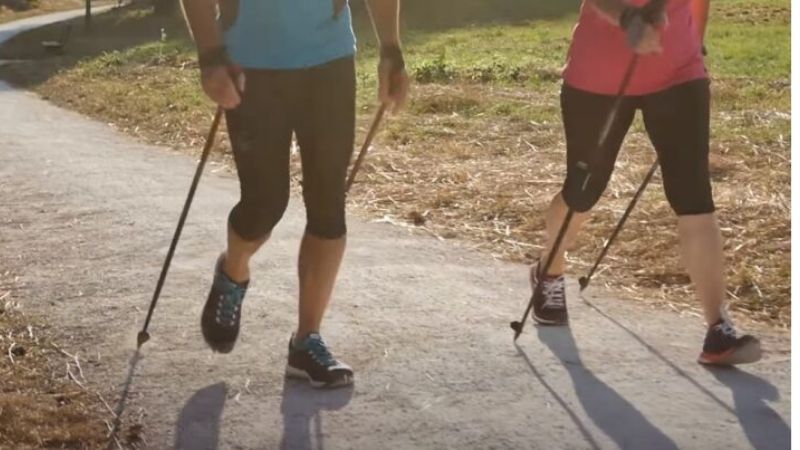
Start with the basic test. Stand upright, plant the pole tip by your foot, and grip the handle. Your forearm should sit roughly parallel to the ground, with your elbow at about a ninety-degree angle. This neutral position lets your arms push efficiently without hunching your shoulders or overreaching.
Use height as a starting point. Roughly, hikers under five foot one want about 100 centimeters, five foot one to five foot seven around 110, five foot eight to five foot eleven near 120, and six feet and up close to 130. Treat these as a baseline that good sizing then refines.
Adjusting for Terrain
Terrain changes the ideal length. On long uphill sections, shorten your poles a few centimeters so you can push down effectively without raising your arms too high. On descents, lengthen them so the tips reach the ground below you, keeping your posture upright and easing impact on your knees.
Traversing slopes calls for asymmetry. On a sidehill, shorten the uphill pole and lengthen the downhill one to stay level and balanced. This is where adjustable poles earn their keep, since fixed-length poles cannot adapt, and good sizing accounts for the ground you actually cross.
Fixed, Adjustable, and Folding Poles
Pole type affects how you size them. Adjustable telescoping poles cover a wide length range and adapt on the fly, making them the most forgiving for varied terrain and for sizing errors. They suit most hikers who want one pair to handle everything from flat trails to steep grades.
Fixed and folding poles need more care. Fixed-length poles are lightest but must be sized precisely when you buy, and folding poles collapse tiny but offer little adjustment. If you choose either, nail your trekking pole sizing up front, since you cannot fine-tune much once you are on the trail.
Top Picks: Poles for Every Sizing Need
With those principles in mind, here are five field-tested pairs that suit different trekking pole sizing needs, from wide-range adjusters to tall-hiker options. The table offers a height-based starting point, and the reviews below explain who each pair fits and the trade-offs to weigh before you buy.
| Your Height | Suggested Length | Pole Type | Note |
|---|---|---|---|
| Under 5’1″ | ~100 cm | Adjustable | Shorter hikers |
| 5’1″ – 5’7″ | ~110 cm | Adjustable or fixed | Average height |
| 5’8″ – 5’11” | ~120 cm | Adjustable | Taller hikers |
| 6’0″ and up | ~130 cm | Long-max poles | Tall hikers |
| Any height | Adjust plus or minus 5-10 cm | Adjustable | Uphill and downhill |
Cascade Mountain Tech Carbon – Best Wide Range
The Cascade Mountain Tech Carbon poles suit almost anyone thanks to a broad 26-to-54-inch adjustment range. That span fits shorter and taller hikers alike, adapts easily for uphill and downhill sections, and pairs cork grips and tungsten tips with a budget price, making it a forgiving choice for dialing in your fit.
The quick locks feel less refined than premium levers, and durability trails top-tier poles. But for the widest, most affordable sizing range in one pair, it is an excellent starting point for most hikers.
Black Diamond Trail Back – Best for Everyday Fit
The Black Diamond Trail Back offers a generous adjustment range with reliable FlickLock levers that hold your chosen length firmly. Its aluminum shafts adjust easily for terrain, so you can shorten for climbs and lengthen for descents, and the durable build handles years of daily fit tweaks without slipping.
It is heavier than carbon and less refined than premium poles. But for a dependable, easy-to-adjust pole that nails everyday trekking pole sizing across varied terrain, it is a rock-solid choice.
Leki Makalu Lite – Best for Tall Hikers
The Leki Makalu Lite extends to a long maximum length, making it a strong pick for taller hikers who struggle to size shorter poles. Its Speedlock levers hold securely at full extension, and the ergonomic Aergon grip keeps wrists comfortable even when the poles are set near their longest.
It is heavier than carbon and priced above budget poles. But for hikers over six feet who need real length without a pole feeling maxed out, its extension and reliable locks are worth it.
Leki Makalu FX Carbon – Best Adjustable Folding
The Leki Makalu FX Carbon blends folding packability with real adjustment, packing down to about 41 centimeters yet adjusting a full 20 centimeters. That rare combination lets you tune length for terrain while still stowing the poles tiny, solving the usual trade-off between folding size and sizing flexibility.
It costs more than fixed folding poles and is pricier than basic telescoping pairs. But for hikers who want both a small packed size and the ability to fine-tune their fit, it is a versatile, do-it-all option.
Black Diamond Distance Carbon Z – Best Fixed-Length
The Black Diamond Distance Carbon Z is the ultralight pick for hikers confident in their size. Its fixed-length carbon design saves maximum weight and packs down small, so once you choose the correct length it delivers a light, rigid, and efficient pole for fast hiking and running.
Because it is fixed, you must get your trekking pole sizing exactly right at purchase, and it cannot adapt to steep terrain. But for gram-counters who know their length, it is the lightest, most packable option here.
Frequently Asked Questions
A few questions come up again and again about trekking pole sizing. Here are quick, practical answers to help you dial in your fit.
How do I know if my poles are the right length?
Plant a pole upright with the tip by your foot and grip the handle. If your elbow bends to about ninety degrees and your forearm is roughly level, the length is right. If your hand rides too high or too low, adjust until your arm sits in that comfortable neutral position.
Should I change pole length for uphill and downhill?
Yes, if your poles adjust. Shorten them a few centimeters for sustained climbs so you can push down without raising your arms, and lengthen them for descents so the tips reach the ground below you. This keeps your posture upright and maximizes the knee relief poles provide.
Can I use one pole length for everything?
You can, and many hikers set a single comfortable length and leave it. But adjusting for terrain improves efficiency and comfort on long climbs and descents. If you buy fixed or folding poles, choose a length that fits flat-ground use well, since you will not be able to change it much.
What if I am between recommended sizes?
Choose an adjustable pole so you can fine-tune within the range, or size slightly longer since you can usually shorten more easily than extend. Personal preference and hiking style matter, so treat height charts as a starting point and adjust until your elbow sits at that comfortable ninety-degree angle.
See More:
- Best camp chair
- Lightweight camp chair
- Camping table review
- Backpacking cookware set
- Camp stove review
Final Thoughts
Good trekking pole sizing comes down to the ninety-degree elbow rule, then adjusting for your height and the terrain underfoot. The Cascade Carbon offers the widest range, the Trail Back an easy everyday fit, and the Makalu Lite length for tall hikers, while the Makalu FX folds and adjusts and the Distance Carbon Z saves weight for those who know their size. Dial in your fit, and every mile feels better.