Key takeaways
What's inside
Camp kitchen essentials turn a chaotic campsite meal into an easy one. This roundup covers six field-tested pieces, from a two-burner stove to a wash basin, comparing weight, capacity, and role, so you can build a car-camping kitchen that cooks real food, keeps it cold, and cleans up fast without dragging half your home pantry into the woods.
As an Amazon Associate we earn from qualifying purchases.
By Jake Thompson
How to Build a Camp Kitchen
A good camp kitchen is a system where cooking, water, cold storage, and cleanup all have a place. The goal is enough gear to eat well without overpacking the trunk. Choosing your camp kitchen essentials comes down to how many people you feed, how you cook, and how long you stay out.
Cooking Power and Surface
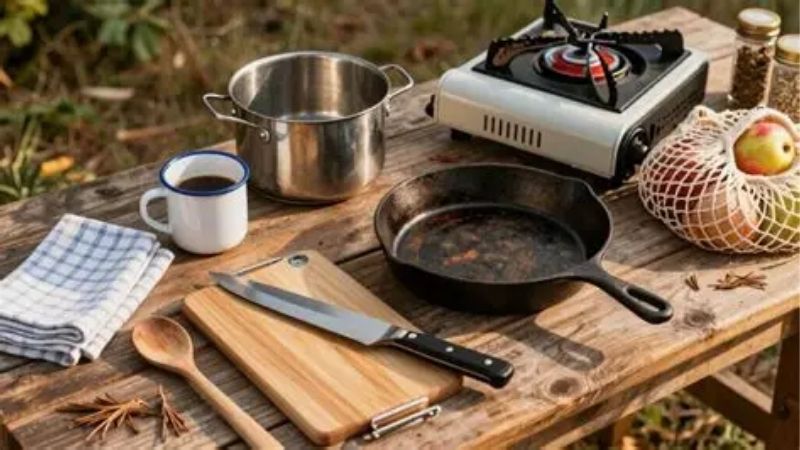
Start with heat and a place to work. A two-burner stove lets you cook a full meal at once, while a sturdy prep table or cook station keeps food off the ground and gives you room to chop. Match burner output and table size to your group so nobody is waiting on a single pot.
Think about wind and stability too. A stove with a wind baffle and a level, heat-resistant surface makes cooking far easier in real conditions. A wobbly setup on uneven ground turns even simple meals into a struggle, so a solid base is one of the true camp kitchen essentials.
Water and Cold Storage
Water and a cooler anchor any campsite kitchen. A rigid water container gives you an on-demand supply for cooking, drinking, and washing, while a capable cooler keeps perishables safe for the length of your trip. Size both to your group and how far you are from a tap or resupply.
Plan for grey water and ice management. Keeping clean water separate from wash water, and draining cooler melt before it warms, keeps your kitchen sanitary. A little forethought here prevents the soggy, lukewarm mess that ruins food on the second or third day of a trip.
Cookware and Cleanup
Round out the kitchen with pots, pans, and a way to wash them. A nesting cookware set covers boiling and frying without hogging space, and a collapsible wash basin makes cleanup quick and tidy. Pack a little biodegradable soap and a cloth, and you can handle any meal’s aftermath.
Do not forget the small stuff. Utensils, a cutting board, a lighter, and a trash bag are easy to overlook until you need them. These minor camp kitchen essentials cost little and weigh almost nothing, but forgetting one can leave you improvising dinner with a stick and a rock.
Top Picks: The Camp Kitchen Essentials
With those roles in mind, here are six pieces that combine into a complete, capable camp kitchen. The table sums up what each one does, and the reviews below explain who each item suits and the trade-offs to weigh so you can adjust the kit to your own trips.
| Item | Role | Key Spec | Best For |
|---|---|---|---|
| Camp Chef Everest 2X | Stove | 2 x 20,000 BTU | Fast, powerful cooking |
| GSI Pinnacle Camper | Cookware | Serves 4 | Group meals |
| GCI Slim-Fold Cook Station | Prep table | Heat-resistant top | Workspace |
| Reliance Aqua-Tainer | Water | 7 gal, ~2 lb | Hydration and washing |
| Coleman Xtreme 5 | Cooler | Up to ~5-day ice | Cold storage |
| Sea to Summit Kitchen Sink | Wash basin | Collapsible | Cleanup |
Camp Chef Everest 2X – The Stove
The Camp Chef Everest 2X is a powerhouse at the heart of the kitchen. Two burners put out a strong 20,000 BTUs each, a matchless ignition fires them instantly, and three-sided wind panels shelter the flames, so you can boil fast and sear well even on a breezy campsite.
At around 12 pounds it is heavy and runs only on propane, so it is strictly a car-camping stove. But its high output and reliable ignition make it one of the most capable camp kitchen essentials for anyone cooking real meals for a group.
GSI Pinnacle Camper – The Cookware
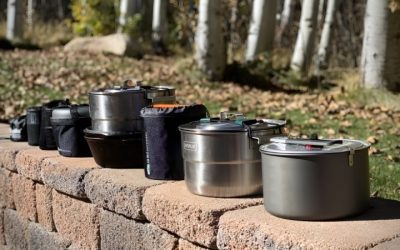
The GSI Pinnacle Camper cookware set feeds a group from one tidy package. It nests three-liter and two-liter pots, a nine-inch nonstick skillet, and four cups, bowls, and plates into a bundle that doubles as a washbasin, covering nearly every cooking task for up to four people.
The full set is bulky and heavier than a minimalist kit, so solo campers will find it overkill. For families and groups who want matching, organized cookware that cleans up together, though, it is a convenient and complete choice.
GCI Slim-Fold Cook Station – The Prep Table
The GCI Slim-Fold Cook Station gives your kitchen a stable, off-the-ground workspace. Its heat-resistant aluminum top handles hot pots, side tables hold utensils and spices, and the whole station folds flat and rolls up for transport, setting up in seconds when you reach camp.
At roughly 16 pounds it is not something you carry far, and its capacity is best for a hot pot and prep rather than a full stove plus gear. But as a dedicated surface, it transforms how organized and pleasant campsite cooking feels.
Reliance Aqua-Tainer – The Water Station
The Reliance Aqua-Tainer 7-gallon container is a trusted campsite water source. Its rugged, BPA-free build holds enough for several people over a couple of days, a reversible hideaway spigot dispenses on demand for cooking and handwashing, and the cube shape stacks and stores easily when empty.
The spigot and vent can leak or grow brittle over time, and a full jug is heavy to lift. But at a low price and with replaceable parts, it remains one of the most dependable camp kitchen essentials for keeping water on hand.
Coleman Xtreme 5 – The Cooler
The Coleman Xtreme 5 keeps your food cold without breaking the budget. This injection-molded cooler holds ice for up to five days in good conditions, comes in family-friendly sizes, weighs far less than a rotomolded box, and costs only a fraction of premium coolers, making it a practical kitchen anchor.
Its thinner walls cannot match a rotomolded cooler in extreme heat or hard use. But for most weekend trips, it keeps perishables safe long enough and stays light enough for one person to load and carry to the site.
Sea to Summit Kitchen Sink – The Wash Basin
The Sea to Summit Kitchen Sink makes cleanup fast and packable. It collapses nearly flat, weighs almost nothing, and holds several liters of water, so you can wash dishes, haul water, or soak gear, then fold it away into a tiny bundle when the job is done.
It is a simple basin, not an insulated or rigid tub, so it will not hold shape on its own when empty. But for a lightweight, do-it-all wash station that stows in a corner of the kit, it is a smart finishing touch.
Frequently Asked Questions
A few questions come up again and again when campers assemble their camp kitchen essentials. Here are quick, practical answers to help you finalize your kit.
What is the most important camp kitchen item?
A reliable stove usually tops the list, since it determines what and how you can cook. After that, a cooler to keep food safe and a water container to keep it flowing are close seconds. Build outward from those three, then add prep and cleanup gear based on your meals.
How much water should I bring per person?
Plan on roughly one to two gallons per person per day for drinking, cooking, and washing combined. Hot weather and active days push that higher. A seven-gallon container covers a small group for a couple of days, and carrying a little extra is wise if you are far from a refill.
Do I need a special camp table?
You do not strictly need one, but a stable, heat-resistant surface makes cooking far easier and safer than working on the ground or a picnic table of unknown cleanliness. A folding cook station keeps food off the dirt, holds your stove or pots, and organizes the small tools you reach for constantly.
How do I wash dishes at camp responsibly?
Scrape food scraps into the trash, wash in a basin with a little biodegradable soap, and scatter strained grey water well away from camp and any water source. Never wash directly in a lake or stream. Keeping cleanup tidy protects the environment and helps avoid attracting animals overnight.
See More:
- Best camp chair
- Lightweight camp chair
- Camping table review
- Backpacking cookware set
- Camp stove review
Final Thoughts
Great camp kitchen essentials make cooking outdoors feel effortless rather than like a chore. The Camp Chef stove and GSI cookware handle the meals, the GCI station and Aqua-Tainer set up your workspace and water, and the Coleman cooler plus a collapsible sink cover cold storage and cleanup. Size the kit to your group, and every campsite dinner gets easier.