
Key takeaways
Best stabilised binoculars come into their own where ordinary optics fail: at high magnification and on the water, where every wave turns the view to blur. The best stabilised binoculars pair wide correction angles with waterproof sealing and serious reach, so a rolling deck or a distant ridgeline stays sharp and steady in your hands.
Our top picks


As an Amazon Associate we earn from qualifying purchases at no extra cost to you.
As an Amazon Associate we earn from qualifying purchases.
🛒 Best Price Today on Amazon
Prime members get fast, free shipping on everything above, plus member-only deals. New members get a 30-day free trial — cancel anytime.
Start 30-Day Prime Free Trial →See Today’s Amazon DealsHow to Choose the Right Best Stabilised Binoculars
Choosing the best stabilised binoculars for high-power and marine use means prioritising correction strength, waterproofing, and reach over sheer portability. The four factors below focus on what actually matters when you glass distant subjects or view from a moving boat, where stabilisation is not a luxury but a necessity.
High Magnification and Why Stabilisation Matters
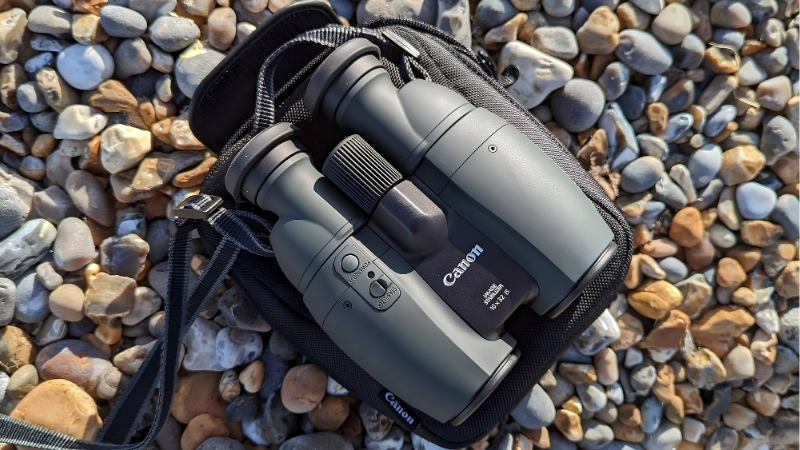
Stabilisation’s value climbs with magnification. At 14x it becomes genuinely transformative, and at 16 to 20x it’s the only way to handhold a usable image, since even a steady grip produces distracting shake at that reach without a system to cancel it.
That’s why high-power pairs almost always need stabilisation. A 20x pair like the Fujinon TS-L 2040 delivers reach that rivals a spotting scope, but only its gyro system makes that magnification steady enough to enjoy without mounting it on a tripod. That freedom to glass handheld at this power is the whole point of paying for stabilisation.
Correction Angle for Rough Conditions
On the water, correction angle is king. Fujinon’s gyro gimbal delivers a class-leading 5 to 6 degrees, holding subjects steady through heavy seas where narrower systems lose the image entirely, making it the benchmark for serious marine use.
Response speed matters alongside range. Kite’s APC corrects a tighter 2 degrees but reacts so fast that reviewers rated its steadiness alongside premium systems, so for lighter chop a quick, smooth optical unit can rival a wide-angle gyro in practice.
Waterproofing for the Water
Marine use demands real sealing. A fully waterproof IPX7 rating, as on the Fujinon Techno-Stabi and Sig Sauer Zulu6, survives submersion in a metre of water for 30 minutes, so an unexpected wave or a dropped pair overboard isn’t a disaster.
Fog protection is just as vital. Nitrogen-purged, sealed optics resist internal misting when warm hands meet cold sea air, and several high-end models add anti-fog coatings, so beware that some otherwise excellent pairs offer only water resistance rather than full IPX7 sealing. For real marine use, treat submersion-rated sealing as non-negotiable, not a nice-to-have.
Timing Your Purchase in 2026
There is a real reason to buy sooner this year. High-power stabilised binoculars are imported precision instruments packed with gyro sensors, microprocessors, ED glass, and sealed metal bodies, exactly the components most exposed to new tariffs, which have lifted the wider category roughly 7.7% with technical parts climbing more.
Because tariffs and supply chains remain unsettled, brands now describe future pricing as an estimate rather than a promise. On marine-grade optics that already run well into four figures, even a modest percentage rise is significant, so securing your pair before the boating season and the next increase is the practical move.
Stock is the other pressure. Popular high-power and marine models sell through as the season peaks, and the best discounts land around October and late-November sale events. Buying in-season while inventory is deep, rather than scrambling mid-summer, ensures you get the exact magnification and sealing you need.
Top Picks for the Best Stabilised Binoculars
Focused on high power and the water, these best stabilised binoculars prioritise correction and sealing over pocketability. Each entry names a genuine drawback so the trade-off is clear before you commit.
| Product | Magnification | Correction | Waterproof | Best For |
|---|---|---|---|---|
| Fujinon Techno-Stabi TS-X 1440 | 14×40 | ±5-6° | IPX7 | Heavy seas |
| Fujinon Techno-Stabi TS-L 2040 | 20×40 | ±5-6° | IPX7 | Max reach |
| Canon 18×50 IS | 18×50 | Smooth optical | Weather-sealed | Long-range/astro |
| Sig Sauer Zulu6 HDX 18×50 | 18×50 | Fast OIS | Yes | Premium hunting |
| Kite APC 18×42 | 18×42 | ±2° fast | IPX7 | Battery endurance |
| Canon 10×42 L IS WP | 10×42 | Smooth optical | Waterproof | All-round marine |
Fujinon Techno-Stabi TS-X 1440 (Best for Heavy Seas)
For serious marine use, the Fujinon TS-X 1440 is the definitive choice. Its dual-gimbal gyro system delivers a class-leading 5 to 6 degrees of correction that holds subjects steady through heavy swells, and its IPX7 body survives spray, rain, and brief submersion without complaint.
It’s heavy, runs on four AA cells, and lasts only about 8 to 10 hours, so spares are essential. For boaters who face genuine rough water, no other pair matches its stability, holding a distant buoy locked in view where lesser systems simply give up.
Fujinon Techno-Stabi TS-L 2040 (Best Maximum Reach)
The TS-L 2040 pushes reach to 20x while keeping gyro stabilisation, adding USB-C charging, around 30 hours of runtime, ED glass, and IPX7 sealing in a roughly 850-gram body, with early reviews calling it optically competitive with Canon’s 18×50 IS.
It’s a premium purchase and substantial to hold at 20x, so a steady stance still helps. For spotting-scope reach you can handhold on the water, it’s outstanding, and the USB-C charging lets you top up from a power bank between watches.
Canon 18×50 IS (Best Long-Range and Astronomy)
The Canon 18×50 IS is the long-range and skywatching specialist, its 18x magnification and light-gathering 50mm objectives resolving distant detail and lunar craters, with smooth optical stabilisation steadying a view that would otherwise be unusable, and a weather-sealed body.
It’s heavy and the narrow exit pupil limits deep low-light performance. For handheld long-range and lunar observation, though, it delivers reach few pairs can, and steadying it against a rail sharpens detailed lunar sessions further.
Sig Sauer Zulu6 HDX 18×50 (Best Premium Hunting)
The Zulu6 HDX 18×50 is Sig’s flagship for serious hunters, combining fast optical image stabilisation with an HDX lens system for enhanced light transmission and clarity, waterproof and fog-proof sealing, and the reach to glass distant game handheld.
It sits at the very top of the price range and, at 18×50, is a large, heavy pair. For hunters who demand premium optics and long-range stability, it’s a top-tier choice, its HDX glass staying bright at the edges of legal light when game is most active.
Kite APC 18×42 (Best Battery Endurance)
The Kite APC 18×42 brings high-power reach with class-leading endurance, running roughly 60 hours on two AA while its fast 2-degree correction keeps 18x steady enough to enjoy, all behind IPX7 sealing that handles any weather.
Its smaller 42mm objective gathers less light than a 50mm at this magnification, and it’s a mid-to-premium spend. For long days glassing without battery anxiety, though, it’s superb, letting you glass a full shore-based session without a single battery swap.
Canon 10×42 L IS WP (Best All-Round Marine)
When you want one waterproof pair for boat and shore alike, the Canon 10×42 L IS WP balances a moderate, forgiving 10x with a bright 42mm objective, full waterproofing, and refined optical stabilisation for versatile, all-round use on and near the water.
It’s heavy at 853 grams and can’t focus closer than 5 metres. As a do-everything waterproof pair that isn’t locked to extreme magnification, though, it’s a superb all-rounder.
Frequently Asked Questions
Quick answers to the questions buyers ask most about the best stabilised binoculars for high power and marine use.
What magnification is best for marine binoculars?
Traditional marine binoculars favour 7x for stability, but stabilised pairs unlock much higher reach on the water. A stabilised 14x like the Fujinon TS-X 1440 handholds steadily where an unstabilised 14x would be unusable, letting you read distant markers and spot wildlife. For heavy seas, prioritise the widest correction angle over sheer magnification.
Do stabilised binoculars need to be waterproof for boating?
Yes. Marine use demands a fully waterproof IPX7 rating that survives submersion in a metre of water for 30 minutes, protecting against waves, spray, and drops overboard. Nitrogen-purged, fog-proof sealing is equally important, since temperature swings between warm hands and cold sea air can otherwise mist the optics internally.
Which correction angle is best for rough seas?
The widest available. Fujinon’s gyro gimbal delivers 5 to 6 degrees of correction, the benchmark for heavy seas, holding subjects steady where narrower systems lose the image. For lighter chop, a fast optical system like Kite’s 2-degree APC can rival it in practice, but for genuine rough water, the wide gyro range wins.
Are high-power stabilised binoculars good for astronomy?
Very much so. A stabilised 18x pair like the Canon 18×50 IS resolves lunar craters and star fields while steadying the shake that plagues handheld high power. The 50mm objectives gather more light for dim targets, though the narrow exit pupil at 18x still limits the faintest deep-sky views compared with a large telescope.
See More:
- best wine cooler drinks
- best cooler for boat
- best cooler for boating
- best lunch box cooler
- best cooler for boats
Final Thoughts
The best stabilised binoculars for high power and the water put correction strength and waterproof sealing first, from the heavy-seas Fujinon TS-X 1440 to the far-reaching TS-L 2040 and the versatile Canon 10×42 L IS WP. Match magnification and IPX7 sealing to your conditions, and with imported-optics prices climbing, buying in-season keeps you steady on every voyage.




Write Your Review
No reviews yet. Be the first to share your experience!