
Key takeaways
What's inside
Best small ice chest cooler claims range from 36 hours to four days at 90°F, and the gap comes down to wall construction, gasket quality and how the manufacturer ran its test. These five hard-sided models are compared on retention, empty weight and usable capacity rather than on brand reputation alone.
As an Amazon Associate we earn from qualifying purchases at no extra cost to you. Product prices and availability are accurate as of the date shown and are subject to change.


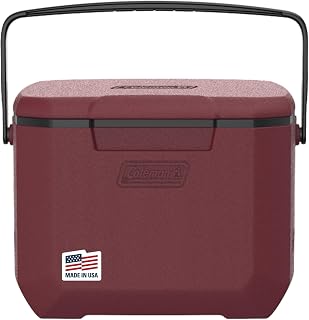


As an Amazon Associate we earn from qualifying purchases at no extra cost to you. Product prices and availability are accurate as of the date shown and are subject to change.
By Jake Thompson, gear writer for Roger Bacon Outdoors.
🛒 Best Price Today on Amazon
Prime members get fast, free shipping on everything above, plus member-only deals. New members get a 30-day free trial — cancel anytime.
How Ice Retention Is Measured in a Small Ice Chest Cooler
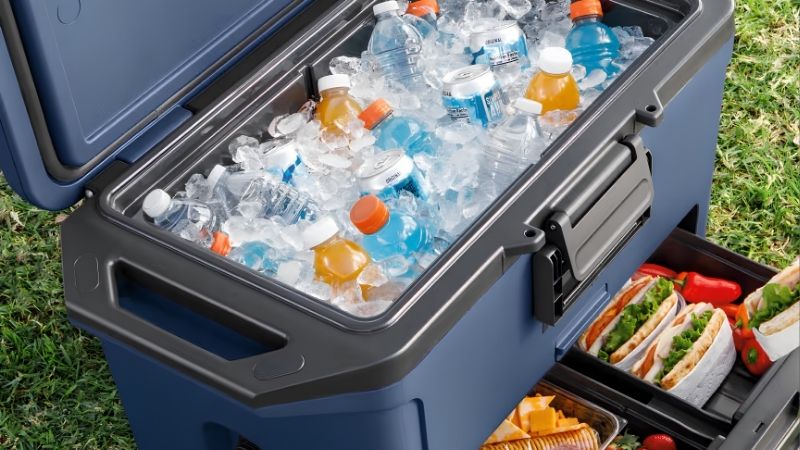
Every brand quotes a retention figure and almost none of them test the same way. Understanding the three variables behind those numbers tells you which claims to trust, and it explains why the best small ice chest cooler on paper sometimes disappoints on an actual Saturday at the lake.
The Test Conditions Behind the Numbers
Pelican states plainly that its published retention figures come from testing in a temperature-controlled chamber at 90°F with forced air circulation, loaded to capacity with commercial cubed ice, and that real performance varies with sun, wind, ice type and how often the lid opens. Igloo quotes four days at 90°F for the BMX 25.
None of those conditions match a cooler riding in a truck bed. Independent testing that ran probes inside four 20-quart-class coolers for 96 hours found the Yeti Roadie 24 led the group but only by roughly five hours, or about 8%, over the far cheaper Igloo BMX 25. Treat quoted figures as a ranking, not a promise.
Wall Thickness and Moulding Method
Rotomoulded shells are formed as one piece and pressure-filled with foam, which is why RTIC can quote walls up to three inches thick on its 20 QT. Blow-moulded builds like the Igloo BMX 25 and injection-moulded ones like Pelican’s personal range use thinner walls and weigh far less as a result.
That thickness trade-off is the whole argument. A rotomoulded compact typically holds ice around two days in normal use and up to four when pre-chilled and packed full. Lighter builds sit closer to 36 hours, which is still enough for a weekend if you top up the ice on day two.
Gaskets, Latches and Where Cold Escapes
The seal matters as much as the foam, and it is often what separates a best small ice chest cooler from a merely insulated box. Yeti uses a freezer-quality ColdLock gasket with an InterLock lid, and Pelican fits a freezer-gasketed lid on its 14QT. The Igloo BMX 25 has no airtight seal at all.
Drainage is the other overlooked detail. A drain plug lets you dump meltwater without tipping a loaded box, and meltwater sitting around your food accelerates the rest of the melt. The current Yeti Roadie 24 has no drain plug, while the RTIC 20 QT and Igloo BMX 25 both include one.
Best Small Ice Chest Cooler Picks From 14 to 25 Quarts
Five hard-sided models covering budget through premium. The best small ice chest cooler for a single beach day is not the one for a three-day fishing trip, so read the retention notes alongside the weight figures. All specifications are manufacturer-published unless noted as independent testing.
| Model | Capacity | Empty weight | Retention claim | Seal / drain |
|---|---|---|---|---|
| Igloo BMX 25 | 25 qt / 37 cans | approx. 11 lb | 4 days at 90°F | No gasket, drain plug |
| Yeti Roadie 24 | approx. 24 qt / 18 cans | 13 lb 2 oz | 2 days typical, up to 4 pre-chilled | ColdLock gasket, no drain |
| RTIC 20 QT Hard Cooler | approx. 22 qt / 24 cans | 17.5-19 lb | Walls up to 3 in | Gasketed, drain plug |
| Orca 20 Quart | 20 qt | 18 lb | Rotomoulded, bear-resistant certified | Gasketed lid |
| Pelican 14QT Personal | 14 qt (13.25 L) | 8.3 lb | approx. 36 hours at 2:1 | Freezer-gasketed lid |
Igloo BMX 25 – Best Value per Ice Hour
Twenty-five quarts, 37 twelve-ounce cans and roughly 11 pounds empty, in a blow-moulded shell with extra-thick foam walls and a rated four days of ice at 90°F. Exterior dimensions are about 20 x 13.25 x 15.7 inches, and it includes rubberised T-latches, stainless-reinforced handle, tie-down points and a moulded fish ruler.
Independent testing put it last of four in the 20 to 25-quart class, but only about 8% behind the Yeti at a fraction of the price. The real weakness is the absence of an airtight gasket, and the rubber latches can catch against your leg if you carry it facing the wrong way.
Yeti Roadie 24 – Longest Hold in the Class
Thirteen pounds two ounces empty and around 18 cans at the two-to-one ice ratio Yeti recommends. PermaFrost pressure-injected insulation, a freezer-quality ColdLock gasket and the InterLock lid system deliver roughly two days of ice in ordinary summer use, extending toward four when pre-chilled and kept shaded.
It also stands tall enough for a wine bottle upright, which the wider RTIC cannot manage. The drawbacks are a poor can-per-quart ratio compared with the Igloo, no drain plug on the current version, and no bear certification, which rules it out of some regulated campgrounds.
RTIC 20 QT Hard Cooler – Thickest Walls per Dollar
Labelled 20 quarts but measuring closer to 22, this one carries 24 cans or 25 pounds of ice behind walls quoted up to three inches thick. A stainless steel handle locks upright for one-handed carrying, and unlike the Yeti it includes a drain plug for emptying meltwater without tipping the box.
The cost is mass. At 17.5 to 19 pounds empty it is four to six pounds heavier than the Roadie for similar space, and loaded with 24 cans it approaches 40 pounds. It is also too short for bottles standing upright, which matters at a picnic more than on a boat.
Orca 20 Quart – The Regulated Campground Option
Eighteen pounds empty, rotomoulded, and certified bear-resistant with the required locks sold separately. That certification is what allows it into campgrounds and parks where bear-resistant food storage is mandatory, which neither the Roadie 24 nor the RTIC 20 QT can claim on their spec sheets.
A lifetime warranty against manufacturer defects supports the price, which sits only slightly below the Yeti. The trade-off is five extra pounds for that certification, so unless the regulations where you camp actually require it, the value argument is weaker than the feature list suggests.
Pelican 14QT Personal – Lightest Genuine Ice Chest
At 8.3 pounds and 18 x 11.5 x 13 inches externally, this holds a six-pack plus ice or lunch plus two one-pound ice blocks. Walls are 1.5 inches of polyurethane behind a polypropylene body with a freezer-gasketed lid, and Pelican rates it at roughly 36 hours at a two-to-one ratio.
Features are unusually good for the size, including a gasketed dry box in the lid, a removable tray, cup holders and a magnetic bottle opener. Capacity is the obvious ceiling, and the warranty runs three years rather than the lifetime cover Pelican puts on its larger Elite line.
What Tariffs and Hunting Season Mean for Cooler Prices
Two things affect what a best small ice chest cooler costs right now. Import duties have already moved pricing across outdoor hard goods this year, and the autumn hunting season creates a second demand peak just as summer stock is running down at most retailers.
Insulation Foam Is a Tariff-Exposed Material
Outdoor Industry Association survey work indicates 84% of member businesses expect to be affected by new tariffs, with costs rising roughly 7.7% overall. Specialised foams are reported up 10 to 15%, and foam is literally what fills a cooler wall, so this category is more exposed than most.
Steel and aluminium duties reach the hardware too: hinges, kick plates, reinforced handles and latch pins. Brands have said openly that quoted prices are estimates while supply chains settle, which weakens the usual habit of waiting for a better number later in the year.
Hunting Season Reshapes Demand From September
Peak hunting runs September through November, and compact ice chests get bought alongside it for hauling drinks, lunch and small game. Buying before the season opens means you can test how it fits behind the seat and how it holds ice on a warm day, rather than finding out in the field.
Early season is also when stock depth is best. By mid-season the popular capacities in the 20 to 25-quart bracket thin out, and what remains is often a size above or below what you actually wanted. That is a poor way to choose a box you expect to keep for a decade.
Buy the Right Size Once
With inflation near 4.2% and an estimated tariff burden of about $1,600 per US household in 2026, replacing gear repeatedly is harder to justify. A rotomoulded compact that survives ten seasons works out cheaper per year than a thin-walled box replaced every second summer.
Warranty terms feed into the same calculation. Orca’s lifetime cover against defects and Pelican’s three-year term on the 14QT are worth more while replacement costs climb, so read the coverage as part of the price rather than as marketing printed on the carton.
Frequently Asked Questions
These four questions cover what readers ask most about compact hard coolers. All answers assume normal summer conditions, a two-to-one ice-to-contents ratio by volume, and a cooler kept in shade rather than sitting in direct sun on an open truck bed all afternoon.
How long does the best small ice chest cooler really keep ice?
Two days is realistic for a rotomoulded compact in ordinary summer use, stretching to around four when pre-chilled, packed full and shaded. Lighter blow-moulded and personal models sit nearer 36 hours. Frequent lid opening costs more retention than any difference between the brands here.
Does pre-chilling actually make a difference?
A large one. Any best small ice chest cooler that has been sitting in a hot garage spends its first several hours melting ice simply to cool its own walls. Chilling it overnight with a sacrificial bag of ice, then dumping that and loading fresh, is the cheapest retention upgrade available.
Block ice or cubed ice?
Block ice melts more slowly because it has less surface area, so use it as the base layer and cubed ice to fill gaps around contents. Manufacturer retention testing is generally run with commercial cubed ice, which means block ice can beat the published figures in practice.
Is a gasket worth paying for?
Yes, and it is the clearest dividing line in this category. The Igloo BMX 25 has thick walls but no airtight seal, and that is where it loses ground to gasketed rivals. If your trips regularly run past 24 hours, a freezer-grade gasket matters more than an extra half-inch of foam.
See More:
- Best Small Cooler: 5 Compact Ice Chests Ranked by Weight
- Best Four Man Tent: 5 Picks by Floor Area, Peak and Weight
- Best Rated Evaporative Cooler: 5 Picks Sized by CFM and Room
Final Thoughts
The best small ice chest cooler is the one whose retention matches your trip length without punishing you on carry weight. The Igloo BMX 25 wins on value per ice hour, the Roadie 24 on outright hold, the RTIC on wall thickness, and the Pelican 14QT on portability. Pre-chill whichever you buy.
Write Your Review
No reviews yet. Be the first to share your experience!