Our Top Picks
 Garmin LiveScope™ Plus Lithium-ion Ice Fishing Bundle13.8 x 12.2 x 13 inches22.5 poundsCheck on Amazon

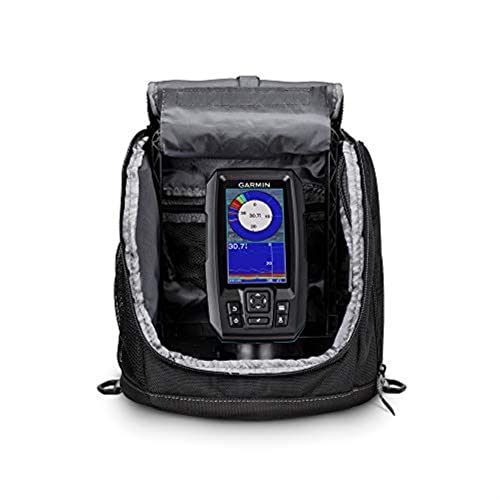


Ice fishing electronics fall into three families, and the right choice depends on how you fish. Mechanical flashers from makers such as Vexilar and MarCum paint sonar returns on a circular dial of colored lights with no processing delay. LCD graph units from Humminbird and Garmin draw a scrolling sonar picture, add GPS mapping, and record the bottom you have already covered. Forward-facing live sonar, led by Garmin LiveScope, shows fish moving in real time around the hole. All three read the same water, but they suit different budgets, species, and patience for menus.
The five units below cover each family with gear that ships as a complete ice kit: transducer, battery, charger, and a case or shuttle included. Every pick is a current model from an established marine electronics brand, built to work through an ice hole rather than adapted from a boat.
As an Amazon Associate, we earn from qualifying purchases.
Quick answer
For most hard-water anglers, the Humminbird ICE HELIX 7 All-Season is the most complete pick: a bright 7-inch CHIRP graph with GPS mapping, an ice transducer and a lithium shuttle, plus open-water parts for summer. Traditionalists should take the MarCum M5LR flasher, while the Garmin LiveScope Plus bundle is the premium live-sonar step up.
Humminbird ICE HELIX 7 CHIRP GPS G4 All-Season
The ICE HELIX 7 All-Season (model 411760-1) is the benchmark LCD ice unit, and the one to beat for anglers who want mapping as much as sonar. Its 7-inch HD display runs 1024 by 600 resolution with strong brightness for glare on open ice, and Dual Spectrum CHIRP sonar separates targets down to three-quarter inch, so a small jig shows apart from the fish rising to meet it. Six CHIRP interference rejection settings keep the screen clean when nearby anglers run their own units, and split-screen views let you watch the flasher-style display and the scrolling 2D history at once.
AutoChart Live Ice builds a depth map of the spot you are fishing as you drill and move, while Jig Charge Mode adds glow to compatible jigging lures so they show brighter on screen. Built-in GPS with Humminbird Basemap handles waypoint marking out of the box, and the unit accepts LakeMaster and Navionics mapping cards for detailed lake charts. The kit centers on a premium shuttle carrying a 15Ah lithium battery with two USB ports and a battery gauge, the XI 9 1521 ice transducer, and a charger. Uniquely here, the box also includes a transom-mount transducer and gimbal bracket, so the same head unit moves to a boat when the ice leaves. As a single year-round electronics purchase, it is hard to fault.
Garmin Striker Plus 4 Ice Fishing Bundle
The Striker Plus 4 Ice Fishing Bundle (model 010-01870-30) is the compact, lower-cost route into GPS-equipped ice sonar. The 4.3-inch display is small but sharp for its class, and the unit pairs traditional CHIRP sonar with a Dual Beam-IF ice transducer that hangs in the hole on the included foam float. Everything arrives in one box: fish finder, transducer, portable bag, rechargeable battery, and charger.
Its standout feature at this size is Quickdraw Contours. As you fish, the unit records the bottom and builds your own contour map with one-foot detail, storing surveys over time. Waypoint marking through the built-in GPS lets you return to the exact hole that produced last weekend, and the scrolling sonar view keeps a history of fish that inspected a bait and drifted away. The trade-offs are the small screen, which crowds split views, and the absence of the preloaded lake mapping found on larger Garmin units. For anglers stepping up from a basic flasher, or anyone who wants a light second unit for hole-hopping, it covers the essentials well.
MarCum MX-7GPS Lithium Equipped GPS Sonar System
The MX-7GPS (model 850013782048) is MarCum’s answer to the graph units: a digital sonar built on flasher thinking, with a 7-inch True-Time LCD that reaches up to 1,000 nits of brightness. It drives a dual-beam transducer with switchable 8-degree and 20-degree cone angles, half-inch target separation, and a 300-foot depth range, which makes it the deepest-reading unit in this group and a genuine option for lake trout water. Patented 12-setting interference rejection and a patented movable zoom that can be placed anywhere in the water column carry over from MarCum’s flasher line, and the display can mimic a traditional flasher dial for anglers raised on one.
What separates it from the M5LR below is the built-in GPS with Navionics basemaps preloaded, so productive holes, weed edges, and travel routes can be marked and revisited without a second device. Power comes from a Brute 12-volt 10Ah LiFePO4 lithium battery with a 3-amp rapid charger, packed in a deluxe padded soft pack, and the system is made in the USA. It costs more than a plain flasher and its menus take a few trips to learn, but for MarCum target separation plus mapping in one shuttle, nothing else here offers both.
MarCum M5LR Flasher System
The M5LR is the purist’s pick: a three-color mechanical-style flasher with no graph, no GPS, and no mapping, built entirely around instant feedback. Its TrueColor display uses brushless MBC lighting to paint returns in red, orange, and green, where color and thickness tell you whether a mark is bottom, weed, bait, or a fish closing on your jig. With 2,500 watts of peak-to-peak power, a dual-beam 8-degree and 20-degree ice transducer, and SuperFine Line technology holding three-quarter-inch target separation through the whole water column, it resolves small panfish jigs better than many graph units manage.
MarCum’s patented movable zoom can be positioned anywhere in the column rather than locked to the bottom, and a split-screen bottom-lock zoom is available when fish hug the floor. Twelve-step interference rejection keeps the dial readable in a crowded shelter, and selectable depth ranges run to 160 feet. A Brute 12-volt 10Ah LiFePO4 battery cuts real weight versus older sealed lead-acid packs, and it rides in the padded Roamer case under a two-year system warranty. If your fishing is about watching a jig and a fish meet in real time, and maps hold no appeal, this is the most refined version of the classic flasher formula.
Garmin LiveScope Plus Ice Fishing Bundle LI
The LiveScope Plus Ice Fishing Bundle LI (model 010-02688-35) sits in a different league from everything above. Instead of looking straight down, its LVS34-IF transducer and GLS 10 sonar black box deliver live, moving sonar images: LiveVü Forward shows fish and structure ahead of the hole so you can decide where to drill next, and LiveVü Down watches the water directly below in real time. You see fish swim, turn, and refuse a bait, which no flasher or conventional graph can show. The Plus generation sharpens resolution and target separation over the original LiveScope system, with cleaner images and fewer dead zones.
The bundle pairs the sonar with an ECHOMAP UHD2 93sv, a 9-inch touchscreen chartplotter with Garmin Navionics+ maps for U.S. inland waters preloaded, plus a lithium battery, an ice pole for the transducer, and a portable carrying bag. The honest costs are weight, setup time at each hole, and a price class far above the other four picks. It earns its place for dedicated anglers who scout structure, chase suspended fish, or fish new water constantly. Casual weekend anglers will catch fish happily with any unit above this one.
How to choose
Start with the display family, because it decides everything else. A mechanical flasher like the M5LR gives the fastest, simplest read of jig and fish directly under the hole, and many panfish and walleye anglers never want more. An LCD graph adds history, split screens, and GPS mapping, which pays off on large lakes and unfamiliar water. Live sonar costs the most and demands the most setup, but it is the only technology that scouts water around the hole before you commit to it.
Next, match the transducer to your depths and species. Narrow cone angles around 8 or 9 degrees separate targets in deep water and reduce dead ground on slopes; wider 20-degree cones cover more water in the shallows but blend close targets together. Dual-beam units that switch between the two cover both cases. Target separation figures matter for small jigs: three-quarter inch or better keeps a tiny tungsten jig visible as its own mark.
Then weigh the power package. Lithium batteries, whether the Humminbird 15Ah pack or MarCum’s 10Ah Brute cells, weigh far less than sealed lead-acid and hold up better across a long cold day. Check what is actually in the box, since a complete kit with battery, charger, transducer, and case included is worth more than a bare head unit. Whatever pack you run, charge it only with the charger supplied for that battery, and store it partly charged indoors between trips. Finally, decide whether summer use matters: the Humminbird All-Season kit and the Garmin LiveScope bundle both convert to open water, which spreads their cost across two seasons.
Who should skip
Skip ice-specific electronics entirely if you fish two or three casual days a season on a small, familiar lake; a hand auger, a handful of jigs, and local knowledge will serve you as well, and the money is better spent on warm boots and a sound shelter. Skip the premium live sonar tier if you mostly fish from a permanent house over a known spot, since forward-looking sonar earns its keep by scouting, and there is little to scout from a fixed hole. Skip GPS graph units if you know you will never open a map; a flasher does the under-hole job with less weight and fewer menus. And skip any unit whose kit leaves out the battery or transducer unless you have priced those parts first, because the headline saving usually disappears at checkout.
FAQ
What is the difference between a flasher and a fish finder on ice?
A flasher shows sonar returns instantly on a circular dial of colored lights, with no history: you see your jig and any fish in the cone right now. A fish finder graph draws the same returns as a scrolling picture, which adds history and split-screen views, and usually GPS. Flashers react faster; graphs remember more.
Do I need GPS on an ice fishing sonar?
GPS earns its place on big or unfamiliar lakes, where marking a productive hole, a weed edge, or a safe travel route saves real time on the next trip. On a small lake you know well, GPS adds cost and weight without changing what you catch, and a plain flasher covers the fishing itself.
How long will the battery last on a day on the ice?
The lithium packs in these kits are sized for a full day of fishing and usually well beyond, but cold, screen brightness, and sonar output all draw them down faster. Charge fully the night before, keep brightness no higher than conditions require, and store the battery warm between trips to preserve its capacity.
Can I use an ice fishing fish finder on a boat in summer?
Two of these kits are designed for it: the Humminbird All-Season package includes a transom transducer and gimbal mount, and the Garmin LiveScope bundle’s chartplotter is a full boat unit. The flashers and the Striker ice bundle are ice-only as packaged, though their head units can sometimes accept separate open-water transducers.
Final verdict
For the widest range of hard-water fishing, the Humminbird ICE HELIX 7 All-Season is the safest single purchase: detailed CHIRP sonar, real mapping, a strong lithium shuttle, and a genuine summer conversion in one box. Anglers loyal to the flasher format should buy the MarCum M5LR, while the MX-7GPS suits those who want MarCum separation with GPS added. The Garmin Striker Plus 4 bundle is the sensible entry point with mapping, and the LiveScope Plus bundle is the aspirational scout for anglers who fish new water hard. Match the display family to your style first, and any of the five will read the water under your hole faithfully.
Product and ASIN Reference
| Product | ASIN |
|---|---|
| Humminbird ICE HELIX 7 CHIRP GPS G4 All-Season (411760-1) | B09FQZLKRB |
| Garmin Striker Plus 4 Ice Fishing Bundle (010-01870-30) | B08HPVW5KW |
| MarCum MX-7GPS Lithium Equipped GPS Sonar System (850013782048) | B08JG83XQX |
| MarCum M5LR Flasher System | B0CCPML53J |
| Garmin LiveScope Plus Ice Fishing Bundle LI (010-02688-35) | B0C9MX7C3M |
FAQ
What is the difference between a flasher and a fish finder on ice?
Do I need GPS on an ice fishing sonar?
How long will the battery last on a day on the ice?
Can I use an ice fishing fish finder on a boat in summer?
More from Amazon
Programs that pair well with the guide above. Offers and eligibility are set by Amazon and may change.
Free shipping on eligible items, Prime Video and more. Eligible new members can start with a free trial.
Start a Prime free trialA Prime membership for ages 18-24 with a trial period. Eligibility is set by Amazon.
See Prime for Young AdultsAudiobooks and podcasts to listen to on the go. Eligible new members can start with a free trial.
Try Audible freeAd-free music streaming. Eligible new subscribers can start with a free trial.
Try Music Unlimited freeAs an Amazon Associate we earn from qualifying purchases.