Key takeaways
- Rider and cargo weight: More mass requires more energy during acceleration and climbing.
- Hills: A short steep climb can consume more battery than several miles of flat travel.
- Speed: Wind resistance rises sharply as speed increases.
- Temperature: Cold batteries normally provide less energy until warmed.
- Stops and starts: Urban intersections use more power than a steady cruise.
- Tire pressure: Soft pneumatic tires increase rolling resistance and can damage the rim.
The best electric scooters for most commuters are the Segway Ninebot Max G2 for range and comfort, the NIU KQi3 Max for value and stable everyday riding, and a lightweight carbon-fiber or compact commuter scooter for stairs and transit connections.
Quick picks by riding situation
| Rider situation | Best fit | Why it fits | Main compromise |
|---|---|---|---|
| Frequent commuting, rough pavement, moderate hills | Segway Ninebot Max G2 | Suspension, tubeless tires, turn signals, strong weather-resistant design | About 44 lb; too heavy for frequent stair carrying |
| Value-focused daily commuting | NIU KQi3 Max | Large battery, wide deck, hydraulic-disc front brake and dependable road manners | No suspension, so potholes require more care |
| Stairs, trains, offices and short trips | Lightweight compact commuter scooter | Usually 26–31 lb and easier to lift or store under a desk | Smaller batteries and firmer rides limit practical range |
| Maximum traction on hills | Dual-motor commuter scooter | Two motors reduce strain on climbs and improve starts on loose surfaces | Higher price, greater weight and faster battery consumption |
| Occasional recreation and neighborhood riding | Single-motor scooter with 10-inch pneumatic or tubeless tires | Lower purchase and maintenance cost while remaining comfortable | Usually slower on steep hills than a dual-motor model |
What separates the best electric scooters from merely adequate ones?
Look beyond the advertised top speed. For commuting, battery size, usable range, braking, tire design, deck space and carrying weight matter more than a headline speed that you may rarely reach. A scooter advertised at 25 miles of range may deliver 15–20 miles in ordinary conditions, while a rider facing hills, cold weather or frequent stops may see less.

Hiboy S2 Electric Scooter - 8.5" Solid Tires - Up to 17 Miles Long-Range
Included for 'Best Electric Scooters for Commuting and Recreation' because the listing specifies 8.5" Solid Tires and Up to 17 Miles Long-Range, details this guide uses to compare options.
View on Amazon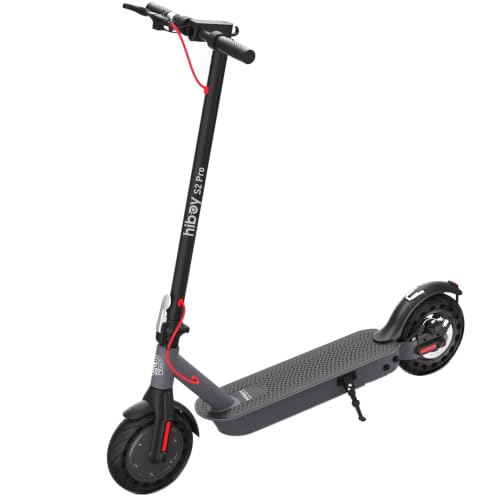
Hiboy S2 Pro Electric Scooter, 500W Motor, 10" Solid Tires, 25 Miles Range
Included for 'Best Electric Scooters for Commuting and Recreation' because the listing specifies 500W Motor and 10" Solid Tires, details this guide uses to compare options.
View on Amazon
Phantomgogo A2 Electric Scooter for Adults, Folding Commuter E Scooter
Included for 'Best Electric Scooters for Commuting and Recreation' because the listing specifies Folding Commuter E Scooter, details this guide uses to compare options.
View on Amazon
Aovowheel Electric Scooter for Adults, Folding E Scooter Commuting Scooters
Included for 'Best Electric Scooters for Commuting and Recreation' because the listing specifies Folding E Scooter Commuting Scooters, details this guide uses to compare options.
View on AmazonReal-world range: calculate a buffer
Manufacturers generally measure maximum range with a light rider, smooth pavement, modest speed, warm temperatures and little wind. Your usable range is affected by:
- Rider and cargo weight: More mass requires more energy during acceleration and climbing.
- Hills: A short steep climb can consume more battery than several miles of flat travel.
- Speed: Wind resistance rises sharply as speed increases.
- Temperature: Cold batteries normally provide less energy until warmed.
- Stops and starts: Urban intersections use more power than a steady cruise.
- Tire pressure: Soft pneumatic tires increase rolling resistance and can damage the rim.
A practical buying calculation is to multiply the claimed range by 0.6 for a conservative everyday estimate. If your round trip is 10 miles, choose a scooter advertised for at least 17 miles: 17 × 0.6 is approximately 10 miles. For winter riding, hills or a heavy load, use a 0.5 factor instead.
Battery capacity in watt-hours is a useful comparison. The NIU KQi3 Max has a battery of about 608 Wh, while the Segway Ninebot Max G2 uses about 551 Wh. The NIU therefore has more stored energy on paper, but range also depends on motor tuning, tires, rider weight and speed. Do not compare watt-hours without considering the rest of the scooter.
Head-to-head: Segway Ninebot Max G2 versus NIU KQi3 Max
| Specification | Segway Ninebot Max G2 | NIU KQi3 Max |
|---|---|---|
| Motor rating | 450 W nominal, up to 1,000 W peak | 450 W nominal, up to about 900 W peak |
| Battery | 551 Wh | 608.4 Wh |
| Advertised maximum range | Up to about 43 miles under test conditions | Up to about 40 miles under test conditions |
| Practical commuting range | Roughly 22–30 miles for many riders | Roughly 22–30 miles for many riders |
| Weight | About 43.7 lb | About 40.6 lb |
| Rider weight limit | Up to about 265 lb | Up to about 265 lb |
| Tires | 10-inch self-sealing tubeless pneumatic | 9.5-inch tubeless pneumatic |
| Suspension | Front and rear | None |
| Folded dimensions | Approximately 44.1 × 19.2 × 22.1 in | Approximately 45.5 × 20.1 × 22.4 in |
| Typical market price | About $700–$1,000 | About $500–$800 |
Choose the Max G2 when broken pavement, expansion joints and comfort are priorities. Its suspension also helps keep the tires planted, although it does not make potholes safe to hit at speed. Choose the KQi3 Max when you want similar battery capacity and a lower typical price, and most of your route is smooth enough that suspension is not essential.
Motor power and hill performance
Motor wattage is useful but incomplete. Nominal wattage describes sustained output; peak wattage describes short bursts. A scooter with a higher peak number is not automatically better on a long hill. Controller current, battery voltage, rider weight, tire grip and thermal management all affect climbing.
For mostly flat commuting, a 300–500 W nominal single motor is usually sufficient. Around 450 W gives a useful margin for heavier riders and moderate inclines. Steep hills, frequent cargo or a rider near the weight limit favor a dual-motor scooter, but expect less range and more expense. A scooter at its weight limit will climb more slowly, and some models may require a running start or brief pushing on steep grades.
Check the manufacturer’s stated maximum incline, but treat it as an optimistic ceiling. A 15% grade is about 8.5 degrees; a 20% grade is about 11.3 degrees. Wet leaves, gravel and worn tires can reduce traction before motor power becomes the limiting factor.
Folding size, weight and the daily carry test
Measure the actual storage location before buying. A scooter that fits a car trunk may not fit beneath an office desk, and a folded length near 45 inches can be awkward in a crowded train. Also measure doorways and elevator space.
Weight is often the decisive specification. A 44-pound scooter may be manageable for a short lift, but carrying it up two flights every day becomes a meaningful burden. If you must carry it regularly, prioritize a model around 30 pounds or less, even if that means accepting a smaller battery, narrower deck and lower hill performance. Check whether the folding latch locks securely and whether the stem has a comfortable carrying point.
Braking systems: what to choose
- Mechanical disc brakes: A strong all-purpose choice with predictable stopping and relatively simple adjustment. Cable tension and pads eventually need service.
- Hydraulic disc brakes: Smooth, powerful and low-effort, particularly useful for heavier riders or repeated downhill braking. They cost more to repair.
- Electronic or regenerative braking: Convenient for speed control and can reduce wear on the physical brake, but it should not be your only dependable stopping system.
- Drum brakes: Enclosed against rain and dirt and often low-maintenance, though they can feel less immediate and may be harder to service.
For a daily commuter, look for a scooter with a physical brake plus electronic braking, a bright rear brake light and a control layout that allows gradual application. Test braking in an empty area before entering traffic; maximum braking force can lock a tire or unsettle a short-wheelbase scooter.
Ownership realities: what wears out first?
Tires, brake pads, folding-latch hardware and charging cables usually need attention before the motor. Pneumatic tires provide a softer ride but can puncture; tubeless self-sealing tires reduce puncture risk but are not maintenance-free. Check pressure at least weekly when riding frequently. Solid tires avoid flats but transmit more vibration and can make braking less comfortable on rough pavement.
Keep the charging port closed, avoid pressure-washing the deck, and wipe away road salt and grit after wet rides. Do not charge a hot or visibly damaged battery. Store the scooter in a dry place, and if it will sit unused for weeks, leave the battery partially charged rather than empty. Follow the manufacturer’s charging and storage instructions.
Inspect the stem for play, tighten loose fasteners with the correct tools, and check brake-pad thickness regularly. Do not exceed the stated rider limit: the limit includes a backpack, groceries and other cargo, and exceeding it affects acceleration, braking distance and structural wear.
Bottom line
The Segway Ninebot Max G2 is the strongest all-around choice when comfort, weather resistance and rough-road ability justify its weight. The NIU KQi3 Max is a compelling value for smooth-to-moderate urban routes and gives up suspension to deliver a large battery at a lower market range. For riders who carry a scooter into buildings or onto transit every day, a lighter compact model is the better decision—even if its advertised range and hill performance are lower.