
Key takeaways
What's inside
Best LED headlamp bulbs have made the old incandescent debate irrelevant, but the output figures printed on the box still tell you almost nothing useful. This guide covers lumens versus beam distance, battery systems, and head comfort, then compares five headlamps that hold up on real trails after dark.
As an Amazon Associate we earn from qualifying purchases at no extra cost to you. Product prices and availability are accurate as of the date shown and are subject to change.


Check Price on Amazon →



As an Amazon Associate we earn from qualifying purchases at no extra cost to you. Product prices and availability are accurate as of the date shown and are subject to change.
By Jake Thompson, gear writer at Roger Bacon Outdoors.
🛒 Best Price Today on Amazon
Prime members get fast, free shipping on everything above, plus member-only deals. New members get a 30-day free trial — cancel anytime.
How to Choose the Best LED Headlamp Bulbs
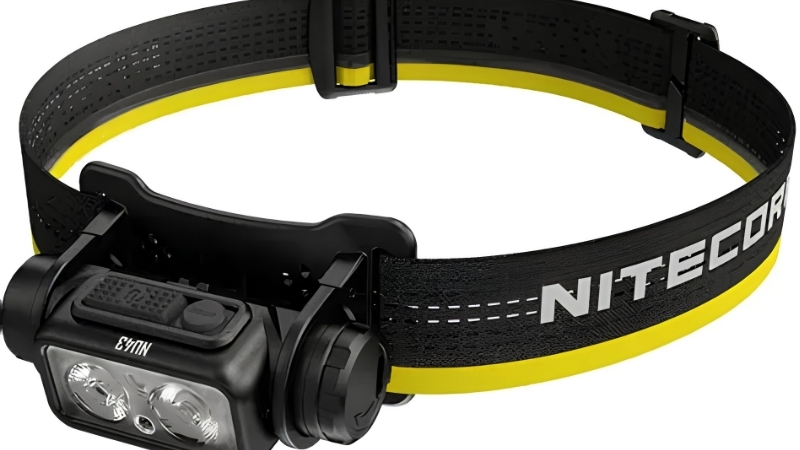
Headlamp marketing leads with a peak lumen number most models sustain for only a few minutes before stepping down. What matters on trail is how far the beam throws, how long the useful setting lasts, and whether the lamp stays put when you move. Three checks separate the best LED headlamp bulbs from the ones that disappoint.
Lumens, Beam Distance, and Emitter Type
Peak lumens describe a boost mode that typically runs three to ten minutes before thermal step-down kicks in. Look instead at the regulated output and its rated runtime, because that is the setting you will actually live with. For camp chores, 50 to 100 lumens is plenty; night hiking wants 200 to 400.
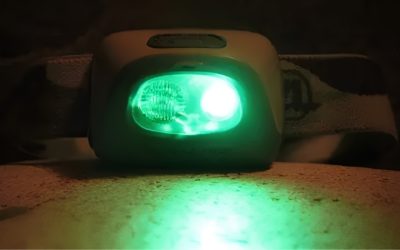
Emitter choice shapes the beam. A single high-output LED behind a reflector throws a tight spot for picking out trail markers, while diffused or COB emitters flood a wide area for cooking and tent work. The best LED headlamp bulbs combine both, with a red mode for preserving night vision in camp.
Battery System: Rechargeable, AAA, or Hybrid
Sealed rechargeable packs are lighter and cheaper to run, but a dead cell on day four of a trip is a genuine problem without a power bank. Alkaline AAA cells stay available anywhere and handle cold better than most people expect, at the cost of extra weight on your forehead.
Hybrid designs solve this by taking a rechargeable pack for everyday use and falling back to AAA cells when you run out. For multi-day trips well beyond a power source, that flexibility is worth a small price premium over a sealed-battery lamp that leaves you with nothing at all.
Weight, Waterproofing, and Head Comfort
Anything past roughly 100 grams starts to feel like weight on your forehead after a few hours, and rear-mounted battery packs shift that load without actually reducing it. Front-heavy lamps also bounce when you run, which matters if any of your miles happen in the dark at pace.
IP ratings tell you what the housing survives. IPX4 handles rain, IPX7 covers brief submersion, and IPX8 handles sustained immersion. For hunting and shoulder-season trekking where a downpour is a certainty rather than a risk, IPX7 or better is the sensible floor to work from.
Top Picks: Best LED Headlamp Bulbs
The best LED headlamp bulbs for camp chores are rarely the right choice for a pre-dawn approach, so these five span both ends. Output and runtime figures come from manufacturer specifications and shift with battery condition and temperature, so treat them as comparison points rather than promises.
| Model | Max Output | Battery | Approx. Weight | Best For |
|---|---|---|---|---|
| Black Diamond Spot 400 | 400 lumens | 3x AAA | ~86 g | All-around use |
| Petzl Actik Core | 600 lumens | Rechargeable + AAA | ~88 g | Multi-day trips |
| Nitecore NU25 UL | 400 lumens | Built-in Li-ion | ~45 g | Ultralight hiking |
| Fenix HM65R-T | 1500 lumens | 18650 removable | ~124 g | Night running, caving |
| Foxelli MX20 | ~165 lumens | 3x AAA | ~90 g | Budget and spares |
1. Black Diamond Spot 400 – Best All-Around Pick
This is the default recommendation for good reason. The Spot 400 pairs spot and flood beams with red, green, and blue night vision modes, runs on three AAA cells, and carries an IPX8 rating that survives sustained immersion. At around 86 grams with batteries it stays comfortable for hours.
The touch-sensitive brightness slider is fiddly with gloves on and occasionally triggers inside a pack. Regulated output also drops noticeably as alkaline cells drain toward empty. For one headlamp covering camp, trail, and bad weather, it still does more things well than anything near the price.
2. Petzl Actik Core – Best Hybrid Battery System
Petzl’s hybrid concept is the smartest answer to the battery question on this list. The Actik Core ships with a rechargeable CORE pack for everyday use, and the same housing accepts three AAA cells when you are days from an outlet. Peak output reaches 600 lumens across mixed beams.
The IPX4 rating handles rain but not immersion, a clear step down from waterproof competitors. The CORE pack also loses capacity over years of charge cycles, as any lithium cell does. For multi-day trips where recharging is uncertain, that fallback option outweighs both drawbacks comfortably.
3. Nitecore NU25 UL – Lightest Option Here
Thru-hikers and anyone auditing grams end up with this one. The UL version strips the NU25 to roughly 45 grams including its battery, less than half what a comparable AAA headlamp weighs, and still delivers up to 400 lumens with a separate red mode for use around camp.
The sealed battery is the trade-off: once it is empty you are carrying a dead lamp unless you packed a power bank and a USB-C cable. The thin headband is also less stable at a running pace. For ultralight backpacking, nothing else here comes close on weight.
4. Fenix HM65R-T – Maximum Output
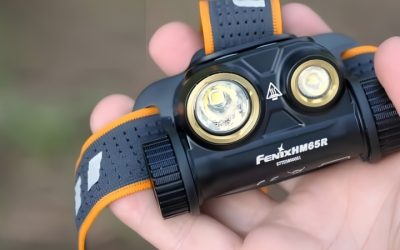
Night runners, cavers, and anyone working in genuine darkness get the most from this lamp. Separate spot and flood LEDs run independently or together, peak output reaches 1500 lumens, and the 18650 cell is user-replaceable, so you can carry a spare battery instead of a power bank.
It is heavier than everything else here, and the magnesium body plus cell is noticeable across a long night. High modes drain the battery quickly and generate real heat in the housing. Buy it if you need serious throw, and skip it if your hardest night task is finding a tent zipper.
5. Foxelli MX20 – Budget and Backup
For a spare in the truck, a lamp for the kids, or a first headlamp that costs less than a tank of fuel, this covers the basics without pretending otherwise. It runs on three AAA cells, offers a red mode alongside white, and the housing shrugs off rain on a wet evening.
Output is modest next to the premium options, and the beam is broad rather than focused, so it suits camp far better than picking out trail markers at distance. Build quality reflects the price paid. As a second lamp or a starting point, it remains honest value.
Tariffs, Darker Evenings, and When to Buy
Headlamps sit at the intersection of two forces moving right now: component costs that have already shifted, and a demand curve that spikes as daylight shrinks. Both are worth understanding before you decide whether to order now or hold out for a discount later in the year.
Component Costs Have Already Moved
An Outdoor Industry Association survey found 84 percent of member businesses expect new tariffs to affect operations, with costs rising roughly 7.7 percent across the category. Aluminum and steel duties feed directly into lamp housings, heat sinks, and the mounting hardware on nearly every model here.
For products in the $30 to $80 range that is a few dollars rather than a dramatic jump, but brands have been unusually direct that any quoted future pricing is an estimate while supply chains settle. Waiting many months on one specific model carries more price risk than it used to.
Hunting Season and Shrinking Daylight
September through November is peak headlamp season, because that is when hunters walk in before first light and hikers finish well after dark. Inventory runs deepest right before that window opens, and rechargeable models in the most popular configurations are the first listings to sell through.
Buying early also gives you time to run a full charge cycle, learn the button sequence in daylight, and confirm the headband holds under a hat or a helmet. Working that out in the dark on opening morning is a poor substitute for ten minutes at the kitchen table.
When Discounts Actually Land
If the need is not immediate, the calendar is predictable. Prime Big Deal Days in mid-October and the Black Friday through Cyber Monday window in late November carry the deepest cuts on outdoor lighting, and Amazon usually runs early deals in the days ahead of each event.
Headlamps are also a common stocking gift, so the popular models thin out before those windows close. Build a wishlist now and track prices, then buy early in the sale rather than holding out for a deeper discount on a lamp that may already be out of stock.
Frequently Asked Questions
A few questions come up every time someone shops for the best LED headlamp bulbs after a decade with an old lamp and finds the market has changed completely. Short answers below.
How many lumens do I actually need?
For camp cooking and tent tasks, 50 to 100 lumens is comfortable. Night hiking on defined trail wants 200 to 400, and technical terrain or running justifies more. Higher peak numbers mostly buy a boost mode you will use briefly, not a brighter default setting.
Are rechargeable headlamps better than AAA?
Rechargeable models are lighter and cheaper over time; AAA models never leave you stranded far from power. Hybrid designs that accept both are the practical compromise for multi-day trips. Choose on trip length and whether recharging will be possible, not on which sounds more modern.
Why does my headlamp dim after a few minutes?
That is thermal step-down, and it is normal behaviour. LEDs at peak output generate more heat than a small housing can shed, so the driver reduces power to protect the emitter. Manufacturers publish regulated runtime alongside peak lumens, and those are the figures worth comparing.
Does cold weather affect battery life?
Considerably. Lithium cells lose capacity below freezing and alkaline cells lose more, sometimes half their rated runtime. Keep spares or a rechargeable pack in an inside pocket where body heat helps, and expect noticeably shorter sessions on cold nights than the packaging suggests.
See More:
- Best trekking sleeping bag
- Best sleeping bag for backpacking
- Best women backpack for work
- Best backpack for backpackers
Final Thoughts
The best LED headlamp bulbs for your kit come down to how far you need to see, how long you need to see it, and whether power will be available along the way. Start with regulated output and rated runtime rather than the peak lumen figure, choose between a rechargeable pack and AAA cells based on trip length, and check the IP rating against the weather you genuinely go out in. Buying ahead of the fall rush gets you the model you want at the price you expected.

Write Your Review
No reviews yet. Be the first to share your experience!