Key takeaways
- A huge lumen claim with no runtime, beam-distance, or test information.
- Runtime listed only for the lowest mode.
- No battery capacity, charging details, or charge indicator.
- An IP claim without the full rating, such as “waterproof” with no IP number.
- A hinge that looks thin or cannot hold several fixed angles.
- A built-in battery with no warranty or replacement policy.
- Product photos showing multiple accessories that are not listed in the box contents.
- A lamp that becomes too hot to hold during ordinary high-mode operation.
What's inside
- Decide These 3 Things First
- Size: Match the Lamp to the Job
- Material: Plastic Is Normal, but Not All Housings Are Equal
- Construction: Read the IP Rating and Controls
- Comfort and Performance: Lumens Are Only One Part of the Beam
- Price Tiers: What $10 to $60 Buys
- Warranty: Protect the Battery and Electronics
- Delivery and Assembly: Check What Arrives in the Box
- Spec Checklist
- Red Flags
- FAQ
A headlamp can look powerful on a product page and still disappoint on a dark trail, in a crawl space, or during a power outage. The most common mistake is treating the biggest lumen number as the best buying signal. Advertised figures such as 99,000 lumens often describe a theoretical LED output rather than the light you will receive continuously in real use. Other frequent mistakes include ignoring beam shape, buying a heavy front-loaded lamp, confusing battery capacity with runtime, and assuming “waterproof” means the lamp can be submerged.
- Decide These 3 Things First
- Size: Match the Lamp to the Job
- Material: Plastic Is Normal, but Not All Housings Are Equal
- Construction: Read the IP Rating and Controls
- Comfort and Performance: Lumens Are Only One Part of the Beam
- Price Tiers: What $10 to $60 Buys
- Warranty: Protect the Battery and Electronics
- Delivery and Assembly: Check What Arrives in the Box
- Spec Checklist
- Red Flags
- FAQ
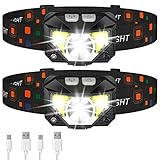
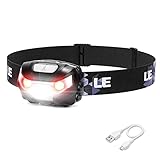
This headlamp buying guide lumens and runtime comparison focuses on the specifications that affect daily use: usable brightness, beam distance, battery behavior, fit, durability, and total cost. Whether you are comparing a low-cost two-pack or a USB-C model from a brand such as Coast, use the same checklist before you buy.
As an Amazon Associate we earn from qualifying purchases at no extra cost to you. Product prices and availability are accurate as of the date shown and are subject to change.


Decide These 3 Things First
- How much light do you actually need? For reading, household repairs, and walking around camp, 100 to 300 lumens is usually sufficient. Trail hiking, running, and general outdoor work are better served by 300 to 600 lumens. Technical work, cycling, search tasks, and fast movement may justify 800 to 1,200 lumens, but only when that output is sustainable and well controlled.
- What runtime and charging method fit your routine? A lamp that runs for 45 hours at its lowest setting may provide only a few hours at high output. Decide whether you prefer a built-in rechargeable battery, replaceable AAA or AA cells, or a dual-power design that can use either.
- How will it be worn? A lightweight lamp with a balanced strap is more comfortable than a brighter model that bounces or presses against your forehead. For running and extended hikes, prioritize weight, stability, and red-light availability before chasing maximum output.
Size: Match the Lamp to the Job
Headlamp size affects comfort, balance, and how much battery capacity the manufacturer can fit into the housing. Compact lamps typically weigh 1.5 to 3 ounces without batteries and are convenient for emergency kits, reading, and short walks. A front housing around 2.5 to 3.5 inches wide and less than 1.5 inches deep usually feels unobtrusive under a cap.
Outdoor models with larger batteries commonly weigh 3 to 5 ounces, while designs with a rear battery pack or separate rear red light may reach 6 to 8 ounces. That extra capacity can support longer runtime, but it also adds cable and strap adjustment. For running, aim for approximately 3 ounces or less at the front. For camping or hands-on work, 4 to 5 ounces is generally a reasonable upper range if the strap is stable.
Look for a tilt mechanism with at least 45 degrees of adjustment. A 90-degree range is more versatile for close-up work, though the hinge should hold its position without drooping. Wide-angle lamps can illuminate a larger area, while a focused beam is more useful for seeing down a trail.
Material: Plastic Is Normal, but Not All Housings Are Equal
Most headlamps use molded ABS or polycarbonate plastic around the light and battery compartment. That is not a drawback by itself: plastic keeps weight down and does not become as cold as metal in winter. A rubberized or textured exterior can improve grip and help protect the lamp from drops.
For occasional household use, a standard plastic housing is adequate. For hiking, hunting, work sites, or repeated outdoor use, look for a lens made from polycarbonate or hardened glass, a protected charging port, and a strap with reinforced attachment points. Aluminum bezels can add impact resistance, but they also increase weight and may transfer heat to the housing during extended high-output use.
Pay attention to the battery door and seals. A door that requires excessive force, has a loose latch, or leaves the charging port exposed is more likely to admit moisture. Materials matter less than how the components fit together.
Construction: Read the IP Rating and Controls
Ingress Protection ratings provide a more useful durability clue than vague claims such as “weatherproof.” IPX4 indicates protection from splashing water. IPX6 means the lamp can withstand powerful water jets, but it is not rated for immersion. IPX7 indicates temporary immersion in up to 1 meter of water under the test conditions. No rating, or an unclear claim such as “water resistant,” deserves caution.
For normal camping and rainy walks, IPX4 is a practical minimum. Choose IPX6 or higher for exposed work, heavy rain, and situations where the lamp may be sprayed. Keep in mind that the rating may apply only when the battery door and charging cover are fully closed.
Controls should be easy to operate with gloves. A large rubber button is preferable to a tiny flush switch. Check whether the lamp has a lockout mode to prevent accidental activation in a backpack. A useful control layout includes low, medium, high, a focused or flood option, and a red mode. A motion sensor can be convenient, but it should be possible to disable it; accidental activation can drain a battery.
Comfort and Performance: Lumens Are Only One Part of the Beam
Lumens measure total visible light output, not how far the beam reaches or how evenly it illuminates the scene. Candela, beam distance, and beam pattern provide more practical information. A narrow beam can project farther with fewer lumens, while a wide flood beam makes nearby rocks, tools, and campsite areas easier to see.
For walking and hiking, a headlamp with a 20- to 40-meter beam distance is suitable for ordinary paths. Fast running or cycling may benefit from approximately 50 to 100 meters, provided the lamp remains stable. For close work, a broad beam and a low setting of 20 to 100 lumens can be more useful than a blinding 1,000-lumen mode.
Runtime should always be connected to brightness. A lamp advertised with 1,200 lumens may list that output for only a short burst, followed by automatic step-down as the LED or battery heats. A more meaningful specification might be 300 lumens for 4 to 6 hours, or 100 lumens for 8 to 12 hours. Treat extremely large claims, including 99,000 lumens in some budget listings, as marketing until the listing provides a credible sustained-output chart.
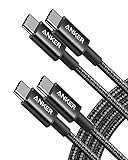
Choose a lamp with a regulated output if possible. Regulation helps maintain consistent brightness as the battery drains. An indicator showing remaining charge is also valuable. A rechargeable lamp should use USB-C when possible and include overcharge, over-discharge, and overheating protection.
Price Tiers: What $10 to $60 Buys
Budget, $10 to $20: Two-packs and basic rechargeable lamps are common in this range. They can be excellent for drawers, guests, occasional camping, and emergency use. Expect simpler controls, less precise battery information, lighter construction, and more variation in advertised brightness. A two-pack around $10 may be a good value if you need spare lamps, but verify that both units include batteries, charging cables, and adjustable straps.
Midrange, $20 to $45: This is the sweet spot for many shoppers. You are more likely to find USB-C charging, multiple beam patterns, a better hinge, charge indicators, and a clearer IP rating. Products advertised around $20 with a 1,500-lumen maximum may offer useful value, but compare their low- and medium-mode runtime rather than relying on the peak number.
Premium, $45 to $80 or more: Premium lamps may add dual-power capability, regulated output, improved optics, stronger straps, magnetic bases, focused beam adjustment, and better service. A model such as the Coast XPH30R, listed around $47, illustrates the category: features such as USB-C charging, a twist-focus beam, and a magnetic base can be more valuable than a larger headline lumen figure.
Warranty: Protect the Battery and Electronics
Look for at least a one-year warranty covering the lamp, charging system, and built-in battery. A two- or three-year warranty is a stronger signal for a more expensive model, particularly when the battery is not user-replaceable. Read the exclusions: water damage, modified charging equipment, physical damage, and normal battery capacity loss may not be covered.
Check whether the manufacturer lists a replacement battery, replacement strap, or replacement charging cable. A built-in lithium battery may gradually lose capacity after several hundred charge cycles; a replaceable-cell design can remain useful longer. Keep receipts and record the purchase date, especially for lamps bought as part of a multi-pack.
Delivery and Assembly: Check What Arrives in the Box
Headlamps require little assembly, but missing accessories can make an inexpensive purchase less convenient. Confirm whether the package includes the head strap, rear strap if applicable, battery, USB-C or other charging cable, and any diffuser or storage case. A two-pack should specify whether the quantity includes two complete lamps or one lamp with two battery options.
Before taking a new lamp outdoors, charge it fully and test every mode. Adjust the strap while wearing the hat or helmet you plan to use. Inspect the charging cover and battery door for a complete seal. If delivery packaging is crushed or the lens is scratched, photograph the condition before use and request a replacement promptly. Avoid charging a damaged lithium-battery lamp.
Spec Checklist
| Spec | Budget | Mid | Premium |
|---|---|---|---|
| Typical price | $10–$20 | $20–$45 | $45–$80+ |
| Useful output range | 50–300 lumens | 100–600 lumens | 100–1,200 lumens |
| Practical high-mode runtime | 1–3 hours | 2–5 hours | 3–8 hours |
| Low-mode runtime | 8–20 hours | 10–30 hours | 20–50 hours |
| Weight | 2–5 oz. | 2.5–5 oz. | 3–8 oz. |
| Charging | USB or AAA/AA | USB-C or rechargeable | USB-C, dual-power, or replaceable battery |
| Water resistance | IPX4 or unclear | IPX4–IPX6 | IPX6–IPX8 |
These are buying ranges, not guarantees. Actual performance depends on battery size, temperature, beam mode, regulation, and the manufacturer’s testing method.
Red Flags
- A huge lumen claim with no runtime, beam-distance, or test information.
- Runtime listed only for the lowest mode.
- No battery capacity, charging details, or charge indicator.
- An IP claim without the full rating, such as “waterproof” with no IP number.
- A hinge that looks thin or cannot hold several fixed angles.
- A built-in battery with no warranty or replacement policy.
- Product photos showing multiple accessories that are not listed in the box contents.
- A lamp that becomes too hot to hold during ordinary high-mode operation.
FAQ
How many lumens should a headlamp have for hiking?
Choose 300 to 600 lumens for most hiking. Use a lower setting for close footing and conserve the highest mode for route finding or poor visibility. A reliable 400-lumen lamp with several hours of runtime can be more useful than a short-lived 1,000-lumen model.
Is a rechargeable headlamp better than one with AAA batteries?
Rechargeable models are convenient and economical for frequent use, especially with USB-C. AAA models are useful for emergency kits and long trips because spare batteries are easy to carry. A dual-power lamp provides the most flexibility but may cost more and weigh slightly more.
What does IPX6 mean on a headlamp?
IPX6 means the lamp is protected against powerful water jets. It does not mean the lamp can be submerged. For rain and wet outdoor work, IPX6 is a strong rating; for intentional immersion, look for an immersion rating such as IPX7 or IPX8.
How long should a headlamp battery last?
For regular camping, target at least 4 hours on a useful medium setting and 20 hours on low. If you need overnight or emergency reliability, choose a model with a low mode of 30 hours or more, a battery indicator, and a backup charging or battery plan.