Key takeaways
- Pro: Monitoring included at no extra cost for three months, so you experience the full service before deciding.
- Pro: Simple DIY install with no drilling required for the base sensors.
- Con: Six pieces is genuinely tight for a two-bedroom home; you will likely need expansion sensors within the first month.
Most homeowners shopping for a cove alarm system are solving one specific problem: they want real intrusion detection without paying a professional installer thousands of dollars or committing to a multi-year contract they cannot easily exit. The market in 2026 is crowded with kits that range from five-piece sensor bundles that barely cover a single entry point to 24-piece arrays designed for apartment buildings with multiple access routes. Sorting signal from noise means separating systems that genuinely monitor doors, windows, and motion zones from cheap novelty products that ship with sensors that false-trigger from HVAC drafts.
What separates a worthwhile cove alarm system from a frustrating one comes down to three things: sensor coverage that matches your actual floor plan, a monitoring model you understand before you buy, and hardware quality that does not degrade within a year. Owner feedback consistently flags the same failure points across brands — unreliable Wi-Fi handshakes, cloud services that change pricing without notice, and door sensors that fall off interior frames because the included adhesive is junk. The eight products below were compared on published specifications, current list prices, and aggregated owner reports to give you a clearer picture before you commit.
Our top picks



As an Amazon Associate we earn from qualifying purchases at no extra cost to you.
Quick Picks
| Product | Best for | Price |
|---|---|---|
| Cove 6-Piece DIY | Low-risk trial with monitoring included | under $80 |
| Ring Alarm 8-Piece | Homeowners already in the Ring ecosystem | under $250 |
| SimpliSafe 8-Piece | Contract-free professional monitoring | $209 |
| PGST 24-Piece | Large apartments with many entry points | $111.7 |
| 15-Piece WiFi DIY | Budget coverage without subscription | under $150 |
| 7-Piece WiFi Door Alarm | Small homes, no monthly fees | under $60 |
| ADT Blu Starter Kit | Buyers who trust the ADT brand | $124.5 |
| 8-Piece WiFi Door Alarm | Entry-level DIY on a tight budget | under $60 |
How We Picked
We evaluated each system on four criteria: piece count relative to price (does the kit actually cover a realistic home footprint?), monitoring flexibility (can you operate without a subscription, and what does optional monitoring cost?), smart-home compatibility (does it integrate with voice assistants or camera systems you already own?), and owner-reported reliability (how do sensors perform after six months of daily use?). A system that scores well on price but ships with three door sensors and no motion detector is not a good value for a three-bedroom house, regardless of how cheap it is.
The 8 Best Cove Alarm System in 2026
Cove 6-Piece DIY Home Security System, 3-Month Monitoring
This is the lowest-risk entry point into a cove alarm system for anyone who wants professional monitoring baked in from day one without a long-term commitment. The six-piece set covers a small apartment or single-family entry zone, and the three-month monitoring trial lets you evaluate response times before paying.
- Pro: Monitoring included at no extra cost for three months, so you experience the full service before deciding.
- Pro: Simple DIY install with no drilling required for the base sensors.
- Con: Six pieces is genuinely tight for a two-bedroom home; you will likely need expansion sensors within the first month.
Skip this if your property has more than two entry points. You will spend nearly as much on add-on sensors as the base kit costs, which undermines the value proposition compared to higher-piece-count options.
Ring Alarm 8-Piece Kit (newest model)
The Ring Alarm 8-Piece Kit makes the most sense if you already own a Ring doorbell or cameras and want a cove alarm system that consolidates everything into one app. The newest model improved sensor response times and added compatibility with Ring’s outdoor cameras as trigger sources.
- Pro: Deep integration with Ring cameras lets motion from a floodlight camera arm the alarm automatically.
- Pro: Eight pieces covers a standard one-bedroom or small two-bedroom layout without immediate expansion.
- Con: The under-$250 price is the highest in this roundup, and full professional monitoring requires a separate monthly plan on top.
Skip it if you do not already own Ring cameras. Without that ecosystem, the premium price over SimpliSafe or the 15-Piece WiFi kits is hard to justify on pure alarm value alone.
SimpliSafe 8-Piece Wireless Home Security System
SimpliSafe remains the default recommendation when someone asks for a cove alarm system that offers professional monitoring with zero contract obligation. Alexa and Google Assistant compatibility mean you can arm and disarm by voice, and the wireless design keeps install time under 30 minutes for most layouts.
- Pro: Monitoring is genuinely month-to-month with no cancellation penalty, which removes the biggest buyer anxiety in this category.
- Pro: White finish blends into modern interiors without looking like exposed industrial hardware.
- Con: At $209 for eight pieces, the per-sensor cost sits above the PGST and 15-Piece kits, so you are paying a brand premium.
Skip it if you need more than eight zones of coverage and refuse to pay extra per expansion piece. The per-sensor math gets expensive for larger properties.
PGST Alarm System for Home Security, 24-Piece WiFi/4G
This is the piece-count king of the roundup at $111.7, and it targets apartment dwellers or homeowners with multiple doors, windows, and rooms who need broad coverage on a modest budget. The 4G cellular backup is a meaningful differentiator because it keeps the system alerting even if your home internet drops.
- Pro: 24 pieces at roughly $4.65 per unit undercuts nearly every competitor on per-zone cost.
- Pro: Dual WiFi and 4G connectivity provides redundancy that most budget kits lack entirely.
- Con: No professional monitoring option exists; you are relying entirely on push notifications to your phone.
Skip it if you want someone to call authorities when an alarm triggers. The lack of a monitoring service means you are your own first responder.
15-Piece WiFi Home Security System, DIY Wireless Alarm Kit
Fifteen pieces with no subscription requirement makes this cove alarm system the strongest pick for renters or anyone who refuses recurring costs. The wireless design means you can take it with you when you move, and the kit includes enough door, window, and motion sensors to protect a three-bedroom home in one box.
- Pro: Zero monthly fees by design, so the total cost of ownership over five years stays near the sticker price.
- Pro: Fifteen sensors provide genuine whole-home coverage without needing a second purchase order.
- Con: App quality and firmware updates lag behind branded systems, and some owners report occasional false triggers from pets near motion sensors.
Skip it if you travel frequently and need verified monitoring that dispatches police while you are unreachable. Self-alerting means the system only works if someone sees the notification.
WiFi Alarm System for Home Security, 7 Pcs, No Monthly Fees
For under $60, this seven-piece WiFi alarm system is the cheapest way to get basic door and motion monitoring without a subscription. It suits studio apartments, home offices, or garage spaces where full professional coverage is overkill but you still want an audible deterrent.
- Pro: No monthly fees means the under-$60 is effectively the total lifetime cost.
- Pro: Seven pieces cover a small footprint adequately, including at least one motion sensor for common areas.
- Con: Build quality and sensor reliability are noticeably below the SimpliSafe and Ring kits; some owners report sensors failing after eight to ten months.
Skip it if your home has more than two bedrooms. Seven pieces will leave blind spots, and buying a second kit to compensate erases the cost advantage.
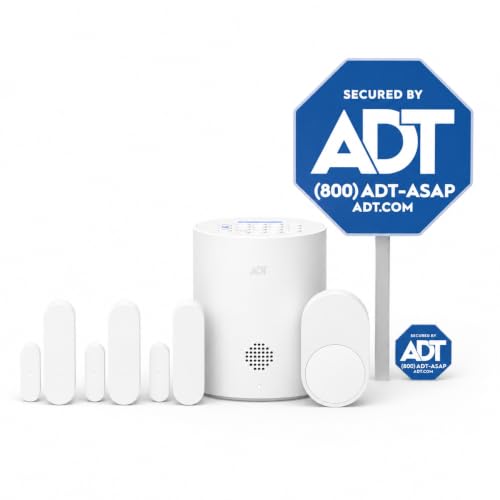
ADT Blu Home Security System Starter Kit, DIY Wireless
ADT carries the most recognized name in home security, and the Blu Starter Kit attempts to bring DIY pricing under that brand umbrella at $124.5. The catch is that a plan is required, meaning the sticker price is only the hardware entry and ongoing monitoring costs apply from day one.
- Pro: ADT’s monitoring infrastructure is the most established in the US market, with a long track record of fast dispatch.
- Pro: DIY wireless install means you avoid the traditional ADT installer fee that historically pushed costs into four figures.
- Con: Mandatory plan requirement removes the flexibility of contract-free competitors like SimpliSafe, and early termination may carry fees.
Skip it if contract commitment is a dealbreaker. You are buying hardware plus a service obligation, and exiting the plan early may cost more than the kit itself.
WiFi Door Alarm System, 8-Piece DIY Wireless Alarm Kit with Door Sensors
Another under $60 option, this eight-piece kit edges out the seven-piece WiFi system by one additional sensor and includes a dedicated door sensor configuration that some owners find easier to calibrate. It targets the same budget-conscious renter who wants basic coverage without recurring costs.
- Pro: Eight pieces at the same price as the seven-piece competitor gives slightly better value per zone.
- Pro: No subscription required, keeping long-term ownership costs near zero beyond occasional battery replacement.
- Con: Like its sibling kit, no professional monitoring means no verified response; alerts are push notifications only.
Skip it if you need cellular backup during internet outages. WiFi-only operation means the system goes dark when your router does.
Buying Guide
Matching Piece Count to Your Floor Plan
Count every exterior door, every ground-floor window, and at least one central motion zone per floor. A two-bedroom home with one front door, one back door, and two ground-floor windows needs a minimum of five sensors. If you choose a seven-piece kit and use three for windows, you have two left for motion, which is barely functional. Buy the piece count that covers all vulnerable points, not just the doors.
Monitoring Model: Self, Cellular, or Professional
Self-monitoring means the siren sounds and your phone buzzes, but nobody else is notified. Cellular backup ensures alerts still fire during internet outages. Professional monitoring dispatches authorities on your behalf. If you are often unreachable — travel, work environments with no phone access, or you simply want insurance-grade response — professional monitoring is worth the monthly cost. If you live in a dense apartment building where a loud siren triggers neighbor response, self-monitoring may suffice.
Long-Term Hardware Reliability
Owner feedback across all price tiers points to the same weak links: adhesive mounting, battery compartment corrosion, and firmware abandonment after one to two product cycles. Before buying a budget cove alarm system, check whether the brand has released updates within the last 18 months. Dead apps and orphaned sensors are the most common complaint in one-star reviews, and no amount of piece count matters if the hub stops receiving updates.
Our Verdict
The SimpliSafe 8-Piece is the top pick overall for most homeowners. It balances a fair per-piece price, genuine month-to-month professional monitoring with no lock-in, voice assistant support, and a white finish that does not clash with home interiors. For the strictest budget, the 15-Piece WiFi Home Security System delivers the best coverage-per-dollar ratio with no recurring costs, making it ideal for renters or self-monitoring minimalists. The PGST 24-Piece wins outright if your apartment has a high number of entry points and you want cellular backup without a monitoring plan.
FAQ
Can I use a Cove alarm system without any monthly payment?
Yes. The 15-Piece WiFi kit, the 7-Piece and 8-Piece WiFi systems, and the PGST 24-Piece all operate on self-monitoring with no subscription required. The alarm siren and push notifications still function; you simply handle response yourself.
What happens to a DIY wireless alarm system if my internet goes down?
WiFi-only systems stop sending alerts to your phone until connectivity returns, though the local siren still sounds. The PGST 24-Piece with 4G cellular backup maintains notifications during internet outages, and professional monitoring services like SimpliSafe and Cove use cellular networks as a secondary path.
Are budget cove alarm systems less reliable than branded ones?
Owner feedback suggests budget kits use lower-grade sensors that are more prone to false triggers and shorter operational lifespans. However, a 15-piece budget kit covering every zone in your home outperforms a 7-piece premium kit that leaves windows unmonitored. Match coverage first, then brand.
Do I need to drill holes to install these systems?
All eight products in this roundup are DIY wireless and ship with adhesive mounting. No drilling is required for the base sensors. Some owners prefer to use screws for doors that get heavy use, but that is optional and typically not needed in the first year.