Key takeaways
- Wilderness preparedness guide planning is about being ready to handle trouble far from help, where calling for rescue is not an option. This roundup compares six field-tested items by how well they let you communicate, navigate, and respond to emergencies,…
What's inside
Wilderness preparedness guide planning is about being ready to handle trouble far from help, where calling for rescue is not an option. This roundup compares six field-tested items by how well they let you communicate, navigate, and respond to emergencies, from a satellite messenger to a first aid kit, so you can head into remote country prepared.
As an Amazon Associate we earn from qualifying purchases.
By Jake Thompson
How to Use a Wilderness Preparedness Guide
Preparedness is planning plus the gear and skills to respond when things go wrong. A good wilderness preparedness guide focuses on communication, navigation, and emergency response, backed by telling someone your plan. Start by understanding three principles before heading deep into the backcountry.
Plan and Communicate
The most important preparation costs nothing: research your route, check conditions, and tell someone your plan and expected return. That information launches a rescue even if everything else fails, making it the single most effective safety step you can take before any remote trip.
In the wilderness, a way to call for help is invaluable. A satellite messenger lets you summon rescue and share your location far beyond cell service, turning a life-threatening situation into a manageable one. This wilderness preparedness guide treats communication and planning as the foundation of true readiness.
Navigate and Stay Found
Getting lost is one of the most common backcountry emergencies. Carrying a map and compass, and knowing how to use them, keeps you oriented when a phone or GPS dies, while a reliable navigation habit prevents the wrong turns that lead to costly searches and dangerous nights out.
Redundancy strengthens navigation. Pair analog tools with a digital device, and download offline maps before you go. A practical wilderness preparedness guide builds layered navigation, since staying found is far easier and safer than being rescued after getting lost.
Respond to Emergencies
When something goes wrong far from help, you must handle it yourself at first. A well-stocked first aid kit and the training to use it, an emergency shelter for exposure, water treatment, and fire together let you stabilize an injury, stay warm, and survive until rescue arrives.
Skills matter as much as gear. Take a wilderness first aid course, practice building fires and shelters, and know your limits. The best wilderness preparedness guide pairs response gear with real training, since knowledge weighs nothing and often makes the difference in an emergency.
Top Picks: Essential Preparedness Gear
With those principles in mind, this wilderness preparedness guide lines up six field-tested items, each covering a part of being ready. The table sums up the essentials, and the reviews below explain who each one suits and the trade-offs to weigh before you buy.
| Category | Gear | Role | Best For |
|---|---|---|---|
| Communication | Garmin inReach Mini 2 | Two-way SOS | Calling for rescue |
| First aid | Adventure Medical Kit | Treat injuries | Backcountry care |
| Navigation | Map and Compass | Find your way | Staying found |
| Shelter | SOL Emergency Bivvy | Retain body heat | Unplanned nights |
| Water | Sawyer + Tablets | Treat water | Safe hydration |
| Fire | Ferro Rod + Lighter | Make fire | Warmth and cooking |
Garmin inReach Mini 2 – Communication
The Garmin inReach Mini 2 is the cornerstone of wilderness preparedness. Its global two-way satellite messaging and SOS work far beyond cell service, letting you reach family, share your location, and summon rescue from anywhere, which is exactly the capability that turns a remote crisis into a survivable event.
It requires a subscription and is a communicator rather than a full navigator. But for the ability to call for help where phones cannot, its lifeline capability is the most valuable preparedness tool you can carry.
Adventure Medical Kit – First Aid
An Adventure Medical Kit gives you the means to respond to injuries far from care. A backcountry-sized kit stocks bandages, wound care, medications, and often a first aid manual in an organized pouch, letting you stabilize the cuts, sprains, and worse that can happen days from the nearest road.
A kit only helps if you know how to use it, so pair it with a wilderness first aid course. But as the foundation for treating backcountry injuries, a quality kit is indispensable preparedness gear.
Map and Compass – Navigation
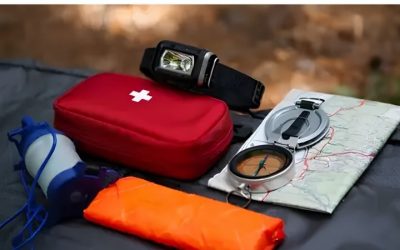
A map and compass keep you found when electronics fail. A waterproof topographic map and a reliable compass never lose battery or signal, work in any weather, and let you orient yourself and navigate out of the backcountry when a GPS dies, preventing the wrong turns that trigger searches.
They require practice and do not show your live position. But as the fail-safe backbone of navigation, they are the one system guaranteed to work, making them essential to any wilderness preparedness guide.
SOL Emergency Bivvy – Shelter
The SOL Emergency Bivvy prepares you for an unplanned night out. Shaped like a sleeping bag from heat-reflective material, it retains up to about 90 percent of your body heat while blocking wind and rain, and it packs to roughly the size of a water bottle, fending off the exposure that kills fastest.
Its single layer is less breathable, so condensation can build inside. But as featherweight insurance against a cold, unexpected night in the wilderness, it belongs in every prepared hiker’s pack.
Sawyer + Tablets – Water
A Sawyer filter plus purification tablets keeps you hydrated with a backup built in. The filter removes bacteria and protozoa from wild sources, while tablets serve as an ultralight failsafe that also kills viruses, ensuring you can drink safely even if the filter clogs or freezes far from help.
The filter adds a step and tablets require a wait time. But for reliable, redundant water treatment on remote trips, this pairing keeps a critical need covered when resupply is impossible.
Ferro Rod + Lighter – Fire
A ferro rod and lighter prepare you to make fire for warmth, cooking, and signaling. The ferro rod sparks even when wet and lasts thousands of strikes, while a lighter offers fast ignition, and together they give you the redundant fire source that a wilderness emergency may demand.
A ferro rod takes practice and good tinder, and lighters fail in cold. But as a light, cheap, redundant way to make fire when it matters most, this pairing is a preparedness essential.
Frequently Asked Questions
A few questions come up again and again when hikers read a wilderness preparedness guide. Here are quick, practical answers to help you get ready.
What is the most important preparedness step?
Telling someone your detailed route and expected return time before you go. It costs nothing and launches a rescue quickly if you do not return. Pair that with checking conditions, carrying a way to call for help, and knowing your limits, and you have covered the foundation of wilderness preparedness.
Do I need a satellite messenger for the backcountry?
For remote, solo, or multi-day trips beyond cell service, yes. A satellite messenger lets you summon rescue and check in from anywhere, which can be lifesaving when you cannot walk out. For short trips near help it is optional, but the further and more remote you go, the more essential it becomes.
Should I take a wilderness first aid course?
Yes, if you travel far from help. A Wilderness First Aid course teaches you to assess and stabilize injuries when rescue is delayed, which differs greatly from urban first aid. The skills weigh nothing, never fail, and dramatically improve outcomes, making a course one of the best preparedness investments you can make.
How do I prepare for a multi-day wilderness trip?
Research the route and conditions, share your plan, and pack layered navigation, a way to call for help, first aid, emergency shelter, water treatment, fire, and extra food and clothing. Practice your skills beforehand, and build in redundancy for water and fire. Preparation and good judgment matter as much as any single item.
Final Thoughts
A good wilderness preparedness guide pairs planning with the gear and skills to respond. The Garmin inReach Mini 2 and a map and compass cover communication and navigation, while a first aid kit, a SOL bivvy, water treatment, and fire handle emergencies. Plan ahead, tell someone your route, carry these essentials, and practice the skills, and you can head into remote country truly ready.