Key takeaways
What's inside
Emergency whistle review shopping matters because a whistle carries far beyond your voice with almost no effort, and it never needs batteries. This roundup compares five field-tested whistles across loudness, design, and durability, from the search-and-rescue standard to the loudest whistle made, so you can carry a signal that gets you found.
As an Amazon Associate we earn from qualifying purchases.
By Jake Thompson
How to Read an Emergency Whistle Review
A whistle is one of the cheapest, most reliable pieces of safety gear you can carry. A useful emergency whistle review weighs loudness, design, durability, and accessibility, since the best whistle is the one you can reach and use instantly. Before the picks, understand the three factors that matter most.
Loudness and Tone
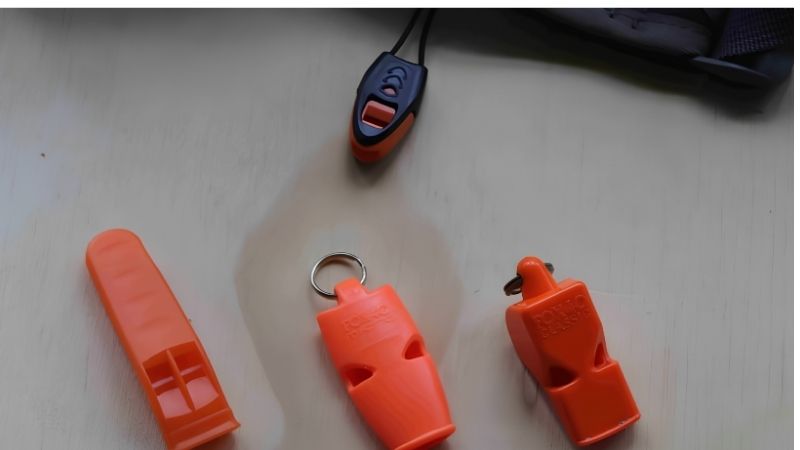
Loudness, measured in decibels, largely determines how far your signal carries, and most quality emergency whistles reach 100 decibels or more, audible over a mile in good conditions. Higher output cuts through wind, surf, and distance, but tone matters too, since a sharp, high-pitched sound travels well.
Do not chase decibels alone. A whistle you can blow to full volume when exhausted or stressed beats a louder one that takes a forceful breath. This emergency whistle review weighs real-world usability alongside raw loudness, since a signal you can actually sound is what gets you found.
Pealess Design and Durability
A pealess whistle, with no moving cork ball inside, is the reliable choice for the outdoors. It cannot freeze, jam, or deteriorate, self-clears when submerged in water, and works instantly even after a river crossing or a soaking rain, which is exactly when you may need it most.
Durability keeps it working for years. Tough ABS plastic and metal builds survive drops, crushing, and harsh weather, so your whistle is ready whenever a crisis strikes. A good emergency whistle review favors pealess, rugged designs that will not let you down in wet or freezing conditions.
Weight and Accessibility
The most powerful whistle is useless buried in your pack. Weight and size determine whether you actually carry it and keep it reachable, so an ultralight whistle clipped to your shoulder strap or a lanyard is far more valuable than a heavier one stashed away.
Keep it within instant reach, even if you are injured and immobile. Attach your whistle to a pack strap, jacket zipper, or lanyard where you can grab it one-handed. This emergency whistle review stresses accessibility, since a signal you cannot reach cannot save you.
Top Picks: The Best Emergency Whistles
With those factors in mind, this emergency whistle review lines up five field-tested whistles, each a clear winner for a different need. The table sums up the essentials, and the reviews below explain who each one suits and the trade-offs to weigh before you buy.
| Whistle | Loudness | Design | Best For |
|---|---|---|---|
| Fox 40 Classic | ~115 dB | 3-chamber pealess | Overall |
| Fox 40 Sonik Blast | ~120 dB | Cushioned mouth grip | Loud and comfortable |
| SOL Slim Rescue Howler | ~110 dB | Ultralight flat | Value and weight |
| HyperWhistle | ~142 dB | Tri-frequency | Maximum volume |
| ACR WW-3 Res-Q | High-pitch | Water-shedding | Wet and marine |
Fox 40 Classic – Best Overall
The Fox 40 Classic is the search-and-rescue standard and the top all-around pick. Its three-chamber pealess design produces a piercing sound around 115 decibels with no moving parts to jam or freeze, self-clears when submerged, and reaches full volume quickly even if you are tired or stressed.
It has a larger footprint than minimalist rescue whistles. But for a bombproof, affordable whistle trusted by professionals and audible up to a mile away, it is the reliable default for nearly everyone.
Fox 40 Sonik Blast – Best Loud and Comfortable
The Fox 40 Sonik Blast turns up the volume with added comfort. It delivers a powerfully clear sound around 120 decibels, its self-clearing chambers work reliably when wet, and a cushioned mouth grip provides a soft, comfortable surface, a real benefit during a long, cold signaling effort.
It is slightly larger and pricier than the Classic. But for extra loudness plus a comfortable mouthpiece you can hold for extended periods, it is an excellent upgrade for serious use.
SOL Slim Rescue Howler – Best Value and Weight
The SOL Slim Rescue Howler is the ultralight value pick. This pealess whistle delivers a sharp signal around 110 decibels audible over a mile, weighs almost nothing, and its slim flat profile sheds water and disappears into a pocket or life jacket, often coming in a two-pack for multiple kits.
It is quieter than the loudest heavy-duty whistles. But for a crush-resistant, featherweight signal you can carry everywhere with no excuse to leave behind, its value is unbeatable.
HyperWhistle – Best Maximum Volume
The HyperWhistle is the loudest option, reaching an ear-piercing 142 decibels. Its tri-frequency design carries clearly over extreme distances, it floats for water use, and it even comes with hearing protection since it can be painful at close range, making it ideal for the most demanding emergencies.
It is larger and its extreme volume is overkill for casual use. But when guaranteed attention over maximum distance is the goal, nothing here comes close to its raw signaling power.
ACR WW-3 Res-Q – Best for Wet and Marine
The ACR WW-3 Res-Q is the pick for water and rainy climates. Its simple, marine-grade flat design produces a clear, high-pitched tone that carries far without needing a forceful breath, and its water-shedding profile keeps working reliably through soakings, river crossings, and coastal spray.
It lacks the extreme decibel rating of larger whistles. But for kayakers, canoers, and hikers in very wet climates who need dependable, water-shedding performance, it is a trusted, practical choice.
Frequently Asked Questions
A few questions come up again and again in an emergency whistle review. Here are quick, practical answers to help you choose.
How loud should an emergency whistle be?
Aim for at least 100 decibels, which carries over a mile in good conditions, and many quality whistles reach 110 to 120. Extremely loud models exceed 140 decibels for maximum reach. But a whistle you can blow to full volume when exhausted matters as much as the raw number, so balance loudness with usability.
What is a pealess whistle and why does it matter?
A pealess whistle has no moving cork ball inside, so it cannot jam, freeze, or fail after getting wet. It self-clears when submerged and works instantly in rain, cold, or after a river crossing. For emergency and outdoor use, a pealess design is far more reliable than a traditional pea whistle.
What is the distress signal with a whistle?
Three short blasts is the widely recognized signal for help on land, repeated at regular intervals, while six blasts per minute is the standard in mountaineering and marine settings. Any repeated pattern of loud blasts draws attention. Pause to listen for a response, then repeat until rescuers reach you.
Where should I carry my whistle?
Keep it instantly reachable, attached to a pack shoulder strap, jacket zipper, or a lanyard, not buried in your pack. You must be able to grab and sound it one-handed even if you are injured. Many whistles are so light there is no reason not to keep one always within reach.
See More:
- Best camp chair
- Lightweight camp chair
- Camping table review
- Backpacking cookware set
- Camp stove review
Final Thoughts
This emergency whistle review shows the right whistle depends on your needs. The Fox 40 Classic leads overall, the Sonik Blast adds volume and comfort, and the SOL Slim Rescue Howler wins on weight and value, while the HyperWhistle maxes out loudness and the ACR Res-Q handles wet conditions. Choose a pealess, durable whistle, keep it reachable, and you will always be able to signal for help.