Key takeaways
What's inside
Wildfire safety guide planning matters more every year as fire seasons grow longer and smoke travels farther. This roundup compares five field-tested items by protection, alerting power, and value, from a proper smoke mask to a satellite messenger, so you can guard your lungs, stay informed, and be ready to move if smoke reaches your trip.
As an Amazon Associate we earn from qualifying purchases.
By Jake Thompson
How to Prepare with a Wildfire Safety Guide
Wildfire safety is about prevention, awareness, and readiness to leave. A good wildfire safety guide covers protecting your lungs from smoke, staying informed of conditions, and having a way to evacuate or call for help. Start by understanding three priorities before heading out in fire season.
Check Conditions and Prevent Fires
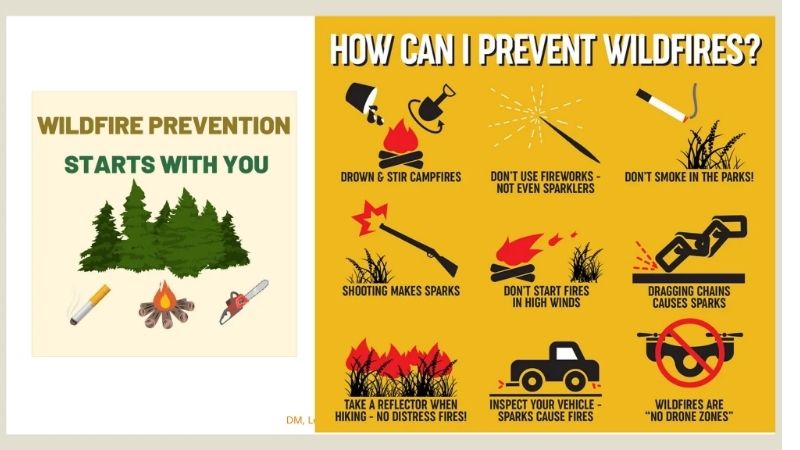
The most important step happens before you leave: check fire conditions, air quality, and area closures for your destination. Conditions change fast, and many trailheads and campgrounds close during high fire danger, so a current check can keep you out of harm’s way entirely.
Preventing fires is equally vital. Obey all fire restrictions, which often ban campfires and even stoves during extreme danger, and never leave any flame unattended. A responsible wildfire safety guide starts with not becoming the cause, since most wildfires are human-started and entirely preventable with care.
Protect Your Lungs
Wildfire smoke is hazardous, and cloth masks or bandanas do essentially nothing against it. The fine particles in smoke require a NIOSH-approved N95 or P100 respirator that seals to your face with two head straps, which is the only mask category health agencies recommend for smoke.
Fit matters as much as the rating. A respirator only protects when it seals with no gaps, so choose the right size and press it to your face. This wildfire safety guide stresses that a properly fitted N95 is essential gear anywhere smoke may reach, since your lungs are the first thing at risk.
Stay Informed and Ready to Move
Awareness buys you time. A weather radio or satellite device that delivers fire and evacuation alerts warns you before a situation becomes an emergency, and an air quality monitor helps you decide whether it is even safe to be outside on a smoky day.
Readiness to leave completes the plan. A reliable way to communicate and a packed evacuation kit mean you can move fast if fire approaches. A thorough wildfire safety guide pairs monitoring with the gear to act, since wildfires can spread faster than a person can travel.
Top Picks: Essential Wildfire Safety Gear
With those priorities in mind, this wildfire safety guide lines up five field-tested items, each covering a different part of staying safe. The table sums up the essentials, and the reviews below explain who each one suits and the trade-offs to weigh before you buy.
| Gear | Type | Role | Best For |
|---|---|---|---|
| N95/P100 Respirator | Smoke mask | Filter fine particles | Smoky air |
| Midland ER310 | NOAA radio | Fire and evac alerts | Staying informed |
| Garmin inReach Mini 2 | Satellite messenger | Comms and SOS | Evacuation |
| Air Quality Monitor | AQI sensor | Track smoke levels | Deciding to go out |
| Black Diamond Spot 400 | Headlamp | Light for evacuation | Outages and night |
N95/P100 Respirator – Best Smoke Protection
A NIOSH-approved N95 respirator is the essential mask for wildfire smoke. It captures at least 95 percent of the fine 0.3-micron particles that make up smoke and seals to your face with two head straps, while a reusable P100 filters 99.97 percent for the heaviest smoke and ash.
Respirators filter particles but not the gases in smoke, and a good seal takes the right fit. But since cloth and ear-loop masks do nothing against smoke, a properly fitted N95 or P100 is the only real protection for your lungs.
Midland ER310 – Best for Alerts
The Midland ER310 emergency radio keeps you informed when power and cell service fail. It receives NOAA weather and emergency alerts, including fire and evacuation notices, runs on a rechargeable battery with hand-crank and solar backup, and packs small enough for a go-bag, making it a reliable information lifeline.
Reception can be weak in deep canyons, and you must know your area’s alert programming to filter notices. But for dependable, power-independent access to official warnings during fire season, it is a smart, affordable addition.
Garmin inReach Mini 2 – Best for Evacuation
The Garmin inReach Mini 2 gives you a way to call for help and coordinate an evacuation anywhere. Its global two-way satellite messaging and SOS work far beyond cell service, letting you reach family and rescuers, share your location, and receive updates when a fire cuts off normal communication.
It requires a subscription and is a communicator rather than a dedicated fire tool. But for the ability to summon help and stay in contact during a fast-moving wildfire, its lifeline capability is invaluable in remote country.
Air Quality Monitor – Best for Smoke Awareness
A portable air quality monitor takes the guesswork out of smoky conditions. By measuring fine-particle levels around you, it tells you when air has become unhealthy, helping you decide whether to hike, mask up, or stay in, which matters since smoke can be dangerous even far from the flames.
Consumer monitors are less precise than official stations and add a small device to carry. But for real-time, on-the-spot awareness of the air you are breathing, one provides useful, actionable information during fire season.
Black Diamond Spot 400 – Best for Evacuation Light
The Black Diamond Spot 400 headlamp earns a place in any fire-season kit. Wildfires often knock out power and force nighttime evacuations, and this 400-lumen, waterproof, hands-free light lets you pack, navigate, and move safely in the dark, whether on the trail or during an outage at home.
It is a general-purpose light rather than a fire-specific tool. But since evacuations and outages so often happen in darkness or smoke-dimmed conditions, a reliable headlamp is a small item with outsized value in an emergency.
Frequently Asked Questions
A few questions come up again and again when hikers read a wildfire safety guide. Here are quick, practical answers to help you prepare.
What mask protects against wildfire smoke?
Only a NIOSH-approved N95 or P100 respirator that seals to your face with two head straps. These filter the fine particles in smoke, while cloth masks, surgical masks, and ear-loop masks do essentially nothing. A P100 filters even more and is reusable. Remember that these masks stop particles but not the gases in smoke.
Should I hike when the air is smoky?
Check the air quality index first. When smoke pushes the AQI into unhealthy ranges, it is best to postpone strenuous outdoor activity, since exertion makes you breathe in more harmful particles. If you must be out, wear a properly fitted N95, limit your effort, and turn back if you feel any respiratory distress.
How do I stay informed about wildfires?
Check official fire, air quality, and closure information for your area before you go, and carry a NOAA weather radio or a satellite device that delivers alerts. Conditions change quickly, so monitor them throughout your trip. Knowing about a fire early gives you the time you need to leave safely.
What should I do if a wildfire approaches?
Leave immediately if you can, moving away from the fire and toward lower ground and cleared areas, never uphill or into canyons where fire spreads fast. Use your satellite device to alert others and call for help. Do not try to outrun a fast fire; evacuate early rather than waiting to see what happens.
See More:
- Best camp chair
- Lightweight camp chair
- Camping table review
- Backpacking cookware set
- Camp stove review
Final Thoughts
A good wildfire safety guide combines prevention, awareness, and readiness to move. A NIOSH N95 or P100 protects your lungs, the Midland ER310 and an air quality monitor keep you informed, and the inReach Mini 2 and a headlamp help you evacuate. Check conditions before you go, obey fire restrictions, and stay ready to leave, and you can navigate fire season safely.