
Key takeaways
- Check current fire bans and permit requirements for your specific area.
- Repackage snacks and meals to minimize packaging waste.
- Match your group size to the area’s limits to reduce impact.
Every year millions of us head into the backcountry chasing quiet, clean air, and wild scenery, but the cumulative weight of all those boots, tents, and campfires can quietly erode the very places we love. Leave No Trace is the seven-principle framework that keeps wilderness wild, and practicing it is less about strict rules than about a mindset: leave each site as good as or better than you found it. In 2026, with trail traffic at record highs, those habits matter more than ever.
This guide walks through how to actually apply Leave No Trace on a real camping trip, from planning to packing out, with practical steps you can start using this weekend. Deepening your understanding with a trusted reference like the Falcon Guide’s Leave No Trace: Minimum Impact Outdoor Recreation will make these habits second nature. Let’s get into it.
Our top picks


As an Amazon Associate we earn from qualifying purchases at no extra cost to you. Ratings are shown as listed on Amazon.
⚡ Save on Your Next PC — Amazon Prime
Prime members get fast free shipping on the systems above, plus early access to Prime Day & Black Friday PC deals. New members get a 30-day free trial.
Watch: How to Practice Leave No Trace Principles While Camping — Video Review
Plan Ahead and Prepare
Good ethics start before you leave home. Research your destination’s regulations, fire restrictions, and group-size limits, and repackage food into reusable containers to cut the trash you carry in. A pocket-sized reference such as Leave No Trace: A Guide to the New Wilderness Etiquette is worth tossing in your pack so you can double-check local rules on the trail.
- Check current fire bans and permit requirements for your specific area.
- Repackage snacks and meals to minimize packaging waste.
- Match your group size to the area’s limits to reduce impact.
Travel and Camp on Durable Surfaces
The ground you choose determines how long your impact lasts. Camp on established sites, rock, gravel, or dry grass, and keep tents at least 200 feet from lakes and streams to protect fragile shorelines. On the trail, walk single file in the middle of the path even when it is muddy, because skirting puddles widens trails and tramples vegetation.
Dispose of Waste Properly
The golden rule is simple: pack it in, pack it out. That includes food scraps, which do not “disappear” and instead habituate wildlife. For human waste, dig a cathole six to eight inches deep and at least 200 feet from water, trails, and camp, then pack out your toilet paper in a sealed bag. Strain dishwater and scatter it well away from any water source.
Minimize Campfire Impact
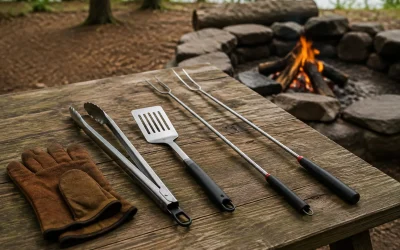
Campfires cause some of the most lasting scars in the backcountry. Whenever possible, use a lightweight camp stove for cooking and a lantern for light instead of a fire. If you do build one, use existing fire rings, keep it small, burn only dead-and-down wood no thicker than your wrist, and drown the ashes cold before you leave.
Respect Wildlife and Other Visitors
Observe animals from a distance and never feed them, since human food damages their health and alters natural behavior. Store food and scented items securely in a canister or hung bag. Keep noise down, yield the trail to others, and let natural sounds prevail so everyone shares the same sense of solitude.
Tips
- Carry a dedicated trash bag and do a “sweep” of your site before leaving, looking for micro-litter like twist ties and food crumbs.
- Bring a backpacking stove rather than relying on fires; it cooks faster and leaves zero scar.
- Use biodegradable soap sparingly and always at least 200 feet from water.
- Study a reference guide like the Falcon or Backpacker Leave No Trace books before your first big trip to internalize the principles.
Frequently Asked Questions
What are the seven Leave No Trace principles?
They are: plan ahead and prepare, travel and camp on durable surfaces, dispose of waste properly, leave what you find, minimize campfire impact, respect wildlife, and be considerate of other visitors. Together they form a complete low-impact ethic.
How far from water should I camp and go to the bathroom?
The standard is 200 feet, roughly 70 adult steps, from lakes, streams, and trails for camping, catholes, and dishwashing. This buffer protects water sources from contamination and erosion.
Is it ever okay to build a campfire?
Yes, where fires are permitted and conditions are safe. Use existing rings, keep it small, burn only small dead-and-down wood, and make sure ashes are cold to the touch before leaving. When in doubt, a stove is the lower-impact choice.
Do I really need to pack out food scraps like apple cores?
Yes. Organic scraps take longer to decompose than people think, attract wildlife, and can spread non-native seeds. Packing out everything, including cores and peels, keeps animals wild and sites clean.
Conclusion
Leave No Trace is not about restricting your adventures; it is about ensuring there is still wilderness worth adventuring in. Plan ahead, camp on durable ground, pack out everything, and tread lightly around fire and wildlife, and you will pass along landscapes as pristine as the ones you found. Pick up a trusted guidebook, practice the seven principles on every trip, and you become part of keeping wild places wild for the next generation.







Write Your Review
No reviews yet. Be the first to share your experience!