
Key takeaways
What's inside
The astronomical binoculars best suited to serious deep-sky observing are giants: big-aperture 20×80 and 25×100 pairs that gather enough light to reveal faint nebulae, galaxies, and star clusters. They demand a mount and reward patience with stunning views. This guide compares the top large-aperture instruments for dedicated stargazers.
As an Amazon Associate we earn from qualifying purchases at no extra cost to you.


As an Amazon Associate we earn from qualifying purchases at no extra cost to you.
🛒 Best Price Today on Amazon
Prime members get fast, free shipping on everything above, plus member-only deals. New members get a 30-day free trial — cancel anytime.
Start 30-Day Prime Free Trial →See Today’s Amazon DealsHow to Choose the Astronomical Binoculars Best for Deep Sky
For serious observers, the astronomical binoculars best for the deep sky are judged on four things: aperture, mounting, glass and coatings, and weight and exit pupil. These giant instruments trade portability for light-gathering power, so understanding the trade-offs ensures you pick the right one.
Aperture Rules the Deep Sky
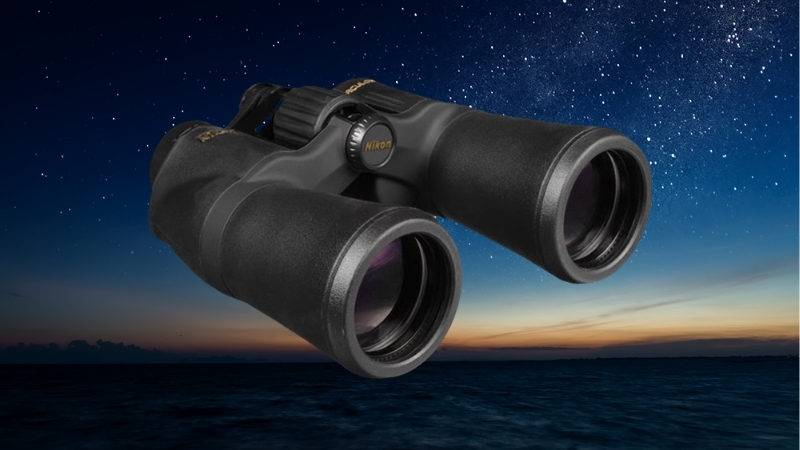
For faint deep-sky objects, aperture is everything. The objective diameter determines how much light the binocular collects, and a 70mm aperture gathers nearly twice the light of a 50mm, while 80mm and 100mm giants pull in dramatically more, unlocking dim nebulae and galaxies invisible in smaller pairs.
This is why serious observers move to 20×80 and 25×100 instruments. The 20×80 offers an excellent balance of aperture and price for most enthusiasts, while the 25×100 pairs huge 100mm objectives with high magnification to reveal the deep sky in a way few binoculars can match under dark skies.
Mounting Is Mandatory
At the magnifications giant binoculars use, handholding is impossible, so a sturdy mount is not optional. Any binocular at 15x or higher needs support, and 20×80 and 25×100 pairs demand a heavy-duty tripod or, better, a parallelogram mount that lets you observe comfortably while keeping the view rock steady.
A parallelogram mount is the serious observer’s tool, holding the binoculars aloft and letting you swing them across the sky or share the view without recollimating your position. Budget for a solid mount and, for the heaviest 25×100 giants, a counterweight, since a flimsy tripod ruins even the finest optics.
Glass, Coatings, and Collimation
Optical quality separates good giants from great ones. BaK-4 prisms and fully multi-coated lenses maximize the light that actually reaches your eye, while ED or HD glass minimizes the color fringing that appears on bright stars and planetary edges, sharpening high-contrast views considerably.
Weatherproofed Pro-series models add improved coatings and the ability to use a finderscope. Because large binoculars can arrive slightly out of collimation, choose brands that back them with a strong warranty, and confirm each pair’s exact specifications on the current listing before you commit to a purchase.
Weight, Transport, and Exit Pupil
Giant binoculars are heavy, and a 25×100 pair is genuinely large and demanding to transport, so plan for case sizing and weight if your observing site requires a hike. This is a consideration serious observers weigh against the superior views these instruments deliver from a fixed backyard setup.
Exit pupil also guides the choice. A 4mm to 5mm exit pupil suits older eyes and light-polluted suburbs, which is why 15×70 and 20×80 configurations are so popular, balancing light-gathering with usable brightness. Under genuinely dark skies, the largest apertures truly come into their own.
Top Picks for the Astronomical Binoculars Best
Our astronomical binoculars best picks span capable 15x70s to massive 25×100 light-buckets, the large-aperture instruments serious stargazers rely on. Each names a real trade-off so you can weigh aperture, weight, and mounting against the deep-sky views you want and the site where you observe.
| Model | Config | Mount | Standout | Best For |
|---|---|---|---|---|
| Celestron SkyMaster 20×80 | 20x, 80 mm | Tripod | Aperture-to-price balance | Best overall serious pick |
| Celestron SkyMaster 25×100 | 25x, 100 mm | Tripod + counterweight | Huge light gathering | Most powerful |
| Celestron SkyMaster Pro 15×70 | 15x, 70 mm | Tripod | Best aperture-per-dollar | Value deep-sky entry |
| Celestron SkyMaster Pro 20×80 | 20x, 80 mm | Tripod | Improved coatings, sealed | Weatherproof giant |
| Celestron Nature DX ED 10×50 | 10x, 50 mm | Handheld | ED glass, dual-purpose | Grab-and-go companion |
| Opticron Oregon 20×80 | 20x, 80 mm | Tripod | Faultless value giant | Newer large-bino observers |
Celestron SkyMaster 20×80
The SkyMaster 20×80 is the serious observer’s sweet spot, balancing large 80mm apertures and 20x magnification against a reasonable price to deliver excellent deep-sky views. Widely rated the best astronomy binocular for most enthusiasts, it sets up fast on a tripod for quick, rewarding sessions on clear nights.
Its 20x view shows a narrower slice of sky that can make finding targets trickier for novices, and it requires a solid tripod. But for dedicated stargazers who want giant-binocular performance without stepping up to the largest, priciest models, the 20×80 is the benchmark large-aperture choice.
Celestron SkyMaster 25×100
The SkyMaster 25×100 is the most powerful pick, pairing enormous 100mm objectives with 25x magnification to gather light like two small telescopes strapped together. It makes short work of distant stars, nebulae, and deep-sky objects, delivering the kind of views that justify a dedicated setup.
It is big, heavy, and should be used with a tripod and counterweight, making it the least portable option here. But for committed observers with a fixed dark-sky site who want maximum light-gathering and detail on faint deep-sky targets, the 25×100 is a genuinely transformative instrument.
Celestron SkyMaster Pro 15×70
The SkyMaster Pro 15×70 is the value deep-sky entry, whose 70mm aperture gathers far more light than a 50mm pair while its 15x power suits light-polluted suburbs and older eyes with a comfortable exit pupil. It is a particularly strong fit for the Moon, star clusters, and double stars.
At 15x it still needs a tripod, and its field is narrower than a 10×50’s. But for serious observers wanting maximum aperture per dollar as an entry into large-binocular astronomy, the Pro 15×70 offers improved coatings and weatherproofing at a very approachable price.
Celestron SkyMaster Pro 20×80
The SkyMaster Pro 20×80 upgrades the standard 20×80 with improved glass coatings, full weatherproofing, and the capacity to accept a finderscope, refinements that matter for regular, serious use. It delivers the same excellent aperture with cleaner, brighter views and better protection against dew and weather.
The Pro refinements add cost over the standard model, and it remains a tripod-bound giant. But for dedicated observers who use their binoculars often and want sealed, coated optics and finderscope compatibility in the proven 20×80 format, the Pro version is the more capable long-term investment.
Celestron Nature DX ED 10×50
The Nature DX ED 10×50 earns a place as the grab-and-go companion to a giant, a fully handheld pair with ED glass that eliminates false color and serves for quick sessions, sky-scanning, and daytime wildlife. Serious observers often keep one alongside their giants for effortless wide-field views.
It cannot rival the light-gathering of an 80mm or 100mm giant on faint deep-sky objects. But as the pair you grab when hauling out a mounted giant is too much effort, the ED 10×50 delivers sharp, versatile, no-setup views that complement a large-aperture instrument perfectly.
Opticron Oregon 20×80
The Opticron Oregon Observation 20×80 is a faultless-value giant, a pleasant, well-made 20×80 with no glaring flaws that suits observers new to large binoculars, often backed by a multi-year guarantee for peace of mind. It brings the deep-sky benefits of an 80mm aperture in an approachable package.
Like all 20x80s it requires a sturdy tripod and shows a narrow field. But for stargazers stepping into large-binocular astronomy who want a dependable, reasonably priced giant that simply works, the Oregon 20×80 is a strong and reassuring choice to build an observing habit around.
Frequently Asked Questions
Quick answers to the astronomical binoculars best questions serious observers ask, from giant size to why a mount is essential.
What are the best astronomical binoculars for deep sky?
For most serious observers, the Celestron SkyMaster 20×80 offers the best balance of aperture, power, and price, while the 25×100 delivers maximum light-gathering for the faintest targets. Both need a sturdy mount. Larger aperture reveals more deep-sky detail, so choose based on your site, budget, and willingness to carry weight.
Why do giant binoculars need a mount?
At 15x and above, hand shake blurs the view completely, and 20×80 and 25×100 pairs are far too heavy to hold anyway. A heavy-duty tripod or a parallelogram mount holds them rock steady, letting you observe faint objects comfortably. The largest 25×100 giants also benefit from a counterweight for balance.
Is aperture or magnification more important?
For the astronomical binoculars best at deep sky, aperture usually wins, since light-gathering reveals faint objects that magnification alone cannot. Many experts prefer a larger objective over higher power, which is why a 20×80 is often rated above a 25×70. That said, more magnification narrows the field and demands a steadier mount.
Can giant binoculars replace a telescope?
For wide-field deep-sky viewing, they come remarkably close, offering bright, immersive, two-eyed views of nebulae, clusters, and the Milky Way that many find more pleasing than a telescope. They cannot match a telescope’s high-magnification planetary detail, but as a complementary or standalone deep-sky instrument, giant binoculars are superb.
See More:
- Best hiking boots for wide feet women
- Best summer hiking boots
- Best hiking boots flat feet
- Best affordable hiking boots
- Best minimal hiking boots
Final Thoughts
The astronomical binoculars best for serious deep-sky observing are large-aperture giants like the 20×80 and 25×100, whose light-gathering unlocks faint nebulae and galaxies. Prioritize aperture, budget for a solid mount, favor coated and ED glass, and weigh weight and transport against the stunning views a giant instrument delivers.





Write Your Review
No reviews yet. Be the first to share your experience!