Our Top Picks
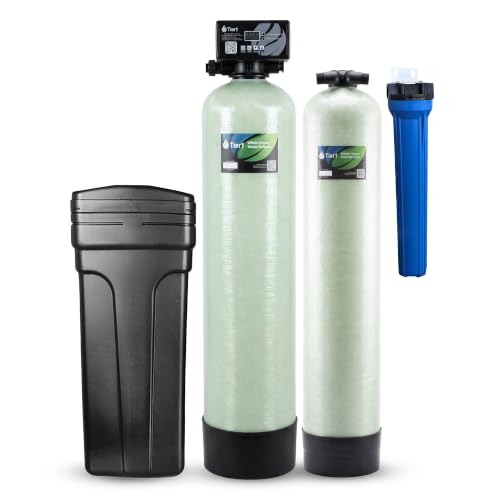
In a house where the washing machine runs most days, hard water stops being a background annoyance and becomes a laundry problem. Towels lose their softness, dark loads fade early, and scale builds inside the machine that is supposed to clean everything else. A 48,000 grain softener is the size many families land on because it covers steady laundry demand plus daily showers and dishes without regenerating every couple of days. The real decision is not the grain number itself, but how the system meters its regenerations and whether your water needs anything beyond softening.
The two systems below suit different households. One is a dedicated softener built around the Fleck 5600SXT metered valve, for families who want proven valve control and upgraded resin doing one job well. The other combines softening with chlorine filtration and sediment capture in a single 3-in-1 unit, for homes whose tap water needs more than hardness removal. Both are rated at 48,000 grains, so the comparison turns on valve behaviour and resin quality.
Quick Picks
As an Amazon Associate we earn from qualifying purchases
| Product | Best for | Key spec from title |
|---|---|---|
| AFWFilters Fleck 5600SXT 48,000 Grain Water Softener | Laundry-heavy homes that want a dedicated softener with upgraded resin | 48,000 grain capacity with Fleck 5600SXT metered valve |
| Tier1 48,000 Grain 3-in-1 Water Softener System | Homes that also need chlorine and sediment treatment | 48,000 grain softener, chlorine filter and sediment stage in one |
How to Choose
Match the capacity to your laundry rhythm
A softener’s grain rating is a budget of hardness it can remove between regenerations, and laundry spends that budget in large, uneven bursts. A family washing several loads a week, on top of showers, baths and a dishwasher, draws far more water than a household that only showers daily. At 48,000 grains, a typical family gets a comfortable buffer: capacity lasts through the busy laundry days instead of running out midweek and letting hard water slip through. Start from a real hardness test of your own water, because the same 48,000 grain tank empties much faster on very hard water than on moderately hard water.
Insist on metered, on-demand regeneration
Older timer valves regenerate on a fixed schedule whether the resin needs it or not, which wastes salt and water in weeks when laundry is light. A metered valve counts the gallons your household actually uses and only regenerates when capacity is genuinely spent. That matters for laundry-driven homes because demand swings so much: a quiet week at home and a week of guests and bedding washes look nothing alike. Both systems in this guide use metered control, so regeneration follows your real consumption. Over a year of family washing, that difference shows up in how often you haul salt bags and how much water goes down the drain at night.
Look at the resin, not just the tank size
The resin inside the tank does the actual softening, and it is also the part that wears out. Standard resin degrades faster when it sits in chlorinated municipal water, slowly losing capacity until the whole bed needs replacing. Upgraded 10 percent cross-linked resin is built to resist that chlorine attack and hold its structure longer, which suits city-water families who plan to keep the system for many years. When you compare two softeners with the same grain rating, the resin specification is one of the few differences that affects how the system performs in year eight rather than month one, so it deserves as much attention as the valve brand printed on the box.
Decide whether your water needs more than softening
Softening only removes hardness minerals. It does nothing about the chlorine taste in drinking water or the grit that arrives from ageing pipes and some wells. If your only complaint is stiff laundry and scale on fixtures, a dedicated softener is the simpler machine: one tank, one job, fewer stages to maintain. If your water also smells of chlorine or leaves sediment in the tub, a combination system that filters while it softens can cover both problems in one footprint. The trade-off is upkeep, because every extra stage is another element to monitor and eventually service. Let your water test, not the feature list, make this call.
The 2 Best Options
AFWFilters Fleck 5600SXT 48,000 Grain Water Softener

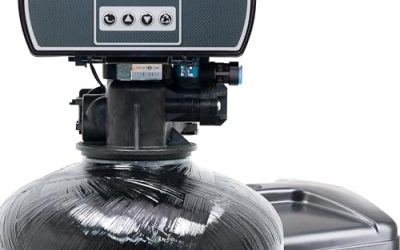
This is the straightforward choice for a family whose main battle is hard water hitting the laundry. The Fleck 5600SXT valve meters your water use with a digital on-demand control, so regeneration happens when the resin actually needs it rather than on a rigid timer. Inside, the tank comes loaded with upgraded 10 percent cross-linked resin, a meaningful detail for homes on chlorinated city water where standard resin breaks down sooner. The package includes the brine tank and a 1-inch bypass, and the tall, narrow tank profile suits a utility corner beside the water heater where floor space is tight but vertical room is available.
Specs
- Capacity: 48,000 grains
- Valve: Fleck 5600SXT digital metered on-demand control valve
- Resin: upgraded 10 percent cross-linked resin, tank supplied loaded
- Brine tank: included
- Bypass: 1-inch bypass
- Dimensions: 10 x 10 x 54 in
Best for: Families on city water who run frequent laundry and want a dedicated softener with long-life resin.
Watch out for: It softens only, so chlorine taste or sediment problems need a separate answer.
ASIN: B0B5B6LQD2
Tier1 48,000 Grain 3-in-1 Water Softener System
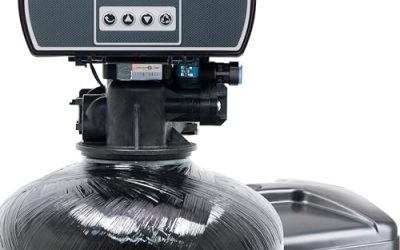
Tier1 builds three treatments into one unit: a 48,000 grain softener, a chlorine filter and a sediment stage, so it should be judged as a combined system rather than a plain softener. The softening side runs on 1.5 cu ft of cross-linked cation resin under a metered valve, and the system is sized for homes with three to four bathrooms. For a family whose laundry suffers from hard water while the tap water also carries a chlorine smell and occasional grit, this design replaces what might otherwise be two or three separate housings in the utility room, at the cost of more stages to keep track of over time.
Specs
- Capacity: 48,000 grains
- System type: 3-in-1 combination — water softener, chlorine filter and sediment filter in one system
- Resin: 1.5 cu ft cross-linked cation resin
- Valve: metered valve system
- Sizing: built for 3-4 bathroom homes
Best for: Larger families who want softening plus chlorine and sediment treatment from a single installed unit.
Watch out for: The filtration stages add maintenance beyond salt refills, so it is more system to look after than a softener alone.
ASIN: B0DNH9JLRD
Which One Fits Your Situation
Your washing machine runs almost every day
Frequent laundry is exactly the load profile a 48,000 grain capacity is meant to absorb, and metered regeneration keeps the resin ready without wasteful nightly cycles. The AFWFilters unit fits this pattern well: its on-demand Fleck valve tracks the gallons your laundry actually uses, and the upgraded cross-linked resin is the longer-wearing choice for a system that will cycle often on chlorinated water.
Your tap water tastes of chlorine as well as feeling hard
If the complaint list includes drinking water that smells like a swimming pool and grit collecting in the bath, softening alone leaves half the problem untouched. The Tier1 3-in-1 addresses hardness, chlorine and sediment in one installation, which suits a family that would rather maintain a single combined system than stack separate filters ahead of a softener.
Three or four bathrooms share one water line
More bathrooms mean more simultaneous demand and more total gallons between regenerations. The Tier1 system is explicitly sized for three to four bathroom homes, while the AFWFilters softener’s 48,000 grain capacity and metered control also handle that throughput comfortably. In this situation the deciding factor is water quality beyond hardness: clean-tasting water points to the Tier1, hardness alone points to the AFWFilters.
You want the simplest possible system to own
Some households would rather check salt every few months and think about nothing else. A dedicated softener like the AFWFilters has one treatment stage, one valve and one consumable, which keeps ownership undemanding. Combination systems earn their place only when your water genuinely needs the extra stages, so if your test shows hardness and little else, simple wins.
Common Mistakes
- Choosing a capacity from bathroom count alone, without testing hardness, even though very hard water drains a 48,000 grain tank far faster than the sizing charts assume.
- Buying a timer-controlled valve for a laundry-heavy home, so the system regenerates on quiet weeks it did not need to and runs dry during the weeks it did.
- Ignoring the resin specification and comparing only grain numbers, when cross-linked resin is what keeps capacity consistent on chlorinated city water over the years.
- Expecting a softener to fix chlorine taste or sediment, then blaming the softener when those separate water problems remain after installation.
- Forgetting the bypass and drain access at install time, which turns the first service visit or resin change into a plumbing project instead of a routine job.
Frequently Asked Questions
How often will a 48,000 grain softener regenerate in a family home?
It depends on your hardness level and how much water the household uses, which is precisely why a metered valve helps. Instead of regenerating on fixed days, the valve tracks gallons and cycles only when capacity is used up. A laundry-heavy family will cycle more often than a light-use household on the same tank, and that is normal behaviour rather than a fault.
Is 48,000 grains enough for a family of five?
For most five-person households with regular laundry, yes, provided the water is not extremely hard. Capacity is consumed by both the number of people and the hardness of the water, so a family of five on very hard well water will regenerate more frequently than the same family on city water. A hardness test before ordering turns this from a guess into a calculation.
Does a 3-in-1 system soften as well as a dedicated softener?
The Tier1’s softening stage is a full 48,000 grain bed of cation resin under a metered valve, so the softening itself is comparable. What differs is everything around it: you gain chlorine and sediment treatment in the same footprint, and in exchange you accept extra stages to maintain. If your water only needs softening, the dedicated unit is the leaner choice.
Why does the valve type matter so much for laundry demand?
Laundry use is bursty. A household might wash two loads one week and ten the next, and a timer valve cannot tell the difference. A metered valve regenerates in response to actual consumption, so salt and water are spent in proportion to the washing you really did. Over years of family laundry, that responsiveness is where most of the running-cost difference between systems comes from.
FAQ
How often will a 48,000 grain softener regenerate in a family home?
Is 48,000 grains enough for a family of five?
Does a 3-in-1 system soften as well as a dedicated softener?
Why does the valve type matter so much for laundry demand?
More from Amazon
Programs that pair well with the guide above. Offers and eligibility are set by Amazon and may change.
Free shipping on eligible items, Prime Video and more. Eligible new members can start with a free trial.
Start a Prime free trialA Prime membership for ages 18-24 with a trial period. Eligibility is set by Amazon.
See Prime for Young AdultsAudiobooks and podcasts to listen to on the go. Eligible new members can start with a free trial.
Try Audible freeAd-free music streaming. Eligible new subscribers can start with a free trial.
Try Music Unlimited freeAs an Amazon Associate we earn from qualifying purchases.