Our Top Picks
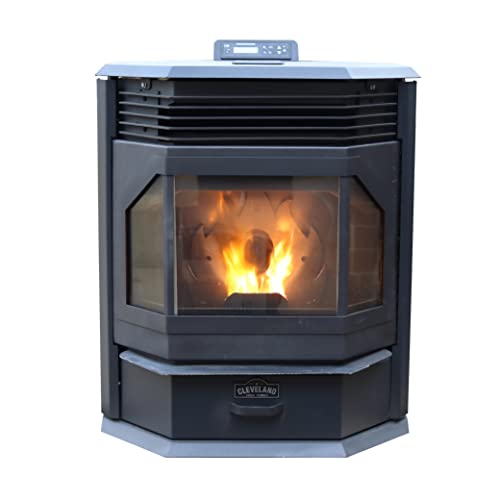 Cleveland Iron Works Bay Front Pellet Stove w/Smart66 lb hopper26.8 x 28.3 x 36.6 inches242.51 poundsCheck on Amazon


A flat-glass stove shows its fire to whoever sits directly in front of it, and to nobody else. A bay window front wraps the flame around three panes, so the fire stays visible from the sofa at one end of the family room, the reading chair angled in the corner, and the kitchen doorway behind. The real decision is whether that wraparound view fits how your room is actually arranged, and whether the stove behind the glass still covers your floor area and schedule.
These three freestanding models suit open-plan living spaces, corner placements, and families who gather around the stove rather than in front of a television. Each was chosen from its Amazon product name and listed specifications because the bay front is a defining feature, not an accessory, and together they span cast iron and steel cabinets, hoppers from 55 to 80 pounds, and both remote and WiFi control.
Quick Picks
As an Amazon Associate we earn from qualifying purchases
| Product | Best for | Key spec from title |
|---|---|---|
| Cleveland Iron Works Bayfront | Three-window cast iron centerpiece | Bayfront pellet stove with three viewing windows |
| ComfortBilt HP22-N | Corner placement with long burns | Bay view window pellet stove, 80 lb hopper |
| ComfortBilt HP22 | Classic bay front with remote control | Bay-view window pellet stove, 55 lb hopper |
How to Choose
Think in Sightlines, Not Just Square Feet
Walk your family room and count the seats from which you would want to see the fire: the sofa ends, an angled armchair, a desk in the corner, the open kitchen behind. A bay front earns its premium when two or more of those seats sit off-axis, because the angled side panes are built exactly for them. If every seat in your room faces one wall in a row, a flat front loses nothing. Sketch the seating first, then the stove position; in bay window shopping, the furniture arrangement is the specification that decides whether the design delivers its promise.
Choose a Placement the Bay Front Rewards
Bay fronts shine in two placements: pulled slightly into the room on a corner hearth, where both side panes have an audience, or centered on a short wall in an open plan where the living and dining zones each catch an angle. Pushed flat and tight into a long wall, the side glass mostly shows the flame to the walls beside it. Check that your chosen spot still satisfies the stove’s clearance and venting requirements, and that foot traffic does not pass close across the front, since a freestanding stove in a walkway is a burn risk for children and a daily annoyance for adults.
Confirm the Stove Behind the Glass
Glass sells the stove, but the firebox keeps the room warm. Check the listed heating coverage against your floor area adjusted for insulation and ceiling height, and check the hopper against your schedule: a beautiful stove that needs filling every evening becomes a chore with a view. Output figures and burn times are stated on these listings, so compare them in that order — coverage for your space, hopper for your routine, then the glass. A bay front should be the reward for choosing the right stove, never a substitute for choosing it.
Weigh Cabinet Material and Presence
A cast iron bay front carries a traditional, furniture-like presence and substantial weight, which suits a room styled around the stove. Steel cabinets with bay glass read more contemporary and can be easier to place in a modern open plan. Either way, these are heavy appliances, from 231.5 lb upward in this group, so the hearth, floor, and delivery path need planning. Consider also how the stove looks cold in July: a bay front is a large dark glass feature in the room all year, so choose a silhouette your household is happy to live with beyond the heating season.
The 3 Best Options
Cleveland Iron Works Bayfront
This is the bay front in its fullest form: a cast iron body, model No. 210 (PSBF66W), with three viewing windows wrapping the fire for an audience spread across a wide room. The 66 lb hopper and stated coverage of 1,800-2,500 sq ft put real heating substance behind the styling, with maximum output listed at 40,259 BTU. Built-in WiFi and smart home control mean the flame you are watching from the far sofa can be adjusted without crossing the room. At 231.5 lb the cast iron cabinet anchors a corner or short wall like a piece of furniture, which is precisely the role it was designed for.
Specs
- Hopper capacity: 66 lb
- Heating coverage: 1,800-2,500 sq ft
- Maximum output: 40,259 BTU per listing data
- Controls: built-in WiFi / smart home
- Construction: cast iron
- Weight: 231.5 lb
- Design: bay front design with three viewing windows
Best for: Wide, open family rooms where seating wraps around the stove and the fire is the room’s centerpiece.
Watch out for: Its presence dominates a small room; the three-window front needs space around it to be appreciated.
ASIN: B07MY7885B
ComfortBilt HP22-N
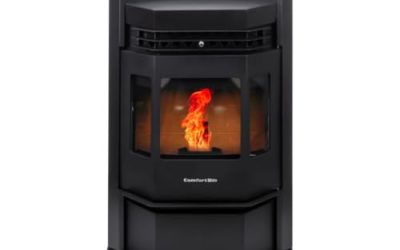
ComfortBilt’s bay view window fronts a stove built for absence as much as ambience: the 80 lb hopper is the largest in this group, with up to 36 hours of continuous burning listed on the lowest setting. Certified output is stated at 50,000 BTU with coverage up to 2,800 sq ft, and EPA and CSA certification appears on the listing. Five power settings, a programmable thermostat, and auto ignition manage the fire while the angled glass keeps it visible from seats to either side. The cabinet, 24″W x 26″D x 40″H, tucks into a corner placement where a bay front does its best work.
Specs
- Hopper capacity: 80 lb
- Output: certified 50,000 BTU output per listing
- Heating coverage: up to 2,800 sq ft
- Burn time: up to 36 hours continuous burning on lowest setting
- Certifications: EPA and CSA certified
- Controls: 5 power settings; programmable thermostat; auto ignition
- Dimensions: 24″W x 26″D x 40″H
- Window: bay view window
Best for: Corner placements in larger family rooms where the stove must also run unattended for long stretches.
Watch out for: The bay glass is one front among this stove’s priorities; the Cleveland offers the more elaborate three-window design.
ASIN: B07J1Z81RF
ComfortBilt HP22
The HP22 pairs its bay-view window with the group’s most familiar control pairing: a remote in hand and a programmable thermostat on the stove. Output is listed at 41,000 BTU/hr, with up to 20 hours of burn from the 55 lb hopper and coverage stated as up to 2,800 sq ft in mild conditions — a qualifier that suits the shoulder-season, ambiance-plus-warmth role many family rooms actually ask of a stove. EPA and CSA certification is listed. At 273 lb it is the heaviest here, a steel presence that sits best on a planned hearth against a wall where its angled panes can serve seating on both sides.
Specs
- Hopper capacity: 55 lb
- Output: 41,000 BTU/hr per listing
- Burn time: up to 20 hours
- Heating coverage: up to 2,800 sq ft in mild conditions
- Certifications: EPA and CSA certified
- Window: bay-view window
- Weight: 273 lb
- Controls: remote and programmable thermostat
Best for: Households wanting the classic bay front look with simple remote control and a long evening burn.
Watch out for: At 273 lb, repositioning after installation is a project; commit to the placement before it is set.
ASIN: B00MMV0R76
Which One Fits Your Situation
Your Seating Wraps Around a Corner
A corner hearth with chairs on both sides is the bay front’s home ground. The Cleveland Bayfront’s three windows serve the widest spread of seats, and its cast iron cabinet looks intentional from every angle. If the corner must also heat a big adjoining space, the HP22-N’s larger stated coverage and hopper make it the working alternative for the same spot.
The Stove Divides Living and Dining Zones
In an open plan where one appliance stands between the sofa area and the table, a bay front lets both zones share the fire. Choose the Bayfront for the fullest wraparound, and keep the walkway behind the stove clear in your layout. WiFi control helps here, because the person who feels cold is rarely the person sitting nearest the stove.
You Host Long Evenings Around the Fire
Gatherings stretch past the point where anyone wants to tend an appliance. The HP22-N’s 80 lb hopper and long listed burn time keep the flame steady through a full evening and the night after, while its five power settings let you turn the heat down as the room fills with people. The HP22’s remote serves the same evening with simpler means: adjust from the chair, and let the thermostat hold the room.
Your Room Is Long and Narrow
A long room seats people along both walls, which flatters a bay front placed at one short end: the side panes angle the view down the room’s length. The HP22 suits this arrangement where winters are moderate, its stated mild-conditions coverage being realistic for a single long space. Avoid centering the stove on the long wall, where half its glass would face the nearest sofa at point-blank range.
Common Mistakes
- Buying a bay front for a room where all seating faces one direction in a single row.
- Placing the stove flat against a long wall so the side windows show the fire only to the walls.
- Letting the glass decide the purchase and ignoring hopper size and stated heating coverage.
- Routing a walkway directly past a freestanding stove in a busy family room.
- Forgetting that a bay front is a year-round visual feature, not only a winter appliance.
Frequently Asked Questions
Does a bay window change how the stove heats?
The glass shape changes what you see, not how the stove makes heat; output, coverage, and burn time come from the firebox, fan, and hopper specifications on the listing. What the bay front changes is distribution of the experience: more seats share the firelight and the sense of warmth. Judge heating by the numbers first, then let the three-sided view choose between stoves that already fit your room.
Is cast iron better than steel for a bay front stove?
The listings here offer both: the Cleveland Bayfront is cast iron, while the ComfortBilt models are similar in weight. Cast iron is chosen for its traditional look and furniture-like presence; steel cabinets suit more contemporary rooms. Neither material changes the listed output figures. Decide by room style and glass design, and plan the hearth and floor for a stove that weighs well over 200 lb either way.
Where should a freestanding bay stove sit in the room?
Give it a corner or a short end wall, on a proper hearth, where both angled panes have seating within their view and no walkway crosses close in front. Keep the manufacturer’s clearances to walls and furniture, and plan the vent route first. A bay front pushed into a flat, crowded wall run wastes the feature you paid for and crowds the room’s traffic at the same time.
How do I keep the bay glass worth looking at?
Bay panes show everything, including ash film, so burn dry pellets and follow the stove’s glass-cleaning guidance; a stove run constantly at its lowest setting soils glass faster than one run at a healthy mid-range. The listings’ stated burn times assume the lowest setting, so balance endurance against a cleaner view. A weekly glass wipe with the ash routine keeps the three-window effect at its best.
FAQ
Does a bay window change how the stove heats?
Is cast iron better than steel for a bay front stove?
Where should a freestanding bay stove sit in the room?
How do I keep the bay glass worth looking at?
More from Amazon
Programs that pair well with the guide above. Offers and eligibility are set by Amazon and may change.
Free shipping on eligible items, Prime Video and more. Eligible new members can start with a free trial.
Start a Prime free trialA Prime membership for ages 18-24 with a trial period. Eligibility is set by Amazon.
See Prime for Young AdultsAudiobooks and podcasts to listen to on the go. Eligible new members can start with a free trial.
Try Audible freeAd-free music streaming. Eligible new subscribers can start with a free trial.
Try Music Unlimited freeAs an Amazon Associate we earn from qualifying purchases.