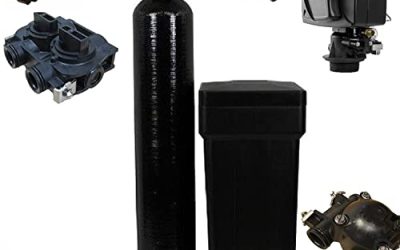
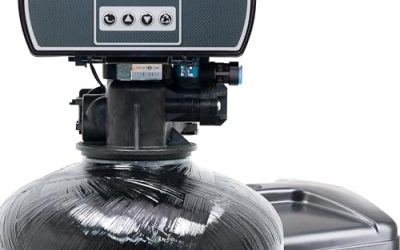
Our Top Picks

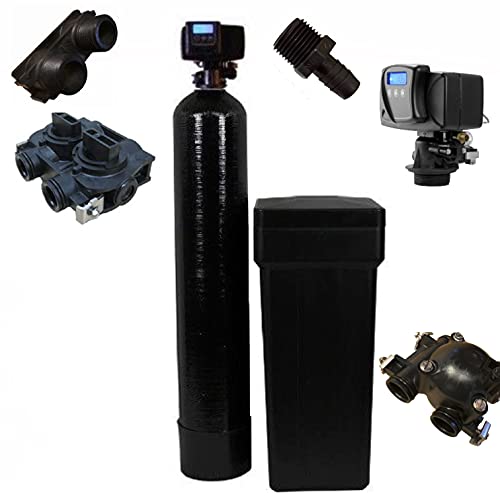

A household fighting genuinely hard water faces a specific frustration: a timer-based softener regenerates whether the resin needs it or not, burning salt and water during quiet weeks, then still runs dry when relatives visit and demand spikes. Demand initiated regeneration solves the mismatch by watching the water itself. The control head counts gallons as they pass, tracks how much softening capacity remains, and starts a regeneration only when the resin is actually nearing exhaustion.
The three systems below pair that demand-based metering with high grain capacities suited to hard water homes: a 72,000 grain Aquasure Harmony with a digital metered head, and two 64,000 grain systems built on the Fleck 5600SXT meter demand valve. Each was chosen from its Amazon listing, where the valve type is stated in the product name or specifications rather than assumed. If your hardness reading is high and your water use is unpredictable, this valve style is the feature that matters most.
Quick Picks
As an Amazon Associate we earn from qualifying purchases
| Product | Best for | Key spec from title |
|---|---|---|
| Aquasure Harmony AS-HS72D | Hard water homes wanting the largest metered capacity | 72,000 grain |
| DuraWater Fleck 5600SXT 64,000 Grain | Buyers who want a paddle wheel meter on a Fleck valve | 64,000 grain |
| AFW Premium Fleck 64,000 Grain | On-demand regeneration with a 1-inch bypass included | 64,000 grain |
How to Choose
Understand What the Meter Actually Counts
A demand initiated system meters flow, not time. As water moves through the valve, a turbine or paddle wheel meter tallies gallons, and the control board subtracts the hardness those gallons carried from the resin’s remaining capacity. When the reserve approaches its limit, the head schedules regeneration, typically for a low-use hour. The DuraWater listing specifically names an upgraded paddle wheel meter on its Fleck 5600SXT, which is the component doing that counting. When comparing listings, look for the meter described explicitly; a digital display alone does not prove the valve regenerates on demand rather than by calendar.
Contrast Demand Control With a Timer Head
Timer heads regenerate every set number of days, full stop. In a hard water household that wastes salt twice over: regenerating fresh resin after a vacation week, and offering no flexibility when a houseful of guests doubles consumption between scheduled cycles. Demand control inverts both problems, regenerating after use rather than before it. The practical result is fewer cycles across a year, less brine discharged, and capacity that is actually available on the household’s heaviest days. If a listing describes its valve as metered, meter demand or on-demand, it belongs to this family; time-clock descriptions do not.
Size the Tank Behind the Valve Generously
Demand metering stretches a tank, but it cannot create capacity the resin does not hold. On hard water, each gallon consumes more grains of capacity, so a household that would manage on a mid-size system with soft municipal water may exhaust the same tank quickly. The systems here start at 64,000 grains, and the Aquasure reaches 72,000, sized by its listing for four to six or more bathrooms and up to seven people. Test your hardness first, estimate daily gallons honestly, and let the meter do the fine-tuning afterward. Valve intelligence and tank size solve different halves of the same problem.
Look at Resin Grade and Valve Serviceability
Because a demand system regenerates less often, the resin bed spends more days in service between cycles, and resin quality shows over years of use. Two of these systems specify upgraded resin: the DuraWater loads up to 2 cubic feet of 10 percent commercial grade cation resin, and the AFW uses an upgraded 10 percent resin as well. The Fleck 5600SXT platform on both also matters for ownership, since its parts and service knowledge are widespread among plumbers. When a listing names both the valve model and the resin grade, you can judge the machine’s working parts instead of trusting a capacity number alone.
The 3 Best Options
Aquasure Harmony AS-HS72D 72,000 Grain Water Softener
Aquasure’s flagship in this group combines the largest grain capacity here with a high efficiency digital metered control head, so the regeneration decision is driven by gallons your household truly used. That pairing suits hard water homes where demand lurches between ordinary weeks and full-house weekends: the meter holds off while the house is quiet, then regenerates promptly after heavy use. The listing sizes the system for four to six or more bathrooms and up to seven people, underlining that the capacity is meant for real volume. It is the straightforward choice when hardness and headcount are both working against you.
Specs
- Grain capacity: 72,000 grains
- Control head: High Efficiency Digital Metered
- Sizing: 4-6+ bathrooms, up to 7 people
Best for: Hard water households of up to seven people that want demand metering on the largest tank here.
Watch out for: The listing does not publish resin volume, so judge it on capacity and valve type rather than bed size.
ASIN: B0DFHT2BV2
DuraWater Fleck 5600SXT 64,000 Grain Water Softener
This DuraWater build is the clearest expression of the demand concept in the group, because its listing names the mechanism: a Fleck 5600SXT meter demand valve fitted with an upgraded paddle wheel meter. Every gallon is counted as it passes that wheel, and regeneration follows consumption instead of the calendar. Behind the valve sits a tank loaded with up to 2 cubic feet of 10 percent commercial grade cation resin, giving the meter a substantial bed to manage. The tank measures 52 by 12 by 12 inches. For buyers who want the metering hardware itself spelled out before purchase, this listing leaves the least to inference.
Specs
- Grain capacity: 64,000 grains
- Valve: Fleck 5600SXT Meter Demand with upgraded paddle wheel meter
- Resin: up to 2 cu ft 10% commercial grade cation resin, loaded tank
- Dimensions: 52 x 12 x 12 in
Best for: Buyers who want the demand meter named in the specifications and a pre-loaded resin tank.
Watch out for: Its 64,000 grain ceiling sits below the Aquasure, so very hard water plus seven people may stretch it.
ASIN: B075XTWHK6
AFW Premium Fleck 64,000 Grain Water Softener
AFW’s entry runs the same 5600SXT family in metered on-demand form, so regeneration follows the household’s actual draw on the resin. The package adds two installation-friendly details: an upgraded 10 percent resin bed and a 1-inch bypass, with the brine tank included in the box. The mineral tank is listed at 12 by 12 by 48 inches, a compact footprint for this capacity class. For a hard water home with 1-inch supply lines, the combination of demand control and the right bypass size removes the two most common ordering mistakes at once, and the included brine tank means one less component to source separately.
Specs
- Grain capacity: 64,000 grains
- Valve: Fleck 5600SXT Metered On-Demand
- Resin: upgraded 10% resin
- Bypass: 1-inch
- Brine tank: included
- Dimensions: 12 x 12 x 48 in
Best for: Hard water homes with 1-inch plumbing that want on-demand regeneration and an included brine tank.
Watch out for: Plan floor space for the separate brine tank even though it is included in the purchase.
ASIN: B0B5BBP49C
Which One Fits Your Situation
Water Hardness That Punishes Small Systems
When a hardness test comes back high, capacity disappears quickly and regeneration timing becomes critical. A demand head protects you at both ends: it will not waste a cycle after a light week, and it will not leave exhausted resin in service because the calendar says wait. Pair that with the Aquasure’s 72,000 grains if your household is also large, or either 64,000 grain Fleck system if your headcount is moderate but your water is severe.
A Home That Empties and Fills With the Seasons
Second homes, shift-work households and families who host often all share spiky water use. Timer heads handle spikes badly, regenerating on empty weeks and lagging on busy ones. Demand initiated regeneration follows the house’s real rhythm, which is precisely the scenario these three systems were picked for. The metered Fleck systems suit owners who like established valve hardware; the Aquasure suits owners who would rather have the largest reserve and a digital metered head managing it.
Salt Bills That Feel Too High
If you are hauling salt bags more often than your water use seems to justify, an over-regenerating timer is the usual suspect. Switching to demand control cuts cycles to the ones the resin actually needs, and the saving compounds across a year of operation. The effect is largest in homes whose occupancy varies, but even a steady household benefits when regeneration tracks gallons instead of dates. Any of the three systems here replaces schedule-based regeneration with consumption-based regeneration.
A Plumber Will Service Whatever You Buy
Owners who rely on a local plumber for long-term service often prefer valve platforms the trade knows. The Fleck 5600SXT on the DuraWater and AFW systems is one of the most widely serviced control valves in residential softening, and both listings pair it with upgraded resin. The Aquasure’s digital metered head is the alternative for buyers comfortable with a manufacturer-specific control. Decide which service path you prefer before ordering.
Common Mistakes
- Assuming any digital display means demand regeneration, when some digital heads still run on a timer.
- Blaming salt use on the tank size instead of on how often the valve regenerates.
- Sizing capacity from a guess instead of a measured hardness figure.
- Ignoring the meter type in the listing and never confirming how flow is counted.
- Forgetting that demand control still needs correct hardness programming at setup to count accurately.
Frequently Asked Questions
How does demand initiated regeneration save salt?
A metered head regenerates only when the resin approaches exhaustion, so each cycle restores a bed that was genuinely used up. A timer head regenerates on schedule even when the resin is barely touched, spending salt and water to refresh capacity nobody consumed. Over a year, eliminating those unnecessary cycles is where the saving comes from, and it is largest in households whose water use varies from week to week.
Does a metered softener ever regenerate at a bad time?
The control counts gallons and typically holds the regeneration for a programmed low-use hour, often overnight, once the reserve runs low. Because the reserve is sized to carry the household through the remaining day, running dry mid-shower is unlikely when the hardness setting is programmed correctly. That reserve behaviour is a core part of demand control design, distinguishing it from both timers and from purely immediate systems.
Is demand regeneration worth it on very hard water?
Yes, and arguably it matters more there. Hard water consumes resin capacity quickly, which makes a timer’s fixed schedule a poor fit: too frequent in light weeks, too late in heavy ones. A meter tracks the actual hardness load gallon by gallon, so regeneration follows the water you really have. Pairing demand control with a 64,000 or 72,000 grain tank, as in this roundup, covers both timing and capacity.
What is a paddle wheel meter on the Fleck 5600SXT?
It is the flow-sensing component inside the valve assembly: moving water spins the paddle wheel, and the control board converts those rotations into gallons counted toward the resin’s remaining capacity. The DuraWater listing calls out an upgraded paddle wheel meter on its 5600SXT, which is the hardware that makes demand initiated regeneration possible on that system. Without a meter of some kind, a valve cannot regenerate based on use.
FAQ
How does demand initiated regeneration save salt?
Does a metered softener ever regenerate at a bad time?
Is demand regeneration worth it on very hard water?
What is a paddle wheel meter on the Fleck 5600SXT?
More from Amazon
Programs that pair well with the guide above. Offers and eligibility are set by Amazon and may change.
Free shipping on eligible items, Prime Video and more. Eligible new members can start with a free trial.
Start a Prime free trialA Prime membership for ages 18-24 with a trial period. Eligibility is set by Amazon.
See Prime for Young AdultsAudiobooks and podcasts to listen to on the go. Eligible new members can start with a free trial.
Try Audible freeAd-free music streaming. Eligible new subscribers can start with a free trial.
Try Music Unlimited freeAs an Amazon Associate we earn from qualifying purchases.