Our Top Picks
The Unigear 1000D leg gaiter is the best all-around pick here for hikers who face real snow and mud, because it covers the full lower leg, uses a tough nylon lower panel and locks under the boot with a thick instep strap. A hiking gaiter is a fabric cuff that seals the gap between your pant leg and your boot so snow, slush, mud and grit stay outside. If your hikes are short, packed-down or mostly muddy rather than deep, the Frelaxy models and the low-profile ankle options below can make more sense, and this guide explains exactly where each one fits.
Quick List
- gear envie Hikas Ankle Gaiters – best for light snow, mud, sand and tick-season trail hikes where low profile matters
- Frelaxy Leg Gaiters (first listing) – best for wet-brush and snow hikes with a rubber instep strap
- Winter Snow Gaiters (universal fit) – best for casual snow walks and snowshoe approaches when you want a simple ankle cover
- Unigear 1000D Leg Gaiters (first listing) – best all-rounder for deep snow, slush and hard-wearing boot coverage
- Frelaxy Leg Gaiters (second listing) – best for buyers who want the Frelaxy design in another size or color
- Unigear 1000D Leg Gaiters (second listing) – best for buyers who want the Unigear design in another size or color
Which One Is Right for You?
| If you… | Choose |
|---|---|
| hike in deep snow, slush or wet powder and need calf-high coverage | Unigear 1000D Leg Gaiters (first listing) |
| want a rubber instep strap and a full-length hook-and-loop opening | Frelaxy Leg Gaiters (first listing) |
| wear sneakers or low trail shoes and mostly fight mud, sand and ticks | gear envie Hikas Ankle Gaiters |
| only need a basic ankle cover for packed winter trails | Winter Snow Gaiters (universal fit) |
| like the Frelaxy design but need a different size or color | Frelaxy Leg Gaiters (second listing) |
| like the Unigear design but need a different size or color | Unigear 1000D Leg Gaiters (second listing) |
Height is the first filter. Tall gaiters keep out knee-deep drifts and splashing creek mud; ankle gaiters only guard the opening of the boot. After that, check how the gaiter attaches under your sole, because a strap that slides or snaps ends the day early. Finally match the size to your calf and your boot, not to a letter on a chart.
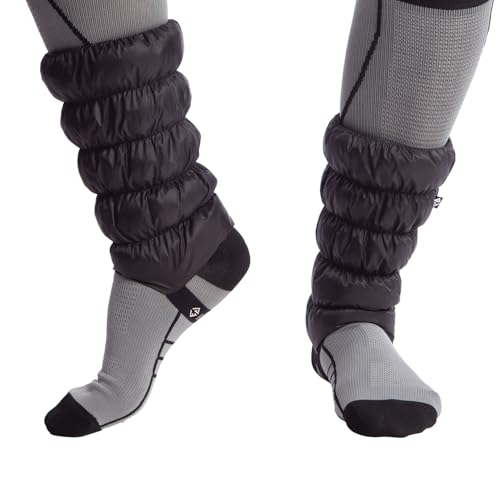
gear envie Hikas Gaiters, Black Onyx - One Size Water Resistant Ankle Gaiters for Hiking, Snow, Mud, Sand & Tick Protection, Cozy Recycled Lightweight Outdoor Cuffs for Boots & Sneakers
Chosen because it specifies Black Onyx and One Size Water Resistant Ankle Gaiters for Hiking.
View on Amazon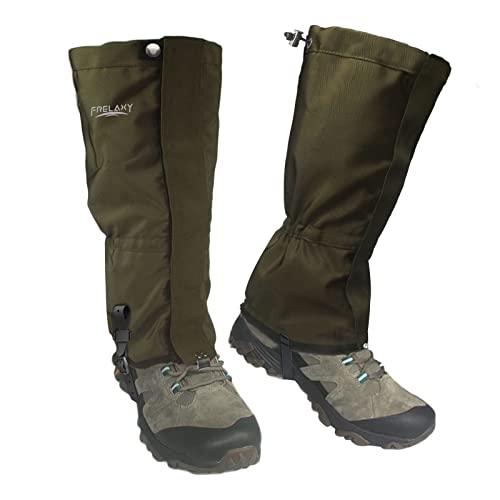
Frelaxy Leg Gaiters 100% Waterproof Hiking Gaiters, Hunting Gaiters with Upgraded Rubber Foot Strap, Adjustable Snow Boot Gaiters for Skiing Motorcycle Snowshoeing (Olive Green, L)
Chosen because it specifies Hunting Gaiters with Upgraded Rubber Foot Strap.
View on Amazon
Winter Snow Gaiters for Hiking - Waterproof Ankle Covers for Snow Trekking, Skiing - Universal Fit Men Women (Black)
Chosen because it specifies Waterproof Ankle Covers for Snow Trekking and Skiing.
View on Amazon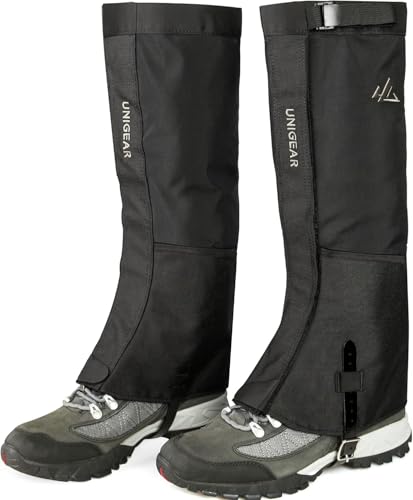
Unigear Leg Gaiters, 1000D Waterproof Boot Gaiters for Hiking Snow Hunting | snow gaiters, durable 1000D fabric, waterproof boot coverage for walking, climbing, hunting, skiing and outdoor use
Chosen because it specifies 1000D Waterproof Boot Gaiters for Hiking Snow Hunting and snow gaiters.
View on Amazon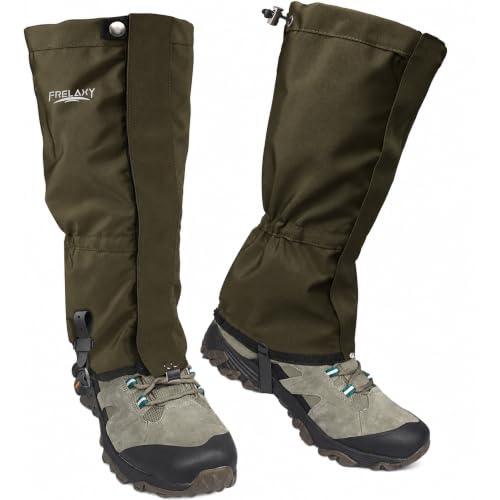
Frelaxy Leg Gaiters 100% Waterproof Hiking Gaiters, Hunting Gaiters with Upgraded Rubber Foot Strap, Adjustable Snow Boot Gaiters for Skiing Motorcycle Snowshoeing (Olive Green, XL)
Chosen because it specifies Hunting Gaiters with Upgraded Rubber Foot Strap and XL).
View on AmazonUnigear Leg Gaiters, 1000D Waterproof Boot Gaiters for Hiking Snow Hunting | snow gaiters, durable 1000D fabric, waterproof boot coverage for walking, climbing, hunting, skiing and outdoor use
Chosen because it specifies 1000D Waterproof Boot Gaiters for Hiking Snow Hunting and snow gaiters.
View on AmazonAll 6 Picks in Detail
1. gear envie Hikas Ankle Gaiters – Best for light snow, mud and tick-season trails
As an Amazon Associate we earn from qualifying purchases at no extra cost to you.

The Hikas is a very different product from the tall gaiters in this guide, and that is worth saying plainly. It is a one-size, water-resistant ankle gaiter in Black Onyx, sold for hiking, snow, mud, sand and tick protection and meant to be worn with boots or sneakers. It is a runner-up for serious snow work, because it guards the boot opening instead of covering the shin and calf.
Where it shines is on hikes where full gaiters feel like overkill. The cuff sits close to the ankle, so it stays out of the way on warm, muddy days and dries quickly. It also works as a physical barrier against ticks and trail debris, though no gaiter can guarantee you will not be bitten, and the listing describes a barrier, not an insect-repellent treatment.
- Ankle-height, low-profile cuff for boots and sneakers
- One-size design; check how it fits your shoe width on the listing
- Water-resistant, not fully waterproof, per the listing name
- Marketed for snow, mud, sand and tick protection
- Lightweight recycled-material construction as named in the listing
Pros
- Barely noticeable on the foot, so it suits long, warm walks
- Works with low shoes where tall gaiters will not fit
Cons
- Will not stop snow from topping the cuff in deep drifts
- Water-resistant only, so expect wet socks in slush
Compared with the Winter Snow Gaiters below, the Hikas is the more trail-oriented cuff, while the Winter Snow model leans toward cold-weather outings.
2. Frelaxy Leg Gaiters (first listing) – Best for wet brush and snow with a rubber instep strap
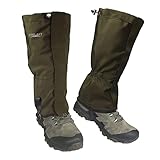
Frelaxy builds this gaiter for hiking, hunting and snow boots, and the listing leans on two features: a 100 percent waterproof claim and an upgraded rubber foot strap. A rubber instep strap resists the abrasion of rocks and icy crust better than thin webbing, which matters because the strap takes more punishment than any other part of a gaiter.
It is a full lower-leg design, so it covers the gap between boot top and knee area where wet brush and snow tend to soak pants. Frelaxy markets it in several sizes, and sizing is the main purchase decision. Pick the size that matches your calf and boot volume, and confirm the exact size and color of this listing on the product page before buying.
- Full lower-leg coverage for snow, mud and wet brush
- Upgraded rubber foot strap per the listing name
- Adjustable closure for different calf sizes; confirm details on the listing
- Marketed as 100 percent waterproof by the seller
- Intended for hiking, hunting and snow-boot use
Pros
- Rubber strap is more abrasion-resistant than plain webbing
- Good coverage for mixed snow and wet-brush hikes
Cons
- Fit depends heavily on choosing the right size
- Waterproof fabric breathes less than lighter ankle covers
Next to the Unigear, the Frelaxy is the choice if you prefer a rubber strap, while the Unigear emphasizes its 1000D lower panel.
3. Winter Snow Gaiters (universal fit) – Best for casual snow walks and simple ankle protection

This generic-named model is sold as waterproof ankle covers for snow trekking and skiing, with a universal fit for men and women in black. The word ankle matters: it is not a tall mountaineering gaiter, and it should be treated as a lighter, simpler option for packed winter trails, short snowshoe approaches and mixed slush.
Because the listing name does not state the fabric, the closure type or the strap material, treat those details as unknown until you check the product page. A universal-fit product can be a good thing for gift buying or for shared gear, but it also means the fit is a compromise for very large boots or thick calves.
- Ankle-height cover, per the listing name
- Marketed as waterproof for snow trekking and skiing
- Universal fit for men and women; confirm size range on the listing
- Black color
- Fabric, strap and closure details: confirm on listing
Pros
- Simple and light for casual winter walks
- One size removes the guesswork for occasional users
Cons
- Not enough height for deep snow or knee-high drifts
- Few specifics in the listing name, so more checking is needed
Compared with the Hikas, this one is aimed squarely at snow, while the Hikas is built around low-profile trail use and tick season.
4. Unigear 1000D Leg Gaiters (first listing) – Best all-rounder for deep snow and slush
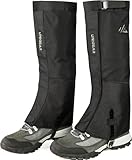
The Unigear is the most fully described tall gaiter in the set. The listing calls out a durable 1000D fabric and waterproof boot coverage for hiking, snow and hunting, and the brand describes a lighter, breathable panel higher on the leg with the heavy 1000D nylon around the lower leg where boots and brush do the damage. That split is a sensible design, since the lower section needs abrasion resistance and the upper section benefits from airflow.
It attaches with a thick instep strap and a hook-and-loop front, with an adjustable strap at the top. Owners of similar Unigear gaiters often mention that the sizing runs on the snug side, so if you wear a bulky winter boot or heavy pants, consider sizing up and check the size chart for this specific listing.
- 1000D fabric for the lower leg, per the listing name
- Waterproof boot coverage for snow, slush and mud
- Instep strap and front hook-and-loop closure; confirm details on the listing
- Adjustable top strap to cinch around the calf
- Sold in multiple sizes and colors; confirm yours on the listing
Pros
- Strong abrasion resistance where it counts
- Calf-high coverage handles deep snow better than ankle models
Cons
- Can run snug over bulky boots and layered pants
- Taller coverage means less airflow on warm days
Compared with the Frelaxy, the Unigear is the pick for heavier abrasion and cold, wet conditions, while the Frelaxy is the pick if you want a rubber instep strap.
5. Frelaxy Leg Gaiters (second listing) – Best for a different size or color of the Frelaxy design
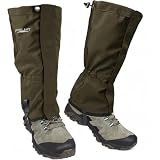
This is a second listing of the same Frelaxy leg gaiter family, with the same 100 percent waterproof claim and upgraded rubber foot strap in the listing name. The reason to list it separately is practical: gaiters are sold by size, and a size that fits a slim calf will not fit a hunter in insulated pants. Having two listings gives you more than one size or color option to compare.
Everything in the previous Frelaxy section applies. The listing name does not state which size or color this version is, so confirm both on the product page, and take a quick measurement of your calf circumference over the clothes you plan to wear before you order.
- Same Frelaxy leg gaiter design as the first listing
- Rubber foot strap and waterproof coverage per the listing name
- Intended for hiking, hunting, skiing and snow boots
- Size and color: confirm on the listing
- Adjustable fit; confirm closure details on the listing
Pros
- Gives you another size or color choice in a proven-style design
- Tall, protective coverage for wet and snowy terrain
Cons
- Easy to order the wrong size if you skip the chart
- Less breathable than ankle-height covers
Choose this listing over the first Frelaxy only if its size or color suits you better; otherwise the two are interchangeable, and the nearest alternative is the Unigear.
6. Unigear 1000D Leg Gaiters (second listing) – Best for a different size or color of the Unigear design
The second Unigear listing carries the same 1000D waterproof boot gaiter wording as the first, aimed at hiking, snow and hunting. As with the Frelaxy pair, the practical reason to look at both listings is the size and color range, since a tall gaiter that is too tight at the calf will gap or slide while one that is too loose lets snow in.
Because the listing name does not say which size or color this entry covers, confirm that on the product page. If you hike in bulky winter boots, lean toward the larger size option and check that the instep strap length reaches comfortably under your sole.
- Same Unigear 1000D design as the first listing
- Waterproof boot coverage for snow, mud and hunting use
- Instep strap and hook-and-loop closure; confirm on the listing
- Calf-high coverage
- Size and color: confirm on the listing
Pros
- Durable lower-leg fabric for rough ground and ice crust
- Another size or color option within a well-described design
Cons
- Sizing can run tight over thick boots
- Not the lightest choice for warm, muddy days
Pick this listing when its size or color matches your needs; otherwise it behaves like the first Unigear, and the nearest alternative is the Frelaxy.
Specs Compared
| Model | Height class | Waterproofing (per listing) | Fabric | Under-boot strap | Sizing |
|---|---|---|---|---|---|
| gear envie Hikas | Ankle | Water resistant | Recycled lightweight material; confirm on listing | Thin stirrup-style; confirm on listing | One size |
| Frelaxy (first listing) | Full lower leg | Sold as 100% waterproof | Confirm on listing | Upgraded rubber foot strap | Multiple sizes; confirm on listing |
| Winter Snow Gaiters | Ankle | Sold as waterproof | Confirm on listing | Confirm on listing | Universal fit |
| Unigear 1000D (first listing) | Full lower leg | Waterproof boot coverage | 1000D | Instep strap; confirm material on listing | Multiple sizes; confirm on listing |
| Frelaxy (second listing) | Full lower leg | Sold as 100% waterproof | Confirm on listing | Upgraded rubber foot strap | Confirm size on listing |
| Unigear 1000D (second listing) | Full lower leg | Waterproof boot coverage | 1000D | Instep strap; confirm material on listing | Confirm size on listing |
How We Chose These
We did not run field trials on these gaiters. Instead we compared the listed products by their published specifications and what each manufacturer says on its own product page: coverage height, the fabric and waterproofing claims, how the gaiter attaches under the boot, how it closes around the leg, and the range of sizes offered. We also weighed the practical trade-offs that hikers describe in published buying advice, such as breathability against coverage and the wear that instep straps take on rocks and ice. Where a listing does not state a spec, we say so and ask you to confirm it on the product page. Products that do not fit the snow-and-mud brief at full height are labeled plainly as lower-profile alternatives.
What to Look For
Height: match the gaiter to your worst conditions
Gaiters fall into three rough height classes. Ankle gaiters, about the height of the boot collar, keep trail grit and light snow out of shoes and boots. Mid-calf models, roughly eight to twelve inches tall, handle mud, wet brush and snow up to around a foot. Knee-high designs, often fifteen to eighteen inches, are meant for deep snow and storms. A good rule of thumb is to choose for the worst day you expect, not the average one: if you will ever post-hole in drifts, ankle gaiters are the wrong tool, but if your winter walking is packed trail, a taller gaiter will simply be warmer than you need.
Waterproof fabric versus breathability
A gaiter that is fully waterproof keeps slush out, yet it also traps sweat and heat from your lower legs. For snow and slush a waterproof lower panel is worth it, and a breathable upper panel helps. For muddy but mild days, a water-resistant fabric dries faster and feels better. Fabric weight in denier, such as 900D or 1000D, tells you about abrasion resistance rather than waterproofing, so read a gaiter listing for both numbers: the denier for toughness and the waterproof or coating claim for water protection.
Instep straps and closures
The strap under your boot lives a hard life. Rubber, TPU or coated webbing straps last longer than thin fabric, and a strap that is adjustable or replaceable gives you a fix when it wears out. At the top, look for a drawcord, buckle or elastic that snugs the gaiter around the calf so it does not slide down, and at the front a wide hook-and-loop strip or zipper that closes without gaps. Frozen hook-and-loop can lose grip, so keep it clean of grit.
Sizing: measure before you buy
Most poor gaiter experiences come from sizing. Measure your calf circumference over the pants you will wear in winter, check the size chart for the listing, and compare the boot dimensions the gaiter is meant to cover. If you are between sizes or use bulky insulated boots, go up a size. A worked example: if your calf measures 16 inches with fleece pants on and the chart range for a medium tops out at 15.5 inches, order the large, because a gaiter stretched to its limit will wear out sooner and gap at the seam.
Compatibility with boots and snowshoes
Low trail shoes need low-profile cuffs, while stiff winter boots can handle tall gaiters with a front lace hook. If you use snowshoes, make sure the instep strap and any buckle do not conflict with the binding straps, and tuck the gaiter over your pant legs so snow cannot sneak in at the top.
Seams, weight and how long the gaiter lasts
Seams are where water gets in first, so look for descriptions such as sealed, taped or reinforced seams, and remember that a “waterproof” label on a listing is a seller claim you should read alongside the fabric details. Weight matters less than people expect: most tall gaiters weigh a few ounces per pair, so the real penalty is bulk in your pack, not grams. Longevity depends on the instep strap, the buckles and the hook-and-loop closure. Rinse grit out of the closure after muddy trips, check the strap for fraying before every winter season, and carry a small repair item such as a spare cord or strip of tape on long routes. A gaiter that survives one rough season usually survives several if you treat those three parts well.
Layering with your pants and boots
Gaiters work best when the pant leg falls outside the boot and inside the gaiter, so the water runs down the outside of everything instead of into the boot. Slim softshell or hardshell pants are easier to fit than baggy cotton. If you wear insulated boots with a wide cuff, test the gaiter at home with the exact socks and pants you plan to hike in, and walk around the room to see whether anything pinches behind the knee or at the ankle bone. Adjust the top before you leave the trailhead, because cold fingers make late adjustments difficult.
Questions
Do I need gaiters for hiking in snow?
You do not need them on every snowy hike, but they help a lot once snow gets deeper than your boot collar. They keep snow from melting inside your boots and keep pant cuffs dry. For short, packed-down trails you can often manage with waterproof boots and pants alone.
What is the difference between ankle gaiters and leg gaiters?
Ankle gaiters cover only the boot opening and the top of the foot, which suits mud, sand, ticks and light snow. Leg gaiters rise up the shin and calf, so they block deeper snow and wet brush. Choose by the depth and wetness you expect.
Are waterproof gaiters hot to wear?
They can be, especially on active uphill hikes, because the fabric limits airflow around the lower leg. A breathable upper panel and an adjustable top help, and many hikers simply switch to ankle gaiters or lighter fabric on milder days.
How do I keep gaiters from sliding up or down?
Make sure the size matches your calf, tighten the top strap or drawcord, and seat the instep strap firmly under your boot sole. A strap that is too long or too short is the usual cause of movement, so adjust it while the boot is on.
Can gaiters help with ticks?
A gaiter that seals the gap at your ankle can act as a physical barrier, which reduces the chance of a tick crawling inside your pants or boots. It does not guarantee protection, so keep checking your body and clothes after walks in tick country.
How should I clean and store gaiters?
Rinse off mud and salt with fresh water, let them air dry away from direct heat, and clear grit out of the hook-and-loop strip. Dry gaiters last longer, and clean straps keep their grip.
Update History
- October 20, 2026 – Initial publication; product set drawn from current catalog listings.
- Check the product page for current specifications and availability before buying.
Sources
- Manufacturer and brand product pages for gear envie, Frelaxy and Unigear gaiters
- Retailer listing titles and specification fields for each listed product
- Published gaiter buying guides from outdoor retailers and gear-review sites for height, strap and sizing guidance