Our Top Picks
 BearVault BV500 Journey Bear Resistant Food ContainerBV500 Journey XL8.7 x 8.7 x 12.7 inches2.5 poundsCheck on Amazon
 BearVault BV475 Trek Portable Bear Resistant CanisterBV475 Trek L8.7 x 8.7 x 10.5 inches2.25 PoundsCheck on Amazon
 BearVault BV450 Jaunt Portable Bear Canister for BackpackingBV450 Jaunt M8.7 x 8.7 x 8.3 inches2.1 poundsCheck on Amazon
 Udap BRC No-Fed-Bear Food Container Bear Resistant Black/RedOne Size0 x 8 x 10 inches2.4 poundsCheck on Amazon
The best bear resistant food canister in this group is the BearVault BV500 Journey, an extra-large, clear-walled container that holds about a week of solo food and carries both IGBC and Sierra-area approvals according to the maker. A bear resistant canister is a hard-sided, lockable container that keeps food, trash and scented items out of a bear's reach when you camp in bear country. The six listings below range from the compact BV450 for short trips to the larger BV500 for longer routes, plus two Udap No-Fed-Bear versions and one unbranded ultralight canister whose approvals you should verify before relying on it.
Quick List
- BearVault BV500 Journey – best overall for week-long trips and widest approval coverage
- BearVault BV475 Trek – best for trips of five or six days where you want a mid-size clear canister
- BearVault BV450 Jaunt – best for weekend and short backpacking trips
- Udap No-Fed-Bear with Carrying Case – best for a coin-opened canister that comes with a carry case
- Udap BRC No-Fed-Bear Black/Red – best for the standard Udap canister at a similar capacity
- Ultralight Bear Canister (unbranded listing) – runner-up for weight-conscious hikers who confirm certification first
Which One Is Right for You?
| If you… | Choose |
|---|---|
| Hike a week or more and carry plenty of food | BearVault BV500 Journey |
| Plan a Yosemite or Sierra trip and need a widely accepted canister | BearVault BV450 Jaunt or BV500 Journey |
| Take two- to three-night trips and want the lightest of the BearVault line | BearVault BV450 Jaunt |
| Want a canister that opens with a coin and comes with a case | Udap No-Fed-Bear with Carrying Case |
| Prefer a basic Udap canister without extras | Udap BRC No-Fed-Bear Black/Red |
| Care most about low weight and will confirm certification yourself | Ultralight Bear Canister (unbranded) |
| Want a mid-size clear canister for four to six days | BearVault BV475 Trek |
Before you buy, check the rules for the area where you will camp. Some parks and wilderness areas maintain their own approved-container lists, and a canister that is certified by the Interagency Grizzly Bear Committee (IGBC) may still not appear on a specific park's list. The BV475 and the unbranded listing are the two models in this group that need that extra check.
BearVault BV500 Journey Bear Resistant Food Container - Extra Large
Chosen because it specifies Extra Large.
View on AmazonBearVault BV475 Trek Portable Bear Resistant Canister - Large
Chosen because it specifies Large.
View on AmazonBearVault BV450 Jaunt Portable Bear Canister for Backpacking - Medium
Chosen because it specifies Medium.
View on Amazon
NO-FED-BEAR UDAP Bear Resistant Canister, Hiking Camping Backpacking Hunting Food Storage Container with Carrying Case, 2 Gallons,8” x 10”, BRCWC
Chosen because it specifies 2 Gallons and 8” x 10”.
View on AmazonUdap BRC No-Fed-Bear Food Container Bear Resistant Black/Red
Picked as a relevant option in this category.
View on Amazon
Bear Canister for Backpacking, Ultralight Bear Canister for Backpacker-Friendly, Bear Resistant Container for Food Storage with Anti-Opening Device, Waterproof and Airtight, 7.2L
Chosen because it specifies Ultralight Bear Canister for Backpacker-Friendly and Waterproof and Airtight.
View on AmazonAll 6 Picks in Detail
1. BearVault BV500 Journey – Best Overall for Week-Long Trips
As an Amazon Associate we earn from qualifying purchases at no extra cost to you.
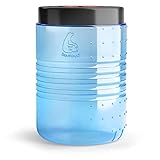
The BV500 Journey is the largest canister in the BearVault line and the one most often used on long trips. Maker and review data put the capacity at about 11.5 liters (700 cubic inches) and the weight at about 2 pounds 9 ounces, with a height near 12.7 inches and a diameter near 8.7 inches. It suits solo hikers on week-long routes or two people on a shorter trip, and its clear walls let you see the contents without unpacking the lid.
- Size class: extra large, about 11.5 L (700 cubic inches)
- Weight: about 2 lb 9 oz (sources vary by an ounce or two)
- Height about 12.7 in, diameter about 8.7 in
- Clear walls for quick inspection
- Screw-top lid with a built-in grip, no tools needed
- IGBC and Sierra-area (SIBBG) approvals, per the maker
Pros
- Large enough for about a week of solo food
- Approved for use in parks that require a canister
- Clear body makes packing easier
Cons
- Heaviest and tallest BearVault; can be awkward in smaller packs
- Bulky shape limits how it packs inside a 40-liter bag
Compared with the BV475, it holds more food and has broader approvals, but the BV475 is lighter and shorter.
2. BearVault BV475 Trek – Best for Mid-Length Trips

The BV475 Trek sits between the BV450 and the BV500. Sources list it at about 9.3 liters (565 cubic inches), roughly 37 ounces, and about 10.5 inches tall, which usually covers five or six days of food for one person. It suits hikers who find the BV500 too big but outgrow the BV450 on longer trips.
- Size class: large, about 9.3 L (565 cubic inches)
- Weight: about 35 to 37 oz depending on the source
- Height about 10.5 in; same 8.7 in diameter as the BV500
- Clear body and screw-top lid
- IGBC-certified; may not appear on every named park list
Pros
- Good balance of capacity and weight
- Clear walls and tool-free lid
- Fits more packs than the BV500
Cons
- Sierra-area listing status needs checking before a Yosemite or Sequoia trip
- Weight sits close to the larger model
Its mid-size footprint also makes it easier on the pack. A hiker with a 50-liter bag can usually slide the BV475 in vertically beside a sleeping bag, which leaves room for a stove, clothing and a shelter. Because the same diameter as the BV500 is used, the packing habits that work for one transfer to the other, so you can borrow a friend's canister for a trip without changing how you pack.
Next to the BV450, it carries roughly two more days of food for a few more ounces; next to the BV500, it saves weight and height at the cost of capacity.
If your route crosses a managed area, look at the current list for that area and confirm that the BV475 is named. A canister that is accepted in one national forest may not be on the list of a specific national park, and the park's rule is the one you must follow.
3. BearVault BV450 Jaunt – Best for Weekend Trips

The BV450 Jaunt is the smallest of the three BearVault models here. Data lists about 7.2 liters (440 cubic inches), about 33 ounces and a height of roughly 8.3 inches. A solo hiker can fit about four days of food by packing carefully. It suits weekend backpackers, ultralight hikers who resupply often and people who need an approved canister without too much bulk.
- Size class: medium, about 7.2 L (440 cubic inches)
- Weight: about 33 oz
- Height about 8.3 in, diameter about 8.7 in
- Clear body with a screw-top lid
- IGBC and Sierra-area (SIBBG) approvals, per the maker
Pros
- Smallest and lightest in the BearVault group
- Short height fits inside most backpacks horizontally or vertically
- Accepted in parks that require approved canisters
Cons
- Limited capacity for trips beyond four days
- Large appetites will overfill it quickly
For many hikers the BV450 is the simplest answer: short trips of two or three nights, spring and fall outings with lighter food loads, and routes where resupply points are close together. Parents who bring a child along sometimes carry two small canisters rather than one big one, because it splits the weight between two packs and keeps the food separated by person.
Compared with the BV500, it saves about half a pound of pack weight and a few inches of height, but holds less than two-thirds of the food.
A practical tip: pack dense, calorie-rich foods and remove bulky wrappers before loading, because air gaps waste capacity. A bag of repackaged trail mix, tortillas and bars will go much further in a small canister than store-bought boxes.
4. Udap No-Fed-Bear with Carrying Case – Best for a Canister with a Case

This is the Udap No-Fed-Bear in the version that includes a carrying case. The listing gives a size of 8 x 10 inches and about 2 gallons of capacity, though sources quote capacity anywhere from about 7 to 8 liters. The canister opens with a coin or a similar tool, which keeps the lid secure against curious paws. It suits hikers who want a durable polymer canister with a case to hold it on the pack.
- Exterior about 8 x 10 inches
- Capacity listed as 2 gallons (other sources say 7 to 8 liters)
- Canister weight about 2.4 lb; with the case it is closer to 3.2 lb
- Coin-opened lid with metal fasteners
- Described by retailers as IGBC approved; confirm current status
Pros
- Case helps carry and strap the canister to a pack
- Appears on Yosemite's list of canisters, according to published guidance
- Opens without twisting a stiff screw-top
Cons
- Opaque body means you cannot see the contents
- Heavier than the smaller BearVault models
Against the plain Black/Red version, it adds the case and the added weight that goes with it.
The coin-opened lid takes a moment to master. Practice at home so you can open it quickly in the cold, and keep a coin in a pocket where you can find it. Bring a spare in case one goes missing.
5. Udap BRC No-Fed-Bear Black/Red – Best for the Standard Udap Canister

This listing is the standard Udap BRC No-Fed-Bear in a black and red finish. It uses the same polymer body as the version with a case, and published specifications point to about 2.4 pounds and the same 8 x 10 inch outline. It suits hikers who want the Udap design without the case, or who already own a pack with enough room to hold it.
- Exterior about 8 x 10 inches (retailer data)
- Weight about 2.4 lb
- Capacity around 2 gallons; confirm on listing as sources vary
- Black and red polymer body
- Coin-opened lid
- Carry case: confirm whether it is included
Pros
- Simple, familiar design
- Lighter than the case version
- Listed by retailers as IGBC approved
Cons
- Capacity figures differ between sources
- Opaque body makes it harder to find items
Compared with the BearVault BV450, it is heavier and larger for four or five days of food, but it opens with a coin instead of a screw-top lid.
Treat the capacity as a range rather than a fixed number. If you pack for the full seven liters, you will fit about four days of food for one person; a hiker who needs more should consider the BV500.
6. Ultralight Bear Canister (Unbranded) – Runner-Up for Weight-Conscious Hikers

This listing describes an ultralight bear canister for backpacking with an anti-opening design, but the shortened title does not name a brand, a capacity or an approval body. We list it as a runner-up because the key facts you need for bear country are not stated. It could suit a hiker who values low weight above all, but only after checking certification on the product page.
- Ultralight, backpacker-oriented container
- Anti-opening design, per the listing name
- Capacity, weight and dimensions: confirm on listing
- IGBC or other certification: confirm before use
- Material and lid design: confirm on listing
Pros
- Marketed for low weight
- Anti-opening design aimed at bears
Cons
- Approval status and size are not stated in the title
- Many areas accept only certified or listed canisters
Next to the BearVault and Udap models, it is the only one whose approvals we cannot confirm, so it ranks last until you verify them.
Look for a certification mark or a statement of IGBC approval, and match the model name against the certified product list before you commit. If you cannot, choose one of the five other canisters instead.
Specs Compared
| Canister | Capacity | Weight | Height | Lid style | Certification |
|---|---|---|---|---|---|
| BearVault BV500 Journey | About 11.5 L (700 cu in) | About 2 lb 9 oz | About 12.7 in | Screw-top, tool-free | IGBC and SIBBG per maker |
| BearVault BV475 Trek | About 9.3 L (565 cu in) | About 35-37 oz | About 10.5 in | Screw-top, tool-free | IGBC; confirm park lists |
| BearVault BV450 Jaunt | About 7.2 L (440 cu in) | About 33 oz | About 8.3 in | Screw-top, tool-free | IGBC and SIBBG per maker |
| Udap No-Fed-Bear with Case | About 2 gal (sources vary, 7-8 L) | About 2.4 lb canister; about 3.2 lb with case | About 10 in | Coin-opened | Described as IGBC approved; confirm |
| Udap BRC Black/Red | About 2 gal (sources vary) | About 2.4 lb | About 10 in | Coin-opened | Described as IGBC approved; confirm |
| Ultralight Bear Canister (unbranded) | Confirm on listing | Confirm on listing | Confirm on listing | Anti-opening, confirm on listing | Confirm on listing |
How We Chose These
This guide is built from desk research. We compared the listing names against manufacturer and published specification data for the BearVault and Udap models, then checked how each canister relates to the Interagency Grizzly Bear Committee certification and to the park-specific lists that some areas use. We prioritized capacity, weight, lid style and certification status, and we marked any figure that varies between sources as approximate. The unbranded listing is included only because it was part of the product set; we flag it plainly as a runner-up because its approvals are not stated. We have not carried or loaded these canisters, so the guide leans on published numbers and the maker's claims.
What to Look For
Certification and local rules
Certification is the first filter. The IGBC runs a protocol in which canisters are exposed to captive grizzlies, and most areas that require canisters accept IGBC-certified models. Some places, such as Yosemite and parts of the Sierra Nevada, keep their own lists or reference the older Sierra Interagency Black Bear Group (SIBBG) approval. A canister can be IGBC certified yet absent from a park's named list, so always check the rules for your route. Many areas also restrict soft-sided bags, which are not accepted in places that require a hard canister.
Capacity and how many days of food it holds
Capacity is stated in liters or cubic inches, and it translates roughly to days of food for one person. As a rule of thumb, 7 liters fits about four days, 9 liters fits five to six, and 11.5 liters fits about seven. These are rough figures; dense foods like nuts, oils and tortillas stretch the space, while bulky items like chips cut it down. Worked example: a hiker who carries 2 pounds of food per day for a 6-day trip needs about 12 pounds of food, which suits a well-packed BV500 but would overflow a BV450 by a wide margin.
Weight, shape and packing
Canisters weigh between about 2 and 3 pounds, and they are bulky because they do not compress. A tall, narrow canister packs vertically along the back, while a short, wide one packs horizontally at the base of the pack. Place it low and close to the back to keep the load stable. A canister of about 8.7 inches in diameter fits most packs of 40 liters or larger, but it can crowd smaller bags.
Lid design and use in the field
Lid design affects both bear resistance and convenience. Screw-top lids with locking tabs can be opened by hand, and clear walls let you see what is inside. Coin-opened lids add a layer of difficulty for animals, but you need to keep the coin handy. Gloves and cold hands can make either style harder, so practice before the trip. Sand, dirt and ice can jam threads, so wipe them clean before closing.
Canister, bear bag or hang: why the hard container wins
Soft bear-resistant sacks and traditional food hangs still have a place in some regions, but they do not provide the crush protection of a hard canister. A bear that cannot open the lid may still bat, roll or gnaw the container; the canister keeps the contents from being squashed or punctured, while a hung bag depends on finding the right branch and rope height. In treeless alpine terrain there may be no branch at all. If your route is above tree line, a canister is the simplest and most reliable option.
Care, cleaning and trip planning
Rinse the canister with warm water and mild soap after each trip, dry it fully, and store it with the lid off so odors do not build up. Check the lid threads or the fasteners for cracks, and replace the canister if the body is damaged or the lid no longer seats firmly. Before a trip, weigh your planned food, divide by your daily food weight, and compare it with the capacity of the canister. Also plan where you will carry it: inside the pack, strapped to the outside is discouraged because it can shift your balance and snag on branches.
Using the canister safely in bear country
Store all food, trash, toiletries and scented items inside the canister whenever you are not eating or holding them. Close the lid fully after each use, and place the canister on level ground well away from your tent, commonly at least 100 feet or the distance your local rules require. Do not tie it to a tree or leave it at the edge of a cliff or near water, since a bear that bats it away can send it out of reach. Follow park rules on cooking and cleaning, and never feed wildlife. Bear spray is a separate tool that you should carry and know how to use.
Questions
Do I need a bear canister for every backpacking trip?
No, but many areas require one, including the Yosemite backcountry and several Sierra Nevada zones. Check the current rules for your route and season, and carry a canister in bear country even where it is not required.
How many days of food fits in a canister?
A medium canister of about 7 liters holds roughly four days for one person, a large one of about 9 liters holds five to six days and an extra-large one of about 11.5 liters holds about a week. Food density and packaging change the result.
What is the difference between IGBC and SIBBG approval?
IGBC is a national certification protocol used in grizzly country, while SIBBG was a Sierra Nevada group that approved canisters for black bear areas. Some parks reference one, the other or their own lists, so check the site you will visit.
Is a clear canister safer than an opaque one?
Clear bodies do not make a canister more or less bear resistant; they only make it easier to see the contents. What matters is the approval and a securely closed lid.
Can I store scented items like toothpaste and sunscreen in it?
Yes, and you should. Toothpaste, sunscreen, lip balm, insect repellent and similar items carry scents that attract bears, so they belong in the canister along with food and trash. If they do not fit, check the local rules for other approved storage.
Where should I keep the canister at camp?
Set it on flat ground at a distance from your tent, commonly 100 feet or more, and away from cliffs and water. Follow any distance rules from the local land manager.
Update History
- October 20, 2026 – Initial publication; product set drawn from current catalog listings.
- Check the product page for current specifications and availability before buying.
Sources
- Manufacturer product and specification pages for BearVault canisters, and published specification data for the Udap No-Fed-Bear
- Retailer listing titles and specification fields for all six canisters
- Interagency Grizzly Bear Committee certification information
- Published National Park Service and backpacking guidance on canister rules for Yosemite and the Sierra Nevada