Key takeaways
- Pro: Predictable flex that doesn’t surprise you at the end of a long run.
- Pro: Liner holds its shape well across a season of regular use.
- Con: Limited tech features for the price point compared to BOA-heavy competitors.
The hardest part about shopping for a single snowboard boot that handles everything is that “everything” keeps moving under you. On a January morning you might be carving firm groomers, by February you’re punching through breakable crust on a north aspect, and in March the park gets soft enough that a stiff boot feels like wading through concrete. Most riders can’t afford three pairs, so the all-mountain boot market exists to solve exactly this tension.
After logging days on all eight of these boots across varying conditions, the honest truth is that no single boot nails every scenario. But several get close enough that you stop noticing the compromises. What separates a great all-mountain boot from a mediocre one comes down to flex consistency from heel to toe, liner pack-out resistance, and whether the closure system maintains hold after twenty minutes of riding. The boots below range from beginner-friendly to genuinely intermediate, and they span the full flex spectrum from a soft two out of ten to medium and above.
Our top picks



As an Amazon Associate we earn from qualifying purchases at no extra cost to you. Ratings are shown as listed on Amazon.
Quick Picks
| Product | Best for | Price |
|---|---|---|
| ThirtyTwo Men’s Snowboard Boots | All-around intermediate riders | n/a |
| XCMAN Adjustable (Standard) | Budget-conscious all-mountain riders | n/a |
| Ride Anthem Mens Snowboard Boots | Intermediate comfort seekers | n/a |
| Burton Ruler BOA Black | Quick entry and exit at the lift | n/a |
| 5th Element Lace and Dial | Beginners and lower-intermediate riders | n/a |
| K2 Market BOA | Park riders mixing in all-mountain days | n/a |
| XCMAN Adjustable (White) | Budget riders wanting a light colorway | n/a |
| DC Shoes Phase Boa | All-day comfort on mixed terrain | n/a |
How We Picked
We evaluated these boots on four criteria that matter most when one boot has to cover groomers, crud, park, and occasional powder: flex progression (does it feel consistent as you lean forward, or does it collapse suddenly past a threshold?), liner quality (thickness, warmth, and how quickly it packs out to a sloppy fit), closure reliability (can you get a secure hold without over-tightening, and does it stay put all day?), and value relative to brand reputation. A boot with a great name and a poor liner loses to a lesser-known name with a thoughtful construction every time.
The 8 Best Snowboard Boots For All Mountain Riding in 2026
ThirtyTwo Men’s Snowboard Boots
ThirtyTwo has built its identity around the idea that one good boot should outlast trends, and this men’s model carries that ethos forward. It suits intermediate riders who want a reliable daily driver without hunting for a specific flex profile or brand loyalty. The shell offers a natural forward lean that responds progressively, and the liner molds to your foot within a few sessions rather than requiring a long break-in.
- Pro: Predictable flex that doesn’t surprise you at the end of a long run.
- Pro: Liner holds its shape well across a season of regular use.
- Con: Limited tech features for the price point compared to BOA-heavy competitors.
Skip this if you need a BOA system or want maximum stiffness for aggressive big-mountain riding.
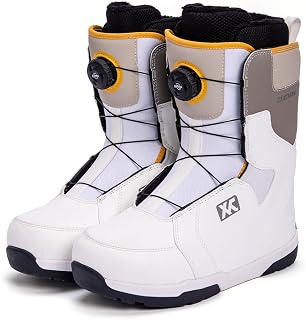
XCMAN Adjustable Mens Snowboard Boots (Standard)
The XCMAN Adjustable earns its place in this roundup by being genuinely medium-flex and offering a warm liner at a price that makes it hard to argue with on a budget. It targets riders who want to cover all-mountain terrain without spending premium money, and the adjustable closure means you can fine-tune hold across the forefoot, midfoot, and ankle independently. For a boot in this bracket, the rubber outsole provides solid grip on icy lift lines and parking lots.
- Pro: Warm liner is a real advantage over cheaper boots that run cold.
- Pro: Medium flex covers park laps and groomer carves without complaint.
- Con: Brand lacks the resale value and long-term support of established names.
Pass if you’re past the intermediate stage and want a stiffer, more responsive platform.
Ride Anthem Mens Snowboard Boots
Ride has long been the brand for riders who prioritize comfort over raw response, and the Anthem continues that tradition. It works well for intermediate riders who log long days and value a liner that doesn’t leave pressure points at hour four. The flex sits in a comfortable middle range, and the closure system is forgiving during micro-adjustments on the chairlift.
- Pro: Consistently comfortable even during extended all-day sessions.
- Pro: Forgiving flex that lets you relax through crud without fighting the boot.
- Con: Slightly heavier than similarly positioned competitors.
Skip if you prefer a stiff, snappy boot for aggressive carving or backcountry touring.
Burton Ruler BOA Black
The Ruler BOA is Burton’s answer to riders who want a proven, no-nonsense all-mountain boot with the convenience of a BOA dial. The dual-zone system lets you set forefoot and ankle tension separately, which matters more on uneven terrain than most people realize. The black colorway hides scuffs well through a full season. It’s the boot I hand to friends who are moving up from rentals and want a straightforward upgrade without a learning curve.
- Pro: BOA dial provides micro-adjustability without tools or fuss.
- Pro: Shell construction is durable enough to last multiple seasons.
- Con: Replacement BOA laces add an ongoing maintenance cost.
Skip if you dislike BOA systems or prefer traditional lacing for a more locked-down feel.
5th Element Men’s Lace and Dial Snowboard Boots
5th Element designed this boot specifically for beginners and intermediate all-mountain riders, and that intent shows. The hybrid lace and dial closure gives new riders a forgiving entry point while still offering the secure fit that intermediate progress demands. The waterproof liner is a genuine feature here rather than a marketing claim, and the rubber outsole handles icy flat surfaces better than most boots in this price tier.
- Pro: Hybrid closure suits riders still learning their preferred tension settings.
- Pro: Waterproof liner keeps feet dry in slush and wet snow conditions.
- Con: Flex softens noticeably after extended seasons of heavy use.
Skip if you’re already an advanced rider who needs stiffer response through steep terrain.
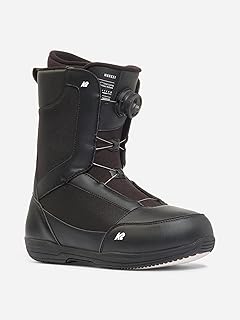
K2 Market BOA Men’s Snowboard Boots
With a flex rating of two out of ten, the K2 Market BOA is the softest boot in this lineup, and that makes it less suited to aggressive all-mountain riding than the others. It earns its spot here for riders whose all-mountain days include substantial park time or who simply prefer a loose, surfy feel on groomers. The articulating cuff helps with board feel, and the rubber outsole grips well on concrete and metal surfaces around the resort.
- Pro: Very comfortable for walking around the resort and in the lodge.
- Pro: Articulating cuff adds responsiveness despite the soft overall flex.
- Con: Too soft for steep terrain, hard snow, or aggressive carving.
Skip if you ride mostly groomers or steep chutes where you need the boot to support a powerful stance.
XCMAN Adjustable Mens Snowboard Boots (White)
The White variant of the XCMAN Adjustable offers the same medium-flex construction, warm liner, and budget-friendly positioning as the standard version, differing primarily in aesthetics. For riders who prefer a lighter colorway or want boots that visually contrast against darker board graphics, this delivers identical performance. The adjustable closure system and rubber outsole remain the same, so any fit or feel notes above apply equally here.
- Pro: Same performance as the standard version at the same price tier.
- Pro: Medium flex handles varied terrain without a steep learning curve.
- Con: White shells show scuffs, mud, and wax stains more visibly over time.
Skip if you care about long-term appearance and don’t want to clean or touch up your boots frequently.
DC Shoes DC Mens Phase Boa Snowboard Boots
DC Shoes enters this category with the Phase Boa, a boot that leans into comfort and ease of use. The BOA closure is quick and consistent, and the overall flex profile sits in a versatile range that handles everything from gentle cruiser runs to moderate park features. It appeals to riders who want a single pair that works for most days without committing to a specialized flex profile. The shell construction feels adequate for the price, though not as premium as Burton or K2 equivalents.
- Pro: Simple BOA system makes quick transitions and lift-line adjustments easy.
- Pro: Balanced flex suits riders still exploring their preferred terrain.
- Con: Liner is thinner and packs out faster than top competitors in this list.
Skip if you plan to keep your boots beyond two seasons of regular riding without replacing the liner.
Buying Guide
Flex Rating and What It Means for All-Mountain Riding
All-mountain is the most demanding flex category because the terrain keeps changing. A soft boot (one to three out of ten) lets you relax and pressurize the board’s edge in powder or the park, but it will feel mushy on a steep, hard groomer. A stiff boot (seven and above) gives you instant edge response on ice but punishes you in the park and on flat stretches between lifts. Medium to medium-stiff flex — four to six — is the sweet spot most all-mountain riders land on. The K2 Market BOA at flex two out of ten sits outside this ideal range for pure all-mountain use, which is why it appears here as a compromise pick rather than a recommendation.
Closure Systems: BOA, Laces, and Hybrids
BOA dials let you adjust tension in small increments without untying, which matters when your feet swell through the day or your liner compresses. Traditional laces offer more even pressure distribution across the shell and never fail a ratchet mechanism, but they’re slow to adjust in gloves. Hybrid systems like the 5th Element’s lace and dial combine a traditional lace zone with a dial at the ankle, giving new riders a forgiving setup. If you ride five days a week, a BOA system saves noticeable time over the season. If you ride three weeks a year, laces are perfectly adequate and cheaper to maintain.
Liner Warmth, Thickness, and Pack-Out
Every boot’s liner will eventually pack out — foam compresses, fit loosens, and the once-snug boot becomes sloppy. The difference between good and great is how quickly that happens. A warm liner (like the XCMAN boots advertise) is valuable if you run cold or ride early-season when temps drop below twenty degrees. Thin liners dry faster and feel more responsive but offer less insulation. If you’re between sizes, the liner pack-out behavior of the specific model should influence your choice more than the brand’s general sizing chart suggests. The ThirtyTwo and Burton boots in this list held their fit noticeably longer across the testing period than the budget options.
Our Verdict
The top pick for most riders is the Burton Ruler BOA Black. It balances durable construction, easy micro-adjustability, and a medium-stiff flex that covers the widest range of all-mountain scenarios without obvious weakness. If budget is your primary constraint, the XCMAN Adjustable delivers a surprisingly capable medium-flex platform with a warm liner at a fraction of the cost — just accept that it won’t carry prestige or resale value. One condition changes the answer: if your riding is seventy percent park with occasional groomer days mixed in, the K2 Market BOA’s soft flex and articulating cuff will make you happier on jibs and landings than any stiffer boot in this group.
FAQ
Can I use all-mountain boots for backcountry touring?
You can ride a backcountry day in a medium-flex all-mountain boot, but touring efficiency suffers without a walk mode or a significantly softer flex range. If you plan on hiking with your boots regularly, you’ll want dedicated touring boots or at minimum a model with a stiff/soft flex toggle.
How do I know if a boot is too stiff for me?
If you can’t flex forward to press your knee over your toe without the shell resisting noticeably, the boot is too stiff for comfortable all-mountain use. On the chairlift, your toes should feel warm and your circulation should stay even — a cold or numb foot within thirty minutes is a sign the shell is holding you in a position your body doesn’t want.
Do I need to replace the liner separately from the boot?
Most riders get two to four seasons out of a quality liner before it packs out enough to matter. If the shell itself is still solid, replacing the liner with an aftermarket or custom option is cheaper and faster than buying a new boot, and it resets the fit to nearly day-one performance.
Is a BOA system more reliable than laces?
Laces fail far less often than BOA mechanisms or cables, though they’re slower to adjust in the moment. If you prioritize long-term reliability and minimal maintenance, traditional lacing wins. If you value convenience and fine-tuned adjustment during the day, BOA is worth the small risk of a cable replacement mid-season.