
Best binoculars for astronomy are the fastest, friendliest way into the night sky: no motors, no alignment, just lift and look with both eyes. The trick is balancing magnification against aperture and steadiness, because more power without more light or a tripod gives you a dim, shaky view. Here are the real specs.
Our top picks


As an Amazon Associate we earn from qualifying purchases at no extra cost to you.
As an Amazon Associate we earn from qualifying purchases.
🛒 Best Price Today on Amazon
Prime members get fast, free shipping on everything above, plus member-only deals. New members get a 30-day free trial — cancel anytime.
Start 30-Day Prime Free Trial →See Today’s Amazon DealsHow to Choose the Right Best Binoculars for Astronomy
The best binoculars for astronomy live and die by four numbers plus one comfort factor: magnification versus steadiness, objective aperture and exit pupil, prism type and coatings, and field of view and eye relief. Understanding these lets you read any spec sheet and skip the marketing.
Magnification Versus Steadiness
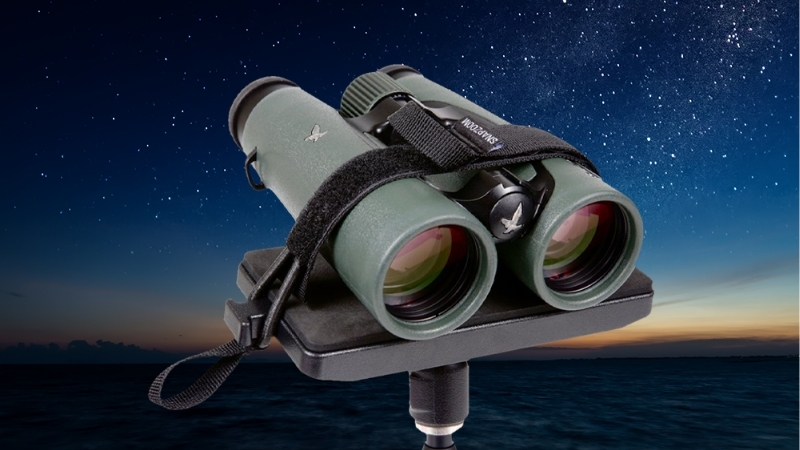
The first number is magnification. Seven to ten power can be handheld and still gives lovely views of the Moon, the Pleiades, and star fields. Once you pass roughly twelve power, hand-shake blurs fine detail, so 15×70 and larger models effectively require a tripod or a parallelogram mount to be usable.
More power is not automatically better. Higher magnification narrows the field, dims the image, and amplifies every tremor. For a first pair used from a backyard, moderate magnification you can hold steady will show you more than a giant you fight to stabilize.
Aperture and Exit Pupil
The second number is the objective lens diameter in millimeters, and it governs light gathering. A 50 mm objective is a great handheld starter; 70 mm and up pulls fainter deep-sky objects into view but adds bulk and weight. Bigger glass is the single biggest driver of what you can actually see at night.
Exit pupil, found by dividing aperture by magnification, tells you how bright the image looks. A 4 to 5 mm exit pupil suits most observers, which is why 10×50, 15×70, and 20×80 configurations are so popular. Older eyes and light-polluted suburbs especially benefit from that comfortable range.
Prism Type and Optical Coatings
Porro-prism binoculars deliver bright images and a pleasing three-dimensional view at lower cost, which is why they dominate astronomy. Roof prisms are more compact and can match Porro brightness with phase coatings and dielectric mirrors, but you pay more for that performance in a slimmer body.
Coatings matter as much as glass. Look for BaK-4 prisms and fully multi-coated optics, which maximize light throughput and contrast, and consider ED or HD glass if you want to minimize the color fringing that shows on bright stars and the lunar limb. These details separate a crisp view from a washed-out one.
Field of View, Eye Relief, and Timing
A wide true field of view makes it easier to find and hold objects, which is a real advantage when sweeping the Milky Way. If you wear glasses, prioritize longer eye relief, around 15 mm or more, so you can see the whole field without pressing the lenses to your eyes.
Timing is worth a thought too. Optics are largely imported and exposed to tariff-driven price pressure, and clear autumn and winter skies plus holiday gifting drive demand up. Buying ahead of that peak protects both selection and price on the model you want.
Top Picks for the Best Binoculars for Astronomy
Our picks for the best binoculars for astronomy cover the practical path from a grab-and-go handheld pair to tripod-mounted deep-sky giants. Every model below is a well-known, widely available choice, with the trade-offs that matter for real observing.
| Model | Config | Prism / Glass | Tripod Needed | Best For |
|---|---|---|---|---|
| Celestron SkyMaster 15×70 | 15x, 70 mm | BaK-4, multi-coated | Yes | Budget deep-sky |
| Celestron SkyMaster Pro 15×70 | 15x, 70 mm | BaK-4, better QC | Yes | Sharper 15×70 |
| Nikon Action Extreme 10×50 | 10x, 50 mm | BaK-4, multi-coated | No | Handheld starter |
| Celestron Nature DX ED 10×50 | 10x, 50 mm | Roof, ED glass | No | Dual day / night use |
| Celestron SkyMaster Pro 20×80 | 20x, 80 mm | Fully coated, fogproof | Yes | Extra reach |
| Celestron SkyMaster 25×100 | 25x, 100 mm | BaK-4, multi-coated | Yes (mount) | Serious deep-sky |
Celestron SkyMaster 15×70
The budget benchmark for giant astronomy binoculars, the SkyMaster 15×70 pairs 70 mm objectives with BaK-4 prisms and multi-coated optics for genuinely bright views of the Moon, star clusters, and brighter nebulae. A rubber-armored, water-resistant body and included tripod adapter make it a remarkable amount of aperture for the price.
Quality control is the catch: some units arrive with prisms slightly out of collimation, the supplied plastic tripod adapter is weak, and at 15 power you truly need a tripod. Budget for a metal adapter and accept the sample variance, and it remains an outstanding first pair for the money.
Celestron SkyMaster Pro 15×70
The Pro version answers the standard model’s main weakness. It delivers sharper images and a wider field of view with tighter quality control, so you spend more time observing and less time fussing with alignment. For anyone who wants the proven 15×70 format without the collimation lottery, it is the safer buy.
You pay noticeably more for that consistency, and it is still a heavy, tripod-bound instrument rather than an all-purpose pair. Reviewers also note the premium ED variant improves color control further but sacrifices some comfort, so the standard Pro often hits the sweet spot for value and performance.
Nikon Action Extreme 10×50
If you want a pair you can actually hold, the Action Extreme 10×50 is a durable, waterproof, multi-coated workhorse with BaK-4 prisms. Ten power over 50 mm is comfortably handheld, so you can step outside and sweep the Milky Way, split brighter doubles, and frame the Pleiades without setting up a tripod.
The true field is on the narrower side at around five degrees, and 50 mm gathers less light than the giants, so faint deep-sky targets stay dim. As a rugged, grab-and-go starter that also serves for daytime wildlife, it is one of the most versatile picks here.
Celestron Nature DX ED 10×50
This roof-prism pair with ED glass is the dual-purpose choice, compact enough for daytime birding yet capable of pleasing views of the Moon, the Pleiades, and the Orion Nebula at night. The ED glass tames color fringing, and the sealed, waterproof body handles field conditions better than most budget Porros.
A roof-prism design at this price cannot match the sheer light grasp of a 70 mm giant, so it is a complement to, not a replacement for, dedicated deep-sky binoculars. For observers who want one pair for everything and hate carrying a tripod, it is an easy recommendation.
Celestron SkyMaster Pro 20×80
Stepping up in reach, the SkyMaster Pro 20×80 combines 20 power with 80 mm objectives, fully coated optics, and fog-proof sealing. The extra aperture and magnification pull in more detail on lunar features and richer deep-sky fields, and reviewers rate it a top choice when you want more than a 15×70 offers.
That reach demands a sturdy tripod, and the size and weight make it a deliberate setup rather than a casual grab. It is also a bigger investment than the 70 mm class. For observers ready to commit to mounted viewing, the 20×80 is a meaningful upgrade in capability.
Celestron SkyMaster 25×100
At the top sits the 25×100, whose massive 100 mm objectives and 25 power approach the experience of a small wide-field telescope with the comfort of both eyes. Under dark skies it transforms deep-sky observing, revealing structure in clusters and nebulae that smaller binoculars only hint at.
This is unapologetically specialist gear: it is heavy, requires a robust tripod or ideally a parallelogram mount, and rewards genuinely dark sites over light-polluted backyards. If you have outgrown 70 and 80 mm giants and want maximum aperture in binocular form, it is the definitive step up.
Frequently Asked Questions
Quick answers to the questions new buyers of the best binoculars for astronomy ask most, from tripod needs to light pollution and the best first configuration to buy.
Do I really need a tripod for astronomy binoculars?
For anything 15 power or higher, yes. Above roughly twelve power, hand tremor blurs fine detail and makes long viewing tiring. Ten-power-and-under models over 50 mm can be handheld comfortably, so choose based on how you want to observe before you buy the biggest number on the shelf.
What is the best first pair for a beginner?
A 10×50 is the classic starting point among the best binoculars for astronomy: handheld, bright, forgiving, and useful for both stargazing and daytime nature. If you have dark skies and a tripod ready, a 15×70 gives a big jump in what you can see. Both are proven entry configurations that will not disappoint.
Can I use these under city light pollution?
Yes, with realistic expectations. Light pollution favors moderate magnification and a healthy exit pupil, so 10×50 and 15×70 both work well on the Moon, brighter clusters, and double stars. Faint galaxies and nebulae still want darker skies, so plan an occasional trip away from city glow.
Is now a good time to buy astronomy binoculars?
Optics are largely imported and exposed to tariff-driven price uncertainty, and demand climbs with clear fall and winter skies and holiday gifting. Buying ahead of that seasonal peak generally protects both availability and price, especially on popular models that can sell out during the best observing months.
See More:
- Best hiking boots for wide feet women
- Best summer hiking boots
- Best hiking boots flat feet
- Best affordable hiking boots
- Best minimal hiking boots
Final Thoughts
The best binoculars for astronomy are the ones whose magnification, aperture, and prism quality match how and where you observe, not just the biggest specs on the box. Start with a handheld 10×50 or a tripod-mounted 15×70, prioritize BaK-4 and multi-coated optics, and buy ahead of the clear-sky season to get the pair you want.



Write Your Review
No reviews yet. Be the first to share your experience!