Our Top Picks
The best sprayer for most yards, small orchards and fence lines is a 4-gallon backpack sprayer, and the best step up for acreage is a 25-gallon ATV or UTV sprayer with a 12V pump and a boom. Of the models we researched, the Chapin 61800 ProSeries is our top pick for a manual backpack sprayer, and the Chapin 97214 25-gallon ATV sprayer is the runner-up for larger jobs. This guide is research-based: we did not personally use these products. It compares listing details and maker specs, and it does not give pesticide dosing or label claims, because the product label on whatever you spray is the only authority on that.
People who search for “best backpack, tank and ag sprayers” really ask several questions at once. Which size fits my property? Manual pump or battery? Will my chemical eat the seals? Do I need a boom, or is a wand enough? Can one machine handle bleach, fertilizer, weed killer and fruit tree sprays? The honest answer to the last one is usually no. We cover those questions below and group the picks by job so you can jump to yours.

Ag Spray Equipment 65 Gallon UTV Sprayer - 7 Nozzle Folding Boom | 4.0 GPM 12V Pump, 140 Inch Spray Width, Heavy-Duty Weed & Fertilizer Sprayer for Side by Side, Pasture & Row Crops
Chosen because it specifies 7 Nozzle Folding Boom and 4.0 GPM 12V Pump.
View on Amazon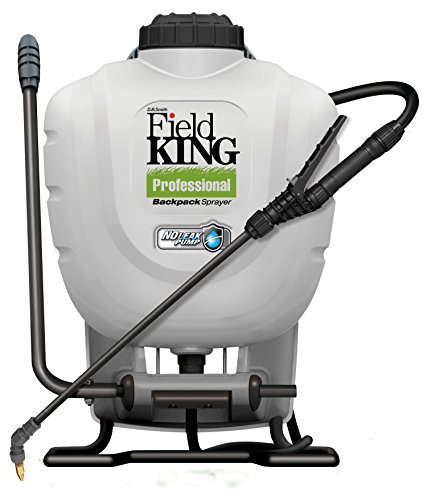
FIELD KING 190328 Backpack Sprayer, 4 Gallon, with Internal No Leak Pump Design Delivers 150 PSI
Chosen because it specifies 4 Gallon and with Internal No Leak Pump Design Delivers 150 PSI.
View on Amazon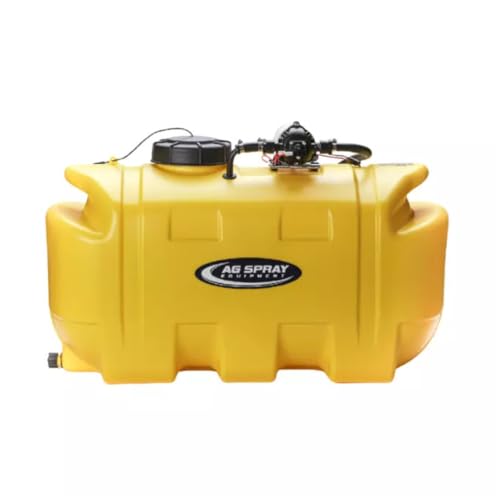
Ag Spray Equipment 25 Gallon Gold Spot Sprayer | Prime Pump (60 PSI) | Economy Handgun with Adjustable Nozzle, 15’ Hose – Lawn & Garden ATV/UTV Sprayer for Weed & Pest Control
Chosen because it specifies Prime Pump (60 PSI) and Economy Handgun with Adjustable Nozzle.
View on Amazon
CHAPIN 60116 Backpack Sprayer – 4 Gallon Easy‑Pump Control | Durable poly tank with clear view for monitoring fluid levels, ideal for lawn care, pest control and fertilizer application
Chosen because it specifies 4 Gallon Easy‑Pump Control and ideal for lawn care.
View on AmazonTop Picks at a Glance
- Best Overall Manual Backpack: Chapin 61800 ProSeries 4-Gallon Backpack Sprayer
- Best Value Manual Backpack: Field King 190328 4-Gallon, 150 PSI listed
- Best Piston Pump for Heavy Use: SOLO 425 4-Gallon Piston Backpack Sprayer
- Best Battery Backpack, Own the Tools: DEWALT DXSP190681 Lithium-Ion Powered Backpack Sprayer
- Best Battery Backpack for Long Days: PetraTools HD4000, 6-hour runtime listed
- Best ATV Boom Sprayer for Acreage: Chapin 97214 25-Gallon ATV/UTV Sprayer
- Best Boomless Wide-Swath ATV Sprayer: NorthStar 26-Gallon ATV Boomless Sprayer
Comparison Table
| Product | Best for | Key specs (as listed) | Watch for | Price tier |
|---|---|---|---|---|
| Chapin 61800 ProSeries | Yards, gardens, fence lines | 4 gal, 3-stage filtration, brass/poly/fan nozzles | Manual pumping fatigue | Mid-range |
| Field King 190328 | Value manual use | 4 gal, internal leak-free pump design, 150 PSI | Check seal compatibility with your chemicals | Mid-range |
| SOLO 425 | Frequent heavy use | 4 gal piston pump, pressure up to 90 psi | Heavier build | Mid-range |
| DEWALT DXSP190681 | Owners of the 20V tool system | Lithium-ion battery powered backpack | Tank size not listed in the title | Premium |
| PetraTools HD4000 | Long battery-powered days | 6-hour runtime, 6 nozzles | Replacement battery availability | Premium |
| Chapin 97214 ATV/UTV | Acreage, pasture, food plots | 25 gal, 2-nozzle boom, 12V pump | Coverage depends on speed | Premium |
| NorthStar 26-Gal Boomless | Wide swath and fencerows | 12V, 5.5 GPM, 60 PSI, 40 ft swath, on-demand pump | Drift in wind | Premium |
1. Chapin 61800 ProSeries 4-Gallon Backpack Sprayer: Best Overall Manual Backpack
The Chapin 61800 ProSeries is a 4-gallon backpack sprayer with 3-stage filtration and a choice of brass, poly or fan nozzles. It is the pick for owners who want a dependable manual sprayer for weed control, fertilizer, and general garden work.
- Tank: 4 gallons
- Filtration: 3-stage as listed
- Nozzles: brass, poly or fan options
- Pump: manual lever
- Seal and hose materials: check the maker’s chemical compatibility chart
Best for: homeowners and small-property managers who spray a few times a month. Skip if: you cover several acres or spray all day, where a battery or ATV unit saves your shoulder.
Filtration is the quiet hero of a sprayer. Clogged nozzles are the most common failure, and a filter at the fill opening, in the wand and at the nozzle catches grit before it reaches the tip. Fan nozzles lay down flat, even bands that suit herbicides on broad areas, while cone-style tips suit wetting foliage. Brass tips resist wear better than plastic, which matters with abrasive mixtures.
A loaded 4-gallon tank holds about 33 pounds of water alone, so the weight on your back is real. Padded straps help, but you still want to take breaks and not overfill.
Pros: multiple nozzle options; layered filtration; widely stocked parts. Cons: manual pumping; pressure drops as you spray; not made for continuous commercial use.
2. Field King 190328 4-Gallon Backpack Sprayer: Best Value Manual Backpack
The Field King 190328 is a 4-gallon backpack sprayer listed with an internal leak-free pump design that delivers up to 150 PSI. It targets owners who want more headroom than a basic hardware-store model without moving to battery power.
- Tank: 4 gallons
- Pump: internal, leak-free design per listing
- Pressure: 150 PSI as listed
- Seal materials: check with the maker
Best for: small orchards, a few fruit trees and a long fence line. Skip if: you need a precise low-pressure pattern for delicate plants.
A higher maximum pressure means you can reach into a tree canopy, but spray at the lowest pressure that gives you coverage. Higher pressure creates smaller droplets that drift more. If you search for “best apple tree sprayers” or “best backpack sprayers for small orchards”, this is the point to remember: a backpack tank covers a handful of trees; beyond that, a wheeled or ATV-mounted tank is less tiring.
Pros: high listed pressure; internal pump design; fair cost. Cons: pressure claims vary with use; manual effort.
3. SOLO 425 4-Gallon Piston Backpack Sprayer: Best Piston Pump
The SOLO 425 uses a piston pump rather than a diaphragm, listed with a wide pressure range up to 90 psi. Piston pumps tend to be favored by people who spray often and want a stable pressure for steady passes.
- Tank: 4 gallons
- Pump: piston, manual
- Pressure: up to 90 psi as listed
- Seal materials and chemical list: see maker’s manual
Best for: landscapers and farm owners who work through chemicals regularly and want a durable pump. Skip if: you want the lightest unit possible for occasional use.
Pump type shapes chemical compatibility. A seal that suits fertilizer may swell with a solvent-based product. Check which seal compounds your sprayer uses and read the chemical label for any compatibility notes. For “best chemical sprayers” and “best bleach sprayers”, a sprayer with viton seals is often recommended by chemical manufacturers, but we did not verify each model, so confirm with the maker before using bleach or solvents.
Pros: strong pump; long track record; stable pressure. Cons: heavier; higher cost than basic models.
4. DEWALT DXSP190681 Battery Backpack Sprayer: Best for Tool-System Owners
The DEWALT DXSP190681 is a lithium-ion powered backpack sprayer. It suits people who already own the tool maker’s batteries and want an electric pump without pumping a lever for hours.
- Power: lithium-ion battery
- Pump: electric
- Tank size and runtime: see the maker’s specification page; not listed in the title
Best for: property maintenance where consistent pressure and fewer pump strokes matter. Skip if: you need a low-cost sprayer or prefer a manual unit for simplicity.
Battery sprayers shine when you have a lot of ground to cover because the pressure stays steady. They also add components that can fail: the pump motor, switches and the battery. Keep the battery out of the chemical mixing area and follow the maker’s guidance on charging.
Several budget brands sell battery sprayers that fit existing tool batteries, including models listed as compatible with DeWalt 20V or Makita 18V batteries. We did not verify the long-term reliability of those alternatives, so choose according to the batteries you already own.
Pros: consistent pressure; fewer strokes; uses existing battery platform. Cons: premium tier; battery cost if you need one; electrical parts near chemicals.
5. PetraTools HD4000 Battery Backpack Sprayer: Best for Long Battery Days
The PetraTools HD4000 is a battery-powered backpack sprayer listed with a 6-hour runtime and 6 nozzles, aimed at lawn and garden work.
- Power: battery included per listing
- Runtime: 6 hours as listed
- Nozzles: 6 included
- Tank size: check the maker’s page
Best for: longer spraying days without carrying a spare battery. Skip if: you want a replaceable battery shared with other tools.
Listed runtime depends on pressure setting and nozzle size, so a heavy-duty tip will drain it faster. Treat 6 hours as a best case. Having six nozzles included is useful because a fan tip for herbicide and a cone tip for foliar sprays can be swapped in minutes. If you search “best back pack yard sprayers” for lawn and garden use, a unit like this removes most of the effort.
Pros: long runtime claim; several nozzles; battery included. Cons: premium tier; proprietary battery; heavier when full.
6. Chapin 97214 25-Gallon ATV/UTV Sprayer: Best Boom Sprayer for Acreage
The Chapin 97214 is a 25-gallon ATV/UTV sprayer with a 2-nozzle boom and a 12V pump. It is for larger lawns, food plots, pastures and fence rows where a backpack would take all day.
- Tank: 25 gallons
- Boom: 2 nozzles
- Pump: 12V
- Mounting: ATV or UTV rack
Best for: homeowners with a few acres and a vehicle that can carry a tank. Skip if: your property is small, steep, or heavily wooded, where an ATV cannot go.
A 25-gallon tank adds over 200 pounds of water, so check your vehicle’s rack and payload ratings. Spray at a steady, slow speed because ground speed changes the amount applied per acre. ATV sprayers are not self-calibrating; the label on your product tells you the rate, and the sprayer’s nozzle, pressure and speed must be set accordingly. This is where many first-time buyers go wrong. We do not give rates, and neither does any listing.
Master Mfg and Chapin sell larger and smaller ATV tanks, including 15-, 25- and 40-gallon models. Replacement boom wands are also sold separately, such as 6-nozzle booms listed for ATV sprayers with coverage of around 122 inches.
Pros: large capacity; saves time; vehicle-mounted. Cons: heavy; needs calibration; drift risk with wind.
7. NorthStar 26-Gallon ATV Boomless Sprayer: Best Wide-Swath Pick
The NorthStar 26-gallon ATV boomless sprayer is listed with a 12V pump delivering 5.5 GPM at 60 PSI, an on-demand pump and a 40 foot spray swath. Boomless nozzles spray a wide fan from a single point, which is handy along fencerows and on uneven ground.
- Tank: 26 gallons
- Pump: 12V, 5.5 GPM, 60 PSI on-demand
- Swath: 40 ft as listed
- Type: boomless
Best for: fields with obstacles, fencerows and trails, where a boom would snag. Skip if: you need tight, even coverage in row crops or near sensitive plants, because the wide fan can drift and overlap unevenly.
Spray swaths that are listed as 40 feet describe the maximum reach under ideal conditions, not the area you will cover accurately. Wind, speed and nozzle height all change the pattern. For “best atv boom sprayers” and “best atv tank sprayers ag”, choose a boom for even coverage and a boomless for rough terrain.
Pros: wide swath; high flow; handles rough ground. Cons: premium tier; drift potential; pattern is less precise than a boom.
Also Consider
Master Mfg 25-Gallon ATV and UTV Broadcast Boom Sprayer
Listed with a 10-foot swath. A close alternative to the Chapin 97214 if you want a different brand for the boom.
Roundup 190314 4-Gallon Backpack Sprayer
A basic 4-gallon manual unit sold for fertilizers, herbicides and insecticides. Budget alternative to the Chapin and Field King.
EARTHCRAFT 4.2-Gallon Backpack Sprayer for DeWalt 20V
A battery sprayer listed as compatible with DeWalt 20V batteries (battery not included). Another way to use batteries you already own.
VANPET 6-Nozzle ATV Sprayer Boom Wand Kit
A boom add-on with 122 inches of listed coverage for ATV sprayers. Check the fitting size on your tank before buying.
Sprayer Types and What They Suit
| Sprayer type | Typical tank | Best for | Limitation |
|---|---|---|---|
| Manual backpack | 4 gal | Yards, gardens, small orchards | Pumping effort |
| Battery backpack | 2.6 to 5.3 gal (varies) | Longer jobs, steady pressure | Battery cost |
| ATV/UTV boom | 15 to 40 gal | Acreage, pasture | Calibration, weight |
| ATV boomless | About 26 gal | Rough ground, fencerows | Drift |
| Handheld pump | 1 to 2 gal | Spot treatment | Small capacity |
| HVLP or coating sprayer | Cup or pot | Paint, stain, auto body | Not for pesticides |
Searches for “auto body sprayers”, “coating sprayers” and “automotive touchup sprayers” point to a different tool class entirely: HVLP guns and airless sprayers for paint and clear coat. Those need compressed air or a dedicated pump and are not interchangeable with garden tanks. Never use a garden sprayer for paint, and never use a paint sprayer for pesticides.
Worked Example: Choosing for a Mixed Property
Take a property with a half-acre lawn and garden, a dozen fruit trees and a quarter-mile of fence line. A 4-gallon backpack handles the lawn edges and garden in one or two fills. The fence line is where people get tired: a quarter mile of walking with a full tank is tiring in warm weather, so a battery backpack or an ATV tank starts to make sense. If you already drive a UTV for chores, a 15-gallon ATV tank with a short boom or a boom wand kit costs less effort than three backpack refills. If you do not, the backpack with a fan nozzle is the economical choice.
Now add a three-acre pasture. Here, the 25-gallon Chapin 97214 or the boomless NorthStar becomes the sensible tool. The arithmetic is simple: ask the product label for the application volume per acre, multiply by acres, and compare it with the tank volume. A tank that needs refilling four times per acre wastes more time than it saves. Larger tanks mean heavier loads, so check the vehicle rack and the ground you will cross.
Maintenance That Extends Sprayer Life
- Rinse after every use, even with fertilizer, because dried residue clogs filters and nozzles.
- Lubricate O-rings and gaskets with a lubricant the maker approves, and replace them yearly if you spray often.
- Store with the tank open and the lid off so seals do not take a set and moisture can escape.
- Drain and winterize battery and 12V pumps before freezing weather; ice cracks pump housings.
- Keep spare nozzle tips, a filter screen and a spare wand gasket on hand, because they are the parts that fail first.
How We Chose
We searched the store for real, currently sold sprayers, shortlisted on-intent models across backpack, battery and ATV classes, and compared details in each listing. We limited the list to two products per brand and avoided price figures, using tier words instead. We also reviewed cleaning and personal protective equipment guidance published by university extension programs and pesticide stewardship groups. We did not personally use these products. Where the listing did not state tank size, runtime or seal material, we wrote “not listed” and pointed you to the maker’s page.
Buying Guide
Match tank size to the job
A 4-gallon backpack covers small lawns, garden beds and fence lines, and weighs around 33 pounds when full of water. A 15- to 25-gallon ATV tank handles a few acres. Above that, tractor-mounted or trailer sprayers take over. Do not buy larger than you can carry or tow comfortably.
Choose a pump by how often you spray
Diaphragm pumps are common in budget models, while piston pumps suit frequent use. Battery pumps maintain pressure without effort. If you spray a handful of times a year, a manual unit is fine. If you spray weekly, a battery or piston model saves effort.
Check seals and hoses against the chemical
Most failures come from a chemical that does not suit the seal. Fertilizers and many herbicides are fine in standard models; solvents, bleach and some acids are not. Read both the chemical label and the sprayer manual. When in doubt, ask the maker.
Pick the nozzle for the task
Fan nozzles lay flat bands for herbicides and surface treatment; cone nozzles suit foliage; adjustable brass wands handle general use. Replace worn nozzles, because a worn tip changes your application rate even when pressure looks right.
Plan for PPE and cleaning
Under US rules, pesticide users must follow the personal protective equipment instructions on the product label. Typical label language calls for long sleeves, chemical-resistant gloves, closed footwear and eye protection, but the label on your product controls. After spraying, empty the tank per the label, rinse with clean water, pump the rinse water through the wand and nozzle, and apply it to a labeled site. Dedicate one sprayer to herbicides and another to fertilizer or insecticide if you can, because residue can harm sensitive plants later.
Common Mistakes
- Spraying in wind, which carries mist onto neighbors and non-target plants.
- Using a worn nozzle and assuming the pressure gauge tells the whole story.
- Overfilling a backpack and straining your back.
- Storing chemicals in the tank for days, which damages seals.
- Forgetting to calibrate an ATV sprayer for speed and nozzle output.
Frequently Asked Questions
What is the best backpack sprayer for home use?
A 4-gallon manual backpack sprayer, such as the Chapin 61800 ProSeries or the Field King 190328, covers most home needs. Choose a battery model if you spray often or have a lot of ground.
Are battery backpack sprayers better than manual ones?
They are easier on your arm and hold steady pressure, but they cost more and add a battery to maintain. For occasional use, a manual unit is simpler and cheaper. For frequent or long jobs, a battery unit like the PetraTools HD4000 pays off in effort saved.
What is the best sprayer for a small orchard?
A 4-gallon backpack with adjustable pressure works for a handful of trees. For more trees, a wheeled or ATV-mounted tank is less tiring. Follow the product label for what may be applied to fruit trees and when.
Can I use one sprayer for bleach, fertilizer and weed killer?
It is best not to. Residues of one product can harm plants treated with another, and bleach or solvents can attack seals not made for them. Keep a separate, labeled sprayer for herbicides, and check the maker’s chemical compatibility for anything else.
What is the difference between an ATV boom and a boomless sprayer?
A boom places several nozzles in a line for even coverage, while a boomless nozzle throws a wide fan from one point. Booms suit open ground; boomless units suit rough terrain and fencerows but drift more.
How do I clean a backpack sprayer after use?
Empty the tank as the product label directs, rinse with clean water, and pump the rinse water through the hose, wand and nozzle. Wear the same protective gear you used for spraying. Dispose of or apply rinse water as the label allows.
Do you give spray rates or mixing ratios?
No. Rates, mixing ratios and re-entry times come from the product label, which is also the law for pesticides. Use this guide to choose equipment and the label to choose how to use it.
Which One Should You Buy?
Choose the Chapin 61800 ProSeries for a dependable manual backpack, the Field King 190328 if you want more pressure for the price, and the SOLO 425 if you spray often and want a piston pump. Go battery with the DEWALT DXSP190681 if you already own its batteries, or the PetraTools HD4000 for long days. For acreage, use the Chapin 97214 for even boom coverage and the NorthStar boomless for rough ground. Confirm tank size, runtime and seal compatibility on the maker’s page, and always follow the product label and your local rules.
Sources
- University of California Agriculture and Natural Resources, backpack pesticide sprayer safety note
- University of Nebraska-Lincoln Extension, Cleaning Pesticide Application Equipment
- Pesticide Environmental Stewardship, The Label and Personal Protective Equipment
- Manufacturer listings for Chapin, Field King, SOLO, DEWALT, PetraTools, NorthStar and Master Mfg
Last updated: October 2026