Key takeaways
- OLED (LG C4, LG G4, Samsung S90D, Sony Bravia 8): Each pixel produces its own light. Perfect blacks, infinite contrast, ultra-wide viewing angles, and instant pixel response time. Best for dim to moderately lit rooms, movie watching, and gaming. Peak brightness is lower than Mini-LED, typically 900-1200 nits on these models, and there is a long-term risk of image retention if you watch static news tickers or play the same HUD for thousands of hours. Modern OLEDs have aggressive pixel shift and logo dimming to mitigate this.
- Mini-LED QLED (Samsung QN90D, TCL QM7/QM851G, Hisense U8N, Sony Bravia 7): Uses thousands of tiny LEDs behind a quantum dot layer. Much brighter (1300-2800 nits), no burn-in risk, and excellent for bright living rooms with windows. Contrast is very good but not perfect; you may see some blooming around bright objects on dark backgrounds and viewing angles are narrower than OLED.
- Standard LED / QLED (TCL Q7, Hisense U7N, Samsung Q70D): Fewer dimming zones and lower brightness (600-1000 nits) but strong value. A good fit for bedrooms, covered patios, or secondary rooms where you want smart features and 120Hz without paying for flagship brightness.
The best 55 smart tv for most living rooms in 2026 is an OLED like the LG C4 or Samsung S90D if you want the best picture quality and gaming performance, while a high-brightness QLED/Mini-LED like the Samsung QN90D or TCL QM7 is the better pick for bright rooms, and a mid-range LED like the TCL Q7 or Hisense U8N offers the best value under $700.
At 55 inches, you are in the sweet spot where 4K resolution, full gaming features, and premium processing are standard without paying the premium that 65-inch and larger OLEDs command. The right choice comes down to viewing distance, room brightness, panel technology, and whether you need HDMI 2.1 gaming features.
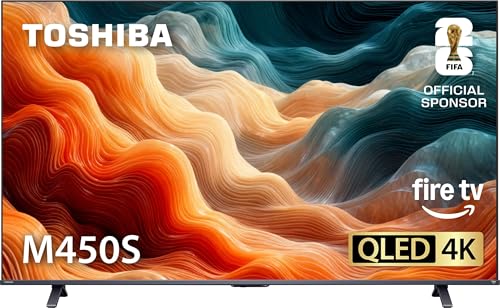
TOSHIBA 55" Class M450 Series QLED 4K UHD Smart Fire TV, Voice Remote with Alexa, Stream Live TV Without Cable
Included for 'Best 55-Inch Smart TVs' because the listing specifies Voice Remote with Alexa and Stream Live TV Without Cable, details this guide uses to compare options.
View on Amazon
Amazon Ember 55" 4-Series with Fire TV (newest model), 4K Ultra HD smart TV with Alexa Remote, HDR10+, fast processor, Dolby Audio, Ambient Experience, free and live TV, find shows faster with Alexa+
Included for 'Best 55-Inch Smart TVs' because the listing specifies 4K Ultra HD smart TV with Alexa Remote and HDR10+, details this guide uses to compare options.
View on Amazon
Samsung 55-Inch Class M70H Series, Mini LED, 4K, Smart TV, 2026 Model
Included for 'Best 55-Inch Smart TVs' because the listing specifies Mini LED and Smart TV, details this guide uses to compare options.
View on Amazon
INSIGNIA 55-inch Class QF Series LED 4K UHD QLED Smart Fire TV with Alexa Voice Remote (NS55-UQFL26)
Included for 'Best 55-Inch Smart TVs' as a relevant option in this category; details come from the product listing.
View on AmazonFinding the Right 55-Inch TV for Your Space
1. Viewing Distance: Are You Close Enough for 4K?
A 55-inch 4K TV is optimal at 5.5 to 8 feet. Closer than 5 feet and you may see pixels on lower-quality content; farther than 9 feet and you lose much of the 4K detail advantage over a 50-inch set, though HDR and color still matter.
Use this simple calculation to check your room:
Optimal distance range = Screen diagonal x 1.2 to 1.6
For 55 inches: 55 x 1.2 = 66 inches (5.5 feet) and 55 x 1.6 = 88 inches (7.3 feet). THX recommends up to about 1.8x for a more cinematic field of view, which puts you at 8.2 feet.
If your sofa is 10-11 feet away, a 55-inch will look small for movies. If you are wall-mounting in a bedroom or apartment where the couch is 6-7 feet away, 55 inches is ideal and you will not need to pay for a 65-inch to get immersion.
2. Panel Type: OLED vs QLED / Mini-LED vs LED
This is the single biggest decision for picture quality.
- OLED (LG C4, LG G4, Samsung S90D, Sony Bravia 8): Each pixel produces its own light. Perfect blacks, infinite contrast, ultra-wide viewing angles, and instant pixel response time. Best for dim to moderately lit rooms, movie watching, and gaming. Peak brightness is lower than Mini-LED, typically 900-1200 nits on these models, and there is a long-term risk of image retention if you watch static news tickers or play the same HUD for thousands of hours. Modern OLEDs have aggressive pixel shift and logo dimming to mitigate this.
- Mini-LED QLED (Samsung QN90D, TCL QM7/QM851G, Hisense U8N, Sony Bravia 7): Uses thousands of tiny LEDs behind a quantum dot layer. Much brighter (1300-2800 nits), no burn-in risk, and excellent for bright living rooms with windows. Contrast is very good but not perfect; you may see some blooming around bright objects on dark backgrounds and viewing angles are narrower than OLED.
- Standard LED / QLED (TCL Q7, Hisense U7N, Samsung Q70D): Fewer dimming zones and lower brightness (600-1000 nits) but strong value. A good fit for bedrooms, covered patios, or secondary rooms where you want smart features and 120Hz without paying for flagship brightness.
3. Room Brightness and Reflection Handling
For a bright room with south or west-facing windows, prioritize peak brightness over perfect blacks. A Mini-LED that can sustain 1500+ nits with a matte or anti-glare coating will remain punchy during the day. OLEDs have improved with MLA and QD-OLED brightness boosters, but they still reflect more in direct sun and use automatic brightness limiting to protect the panel.
For a dedicated dark room, basement, or evening viewing, OLED wins decisively. Its ability to turn pixels completely off makes letterbox bars disappear and shadow detail far more realistic than any LED can manage.
4. HDR Performance: What Actually Matters
All 55-inch smart TVs support HDR10, but real HDR quality depends on brightness, local dimming, and color volume.
- Look for at least 600 nits for decent HDR, 1000+ nits for impactful HDR.
- OLEDs deliver better perceived HDR in dark scenes due to pixel-level dimming, even with lower peak numbers.
- Mini-LEDs deliver more specular highlights – sunlight, explosions, and reflections look brighter and more dynamic.
- Dolby Vision is supported on LG, TCL, Hisense, and Sony. Samsung uses HDR10+ instead. If you watch a lot of Netflix, Disney+, and Apple TV+, Dolby Vision support is a practical advantage.
5. Gaming Features: HDMI 2.1 Is Essential in 2026
If you own a PlayStation 5, Xbox Series X, or gaming PC, filter for these specs:
- 4K 120Hz on at least two HDMI 2.1 ports
- VRR (Variable Refresh Rate) including AMD FreeSync and NVIDIA G-Sync compatibility
- ALLM (Auto Low Latency Mode) and sub-13ms input lag in game mode
- HFR / Game Optimizer menus for quick adjustments
LG C4 and Samsung S90D/QN90D all offer four HDMI 2.1 ports with full 48Gbps bandwidth. TCL QM7 and Hisense U8N offer two HDMI 2.1 ports (often ports 1 and 2) which is enough for most console setups. Budget LED models may only offer 60Hz or 120Hz via upscaling – check that the panel is native 120Hz, not effective motion rate.
6. Operating System and Smart Platform
- Google TV (Sony, TCL, Hisense): Best for Google Home integration, extensive app library, and Chromecast. Highly customizable home screen.
- webOS (LG): Clean, fast Magic Remote, excellent multi-view and game dashboard. Works well with Apple AirPlay and Matter.
- Tizen (Samsung): Strong gaming hub, Samsung Health and SmartThings integration, and broad app support. No Dolby Vision.
- Roku TV (select TCL, Hisense, Sharp): Simplest interface, neutral search, and minimal ads compared to others.
All platforms support Netflix, YouTube, Prime Video, and Hulu. Choose based on the ecosystem you already use for voice control and smart home.
55-Inch Smart TV Spec Comparison
General market ranges in 2026: budget 55-inch LED models $380-$600, mid-range QLED/Mini-LED $600-$900, premium Mini-LED and entry OLED $950-$1400, flagship OLED $1300-$1700.
| Model (55-inch) | Panel / Backlight | Peak Brightness (approx.) | Native Refresh Rate | HDMI 2.1 4K 120Hz Ports | Weight Without Stand | HDR Format Support |
|---|---|---|---|---|---|---|
| LG C4 OLED55C4 | QD-OLED / W-OLED | 950 – 1100 nits | 120Hz (144Hz with PC) | 4 | 14.1 kg / 31.1 lbs | Dolby Vision, HDR10, HLG |
| Samsung S90D OLED | QD-OLED | 1100 – 1300 nits | 144Hz | 4 | 13.8 kg / 30.4 lbs | HDR10+, HDR10, HLG |
| Samsung QN90D Neo QLED | Mini-LED QLED | 1800 – 2200 nits | 120Hz (144Hz with PC) | 4 | 15.9 kg / 35.1 lbs | HDR10+, HDR10, HLG |
| Sony Bravia 7 K-55XR70 | Mini-LED QLED | 1500 – 1800 nits | 120Hz | 2 | 15.2 kg / 33.5 lbs | Dolby Vision, HDR10, HLG |
| TCL QM7 (55QM751G) | Mini-LED QLED | 1600 – 2000 nits | 120Hz (144Hz VRR) | 2 | 12.4 kg / 27.3 lbs | Dolby Vision IQ, HDR10+ |
| Hisense U8N (55U8N) | Mini-LED QLED | 2000 – 2800 nits | 144Hz | 2 | 14.5 kg / 32.0 lbs | Dolby Vision IQ, HDR10+ |
| TCL Q7 (55Q750G) | QLED Direct LED | 800 – 1000 nits | 120Hz | 2 | 11.2 kg / 24.7 lbs | Dolby Vision, HDR10+ |
Decision Matrix: Which 55-Inch TV Fits Your Situation
| Your Situation | Best Match | Why |
|---|---|---|
| Movies in dark room, couch 6-7 ft away, want best contrast | LG C4 or Samsung S90D OLED | Perfect blacks, no halo, widest viewing angle, instant response |
| Bright living room with windows, sports during the day | Samsung QN90D or Hisense U8N | 1800+ nits overpowers glare, anti-reflection layer, no image retention worry |
| Competitive console/PC gaming, need 4K 120Hz VRR | LG C4, Samsung S90D, or Sony Bravia 7 | Sub-10ms lag, 4x HDMI 2.1 on LG/Samsung, excellent game bars |
| Tight budget, bedroom or covered patio second TV | TCL Q7 or Hisense U7N class | Native 120Hz panel, Dolby Vision, Google TV under $700, lighter to wall-mount |
| Wide family seating, off-angle viewers | OLED (any) or TCL QM7 with wide-angle layer | OLED maintains color at 60+ degrees; Mini-LEDs without wide-angle film wash out past 30 degrees |
| Need Dolby Vision for Netflix/Apple TV | LG C4, Sony Bravia 7, TCL QM7, Hisense U8N | All four support Dolby Vision; Samsung models do not |
Ownership Realities and Durability
Smart TVs are reliable, but a few things wear first:
- Panel care: OLEDs should not be left paused on static images for hours. Run the automatic pixel refresh cycle and avoid max OLED brightness in Vivid mode for static content. Mini-LEDs have no burn-in risk but can develop uneven backlighting if vents are blocked.
- Heat and dust: Leave 3-4 inches of clearance behind wall-mounted sets. Vacuum vents every few months. In dusty cabins or garages, cover the back when not in use; heat is the primary killer of power boards.
- Cleaning: Use a dry microfiber cloth. Never spray cleaner directly on the screen. For fingerprints, lightly dampen the cloth with distilled water. Avoid ammonia-based cleaners which strip anti-reflective coatings.
- Sound: All thin 55-inch sets have weak bass due to 10-20W down-firing drivers. If you watch movies without a soundbar, prioritize models with dedicated bass enhancement like Sony Acoustic Multi-Audio or Samsung Object Tracking Sound, but plan for a soundbar or 2.1 system for real impact.
- Smart platform longevity: Expect 4-6 years of app updates. If the OS slows down, a $40-50 external streaming stick restores speed without replacing the panel. Save your picture settings before factory resetting.
- Common mistakes: Mounting too high (center of screen should be at seated eye level, roughly 42-48 inches from floor), using the included cheap HDMI cable for 4K 120Hz (use Ultra High Speed certified 48Gbps cables), and leaving energy saving on Dynamic – turn off ambient light limiting for accurate gaming HDR.
Setup Tips for Best Picture
- Use Movie, Cinema, or Filmmaker Mode as the baseline – these are closest to accurate color out of the box.
- Disable motion smoothing (TruMotion, Motion Xceleration, Motion Clarity) for movies to avoid soap opera effect; leave on Low for sports if you like smoother motion.
- Set HDMI inputs to Enhanced / 8K Enhanced to unlock 4K 120Hz and Dolby Vision.
- For gaming, enable Game Mode and VRR on the TV and on the console. Set console to 120Hz output and enable HDR calibration in system settings.
Frequently Asked Questions
Is OLED worth it over Mini-LED at 55 inches?
At 6-8 feet in a light-controlled room, yes. The contrast and viewing angle difference is immediately visible, especially with movies and games that have dark scenes. If your room is very bright or you watch CNN and sports tickers 8+ hours daily, a bright Mini-LED gives you more peace of mind and better daytime punch.
Do I need 144Hz on a 55-inch TV?
Only for PC gaming. Consoles cap at 120Hz. A native 120Hz panel with HDMI 2.1 VRR is sufficient for PlayStation 5 and Xbox Series X. 144Hz is a nice bonus if you connect a gaming PC.
What wall mount size for a 55-inch TV?
Most 55-inch models are VESA 300×200 or 300×300 and weigh 24-35 lbs without the stand. A fixed or tilting mount rated for 40-60 lbs with the correct VESA pattern is adequate. Use a stud finder and lag bolts; drywall anchors alone will not safely hold dynamic load.
How much power does a 55-inch smart TV use?
Typical measured consumption is 60-90W for LED/QLED and 80-110W for OLED at calibrated brightness in SDR. HDR peaks can spike to 150-200W briefly. Expect $12-$20 per year in electricity with 5 hours daily viewing at average US rates.