Our Top Picks
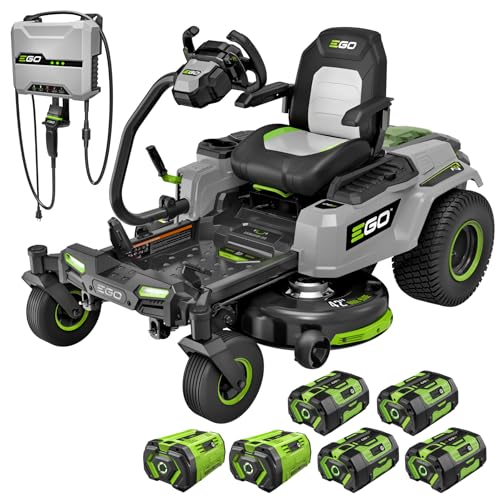 EGO Power+ Z6 e-Steer Zero Turn Electric Riding42"76.8 x 43.3 x 52.2 inches619 poundsCheck on Amazon
The best zero turn mowers for large properties are the John Deere Z530M for an all-around gas machine, the EGO POWER+ Z6 for low-noise electric mowing, and the Exmark Radius S-Series for commercial-grade durability and control.
A zero-turn mower can cut mowing time substantially, but the right choice depends on more than advertised speed. Deck width, engine output, fuel or battery capacity, terrain, operator comfort, and the cost of keeping the machine running determine whether a mower feels efficient—or becomes an expensive source of repairs.

EGO Power+ Electric Riding Lawn Mower, 52" Deck with Zero Turn Radius, Includes (6) 56V 12.0Ah Batteries and Charger - ZT5207L
Chosen because it specifies 52" Deck with Zero Turn Radius and Includes (6) 56V 12.0Ah Batteries and Charger.
View on AmazonEGO Power+ Z6 e-Steer Zero Turn Electric Riding Lawn Mower, 42" - ZT4215S
Chosen because it specifies 42" and ZT4215S.
View on Amazon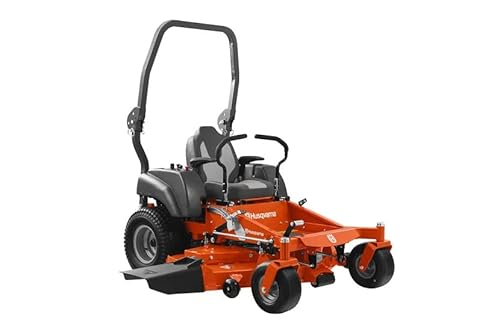
Husqvarna MZ61 (61") 24HP Kawasaki Zero Turn Lawn Mower w/ROPS
Picked as a relevant option in this category.
View on Amazon
Husqvarna Z254FX 22HP 726cc Kaw Engine 54" FAB Z-Turn Mower 970797901
Picked as a relevant option in this category.
View on AmazonBest Zero-Turn Mowers at a Glance
| Mower | Power system | Deck options | Fuel or battery capacity | Best use |
|---|---|---|---|---|
| John Deere Z530M | 24-hp Kawasaki V-twin gasoline engine | 48 or 54 inches | 4.5-gallon fuel tank | Large residential properties and frequent mowing |
| EGO POWER+ Z6 | Battery-electric, up to 25-hp equivalent output | 42, 48, or 54 inches, depending on configuration | Up to six 56V batteries; runtime varies by load and battery set | Noise-sensitive properties and lower routine maintenance |
| Toro TimeCutter MAX | Gasoline engines commonly offered around 23–24.5 hp | 48, 54, or 60 inches, depending on model | Approximately 5 gallons on many configurations | Fast residential mowing with a wide deck |
| Exmark Radius S-Series | Commercial-style gasoline engines, commonly 23–27 hp | 48, 52, or 60 inches, depending on model | Approximately 5 gallons, depending on configuration | High hours, demanding turf, and long ownership |
Specifications can change by model year, deck configuration, and regional package. Confirm the exact engine, deck, tank, and battery configuration before buying.
Our Picks by Property and Situation
| Your situation | Best direction | Why |
|---|---|---|
| 1–3 acres, mostly open lawn, moderate budget | 48- or 54-inch residential gas mower | Good coverage without excessive purchase price or trailer width |
| 3–8 acres and weekly mowing | 54- or 60-inch gas mower with a serviceable V-twin | Wider cutting path and better endurance reduce mowing time |
| Frequent use, rougher grass, or commercial-style workload | Exmark Radius or similar commercial-oriented model | Heavier construction, stronger service support, and more durable controls |
| Noise restrictions, neighbors nearby, or enclosed storage | EGO POWER+ Z6 | Quiet operation, no gasoline storage, and fewer engine service items |
| Many trees, beds, gates, and obstacles | 42- or 48-inch deck | Easier clearance and less trimming than a 60-inch deck |
| Slopes or consistently wet ground | A mower with appropriate tires, low center of gravity, and manufacturer-approved slope limits | Deck width alone does not make a machine safe or stable |
John Deere Z530M: Best Gas All-Rounder
The Z530M is a strong fit for homeowners who want a fast, familiar gasoline mower without moving fully into commercial pricing. Its Kawasaki V-twin engine, 48- or 54-inch deck choices, adjustable seat, and substantial rear tires give it a useful balance of power and maneuverability.
The 54-inch deck is the better choice for broad, open lawns. Choose the 48-inch deck when gates, landscaping, and narrow passages are more important than maximum coverage. The mower’s dual hydrostatic transmissions allow precise speed changes and independent wheel control, making it easy to pivot around trees without repeated three-point turns.
Expect general market pricing in the upper residential range, often roughly $5,000–$7,000 depending on deck and dealer package. The main ownership advantage is service availability: belts, blades, filters, and engine parts are widely supported. It is less appropriate for severe slopes, deeply rutted ground, or constant commercial use.
EGO POWER+ Z6: Best Electric Option
The EGO POWER+ Z6 is the most compelling choice when quiet operation and reduced routine maintenance matter more than unlimited mowing range. It uses the same 56V battery ecosystem as other EGO outdoor tools and can be configured with multiple batteries. Runtime depends heavily on deck width, grass height, speed, temperature, and the number and age of installed batteries.
Electric drive motors deliver immediate blade and wheel response, while the absence of an engine means no oil changes, spark plugs, fuel stabilizer, or carburetor problems. You still need to sharpen blades, clean the deck, inspect belts, grease applicable points, and maintain tire pressure.
Its limitation is endurance. A large property with thick, wet grass may require spare batteries, a charging plan, or a second mowing session. Battery replacement is also a significant future expense. The Z6 makes the most sense when the property can be divided into manageable mowing blocks and the owner already uses compatible batteries.
Toro TimeCutter MAX: Best for Fast Residential Coverage
The TimeCutter MAX targets owners who prioritize mowing speed and a wide residential deck. Models are commonly available with 48-, 54-, or 60-inch decks and gasoline engines in the low-to-mid-20-horsepower range. The 60-inch version can cover open acreage quickly, but it needs more room to turn and may struggle to fit through standard gates.
Toro’s suspension-seat options and intuitive lap-bar controls improve comfort on longer sessions. Its residential frame and drivetrain are appropriate for routine homeowner use, but buyers should not treat a residential mower as a commercial machine simply because it has a large deck.
Typical market prices range from approximately $4,500 to $7,000, varying substantially with deck size and engine. For the best value, match the deck to the property rather than automatically selecting the widest version.
Exmark Radius S-Series: Best for Heavy Use
The Exmark Radius S-Series is aimed at owners who mow often, maintain large grounds, or want more commercial-oriented construction. Its available deck sizes, engine choices, and suspension-seat configurations vary, but the platform generally emphasizes a rigid cutting system, durable controls, and serviceability.
This type of mower earns its higher purchase price through repeated use rather than occasional mowing. It is a sensible choice for several acres of demanding grass, multiple properties, or owners who expect to keep the machine for many years. General market pricing is commonly about $8,000–$12,000 or more, depending on configuration.
For a small, smooth residential lawn, the extra cost may not produce a proportional benefit. For high annual hours, however, stronger spindles, better operator support, and easier access to service points can matter more than a few extra miles per hour.
How Deck Width Changes Real Mowing Time
A wider deck does not reduce mowing time in direct proportion to its width because overlapping passes, obstacles, turns, and trimming consume time. A useful estimate is:
Approximate mowing time = lawn area ÷ effective coverage rate.
For example, a 3-acre lawn contains 130,680 square feet. A 54-inch deck has a nominal cutting width of 4.5 feet. At 6 mph, its theoretical coverage is about 2.73 acres per hour, but assuming 70% real-world efficiency for overlap and turns produces approximately 1.9 acres per hour. The mowing portion would therefore take about 95 minutes, before trimming and refueling.
A 48-inch deck has a nominal width of 4 feet and may be easier around obstacles, but the same property could take roughly 10–15% longer. A 60-inch deck can reduce open-lawn time further, yet it may lose that advantage around trees, fences, and narrow gates.
What to Check Before Buying
Engine and drivetrain
For large properties, a V-twin gasoline engine in the 23–27-horsepower range provides useful reserve power when grass is tall or conditions are damp. More horsepower does not compensate for an undersized deck shell, weak spindles, or poor traction. Electric models should be judged by usable battery capacity and recharge time, not peak horsepower-equivalent claims.
Terrain and traction
Zero-turn mowers are excellent on open ground but require careful handling on slopes. Their independent rear wheels can make a downhill turn unpredictable, especially on wet grass. Follow the specific manual’s slope limits, mow across slopes only where approved, reduce speed, and avoid sudden steering inputs. Turf tires protect grass but may spin in soft soil; aggressive tires improve traction but can mark lawns.
Comfort and controls
For properties requiring more than an hour per mowing session, prioritize a high-back or suspension seat, adjustable lap bars, vibration control, and a foot-operated deck lift. A comfortable seat does not fix a harsh frame, so inspect the suspension and seat travel together.
Maintenance Realities and Common Mistakes
- Clean the deck after mowing: packed clippings hold moisture, restrict airflow, and encourage corrosion. Remove the ignition key or disconnect power before working underneath.
- Sharpen blades regularly: dull blades increase the load on the engine or battery system and leave ragged grass. Inspect blades for bends after striking hidden objects.
- Check tire pressure: uneven pressure changes deck height and can create a visibly uneven cut, particularly on a wide deck.
- Replace belts and filters on schedule: belts typically wear faster in dusty, high-hour use. Gas models need oil, air-filter, fuel-filter, and spark-plug service.
- Protect the hydrostatic system: keep cooling areas clear of debris and use the manufacturer’s specified fluid and service intervals.
- Avoid mowing too fast: excessive speed reduces blade overlap and makes scalping more likely on uneven ground.
The parts that commonly wear first are blades, deck belts, idler pulleys, spindle bearings, tires, and seat or control components. A mower with easy access to these items can cost less to own than a cheaper machine that requires extensive disassembly for routine work.
Final Buying Advice
Choose a 48-inch mower for obstacle-heavy properties, a 54-inch mower as the best compromise for many large lawns, and a 60-inch mower only when gates, storage, trailer width, and terrain can accommodate it. Select the John Deere Z530M for balanced gas performance, the EGO POWER+ Z6 for quiet electric operation, the Toro TimeCutter MAX for rapid residential coverage, and the Exmark Radius S-Series for heavier annual use. The best zero turn mowers are not necessarily the fastest; they are the ones whose deck, traction, comfort, and service requirements match the property every week.