Key takeaways
- Lower ongoing cost: You do not need to keep buying AAA or AA batteries. For frequent users, the savings can outweigh the modestly higher purchase price.
- Convenient charging: A USB cable works with common chargers, power banks, computers, and vehicle adapters. You can recharge the lamp alongside your phone.
- Consistent performance: A charged lithium-ion battery generally delivers steadier light than disposable batteries that are nearing the end of their life.
- Less waste: Reusing one battery avoids throwing away multiple sets of disposable cells over the headlamp’s lifetime.
- Lightweight design: Many rechargeable models weigh less than a headlamp loaded with three AAA batteries, especially when the battery is built into the lamp body.
- Useful charging indicators: Several models show remaining charge or warn you before the battery is depleted, making them easier to maintain than older battery-only designs.
- Good everyday versatility: A headlamp leaves both hands free for plumbing, painting, walking the dog, changing a tire, reading in a tent, or checking a breaker panel.
What's inside
The Short Answer
Yes—rechargeable headlamps are worth it if you use a headlamp at least a few times a year and can remember to recharge it before storage or a trip. They eliminate the ongoing cost and hassle of disposable batteries, provide consistent brightness, and are especially convenient for camping, repairs, walking, and emergency kits.
They are not automatically the best choice for everyone. A rechargeable model can become useless when its built-in battery is empty, and replacing that battery is usually difficult or impossible. If you need a light that can sit untouched for years and work instantly, a battery-powered headlamp remains the safer option.
As an Amazon Associate we earn from qualifying purchases at no extra cost to you. Product prices and availability are accurate as of the date shown and are subject to change.
For most casual buyers in 2026, the best answer is “yes, with a backup.” Keep a small flashlight or spare battery-powered light nearby, and a rechargeable headlamp becomes a practical, inexpensive tool rather than a gadget you have to worry about.
What You Actually Get
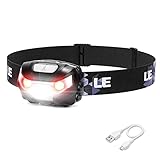
A rechargeable headlamp is a hands-free LED light with a built-in lithium-ion battery. You charge it through USB, usually USB-C on newer models or micro-USB on budget designs. Instead of carrying AAA or AA batteries, you connect the lamp to a wall adapter, power bank, laptop, or car charger.
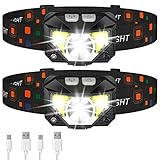
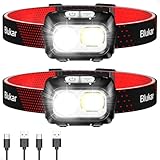
Most affordable models cost roughly $13 to $30. For example, the Blukar LED Headlamp Rechargeable is listed around $13.49, while the LHKNL Headlamp Flashlight is around $17.99. At this price, you generally get a lightweight plastic housing, an adjustable elastic headband, several brightness settings, a floodlight or spotlight mode, and a charging cable. Some also include a motion sensor that lets you turn the lamp on or off with a wave.
Expect a total weight of about 2.5 to 5 ounces, including the strap and battery. The lamp housing is commonly 2 to 3 inches wide and roughly 1 to 1.5 inches tall, though a rear battery pack or second lamp can make the entire setup bulkier. These dimensions matter more than an eye-catching lumen number: a compact headlamp is easier to wear for an hour, while a larger model may offer longer runtime but feel front-heavy.
Advertised brightness can range from approximately 200 to 2,000 lumens. Treat the highest number as a peak claim rather than a dependable everyday output. In this price category, practical brightness is often lower once the lamp warms up or automatically steps down to preserve battery life. A useful headlamp should offer a comfortable low mode for close work, a medium mode for walking, and a brighter setting for trails or outdoor tasks.
Runtime depends on brightness, battery capacity, temperature, and whether the lamp has one LED or several. As a general buying expectation, a small model may run for about 2 to 8 hours on useful settings, while the brightest mode may last less than two hours. Charging can take approximately 2 to 4 hours. Look for a visible charging indicator and, ideally, a pass-through or emergency-use feature that allows the lamp to operate while connected to a power source.
Pros
- Lower ongoing cost: You do not need to keep buying AAA or AA batteries. For frequent users, the savings can outweigh the modestly higher purchase price.
- Convenient charging: A USB cable works with common chargers, power banks, computers, and vehicle adapters. You can recharge the lamp alongside your phone.
- Consistent performance: A charged lithium-ion battery generally delivers steadier light than disposable batteries that are nearing the end of their life.
- Less waste: Reusing one battery avoids throwing away multiple sets of disposable cells over the headlamp’s lifetime.
- Lightweight design: Many rechargeable models weigh less than a headlamp loaded with three AAA batteries, especially when the battery is built into the lamp body.
- Useful charging indicators: Several models show remaining charge or warn you before the battery is depleted, making them easier to maintain than older battery-only designs.
- Good everyday versatility: A headlamp leaves both hands free for plumbing, painting, walking the dog, changing a tire, reading in a tent, or checking a breaker panel.
Cons
- Limited shelf readiness: Lithium-ion batteries slowly lose charge while stored. A lamp left in an emergency drawer for months may not be ready when needed.
- Battery aging: Built-in batteries gradually lose capacity after repeated charging cycles and over time. If the battery fails, replacing the entire headlamp may be easier than repairing it.
- Charging dependency: A dead rechargeable headlamp cannot be revived immediately unless you have access to a suitable cable and power source.
- Unclear brightness claims: Budget listings often emphasize maximum lumens without explaining sustained output, beam distance, heat management, or runtime at that setting.
- Potentially awkward controls: Some lamps cycle through every mode with one button, forcing you to click through bright, flashing, or red-light settings to switch off.
- Water resistance varies: A headlamp described as splash-resistant is not necessarily safe in heavy rain or submersion. Check for an IP rating rather than assuming outdoor durability.
- Cold-weather limitations: Lithium-ion batteries can provide shorter runtime in freezing conditions. Winter campers and outdoor workers may prefer replaceable batteries or carry a spare lamp.
Who Should Buy It
Buy a rechargeable headlamp if you regularly camp, hike, fish, work in a garage, walk after dark, or perform home maintenance. It is also a smart choice for apartment dwellers who want a compact emergency light for power outages. The hands-free design is more useful than a phone flashlight because it follows your gaze while leaving your hands available.
Frequent users should prioritize comfort over the largest advertised lumen figure. Look for an adjustable strap, a lamp that tilts downward, a low mode under roughly 50 lumens, and a medium mode suitable for walking. A rear red light can improve visibility around camp without ruining night vision, while a lockout mode helps prevent the lamp from turning on inside a bag.
A rechargeable model also makes sense for families who use a headlamp for children’s camping trips, household repairs, or seasonal outdoor activities. At roughly $13 to $18 for basic examples such as the Blukar and LHKNL models, the entry cost is low enough that convenience is usually the main consideration—not a major financial risk.
Who Should Skip It
Skip a rechargeable-only headlamp if you need emergency equipment that may sit unused for years. A battery-powered model with a fresh set of stored batteries is easier to restore quickly, particularly after a storm or extended outage. You can also choose a hybrid headlamp that accepts replaceable batteries and has USB charging, though those designs may cost more and weigh slightly more.
You may also prefer disposable batteries if you work far from electrical outlets, travel in very cold conditions, or need to carry a light for several consecutive nights without access to a power bank. People who dislike proprietary cables or complicated button sequences should inspect the controls before buying.
Cheaper Alternatives
| Option | Cost | Trade-off |
|---|---|---|
| Basic AAA headlamp | $7–$15 | Lowest upfront cost, but requires spare batteries and creates more waste. |
| Small handheld flashlight | $5–$20 | Often brighter for the price, but it occupies one hand and cannot follow your line of sight. |
| Clip-on book or utility light | $5–$12 | Fine for close tasks and reading, but usually has less range and a weaker attachment. |
| Phone flashlight | $0 if you own a phone | Always available, but drains your phone battery, provides limited runtime, and ties up one hand. |
| Hybrid USB/AAA headlamp | $20–$45 | More flexible during outages, but typically costs more and has extra weight or complexity. |
FAQ
How often should I charge a rechargeable headlamp?
Charge it after substantial use and check it every two to three months when stored. For emergency use, keep it around half to three-quarters charged rather than fully depleted. Avoid leaving it connected to a charger indefinitely, and store it in a cool, dry place away from direct sunlight.
Are rechargeable headlamps as bright as battery-powered ones?
They can be. Brightness depends more on the LED, optics, battery capacity, and heat control than on the charging method. A rechargeable model may be brighter than a cheap AAA headlamp, but advertised peak lumens are not directly comparable across brands. Focus on beam pattern, medium-mode runtime, and usable low brightness.
How long do rechargeable headlamps last?
The lamp itself can last several years with normal care, while the built-in battery may noticeably lose capacity sooner. Heavy users may see reduced runtime after a few hundred charging cycles, though actual lifespan varies. A replaceable-battery design is easier to keep working long term.
What is the best way to keep one ready for emergencies?
Choose a lamp with a charge indicator, store it in an accessible location, and test it every few months. Keep a short charging cable with it and maintain a separate battery-powered flashlight as backup. That combination gives you rechargeable convenience without depending on a single aging battery.