Key takeaways
- Faster, more consistent cooking: Wind can spread a flame, cool the pot, and make simmering unpredictable. A shield keeps the flame more stable, especially when gusts come from the side.
- Less fuel waste: When less heat escapes around the cookware, you may need less burner time to boil water or cook a meal. The savings depend on wind, cookware, stove efficiency, and cooking habits, so do not treat a windscreen as a guaranteed fuel percentage.
- Low cost: Basic aluminum models generally cost about $8 to $15. That is a modest investment compared with replacing a stove or buying a larger fuel supply.
- Lightweight and packable: Aluminum folding panels add little bulk compared with a pot or fuel canister. Many include a drawstring bag, which prevents the sharp panel edges from catching on other gear.
- Adjustable coverage: Hinged panels let you create a partial shield for changing wind direction or a broader barrier for a larger pot. You do not necessarily have to use the entire screen at its widest setting.
- Better simmer control: A sheltered flame is easier to turn down for oatmeal, rice, sauces, and dehydrated meals. This can be more useful than faster boiling.
- Works with many stove types: Windscreens can help canister-top backpacking stoves, remote-canister stoves, alcohol burners, and compact liquid-fuel stoves, provided the screen is positioned safely for that design.
What's inside
The Short Answer
Yes—if you cook outdoors in moderate or stronger wind, a camp stove windscreen is a small, inexpensive upgrade that can make your stove faster, steadier, and less wasteful. The one condition is that it must be used with the correct clearance around your stove and fuel canister; never wrap a windscreen tightly around a canister or block the stove’s ventilation.
If you mostly camp in calm, sheltered conditions, you can skip one. But for backpackers, car campers, beach campers, and anyone who has watched a burner struggle in a breeze, a windscreen is usually worth the roughly $8 to $15 purchase price.
As an Amazon Associate we earn from qualifying purchases at no extra cost to you. Product prices and availability are accurate as of the date shown and are subject to change.

What You Actually Get
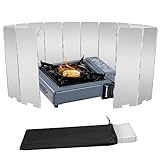
A camp stove windscreen is a folding set of thin aluminum panels designed to stand around a burner. Most models use hinged sections so you can curve the shield around the windward side of a stove or form a three-sided barrier. The panels reflect some heat toward the cookware and interrupt the airflow that pulls heat away from the flame.
The two common styles are flexible folding shields and rigid surrounds. The folding type is the most portable and affordable. A 10-plate model, such as the Ohuhu Camp Stove Windscreen listed at $9.99, gives you a compact barrier for small backpacking stoves and picnic burners. A 16-plate aluminum windshield, listed at $7.99, offers more sections for creating a wider enclosure around larger cookware or a two-burner-style setup.
Most camping windscreens are roughly 6 to 9 inches tall, though exact dimensions vary by product. That height is usually enough to protect a small burner without extending far above a standard mug or pot. Folded, a shield commonly becomes a narrow stack that fits in a cook kit, side pocket, or supplied drawstring bag. The important measurements are the unfolded length, panel height, and clearance around your particular stove—not simply the number of plates.
Think of the windscreen as a heat-management accessory, not a substitute for a better stove. It will not increase the burner’s rated output. A 10,000-BTU burner remains a 10,000-BTU burner. Instead, it helps the stove deliver more of that heat to the pot by reducing wind exposure.
Pros
- Faster, more consistent cooking: Wind can spread a flame, cool the pot, and make simmering unpredictable. A shield keeps the flame more stable, especially when gusts come from the side.
- Less fuel waste: When less heat escapes around the cookware, you may need less burner time to boil water or cook a meal. The savings depend on wind, cookware, stove efficiency, and cooking habits, so do not treat a windscreen as a guaranteed fuel percentage.
- Low cost: Basic aluminum models generally cost about $8 to $15. That is a modest investment compared with replacing a stove or buying a larger fuel supply.
- Lightweight and packable: Aluminum folding panels add little bulk compared with a pot or fuel canister. Many include a drawstring bag, which prevents the sharp panel edges from catching on other gear.
- Adjustable coverage: Hinged panels let you create a partial shield for changing wind direction or a broader barrier for a larger pot. You do not necessarily have to use the entire screen at its widest setting.
- Better simmer control: A sheltered flame is easier to turn down for oatmeal, rice, sauces, and dehydrated meals. This can be more useful than faster boiling.
- Works with many stove types: Windscreens can help canister-top backpacking stoves, remote-canister stoves, alcohol burners, and compact liquid-fuel stoves, provided the screen is positioned safely for that design.
Cons
- Safety requires attention: The biggest mistake is enclosing a fuel canister or trapping excessive heat around it. A windscreen must not touch a canister, cover its valve, or prevent heat from escaping. Follow the stove manufacturer’s instructions first.
- Thin aluminum can bend: Folding panels are intentionally lightweight. They can crease if packed loosely or stepped on, and bent hinges may make the shield harder to position.
- It takes setup space: A screen needs a stable, level cooking area. On a tiny picnic table or narrow rock ledge, the unfolded barrier may compete with your pot, fuel, and utensils.
- Not every stove needs one: Some stoves already include an integrated shield, recessed burner, or remote wind protection. Adding another barrier can be redundant or unsafe.
- It can complicate access: A tall or tightly curved screen can make it harder to adjust the flame, lift the pot, or see a small burner. Leave an opening where you need to reach the controls.
- Limited benefit in calm weather: If you cook in a sheltered backyard, forest campsite, or enclosed picnic area with little airflow, the improvement may be too small to notice.
- Aluminum reflects heat unpredictably when misused: Placing panels too close to the burner or cookware can redirect heat toward components that are not designed to receive it.
Who Should Buy It
A windscreen makes the most sense for anyone who regularly cooks where wind is part of the experience. Backpackers crossing exposed ridgelines, campers near lakes and beaches, desert travelers, and winter campers will usually get the most value. It is also useful if your stove flame frequently blows out, your boil times change dramatically from day to day, or you carry a small fuel canister and want to avoid wasting fuel.
Choose a smaller 8- to 10-panel shield for a compact backpacking stove and a mug-sized pot. A broader 12- to 16-panel design is more practical for larger pots, wider burners, or campsites where you want more flexibility in directing the barrier. The 16 Plates Aluminum Stove Windshield with Drawstring Bag is a budget-oriented example at $7.99. The 10-plate Ohuhu model is another option at $9.99, particularly for a compact kit.
Before buying, compare the screen’s height with your stove and pot, and check whether your stove manufacturer permits an external windscreen. Remote-canister stoves often offer more placement flexibility than stoves with a fuel canister directly beneath the burner.
Who Should Skip It
Skip a separate windscreen if your stove has an integrated shield or if the manufacturer specifically warns against using one. You may also do without it if you only boil water in calm, protected locations and do not mind slightly longer cooking times.
It is not a good purchase for someone who wants a “set it and forget it” cooking system. You still need to watch the flame, check that the screen is stable, and reposition it if the wind changes. If your cooking area is unstable, crowded, or close to dry grass, improving the site may matter more than adding an accessory.
Cheaper Alternatives
| Option | Cost | Trade-off |
|---|---|---|
| Use the stove behind a natural windbreak | $0 | Free, but wind direction can change and rocks, logs, or vegetation may be unsafe near heat. |
| Build a temporary shield from a backpack or sit pad | $0 if already carried | Can block airflow or melt, scorch, or catch fire if placed too close; requires constant supervision. |
| Use a flat metal baking sheet or foil folded into a barrier | About $1 to $5 | Inexpensive, but less stable, less packable, and more likely to tear or collapse than hinged panels. |
| 16-plate aluminum windscreen with bag | $7.99 | Affordable and adjustable, but thin aluminum may bend and still needs safe clearance. |
| 10-plate Ohuhu aluminum windscreen with bag | $9.99 | Compact coverage for smaller stoves, but fewer panels provide less flexibility around wide cookware. |
A natural windbreak is the cheapest option, but it is not always the safest or most reliable. Avoid using your body, tent wall, or a flammable object as a shield. A purpose-built aluminum screen costs little enough that it is usually the better long-term choice.
FAQ
Can I use a windscreen with a canister stove?
Sometimes, but the setup matters. With a canister-top stove, keep the screen well away from the fuel canister and leave openings for ventilation. Never create a sealed enclosure around the canister. A remote-canister stove may allow safer placement because the fuel container can sit farther from the burner, but you should still follow the stove’s instructions.
Does a windscreen make a camp stove boil water faster?
It can, particularly in exposed or gusty conditions, because less heat is carried away by moving air. The actual improvement varies too much to promise a specific number. In calm weather, the difference may be minor; in strong wind, stabilizing the flame can make a noticeable difference in both boil time and fuel use.
How tall should a camp stove windscreen be?
A shield around 6 to 9 inches tall suits many compact backpacking stoves, but the correct height depends on the burner and cookware. It should protect the flame without rising excessively around the pot or blocking access to the controls. Measure your stove before buying, and prioritize safe airflow over maximum coverage.
Is a cheap aluminum windscreen worth buying?
Yes, if you camp in wind and choose one that fits your stove safely. A $7.99 to $9.99 folding screen can solve a common outdoor-cooking problem without adding much weight or cost. Just treat it as a positioning tool—not a sealed wall—and inspect the hinges and edges before each trip. For most campers, that balance makes a windscreen a worthwhile small upgrade in 2026.