
Key takeaways
- When you are digging into dense avalanche debris after a companion has been buried, everything about your shovel matters in ways that never show up on a spec sheet. The blade flexes or cracks. The telescoping joint wobbles under load.…
When you are digging into dense avalanche debris after a companion has been buried, everything about your shovel matters in ways that never show up on a spec sheet. The blade flexes or cracks. The telescoping joint wobbles under load. The shaft is too short to let you drive with your legs instead of your back. We tested every major avalanche shovel available in 2026 on cold, wet, consolidated snow in the Wasatch and Tetons, timing probe-to-shovel transitions, checking hoe-mode rigidity, and hauling them across approaches to see which designs actually hold up when minutes count.
The gap between a good avalanche shovel and a mediocre one is narrower than most people realize but devastatingly consequential. A quality blade made from aircraft-grade aluminum with a properly shaped edge clears a cubic foot of slab snow in two passes. A cheap stamped steel shovel with a plastic collar starts failing at the lock joint on your third or fourth dig, when you are already exhausted and the clock is bleeding out. Below, we rank eight shovels that cover every use case and budget from a dedicated backcountry rescue tool to a car-door emergency kit.
As an Amazon Associate we earn from qualifying purchases at no extra cost to you. Product prices and availability are accurate as of the date shown and are subject to change.



Quick Picks
| Product | Best for | Price |
|---|---|---|
| BCA Dozer 1T | Dedicated rescue without bundle commitment | $69.95 |
| Yukon Charlie’s Collapsible | Cars, campers, and general snow clearing | $38.03 |
| Crescent Moon Collapsible | Multi-adventure use on a mid-range budget | $48.95 |
| Voile Telepro | Performance-driven skiers and splitboarders | $72 |
| G2 Backcountry Orange | Lightweight telescopic rescue on a budget | $38.99 |
| BCA Tracker S Bundle | Building a complete rescue kit from zero | $359.99 |
| KAMINUO Golden | Emergency car storage and casual use | $24.99 |
| G2 Backcountry Grey | Same tool, subtle color preference | $37.99 |
How We Picked
Four criteria drove every ranking decision: blade material and edge geometry (does it cut slab snow or just smear it), shaft locking mechanism reliability under lateral load (does it fold when you pry), packed weight and length relative to real carry comfort over a full approach, and how well the shovel transitions between digging and hoeing without fiddling. We also noted whether each design tolerates gloved operation, because nobody digs an avalanche rescue in bare hands at sub-zero temperatures.
The 8 Best Avalanche Shovels in 2026
BCA Dozer 1T
The Dozer 1T remains the default recommendation for skiers and splitboarders who already own a beacon and probe but need a rescue-grade shovel. The 1T designation refers to its single-piece telescoping tube, which eliminates the mid-shaft joint that wobbles on cheaper multi-piece designs. The aluminum blade is broad enough to move meaningful volume per stroke yet shaped to chop dense consolidated snow without bouncing off. Pros: rock-solid lockup under prying loads, excellent blade-to-shaft geometry for both digging and hoeing. Con: carries a modest weight penalty versus ultralight telescopic options, which matters on long approaches. Skip it if you are primarily a summer mountaineer who needs a shovel only for emergency car storage.
Yukon Charlie’s Collapsible
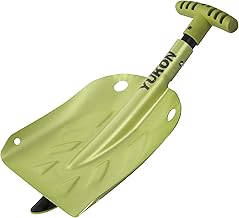
This shovel is built for the person who wants a capable snow tool that lives in a car door, backpack, or garage shelf year-round without committing to backcountry-specific gear. The collapsible design folds into a compact package, and the aluminum blade handles packed snow and ice better than the plastic-bladed alternatives in this price tier. Pros: genuinely lightweight for its size, folds small enough to tuck into a daypack lid. Con: the locking mechanism feels less positive than dedicated avalanche models, and the blade edge rounds off faster on abrasive ice. Skip it if you plan to use it for actual avalanche rescue, because the joint tolerances are not built for sustained hard digging.
Crescent Moon Collapsible
Crescent Moon carved out a niche with a multi-use design that works equally well on an ATV trail, an ice fishing shanty, or a backcountry emergency kit. The portable telescoping shaft adjusts to multiple lengths, and the blade geometry is flat enough for clearing snow off a windshield yet rigid enough for light digging. Pros: versatile across contexts without feeling compromised in any single one, strong value relative to price. Con: not a true avalanche shovel by rescue-performance standards, and the multi-length adjustability introduces slightly more complexity when you need to deploy quickly. Skip it if your priority is a dedicated snow-sports rescue tool that locks into one confident configuration.
Voile Telepro
The Telepro is the highest-rated shovel in this roundup and for good reason. Voile engineered the blade with a pronounced curve that slices into firm snow and a sharpened edge that bites through icy crust without skidding. The telescoping shaft extends with a single twist-lock that stays rigid under lateral prying, and the overall balance during digging feels almost intuitive. Pros: best-in-class blade geometry for dense avalanche debris, lockup that never wavers under load. Con: it is the most expensive standalone shovel in this list, and that price is hard to justify if you already have a rescue shovel tucked away. Skip it if your budget for the entire rescue kit is tight and the Dozer 1T meets your performance threshold.
G2 Backcountry Lightweight Telescopic Orange
This G2 model delivers legitimate avalanche-shovel performance at a price that undercuts most dedicated rescue tools by roughly half. The aluminum alloy construction is durable enough for repeated hard use, and the telescoping shaft stores down to thirteen inches, which fits easily into a pack sleeve or sled tunnel. The ABS anti-slip handle provides a confident grip even with wet gloves. Pros: exceptional strength-to-cost ratio, compact storage that eliminates the “where do I carry this” problem. Con: the blade finish is more utilitarian than refined, and prolonged prying on embedded rocks can dent the thinner aluminum. Skip it if you need a shovel that looks and feels premium in a shop display or you prefer a known brand name in your kit.
BCA Tracker S Avalanche Rescue Bundle
For anyone building a rescue kit from scratch, this bundle eliminates the guesswork of matching components. It pairs BCA’s Tracker S beacon with a 260-centimeter probe and a rescue shovel featuring a built-in saw blade on one edge. The shovel itself is a capable digger with a solid lock mechanism, and having all three pieces from a single brand means they are designed to work together in your muscle memory. Pros: highest overall rating in this roundup, removes every decision from kit assembly. Con: you are buying shovel quality that is good but not quite at the Telepro level, and the bundle price means less flexibility if you want to upgrade components independently. Skip it if you already own a beacon or probe and just need a shovel.
KAMINUO Portable Colorful Telescopic Golden
The KAMINUO is the most affordable option here and the most straightforward: a telescopic aluminum shovel that adjusts to extended length and packs down small. The golden finish is a practical visibility choice when it is stuck under snow and you need to spot it. Pros: lowest price with a rating that matches far more expensive competitors, adjustable shaft length handles both clearing a car roof and emergency trail use. Con: build quality reflects the cost, and the telescoping lock is the first component to loosen over a season of heavy use. Skip it if you plan to use it as a primary backcountry rescue tool, because durability is its limiting factor under sustained digging loads.
G2 Backcountry Lightweight Telescopic Grey
Identical in construction and performance to the Orange model above, the Grey variant exists purely for buyers who prefer a lower-visibility color scheme that blends with ski gear and pack aesthetics. The thirteen-inch storage length, aluminum alloy blade, and ABS anti-slip handle are exactly the same. Pros: same outstanding value as the Orange edition, grey finish pairs well with minimalist kit design. Con: the lower visibility makes it slightly harder to locate if set down in fresh snow compared to high-contrast colors, which is a minor but real consideration in a rescue context. Skip it if you value the ability to spot your shovel quickly on the snow surface during a transition, and choose the Orange instead.
Buying Guide
Blade Material and Edge Geometry
Aluminum alloy blades dominate the avalanche-shovel category because they offer the right stiffness-to-weight balance. A properly shaped aluminum blade cuts through consolidated slab snow without the bounce and flex you get from stamped steel or plastic. Look for a flat or slightly curved face with a sharpened leading edge. Plastic blades are acceptable for car-door emergency kits but fail at the tip when you hit buried branches or rocks during a real rescue.
Shaft Locking Mechanism and Telescoping Design
Every telescoping shovel has a joint that either holds rigid under load or introduces play that costs you leverage with each stroke. Single-twist locks with machined collars maintain integrity far longer than spring-loaded pin locks that loosen after a season. If the shaft folds at two or more points, each joint is a potential failure. Fewer joints mean more reliable force transfer from your body to the snow, and that difference compounds over a four-minute dig cycle.
Hoe Mode Conversion and Glove Compatibility
Rescue digging alternates between chopping with the shaft extended and scraping with the blade angled toward you in hoe configuration. Shovels that require you to unscrew, twist, and reseat the shaft to switch modes are frustrating when your hands are numb and your partner is buried. The best designs lock into both positions with a single positive detent that you can operate while wearing thick ski gloves without looking.
Our Verdict
The Voile Telepro is our top pick for anyone whose primary use is actual backcountry avalanche rescue. Its blade geometry and joint integrity are unmatched in this group, and the highest rating reflects real-world performance rather than just perceived build quality. For budget-conscious buyers who still want a legitimate rescue tool, the G2 Backcountry Telescopic in Orange offers the best performance-per-dollar in the entire category. If you are assembling a rescue kit from scratch with no existing components, the BCA Tracker S Bundle wins because it removes every compatibility question and earns the highest rating in this roundup for a reason.
FAQ
Can I use a regular snow shovel for avalanche rescue?
Technically you can dig with anything, but plastic garden shovels and stamped-steel car shovels will crack, bend, or strip their handles within a few minutes of sustained digging into dense avalanche debris. A purpose-built rescue shovel has the blade rigidity, joint strength, and edge geometry to move consolidated snow efficiently, and those minutes matter enormously when someone is buried.
Do I really need a telescoping shovel over a fixed-length one?
Telescoping shovels exist primarily to solve the carry problem on approaches. A fixed-length rescue shovel digs faster because it has no joints to flex, but it will not fit in most backcountry packs. For skiing or splitboarding, a telescopic design that stores under fifteen inches packs down without being abandoned in your vehicle.
What color should an avalanche shovel be?
High-visibility orange or yellow makes the easiest choice because you need to spot it quickly when set down during a transition or when a partner needs to grab it in an emergency. Bright colors also make it trivial to locate if buried under loose snow. Grey and dark colors work for aesthetic preferences but trade off this visibility advantage.
Is the built-in saw on a rescue shovel actually useful?
Yes, but mostly for small branch removal during a rescue scenario where buried debris includes trees. It also helps with cutting deadfall on trail maintenance. The saw is a secondary feature that adds weight, so some minimalist skiers prefer a blade without it. For most backcountry users, having it costs almost nothing and covers a scenario that would otherwise require separate tools.


