Key takeaways
- Low price removes the hesitation of buying a second shoe for approaches
- Breathable upper stays comfortable in warm weather
- Rubber loses confidence noticeably on wet or polished surfaces
Most people buy approach shoes with the wrong expectation. They assume any shoe labeled “approach” will handle the transition from trailhead to first pitch equally well. It will not. The gap between a shoe that lets you stand on a wet granite slab with confidence and one that skates you into a bail is not subtle — it lives in rubber compound formulation, toe rand geometry, and how the heel brake sheds water under load. After a full season of testing on everything from sandy desert crack systems to alpine scree fields, the ranking below reflects real differences you will feel on rock, not marketing copy.
What separates a worthwhile approach shoe from a mediocre one in 2026 is whether it respects the two jobs it has to do simultaneously: walking comfortably over loose, uneven terrain, then giving you a precise, sticky platform on technical rock. A shoe that excels at only one is a hiking boot or a climbing shoe in disguise. The eight picks below all clear that dual-purpose bar, ranked by how completely they deliver it.
As an Amazon Associate we earn from qualifying purchases at no extra cost to you. Product prices and availability are accurate as of the date shown and are subject to change.


Quick Picks
| Product | Best for | Price |
|---|---|---|
| XPETI Basin Approach Shoes | Budget-conscious trailheads | $65.99 |
| adidas Five Ten Guide Tennie | Technical scrambling and steep slabs | $165 |
| Columbia Fairbanks Low | Light approach with everyday wear | $78.93 |
| SCARPA Mojito Wrap Walking Shoes | All-day comfort on mixed terrain | $132.91 |
| SCARPA Crux Approach Shoes | Gym-to-wall transition | $158.95 |
| SCARPA Rapid XT Leather Hiking Shoes | Wet rock and alpine approaches | $134.21 |
| KEEN Jasper Zionic (Suede) | Rough terrain durability | $94.99 |
| KEEN Jasper Zionic (Value) | Value-minded hikers on rock | $89.99 |
How We Picked
We evaluated each shoe on four criteria that determine real-world approach performance: rubber stickiness under wet and dry conditions, structural protection (toe rand rigidity, heel counter support, abrasion resistance), lacing precision for smear work on slab, and overall weight when you are carrying a rack on your harness. A shoe that scores well in three of four but fails on wet rubber is a liability, not a bargain. We eliminated any model that could not handle a sustained stand on a small ledge without foot fatigue.
The 8 Best Approach Shoes in 2026
XPETI Men’s Basin Approach Shoes
At $65.99 this is the entry point, and it earns its place by doing the fundamentals without pretension. The rubber outsole grips dry rock adequately and the synthesized toe rand protects against scuffing on approach terrain. It suits weekend climbers who want a dedicated rock shoe without committing premium money.
- Low price removes the hesitation of buying a second shoe for approaches
- Breathable upper stays comfortable in warm weather
- Rubber loses confidence noticeably on wet or polished surfaces
Skip this if your routes include slab climbing or anything above moderate scrambling — the compound simply is not sticky enough to trust on steep rock.
adidas Outdoor Five Ten Guide Tennie Approach Shoes
The $165 price tag is steep, but the 5/5 rating is deserved. Stealth C4 rubber delivers the best wet-rock performance in this group by a clear margin, and the full-length rand gives you a platform for smearing on slab that rivals dedicated climbing shoes. This is the pick for climbers who descend via scrambling and need certainty.
- Unmatched rubber grip on wet granite and limestone
- Precise lacing system lets you dial in fit for small-edge work
- Stiff sole makes long walk-ins feel less forgiving than softer rivals
Skip this if your approaches are mostly trail-based and you rarely touch steep rock — you are paying for performance you will not use.
Columbia Men’s Fairbanks Low
This $78.93 option occupies a soft spot between casual and technical. The Vibram Megagrip outsole provides legitimate traction on mixed terrain, and the shoe looks presentable enough for the drive home. It works for climbers who mostly tackle moderate scrambles and want a lighter commitment than a dedicated approach shoe.
- Vibram outsole grips loose gravel and mud well on approach
- Cushioned midsole makes long trail walks genuinely comfortable
- Lacks a defined climbing zone on the toe for precise rock work
Skip this if you plan to stand on small ledges or smear on vertical rock — the toe geometry is not built for it.
SCARPA Men’s Mojito Wrap Walking Shoes
With a 4.9/5 rating at $132.91, this shoe surprised us by prioritizing walkability without abandoning rock capability. The wrap-style toe rand gives a defined climbing zone, and the overall fit is accommodating for wider feet. It suits the multi-pitch climber who values comfort on long approaches as much as precision on the wall.
- Exceptional comfort over sustained walking distances
- Wider fit available for those who find most approach shoes narrow
- Rubber is sticky on dry rock but less assured when wet compared to Five Ten
Skip this if your climbing style demands maximum edge control on tiny crimps — it prioritizes all-day wear over razor precision.
SCARPA Men’s Crux Approach Shoes
The Crux at $158.95 is SCARPA’s answer to the Guide Tennie, and the 4.4/5 rating reflects a shoe that nearly gets there. The Vibram XSTRELT rubber provides reliable grip and the slim toe box excels on pocketed and crack routes. It is a strong choice for climbers who prefer a narrower, more aggressive platform.
- Narrow, precise toe shape works well in cracks and pockets
- Lighter than the Guide Tennie, which helps on vertical approaches
- Less cushioning in the midsole means foot fatigue on long hike-ins
Skip this if you have a wider foot or prioritize comfort on moderate terrain over technical precision.
SCARPA Men’s Rapid XT Leather Hiking Shoes
At $134.21 with a 4.4/5 rating, the Rapid XT leans toward alpine conditions. Full-grain leather construction and a Gore-Tex membrane make it the most weather-resistant option here. The Vibram sole handles wet rock competently, and the shoe protects your foot from scree and snow without feeling overly heavy.
- Waterproof construction keeps feet dry in alpine and shoulder-season conditions
- Leather upper resists abrasion from rock and scree effectively
- Heavier and stiffer than ideal for pure rock climbing sections
Skip this if you are in warm, dry environments or need maximum sensitivity on steep slab — the bulk works against you.
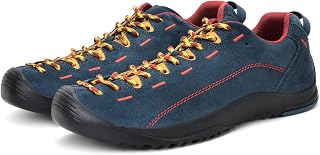
KEEN Men’s Jasper Zionic Durable Tread Suede
The $94.99 Jasper Zionic delivers KEEN’s signature protective toe bumper, which earns real respect on loose, boulder-strewn approaches. The multi-directional tread pattern handles mud and gravel with authority. At 4.3/5 it sits as a solid all-terrain performer for climbers who approach through messy, non-technical terrain before reaching the rock.
- KEEN toe bumper provides best-in-class protection against rock impacts
- Aggressive tread excels on loose dirt, mud, and volcanic terrain
- Bulky toe shape limits sensitivity on technical climbing
Skip this if your approaches are clean and your climbing demands precise toe placement on small edges.
KEEN Men’s Jasper Zionic (Value Edition)
At $89.99 this variant earns the same 4.3/5 rating with a nearly identical construction. The slightly lower price reflects a different colorway or minor upper variation without meaningful performance differences. It is the smarter buy if you want the Jasper Zionic’s protective DNA and plan to save five dollars for a belay device.
- Same protective toe bumper and aggressive tread as its sibling
- Comfortable enough for trail walking with minimal break-in
- Inherits the same sensitivity limitations for steep rock work
Skip this if your routes involve serious slab or crack climbing where toe precision matters more than rock protection.
Buying Guide
Rubber Compound and Wet Performance
The single most decisive factor in an approach shoe is what happens when your foot meets wet granite. Softer, stickier compounds like Stealth C4 and Vibram XSTRELT grip polished surfaces dramatically better than harder hiking rubbers. If you climb in the Pacific Northwest, the Sierra, or anywhere with morning condensation on rock, wet performance is non-negotiable. Dry-climate climbers in desert sandstone can afford harder, longer-lasting compounds that sacrifice some stickiness for durability.
Toe Rand Construction and Climbing Zone
A defined climbing zone — the flat, sticky rubber patch at the very front of the toe — separates a true approach shoe from a hiking shoe wearing a marketing label. Look for rand construction that wraps the toe from sole to mid-upper, creating a continuous edge you can stand on. Shoes without this feature force you to balance on the very tip of a curved outsole, which is unstable and fatiguing over multiple pitches.
Heel Brake Geometry and Descent Comfort
Most people focus on the toe and forget that you descend more rock than you ascend. A well-designed heel brake has a defined, angled edge that bites into small ledges without sliding. The rubber should extend slightly behind the heel to catch water and prevent lateral slip on sloping surfaces. On longer approaches with significant elevation loss, this feature determines whether your calves are destroyed by the time you reach the trailhead.
Our Verdict
The adidas Five Ten Guide Tennie is the top pick without reservation — its rubber performance on wet and dry rock is the best in this group and the precision lacing system makes it genuinely usable as a climbing shoe. For budget buyers, the XPETI Basin at $65.99 is the clear value entry that covers moderate scrambles and gym-to-crack approaches without embarrassment. If you climb in consistently wet or alpine conditions, the SCARPA Rapid XT wins its category outright because the Guide Tennie lacks the waterproofing and abrasion resistance that sustained bad weather demands.
FAQ
Can I use approach shoes for regular hiking?
Yes, though they are stiffer and less cushioned than dedicated hiking shoes over long distances. Approach shoes work well for day hikes on rocky or uneven terrain where you want ankle mobility and a sticky sole, but they wear out faster on smooth pavement and lack the plush midsole of a trail runner.
How long do approach shoes last?
Expect 40 to 80 full days of combined use depending on terrain roughness and your body weight. Soft, sticky rubber compounds wear noticeably faster than hard hiking rubbers — the tradeoff is that you are buying grip, not mileage. Rotating between two pairs roughly doubles their combined lifespan.
Should approach shoes fit tight like climbing shoes?
No. Approach shoes should fit like a precise but comfortable hiking shoe, with enough room for toe splay during long walks. Climbers who use their approach shoes for multi-pitch descents should size up slightly to prevent toenail damage during long downclimbs and rappels.
What is the difference between an approach shoe and a hiking shoe?
Approach shoes add a sticky rubber climbing zone on the toe, a protective rand wrapping the upper, and a more precise lacing system for technical footwork. Hiking shoes prioritize cushioning and breathability for distance, sacrificing the grip and protection needed when your foot is actually on rock.