
Key takeaways
- Pro: Strong contrast and sensitivity for identifying hogs in cover
- Pro: Straightforward controls and stable tracking feel
- Con: Lacks dual-spectrum optical fusion found on some rivals
What's inside
Hog hunting with thermal is a different game than daylight glass. You are picking a dark, moving target out of tall grass, brush, or open pasture where hogs rarely stand still, and you need to identify, range, and place a shot in seconds. A good thermal scope makes that possible by giving you consistent contrast, a stable image when you pan, and controls you can run by feel with gloves on. A bad one leaves you guessing at blobs, fighting lag, or digging through menus while the sounder moves off.
After running this class of optics on feeders, spot-and-stalk nights, and truck-based hunts, the differences that actually matter in 2026 are not just resolution on paper but usable image quality, refresh stability, reticle and zeroing logic, and how well ranging and ballistic support integrate into a real shot sequence. The scopes below were evaluated on those practical points, with an emphasis on hog-specific use rather than lab specs.
As an Amazon Associate we earn from qualifying purchases at no extra cost to you. Product prices and availability are accurate as of the date shown and are subject to change.




Quick Picks
| Product | Best for | Price |
|---|---|---|
| AGM Rattler V2 | Proven all-around performance | $794.6 |
| GOYOJO GRS Series | Rangefinding and ballistic assistance | $829 |
| GOYOJO GRL Series | Higher resolution thermal image | $799 |
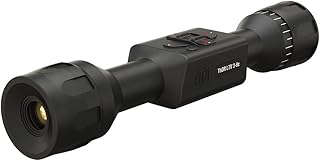
| ATN Thor 6 Mini | Compact lightweight hunting | $689 |
| ATN Thermal Imaging Scope | Feature-rich traditional styling | $835.37 |
| RIX Storm S2 | Ultralight handling and simple controls | $799 |
| 384×288 Thermal Scope with Night Vision | Budget entry to thermal | $409.99 |
| GOYOJO GTD215 | Dual-light fusion versatility | $699 |
How We Picked
We ranked these scopes for hog hunting on four things that decide success after dark: thermal image usability including sensitivity and contrast retention in humidity and brush, viewing comfort and tracking stability when panning on moving hogs, practical hunting features such as reticle options, one-shot zero, rangefinding and ballistic support, and overall handling including weight, control layout, and power management for long sits and quick follows.
The 8 Best Thermal Scopes For Hog Hunting in 2026
1. AGM Rattler V2
Built for hunters who want proven field reliability without stepping into premium price tiers, the AGM Rattler V2 is the steady upgrade from entry-level thermals. Its high-sensitivity sensor delivers clean contrast on hogs moving through brush and open pasture, holding detail at distance and in humid conditions where cheaper units wash out. Handling is straightforward with intuitive controls that let you stay on the animal rather than the menu, and image stability feels smooth enough for tracking running sounders. It balances performance and familiarity, making it a confident first serious thermal or a dependable second rifle setup. When to skip it: if you need the absolute lowest price or want integrated optical and thermal fusion in one housing.
- Pro: Strong contrast and sensitivity for identifying hogs in cover
- Pro: Straightforward controls and stable tracking feel
- Con: Lacks dual-spectrum optical fusion found on some rivals
2. GOYOJO GRS Series
The GOYOJO GRS Series is aimed at hunters who want more shot support built into the optic. With a 256×192 thermal sensor and 50Hz optics, it focuses on usable clarity plus rangefinding and ballistic assistance and RAV recording to review shots. The interface is geared toward hunters who like guided holds rather than guessing drop at night, which helps on feeders and field edges where hogs hang up beyond point-blank range. Image is clean for its class and the feature set adds confidence on longer presentations. When to skip it: if you prefer a minimalist reticle and manual hold and do not need ranging or ballistic tools.
- Pro: Integrated rangefinding and ballistic assistance for night shots
- Pro: RAV video for reviewing shot placement and hog behavior
- Con: 256×192 resolution is a step below higher-resolution options
3. GOYOJO GRL Series
Hunters who prioritize image detail will gravitate to the GOYOJO GRL Series, which steps up to a 384×288 high-resolution sensor with 55Hz high-sensitivity optics. That combination gives a noticeably more refined picture, with better edge definition on hogs against warm ground and more color and reticle options to tune the view to conditions. RAV video is included for documentation, and the overall handling remains hunting-focused rather than bench-oriented. It is a strong fit for those who glass longer and want to separate hogs from calves, deer, or brush at extended distances. When to skip it: if you want the lightest possible package or the lowest cost.
- Pro: Higher resolution sensor with improved detail and color options
- Pro: 55Hz refresh aids smooth panning on moving sounders
- Con: More options to learn compared to simple point-and-shoot thermals
4. ATN Thor 6 Mini
The ATN Thor 6 Mini is the compact pick for hunters who cover ground or run a lighter rifle. It keeps the essentials for hog and coyote work while trimming bulk, and the One-Shot Zero system shortens sight-in and re-zero chores when swapping loads or rifles. For stand, tripod, or vehicle setups where weight and length matter, the smaller housing is easier to balance and maneuver. Image performance is geared toward practical predator and hog identification rather than spec-sheet chasing, with a straightforward operating logic. When to skip it: if you want the largest objective lens or maximum resolution for long-field scanning.
- Pro: Compact form that balances well on light rifles
- Pro: One-Shot Zero simplifies sight-in
- Con: Mini footprint trades some objective size and field of view
5. ATN Thermal Imaging Scope
This ATN Thermal Imaging Scope suits hunters who like a traditional scope footprint with a broad feature set. It is positioned as a do-everything night optic for predator and hog work, offering familiar ergonomics for those transitioning from day optics. The appeal is completeness rather than specialization, giving you a conventional mounting and control feel with thermal capability for feeders and open fields. Consider it if you value a known brand ecosystem and a classic shape over ultralight or fusion designs. When to skip it: if you want the latest high-refresh or fusion tech or the best value per dollar.
- Pro: Familiar scope-style handling for easy transition
- Pro: Broad feature set for varied night hunting
- Con: Rated lower by users than other options on this list
6. RIX Storm S2
The RIX Storm S2 is built around ease of use and carry. At 0.9 pounds with a 25mm lens, 256×192 sensor, NETD under 25mK and 50Hz refresh, it emphasizes lightweight comfort, simple controls, and handheld flexibility for hunters who move between stands or scan off-rifle. Sensitivity under 25mK helps it hold contrast on hogs in warm, humid nights when lesser units lose definition. The control logic is deliberately uncomplicated, so you spend less time in menus and more time on target. When to skip it: if you need higher native resolution for long-range identification.
- Pro: Very light at 0.9 pounds with simple, fast controls
- Pro: Strong sensitivity under 25mK for muggy conditions
- Con: 256×192 sensor resolution trails 384 class options
7. 384×288 Thermal Scope with Night Vision
This 384×288 Thermal Scope with Night Vision is the budget gateway to usable thermal for hog control. It combines adjustable diopter, 60Hz refresh, 11 color palettes, and a dual system approach for outdoor and hunting use, plus an included charger for field power management. The 60Hz refresh and higher resolution class give it an edge over typical entry-level 256 units for tracking moving hogs, while the palette choices help tailor contrast to terrain. It is best for landowners and hunters who need functional thermal on a tight budget. When to skip it: if you want refined ballistic tools, premium build, or advanced fusion.
- Pro: High value with 384×288 class resolution and 60Hz refresh
- Pro: 11 palettes and dual system add versatility
- Con: Fit and finish and support trail premium brands
8. GOYOJO GTD215
The GOYOJO GTD215 stands out for hunters who want both thermal and optical information in one optic. It pairs 256×192 thermal resolution with 2K optical imaging and Dual-Light Fusion, backed by a 300-yard recognition range and 50Hz thermal with 60Hz optical refresh. That fusion approach helps with target confirmation before the shot, especially where hogs mix with livestock or deer, and the optical side preserves context that pure thermal can flatten. It is ideal for mixed-light hunts at dusk and for hunters who value positive ID. When to skip it: if you want pure thermal simplicity or higher thermal-only resolution.
- Pro: Dual-Light Fusion with 2K optical for better identification
- Pro: Smooth dual refresh rates for tracking and observation
- Con: Fusion system adds complexity versus single-mode thermals
Buying Guide
Resolution, Sensitivity, and Refresh That Matter on Hogs
For hogs, usable contrast beats headline numbers. A 384 class sensor generally shows cleaner edges on a hog against warm soil and lets you distinguish body angle for shot placement, while a sensitive sensor with low NETD holds that contrast on humid nights when everything glows. Refresh rate affects how the image feels when you swing on a running sounder, with higher rates looking smoother. Prioritize a unit that keeps hogs distinct from background at your typical feeder or field distance and that stays stable when you pan, rather than chasing the highest number alone.
Zeroing, Reticles, and Shot Support
Night zeroing should be simple and repeatable. Features like One-Shot Zero, multiple reticles and colors, adjustable diopter, and integrated rangefinding with ballistic assistance reduce guesswork when hogs hang up or angle away. Think about how you hunt: fixed feeders reward precise holds and video review, while spot-and-stalk or truck hunting rewards fast reticle changes and intuitive turrets. Choose a system you can run without looking away from the target and that returns to zero reliably after travel or battery swaps.
Weight, Controls, and Power in the Field
Hog hunts are long, often cold or buggy, and usually gloved. A lighter scope that balances well and offers simple, tactile controls will get used more than a heavy, menu-heavy unit. Consider handheld use for scanning, lens size for field of view versus reach, and how charging and battery life fit your routine. Palettes and dual-system or fusion modes add versatility but should not complicate the core job. The best scope is the one you can mount, zero, and operate confidently in the dark without a manual.
Our Verdict
Our top pick is the AGM Global Vision Rattler V2 for its proven, high-sensitivity image and hunter-friendly handling that works across feeders, fields, and timber without overcomplicating the shot. Our budget pick is the 384×288 Thermal Scope with Night Vision, which delivers 384 class detail and 60Hz viewing with broad palette options at a notably low price. If you want maximum identification confidence where hogs mix with other animals, the GOYOJO GTD215 wins thanks to its 2K optical and Dual-Light Fusion approach.
FAQ
What resolution do I need for hog hunting?
For most hog hunting inside a few hundred yards, 256 class thermals can work, but 384 class sensors show better edge detail and make body angle easier to read, especially in warm conditions. Choose based on your average engagement distance and how much you need to distinguish hogs from similar heat signatures.
Is 50Hz or 60Hz important?
Higher refresh generally looks smoother when you pan or track moving hogs. Both 50Hz and 60Hz are serviceable for hunting, but if you often swing on running sounders, the smoother feel helps maintain sight picture and shot timing.
Do I need rangefinding and ballistic assistance at night?
Not every hunter does, but it helps when hogs stop beyond your zero or on uneven terrain where distance is hard to judge in the dark. If you hunt open fields or varied distances, integrated ranging and holds add confidence; for close, fixed feeders, a simple reticle may be enough.
Can one thermal scope handle both scanning and shooting?
Yes, many hunters scan and shoot with the same optic, and lightweight models with simple controls handle this well. A dedicated handheld scanner is more comfortable for long glassing sessions, but a versatile rifle scope with good ergonomics can cover both roles if you prefer one device.


