Key takeaways
What's inside
Satellite messenger review shopping matters because these devices are a genuine lifeline when cell service disappears. This roundup compares five field-tested units across battery life, coverage network, weight, and cost, from a do-it-all standard to a subscription-free beacon, so you can choose the right two-way SOS device for your trips.
As an Amazon Associate we earn from qualifying purchases.
By Jake Thompson
How to Read a Satellite Messenger Review
Specs only matter once you know your trips and budget. A useful satellite messenger review weighs battery life, satellite network, subscription cost, and messaging features together, since a device that wins on one can lose on another. Before the picks, understand the three trade-offs that separate every model.
Network and Coverage
The satellite network behind a device shapes its reliability. The Iridium network offers true global, pole-to-pole coverage, which is why many top messengers use it, while other networks may leave gaps at extreme latitudes. For international or high-latitude travel, network matters more than almost any other spec.
Coverage still depends on the sky. Even a global network needs a clear view overhead, so canyons and dense forest can slow messages. A good satellite messenger review notes that no device is immune to terrain, and positioning yourself in the open speeds a critical message.
Battery Life and Messaging
Battery life decides how long you can go between charges. Some messengers run for weeks in tracking mode, while others last days, which matters most on long trips without power. Longer battery life buys peace of mind and fewer worries about a dead device when you need it.
Messaging features vary widely. Basic units send preset check-ins and SOS, while premium models add two-way texting, weather, tracking, and even voice or photo messages over newer protocols. This satellite messenger review weighs how much you will actually communicate against the added cost of premium features.
Subscription and Standalone Use
Ongoing cost is part of the purchase. Satellite messengers require monthly or annual plans, and prices vary by messaging volume, while a personal locator beacon needs no subscription at all. Factor the plan into your budget, since the device price is only part of the long-term cost.
Standalone operation adds resilience. Some messengers work fully on their own, while others lean on a paired phone for easy texting. A device that functions without your phone keeps working if the phone dies, a point this satellite messenger review keeps in mind for serious backcountry use.
Top Picks: The Best Satellite Messengers
With those trade-offs in mind, this satellite messenger review lines up five field-tested devices, each a clear winner for a different user. The table sums up the essentials, and the reviews below explain who each one suits and the trade-offs to weigh before you buy.
| Device | Weight | Network | Battery | Best For |
|---|---|---|---|---|
| Garmin inReach Messenger | ~4 oz | Iridium | ~28 days tracking | Overall |
| Garmin inReach Mini 3 Plus | ~4.4 oz | Iridium | Long | Compact premium |
| ZOLEO | ~5.3 oz | Iridium | Long | Value |
| SPOT X | ~7 oz | Globalstar | Long | Standalone keyboard |
| ACR ResQLink View | ~5.4 oz | 406 MHz | Years standby | SOS-only, no fee |
Garmin inReach Messenger – Best Overall
The Garmin inReach Messenger is the best all-around value in this satellite messenger review. It delivers full global Iridium two-way messaging and SOS, an outstanding battery life of up to around 28 days in tracking mode, and reliable standalone operation, all at a lower price than the compact Mini lineup.
It lacks the tiny footprint and touchscreen of premium Mini models and still needs a subscription. But for dependable global messaging, class-leading battery life, and strong value, it is the device most hikers should buy.
Garmin inReach Mini 3 Plus – Best Compact Premium
The Garmin inReach Mini 3 Plus packs the most features into the smallest package. At around 4.4 ounces, it adds a color touchscreen, voice messaging, and a faster next-generation messaging protocol to the trusted global Iridium network, making it the most capable pint-sized messenger available.
It costs more than the standard Messenger and its advanced features are overkill for casual users. But for those who want the smallest, most feature-rich standalone device for high-output missions, it is the top premium pick.
ZOLEO – Best Value
The ZOLEO Satellite Communicator offers the lowest cost of entry for two-way contact. It uses the global Iridium network, provides a dedicated phone number so contacts can text it like a normal phone, and pairs with a simple, reliable app, making it the friendliest budget choice for staying in touch.
Its app-dependent architecture can frustrate on long trips when you want standalone messaging, and it is a bit bulkier. But for casual backcountry users who want affordable, dependable two-way messaging, it is the standout value.
SPOT X – Best Standalone Keyboard
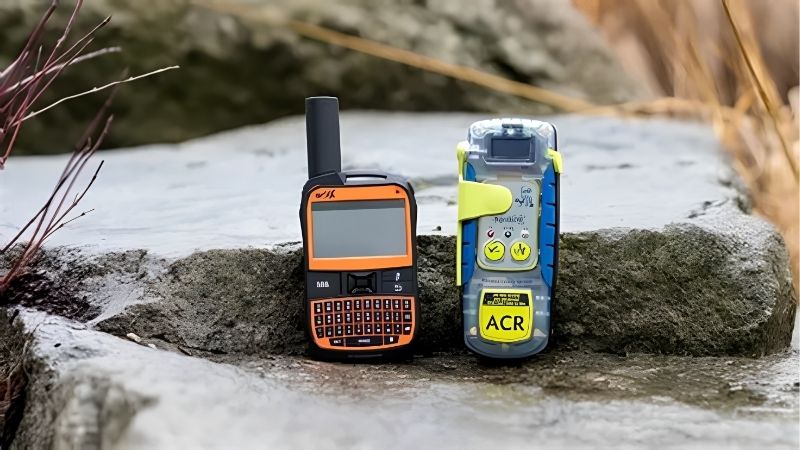
The SPOT X stands out with a full physical QWERTY keyboard and its own dedicated mobile number. That lets you type messages directly on the device without a phone and lets contacts text you like a regular number, appealing to those who want a self-contained communicator with easy typing.
It uses the Globalstar network, which has less complete polar coverage than Iridium, and it is heavier and bulkier. But for hikers who value standalone typing and a dedicated number over minimum weight, it fills a genuine niche.
ACR ResQLink View – Best SOS-Only
The ACR ResQLink View is the pick for those who want emergency-only simplicity. This personal locator beacon sends a powerful 406 MHz distress signal to the global search-and-rescue network with no subscription ever, and it is buoyant and rugged, standing by for years until the day you truly need it.
It offers no messaging, tracking, or check-ins, only an SOS. But for hikers who want a bombproof, cost-free emergency beacon and do not need two-way contact, its no-subscription simplicity is exactly right.
Frequently Asked Questions
A few questions come up again and again in any satellite messenger review. Here are quick, practical answers to help you choose.
Do I really need a satellite messenger?
If you hike beyond cell coverage, which is most real backcountry, yes. A satellite messenger lets you call for rescue and check in from anywhere, turning a serious situation into a manageable one. For remote, solo, or multi-day trips, it is one of the most valuable safety devices you can carry.
How much do the subscriptions cost?
Plans vary by device and messaging volume, typically ranging from affordable basic tiers to higher plans with more messages and tracking. Many offer flexible monthly or annual options you can pause between trips. Personal locator beacons avoid subscriptions entirely, so factor ongoing cost into your choice alongside the device price.
Which satellite network is best?
The Iridium network offers true global, pole-to-pole coverage, which is why many top messengers use it and why it is preferred for international or high-latitude travel. Other networks work well in most populated regions but may have gaps at extreme latitudes. For worldwide reliability, Iridium-based devices are the safest bet.
Should I register my device?
Yes, always. Register a satellite messenger with the provider and a personal locator beacon with the national authority, so rescuers have your details and emergency contacts. Registration is free, quick, and speeds rescue by giving responders vital information. Also tell someone your route and expected return before every trip.
See More:
- Best camp chair
- Lightweight camp chair
- Camping table review
- Backpacking cookware set
- Camp stove review
Final Thoughts
This satellite messenger review shows the right device depends on your trips and budget. The Garmin inReach Messenger leads overall, the Mini 3 Plus packs premium features into a tiny body, and ZOLEO wins on value, while the SPOT X offers standalone typing and the ACR ResQLink View gives subscription-free SOS. Match battery, network, and cost to your adventures, and carry a lifeline you can trust.