Our Top Picks
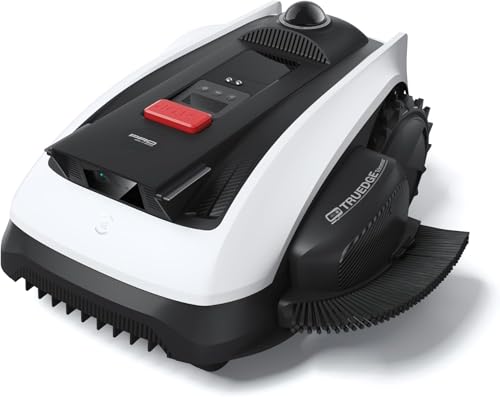 ECOVACS Goat O1000 LiDAR PRO Robot Lawn MowerO1000 LIDAR PRO1.95 x 1.56 x 0.58 inchesCheck on Amazon
The best wire-free robot lawn mower for most yards is the Segway Navimow i210 AWD, with the Sunseeker X3 Plus as the runner-up. The Navimow earns the top spot because it pairs network-RTK and vision navigation with all-wheel drive and a 45 percent slope rating, which covers the widest range of ordinary suburban lawns. The Sunseeker X3 Plus is the stronger choice if your lawn is a little larger and you want RTK plus vision AI at a lower step-up in cost. A wire-free robot lawn mower, also called a wireless or no-wire robot lawn mower, maps your lawn with satellites, cameras or LiDAR instead of a buried boundary cable. This guide is research-based. We compared maker listings and spec pages and we did not personally use these mowers, so every figure below is a maker rating and anything the listing does not state is marked “not listed”.
Choosing a no-wire mower is less about brand and more about how it finds its way. RTK, vision and LiDAR each succeed and fail in different yards, and that is what most guides skip. If you have tall trees overhead, an RTK mower may lose precision; if you have deep shadows or night schedules, a vision-only mower may struggle; if you have lots of open sky, RTK is simple and accurate. Below you will find seven picks, a comparison table, a navigation-versus-yard matrix, a worked sizing example, setup advice, safety basics and a short FAQ.

Segway Navimow i105N Robot Lawn Mower Perimeter Wire Free 1/8 Acre RTK+Vision Robotic Lawnmower, AI-Assisted Mapping, Virtual Boundary, APP Control, 58dB(A) Quiet, Multi-Zone Management
Chosen because it specifies AI-Assisted Mapping and Virtual Boundary.
View on Amazon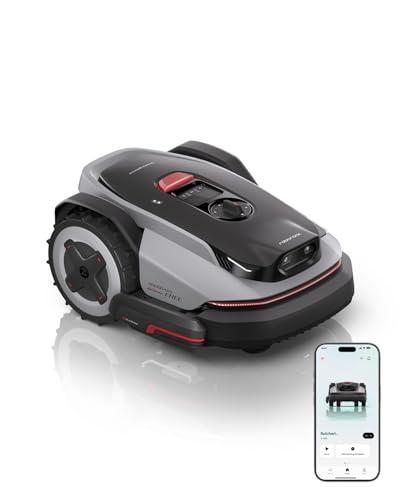
Roborock RockNeo Q110H Robot Lawn Mower, Wire-Free Robotic Lawn Mower with Full-Band RTK + VSLAM Navigation, Auto Mapping, AI Vision Obstacle Avoidance, App Control, 45% Slope, Covers Up to 1/4 Acre
Chosen because it specifies Auto Mapping and AI Vision Obstacle Avoidance.
View on AmazonECOVACS Goat O1000 LiDAR PRO Robot Lawn Mower, Wire-Free Mapping with LiDAR Navigation, AI Obstacle Avoidance, Smart Edge Mowing, App Control, for Lawns Up to 1/4 Acre
Chosen because it specifies Wire-Free Mapping with LiDAR Navigation and AI Obstacle Avoidance.
View on Amazon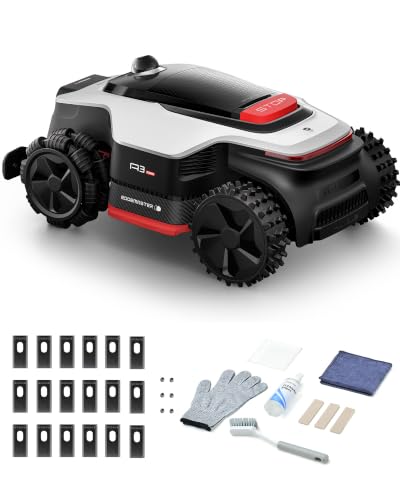
[All-Terrain Wire-Free] DREAME LiDAR Robot Lawn Mower A3 AWD 1000 + Cleaning Set+Blade Set, 360° 3D LiDAR & AI Dual Vision Smart Robotic Mowers for 0.25 Acre
Picked as a relevant option in this category.
View on AmazonTop Picks at a Glance
- Best Overall: Segway Navimow i210 AWD (network RTK plus vision, 45 percent slope rating)
- Best RTK Plus Vision Value: Sunseeker X3 Plus (RTK, Vision AI, wire-free)
- Best Without an RTK Antenna: MOVA LiDAX Ultra 1000 (360 degree 3D LiDAR plus AI vision)
- Best Budget-Minded RTK: Roborock RockNeo Q110H (full-band RTK plus VSLAM)
- Best RTK for Small Lawns: ECOVACS GOAT O1000 RTK (RTK plus vision)
- Best for Bigger Yards Without RTK: HOOKII Neomow X SE (LiDAR, listed for 0.75 acre)
- Best Premium Brand: Husqvarna 410iQ (wire-free, 45 percent slope, app-set virtual boundaries)
Comparison Table
| Product | Best for | Navigation and key specs (as listed) | Watch for | Price tier |
|---|---|---|---|---|
| Segway Navimow i210 AWD | Slopes and mixed lawns | Network RTK plus vision, AWD, 0.25 acre rating, 45% slope | Needs a cellular or network RTK signal | Premium |
| Sunseeker X3 Plus | Open yards, edge cutting | RTK plus Vision AI, 0.3 acre rating | Tree cover can reduce RTK accuracy | Mid-range |
| MOVA LiDAX Ultra 1000 | Tree-covered yards | RTK-free, 360 degree 3D LiDAR plus AI vision, 1/4 acre rating | LiDAR sensor needs to stay clean | Premium |
| Roborock RockNeo Q110H | Cost-conscious wire-free | Full-band RTK plus VSLAM, auto mapping | Area rating not in the title | Mid-range |
| ECOVACS GOAT O1000 RTK | Small to mid lawns | RTK plus vision, up to 1/4 acre rating | RTK needs sky view | Mid-range |
| HOOKII Neomow X SE | Larger open lawns | 360 degree 3D LiDAR, no RTK antenna, 0.75 acre rating | Rating is the maker’s; real results vary | Premium |
| Husqvarna 410iQ | Brand support, slopes | Wire-free EPOS, app-set virtual boundaries, 1/2 acre, 45% slope | Needs a stationary reference station | Premium |
RTK vs Vision vs LiDAR: Which Navigation Fits Your Yard?
RTK uses satellite positioning corrected by a base station or network to place the mower within a small margin. Vision uses cameras and software to recognize the lawn edge and obstacles. LiDAR uses laser scanning to build a three-dimensional map. Most modern wire-free mowers blend two of these methods. The matrix below shows which approach tends to fit which yard.
| Your yard | Better navigation | Why |
|---|---|---|
| Wide open sky, few trees | RTK plus vision | Clear satellite view gives stable positioning |
| Many mature trees or tall hedges | LiDAR plus vision | Does not rely on an open sky view |
| Mixed shade and sun | Hybrid RTK with vision or LiDAR | Fallback when one signal weakens |
| Steep slopes | AWD with any navigation | Traction matters more than the sensor |
| Multiple separate lawn zones | Any mapping with multi-zone support | Check how the app handles passages between zones |
| Night mowing | RTK or LiDAR | Vision alone can be limited in low light; check the maker’s guidance |
1. Segway Navimow i210 AWD: Best Overall
- Perimeter wire-free setup
- NRTK plus vision navigation, per the listing
- All-wheel drive
- Rated for 0.25 acre and 45 percent slopes by the maker
- Also sold in garage and extra-blade bundles
Best for: Lawns with a few humps, side slopes or uneven ground. Skip if: your yard has weak cellular coverage or your lawn is larger than the maker’s rated area.
Network RTK takes a correction signal from a cellular network rather than a base station that you mount in the yard. In practice it means fewer parts to install and a more flexible setup. Vision fills gaps when the satellite signal is poor. AWD adds traction on slopes and wet grass, which is where two-wheel-drive robots tend to slip and leave marks.
A 45 percent slope rating is a maker’s figure and indicates a gradient of about 24 degrees. It is not a promise for every surface, so check wet-grass guidance in the manual and avoid mowing a wet slope. Start with a conservative route near the steepest part of your lawn to see how the mower handles it.
Pros: strong slope rating; no yard base station needed; AWD traction; bundle options. Cons: premium cost; network dependence; area rating suits mid-size lawns only.
2. Sunseeker X3 Plus: Best RTK Plus Vision Value
- RTK and Vision AI navigation
- 0.3 acre rating
- Wire-free
- Edge cutting highlighted in the listing
- Slope rating: not listed in the title
Best for: Open yards of roughly a quarter to a third of an acre. Skip if: you have a steep yard and want a stated slope figure up front.
The X3 Plus is a straightforward fit for a typical suburban lawn. RTK handles the mapping, and Vision AI helps with obstacles such as toys, garden hoses and pets. A larger area rating than some rivals gives breathing room if your lawn has a few odd corners.
Edge trimming is a big deal for wire-free robots because there is no wire to guide the blade to the edge. Look for how the maker describes edge cutting and plan to use a string trimmer for the last few inches around fences and beds, even with a robot.
Pros: RTK plus vision; larger rated area than entry models; edge-cutting focus. Cons: slope rating not listed; RTK works best with open sky; mid-range cost.
3. MOVA LiDAX Ultra 1000: Best Without an RTK Antenna
- Wire-free for 1/4 acre, per the listing
- RTK-free with 360 degree 3D LiDAR and AI vision
- Auto mapping
- Zero-edge cutting claim in the listing
- Slope rating: not listed in the title
Best for: Yards with trees, tall fences or buildings that block the sky. Skip if: you want the simplest, lowest-cost RTK route.
By skipping RTK, the LiDAX Ultra 1000 does not depend on a clear view of the sky. The laser scanner builds a map of trees, fences and buildings, and the camera helps recognize obstacles. For a yard shaded by oaks or surrounded by houses, this approach can be more consistent than RTK.
Keep the sensor window clean and free of sap or dirt, and follow the maker’s cleaning advice. The larger Ultra 2000 and 3000 AWD models are sold for bigger lawns.
Pros: no antenna; works in tree-covered yards; AI vision; zero-edge claim. Cons: sensor upkeep; premium cost; slope not listed.
4. Roborock RockNeo Q110H: Best Budget-Minded RTK
- Wire-free
- Full-band RTK plus VSLAM navigation
- Auto mapping
- Area and slope rating: not listed in the title
Best for: Buyers who want a known vacuum brand’s approach to mapping at a lower tier. Skip if: you need a published slope rating before buying.
Full-band RTK uses multiple satellite frequencies to improve accuracy in tricky locations, and VSLAM adds visual mapping to the mix. The combination is similar to premium mowers, but the title does not give the area or slope. Check the product page for the rated area and compare it with your lawn size before buying.
Pros: dual navigation; auto mapping; lower tier than many rivals. Cons: missing area and slope data; newer product line; RTK needs sky view.
5. ECOVACS GOAT O1000 RTK: Best RTK for Small Lawns
- Wire-free robotic lawn mower
- RTK plus vision navigation
- Rated up to 1/4 acre by the maker
- Auto mapping
- Also sold in a LiDAR PRO version with dual-LiDAR navigation
Best for: Small to mid-size lawns with a good view of the sky. Skip if: your lawn is shaded; look at the LiDAR version instead.
ECOVACS sells the GOAT in several flavors. The RTK version relies on satellite positioning, and the LiDAR PRO version adds laser scanning. If you are unsure which suits your yard, look at the tree cover first and choose the LiDAR version when trees block the sky.
Pros: RTK plus vision; multiple versions; app mapping. Cons: sky dependence; slope not listed in the title; several similar model names.
6. HOOKII Neomow X SE: Best for Bigger Yards Without RTK
- 360 degree 3D LiDAR navigation
- No RTK antenna required, per the listing
- Listed for 0.75 acre
- Obstacle avoidance: the listing cites more than 200 obstacle types
Best for: Larger lawns where trees or buildings affect satellite signals. Skip if: your lawn is small and a cheaper model would do.
A 0.75 acre rating is the highest among the picks except for the large lawn models in the also-consider list. As with any area rating, treat it as a ceiling for ideal conditions, not a promise for a cluttered lawn with many obstacles. Give extra margin if your lawn has slopes, hedges and flower beds.
Pros: large rated area; LiDAR; no antenna. Cons: premium cost; maker’s area rating; slope not listed.
7. Husqvarna 410iQ: Best Premium Brand
- Wire-free with EPOS, as described in the listing
- Rated for 1/2 acre and 45 percent slopes
- App-set virtual boundaries
- Requires a reference station, per Husqvarna’s EPOS system
Best for: Buyers who want established dealer support and a long-running robotic brand. Skip if: you want the least equipment in the yard.
Husqvarna has made robotic mowers for years, and the 410iQ brings its virtual-boundary approach to a wire-free setup. EPOS uses satellite positioning with a stationary reference station, so plan a spot with a clear sky view for that station. Dealer support and parts availability are a strong reason to consider the brand.
Pros: brand support; slope rating; app boundaries; half-acre rating. Cons: station required; premium cost; larger footprint to install.
Also Consider
- ANTHBOT M5: a dual vision plus full-band RTK mower rated for 1/8 acre, suited to very small lawns.
- RoboUP Raccoon 2 SE: a wire-free vision mower without RTK, listed for 0.15 acre, aimed at small yards.
- Sunseeker X5 AWD: an RTK and vision AWD mower rated for 0.5 acre when you need more capacity.
- DREAME A3 AWD 1000: an all-terrain wire-free mower using LiDAR and dual vision.
Sizing Example: Will It Cover Your Lawn?
One acre is 43,560 square feet, so a 1/4 acre rating equals about 10,890 square feet. Suppose your lawn measures 80 by 100 feet, or 8,000 square feet, but 1,500 square feet of that is beds and a patio you do not mow. The mowable area is 6,500 square feet, or roughly 0.15 acre. A 1/4 acre mower leaves plenty of room. If your mowable area is 10,000 square feet with steep sections and several obstacles, a 1/4 acre mower sits near its limit. In that case move up one size, because ratings assume ideal, open grass and a daily schedule.
Slope works the same way. Percent slope is rise over run: a 45 percent slope rises 4.5 feet for every 10 feet of distance. Use a smartphone level to measure your steepest section and compare it with the maker’s figure, then reduce it for wet grass.
How We Chose
This guide is research-based. We reviewed maker listings and product pages, compared navigation type, rated area, slope rating and setup method, and looked at independent reviews and robot mower buyer guides for context on RTK, vision and LiDAR. We did not personally use these mowers, and we did not measure any figure. We selected models that were listed as wire-free, spread them across RTK, vision and LiDAR approaches, and limited each brand to one main pick. Where a listing did not give a spec, we wrote “not listed”. Some mowers in your search results may use different names across regions, so confirm the model number before buying.
Buying Guide
Pick navigation by your trees, not by the brand
Walk your yard and look up. If more than a third of the lawn sits under tree canopy or beside tall walls, lean toward LiDAR or LiDAR plus vision. If the sky is open, RTK plus vision is a good fit and often costs less.
Add margin to the area rating
Choose a mower rated at least 25 to 30 percent above your mowable area. Ratings assume ideal conditions and the mower needs time to charge between mowing sessions.
Check slope and traction
For slopes above about 20 percent, look for AWD or tracks and a published slope figure. Avoid mowing wet grass on any incline.
Plan the charging station
Place the station on flat ground, with a clear approach path and shelter from direct rain and sun if possible. Many makers sell garages. Keep the power cable out of the mowing path.
Think about connectivity
Most wire-free mowers use an app over Wi-Fi or cellular for mapping, schedules and updates. Confirm whether any features need a subscription or a SIM, and read the maker’s current terms before you buy.
Safety Basics
Follow the manufacturer’s manual. Remove toys, hoses and debris before a mowing session, keep children and pets away while the blades run, and never lift or handle the mower with the blades active. Use the app’s pause and lift-stop features, set mowing times when people are not in the yard, and keep the sensor and wheels clean. Replace blades on the maker’s schedule using the correct parts. If you have questions about your mower or electrical setup, contact the maker or a qualified installer.
Setup Walkthrough: From Box to First Cut
Wire-free does not mean effortless. The first afternoon decides how well the mower behaves for the rest of the season, so allow an hour or two and follow this order.
- Walk the lawn and clear it. Pick up sticks, toys, hoses and loose sprinkler heads. Cut very tall grass with a regular mower first so the robot starts from a manageable height.
- Choose the station spot. Pick level ground at the edge of the lawn with a straight approach of a few feet and a power outlet nearby. For RTK systems that use a yard station, place it where it sees open sky; for network RTK or LiDAR systems, check the app for signal or mapping prompts.
- Map the boundary. Most apps ask you to drive the mower around the edge with a remote or to let it explore on its own. Keep a few inches away from hard edges such as walls and curbs until you have seen how close the blades get.
- Mark no-go zones. Draw around flower beds, ponds, trampolines and soft ground. These are easier to fix now than after the mower has tracked through a bed.
- Set passages between zones. If your lawn is split by a path or gate, create a passage so the mower can travel between areas. This is where many multi-zone setups fail, so check the app help pages for the width the maker recommends.
- Set a schedule. Start with short sessions at times when nobody is in the yard, then extend them once you are comfortable. Several shorter cuts are generally gentler on grass than one long cut.
- Watch the first runs. Stand nearby for the first few sessions, note where it hesitates, and adjust the map. Update the firmware early because makers often improve obstacle handling through the app.
Ownership Realities: What Wears and What It Costs You in Time
Blades are the main consumable. Robot mowers use small, thin blades that dull and chip on stones and roots, and makers sell replacement sets in bulk. Plan to inspect them regularly and replace them on the schedule in your manual rather than waiting until the grass looks torn. Wheels pick up mud and clippings, which can reduce traction on slopes, so brush them clean after wet weather. Sensors and camera lenses need an occasional wipe with a soft cloth; a dirty lens is a common reason a vision mower pauses or wanders.
Connectivity is the other hidden factor. Because setup, schedules and alerts run through an app, a router change or a weak signal at the far end of the lawn can interrupt features. Some mowers include cellular connections, and some features may need a plan after an initial period, so read the maker’s current terms. If you use anti-theft tracking, confirm what it needs to function.
Winter storage matters too. Most makers advise cleaning the mower, charging the battery to the recommended level and storing it indoors in a cool, dry place, with the station unplugged. Check the manual for your model, because battery storage guidance differs. A garage or weather cover for the station can protect it during the season.
Finally, remember that a robot does not replace all yard work. Expect to trim edges, mow tight corners by hand and handle the occasional rescue when the mower gets stuck on a root or a hole. A good fit is a lawn that is mostly open turf with gentle contours, which is where wire-free robots shine.
Common Mistakes
- Buying on area rating alone and ignoring obstacles and slopes.
- Choosing RTK for a heavily shaded yard.
- Skipping the manual setup steps for edges and no-go zones.
- Leaving hoses and sprinkler heads in the mowing area.
- Ignoring blade replacement and sensor cleaning.
Frequently Asked Questions
What is a wire-free robot lawn mower?
It is a robot mower that maps your lawn using satellites, cameras or LiDAR rather than a buried boundary wire, so you set the boundary in an app.
Is RTK or vision better for a robot lawn mower?
Neither is better in every yard. RTK suits open sky, vision helps with obstacles and edges, and many models combine both for backup.
Can a wireless robot lawn mower work in a yard with trees?
Often yes, especially with LiDAR or hybrid systems, but heavy canopy can reduce RTK accuracy, so choose a LiDAR-based or hybrid model for shaded lawns.
Which wire-free robot mower is best for a large yard?
Look at models rated for 0.5 to 0.75 acre, such as the HOOKII Neomow X SE, Husqvarna 410iQ and Sunseeker X5 AWD, and add margin to the rating for your actual conditions.
Do I need a base station?
Some RTK systems use a station in your yard and others use a network correction signal; check the product page. Husqvarna’s EPOS uses a reference station.
Can robot mowers handle slopes?
Some can, with AWD and a stated slope rating, but always follow the manual and avoid wet slopes.
How much maintenance does a robot mower need?
Plan to replace blades periodically, clean the underside and sensors, update firmware through the app and store it properly over winter.
Which One Should You Buy?
Choose the Segway Navimow i210 AWD if slopes and mixed terrain define your lawn. Pick the Sunseeker X3 Plus for an open mid-size yard, the MOVA LiDAX Ultra 1000 or HOOKII Neomow X SE if trees block the sky, the Roborock RockNeo Q110H or ECOVACS GOAT O1000 RTK if you want RTK at a lower tier, and the Husqvarna 410iQ if you value brand support. Measure your mowable area and slope first, add a margin, and buy the model whose navigation matches your yard.
Sources
- Segway Navimow product information
- Sunseeker, MOVA, ECOVACS, Roborock and HOOKII maker listings
- Husqvarna Automower and EPOS documentation
- Independent robot mower buyer guides and comparison sites
Last updated: October 2026