Our Top Picks
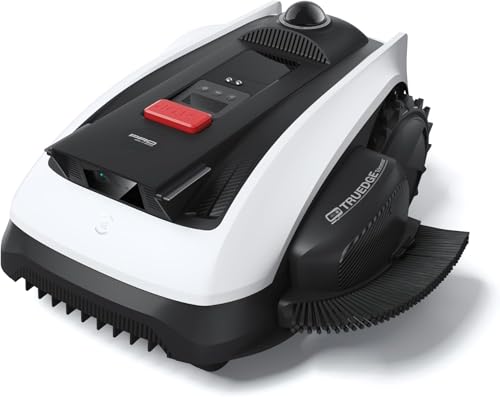 ECOVACS Goat O1000 LiDAR PRO Robot Lawn MowerO1000 LIDAR PRO1.95 x 1.56 x 0.58 inchesCheck on Amazon
The best wire free robot lawn mowers for most yards of up to a quarter acre are the Segway Navimow i110N and the Ecovacs GOAT O1000 RTK, both of which map the lawn with satellite positioning and cameras so you never bury a boundary wire. If your yard sits under heavy tree cover or has steep sections, a LiDAR-based mower such as the Dreame A3 AWD 1000 or the MOVA LiDAX Ultra 1000 is the better fit, since LiDAR does not rely on a clear view of the sky. For bigger or hillier lawns, the Husqvarna 410iQ and the Roborock RockMow X130H are the models to look at, though they cost the most. This guide explains how each navigation system works, how slope ability should be read, and which mower matches which yard.
Wire-free (also called boundary-free or perimeter-wire-free) mowers are the fastest-growing group of robot mowers, so we narrowed the field to the models available in the site’s product store. This guide is research-based: we did not personally use these mowers. We compared manufacturer pages, product listings, and published independent reviews, and where a spec is not stated we write “not listed”. Slope figures are given only as the maker states them, because real-world traction depends on grass, moisture, and wheel type.

Segway Navimow i105N Robot Lawn Mower Perimeter Wire Free 1/8 Acre RTK+Vision Robotic Lawnmower, AI-Assisted Mapping, Virtual Boundary, APP Control, 58dB(A) Quiet, Multi-Zone Management
Chosen because it specifies AI-Assisted Mapping and Virtual Boundary.
View on Amazon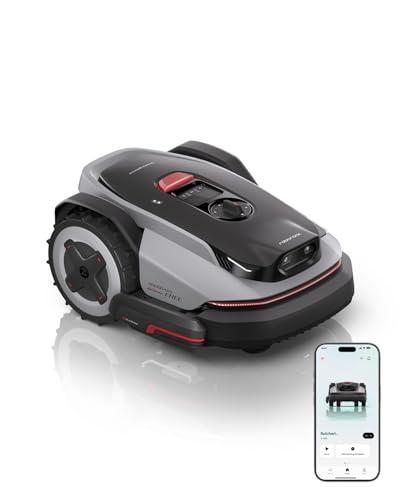
Roborock RockNeo Q110H Robot Lawn Mower, Wire-Free Robotic Lawn Mower with Full-Band RTK + VSLAM Navigation, Auto Mapping, AI Vision Obstacle Avoidance, App Control, 45% Slope, Covers Up to 1/4 Acre
Chosen because it specifies Auto Mapping and AI Vision Obstacle Avoidance.
View on AmazonECOVACS Goat O1000 LiDAR PRO Robot Lawn Mower, Wire-Free Mapping with LiDAR Navigation, AI Obstacle Avoidance, Smart Edge Mowing, App Control, for Lawns Up to 1/4 Acre
Chosen because it specifies Wire-Free Mapping with LiDAR Navigation and AI Obstacle Avoidance.
View on Amazon
Robot Lawn Mower, for 0.12 Acres,Wire-Free Robotic Lawnmower,with Border Lines,AI Obstacle Avoidance, App Control, 58dB Quiet, Multi-Zone Management
Chosen because it specifies for 0.12 Acres and Wire-Free Robotic Lawnmower.
View on AmazonTop Picks at a Glance
- Best Overall: Segway Navimow i110N (quarter-acre class, RTK plus vision)
- Best for Easy Setup on a Quarter Acre: Ecovacs GOAT O1000 RTK (RTK plus vision, 8.66 inch cutting width per Ecovacs)
- Best Value: Roborock RockNeo Q110H (full-band RTK with VSLAM navigation)
- Best Under Trees: MOVA LiDAX Ultra 1000 (RTK-free, 360 degree 3D LiDAR plus AI vision)
- Best for Hills and Rough Ground: Dreame A3 AWD 1000 (all-wheel drive, LiDAR plus dual vision)
- Best for Half-Acre Lawns: Husqvarna 410iQ (half-acre class, 45% slope per the listing)
- Best Premium 4WD: Roborock RockMow X130H (4WD, full-band RTK with quad-vision navigation)
How Wire-Free Navigation Works: RTK vs LiDAR vs Vision
Robot mowers used to need a thin boundary wire laid around the lawn so the mower knew where to stop. Wire-free models replace that wire with positioning technology. Understanding which one a mower uses tells you where it will work well and where it may struggle.
- RTK (real-time kinematic) satellite positioning: A small antenna station placed in an open spot corrects satellite signals so the mower knows where it is to within about an inch or two, per most makers. It needs a clear view of the sky. Heavy tree canopy, tall walls, and narrow side yards can weaken it.
- Vision (cameras and AI): Cameras recognize obstacles, grass edges, and sometimes pets. Vision helps fill gaps where satellite positioning is weak, and it is used for obstacle avoidance on nearly every model here.
- LiDAR: A laser scanner builds a 3D map of the surroundings. It works under trees and does not depend on a clear sky, which is why LiDAR models are recommended for shaded yards. Some LiDAR mowers are marketed as RTK-free.
- VSLAM: Visual simultaneous localization and mapping, a camera-based technique used on the Roborock RockNeo Q110H together with RTK.
Quick Comparison Table
| Product | Best for | Key specs (per listing) | Watch for | Price tier |
|---|---|---|---|---|
| Segway Navimow i110N | Open quarter-acre lawns | 1/4 acre; RTK plus vision; AI-assisted mapping | Needs open sky for the antenna | Mid-range |
| Ecovacs GOAT O1000 RTK | Quarter-acre lawns with edges | 1/4 acre; RTK plus vision; 45% slope and 8.66 in cutting width per Ecovacs | Runtime figures vary by source | Mid-range |
| Roborock RockNeo Q110H | Budget wire-free mowing | Full-band RTK plus VSLAM; auto mapping | Lawn size not listed in the title | Budget |
| MOVA LiDAX Ultra 1000 | Yards with trees | 1/4 acre; RTK-free; 360 degree 3D LiDAR; AI vision | Check slope spec on the maker page | Mid-range |
| Dreame A3 AWD 1000 | Uneven, sloped ground | All-wheel drive; 360 degree 3D LiDAR; AI dual vision | Lawn size not listed in the title | Premium |
| Husqvarna 410iQ | Half-acre lawns with slopes | 1/2 acre; wire-free; 45% slope; EPOS; app-set virtual boundaries | Highest cost per square foot of the group | Premium |
| Roborock RockMow X130H | Larger, rougher lawns | 4WD; full-band RTK; quad-vision navigation | Heavier, premium tier | Premium |
1. Segway Navimow i110N: Best Overall for Open Quarter-Acre Lawns
- Perimeter wire free, sized for a 1/4 acre lawn
- RTK plus vision navigation
- AI-assisted mapping
- Cutting width, battery runtime, and weight: not listed in the title
Best for: Homeowners with a mostly open quarter-acre yard who want a mainstream, app-driven setup. Skip if: Large trees cover much of the lawn.
Navimow is Segway’s robot mower line and one of the better-known names in wire-free mowing. The i110N pairs an RTK antenna with cameras, so setup is mostly a matter of mounting the antenna where it sees the sky, driving the mower around the edge once or marking zones in the app, and setting no-go areas around flower beds and ponds. In practice, the work goes into placing the antenna correctly: put it high, away from walls, and with a clear horizon in all directions.
The advantage of an RTK system is repeatable positioning, which means neat stripes and consistent coverage. The weakness is the shade problem. If the antenna cannot see enough satellites, the mower can pause or lose its position, which is why this is the pick for open lawns, not wooded ones.
Pros: Established brand; app mapping; quarter-acre capacity; wire-free. Cons: Needs open sky; spec detail is limited in the listing; may need virtual boundaries at slope edges.
2. Ecovacs GOAT O1000 RTK: Best for Quarter-Acre Lawns with Edges
- Wire-free robotic lawn mower for up to 1/4 acre
- RTK plus vision navigation, automatic mapping
- Per Ecovacs: maximum slope 45% in the work area, 17% for the virtual boundary, 8.66 inch cutting width, 11 height settings from 1.2 to 3.2 inches
- Per Ecovacs: about 65 minutes of continuous mowing; some reviewers report longer
- Per the maker: protection class IPX6 for the mower and the antenna
Best for: Small and mid-size lawns with curved beds, where edge cutting and obstacle avoidance matter. Skip if: Your yard is heavily shaded or larger than about a quarter acre.
The GOAT O1000 comes in several versions in the store, including an RTK version, an RTK Care kit, and a LiDAR PRO variant, so read the exact name when you shop. Consumer Reports lists a maximum lawn size of 8,600 square feet, a bit below the official quarter-acre figure, and independent reviewers cite roughly 1,500 to 1,900 square feet per hour depending on the mowing mode. That difference between the official figure and independent numbers is common with robot mowers, so size down if your yard has many obstacles.
The narrow cutting width is a feature and a limit. At 8.66 inches it can fit narrow passages (Ecovacs lists a minimum of about 2.3 feet), but it also means more passes over the same area. On a quarter acre the mower simply works longer each day. Plan for it to mow over multiple sessions and leave it on a schedule.
Pros: Maker-stated 45% work-area slope; IPX6 protection; fine height adjustment; narrow passage ability. Cons: Small cutting width; runtime figures conflict between sources; needs clear sky for RTK.
3. Roborock RockNeo Q110H: Best Value for Wire-Free Mowing
- Wire-free robotic mower with full-band RTK plus VSLAM navigation
- Auto mapping
- Lawn size, cutting width, and slope: not listed in the title
Best for: Budget-minded buyers who still want modern satellite-plus-vision navigation. Skip if: You have a large lawn or steep ground and need verified specs.
Roborock is known for robot vacuums, and the RockNeo line brings that mapping experience to lawns. The pairing of full-band RTK (which uses multiple satellite frequencies for better accuracy) with VSLAM suggests it is built to keep working where signal is imperfect. The title does not state lawn size or slope, so check Roborock’s own page for those numbers before buying. If it fits the size of your yard, it is the least expensive way into wire-free mowing on this list.
Pros: Lowest cost tier; full-band RTK; familiar app ecosystem. Cons: Key specs not listed in the title; unknown fit for steep yards.
4. MOVA LiDAX Ultra 1000: Best Under Trees
- Wire-free robot lawn mower for 1/4 acre
- RTK-free navigation using 360 degree 3D LiDAR plus AI vision
- Auto mapping and zero-edge cutting, per the listing
- Slope, runtime, and weight: not listed in the title
Best for: Yards with mature trees, patios, or walls that block the sky. Skip if: You want to rely on a published slope figure; confirm it on the maker’s page.
A mower that uses LiDAR does not need an RTK base station, which means one fewer piece of hardware to install and no sky-view worry. For a yard under an oak canopy, this is the major reason to choose LiDAR over RTK. The tradeoff is that LiDAR can be less certain on a wide open lawn with few features to map, so some owners add virtual boundaries or reference points. The listing describes the mapping as automatic.
Pros: No antenna to place; works with limited sky view; quarter-acre class. Cons: Slope not listed; less proven than RTK on open lawns; some specs vary by sellers.
5. Dreame A3 AWD 1000: Best for Hills and Rough Ground
- All-terrain wire-free mower with all-wheel drive (AWD)
- 360 degree 3D LiDAR and AI dual vision
- Sold in the store as a bundle with a cleaning set and blade set
- Lawn size and slope: not listed in the title
Best for: Uneven lawns, bumps, and slopes where two-wheel-drive mowers spin. Skip if: Your lawn is small and flat; you will pay for traction you do not need.
Traction is what stops most robot mowers on hills. Do robotic lawn mowers get stuck on hills? They can, when wheels spin on wet grass or when the slope exceeds what the drive system handles. All-wheel drive spreads the work across four wheels and improves grip, which is why AWD and 4WD models lead the hill-friendly part of this guide. Our separate guide on this site covers the Dreame A3 AWD Pro in more depth.
Even with AWD, wet grass lowers the practical slope limit. Maker-stated slope numbers are for dry conditions, so keep a margin: a 45% claim does not mean you should expect it to climb a 45% wet slope. Let the mower mow only when the grass is dry.
Pros: AWD traction; LiDAR plus vision; sold with blade and cleaning accessories. Cons: Premium cost; specs sparse in the title; heavier to carry.
6. Husqvarna 410iQ: Best for Half-Acre Lawns with Slopes
- Wire-free robot lawn mower for 1/2 acre
- 45% slope, per the listing
- EPOS satellite positioning with app-set virtual boundaries
- Weight and battery runtime: not listed
Best for: Owners who want a robot mower from a long-established outdoor power equipment brand with dealer support. Skip if: You have a small yard and a limited budget.
Husqvarna has made robot mowers for decades, and the 410iQ is its way of dropping the boundary wire. EPOS is Husqvarna’s satellite-based positioning system, and virtual boundaries are set in the app instead of with a wire. A half-acre rating makes it the largest-capacity unit among the main picks. Dealer support is a real advantage for a machine that will mow for years, since blades, wheels, and software updates are easier to handle through a brand with local service.
Pros: Half-acre class; strong brand and dealer network; slope capability stated in the listing. Cons: Premium cost; needs sky view for EPOS; details not shown in the listing.
7. Roborock RockMow X130H: Best Premium 4WD Option
- Wire-free 4WD robotic lawn mower
- Full-band RTK plus quad-vision navigation
- Lawn size, slope, and weight: not listed in the title
Best for: Larger, rougher lawns where 4WD traction and strong navigation matter. Skip if: You mow under dense canopy; a LiDAR model suits that better.
The X130H is Roborock’s higher-end mower. It adds four-wheel drive and a four-camera vision system to full-band RTK, aiming at the same hill and obstacle problems as the Dreame, but with satellite-led positioning. A four-camera setup improves obstacle recognition in changing light, which can reduce stuck situations around toys, hoses, and furniture. As always, check the maker’s page for the yard size and slope numbers before buying.
Pros: 4WD; strong sensor suite; premium build. Cons: Highest cost tier; specs not shown in the title; needs sky view for RTK.
Also Consider
- Segway Navimow i105N: The smaller sibling of the i110N, listed for a 1/8 acre lawn with RTK plus vision. Choose it for a compact yard.
- HOOKII Neomow X2 Air: Listed for 0.37 acre, with 360 degree 3D LiDAR, no RTK antenna, and 4G app control. A different approach if you want to avoid an antenna.
- Ecovacs GOAT A2000 LiDAR PRO: Dual LiDAR navigation for lawns up to 1/2 acre, listed as wire-free with automatic mapping. A step up from the O1000 in coverage.
Which Navigation Fits Your Yard?
| Your yard | Look for | Examples here |
|---|---|---|
| Open lawn, little shade | RTK plus vision | Navimow i110N, Ecovacs GOAT O1000 RTK |
| Heavy tree cover or tall walls | LiDAR-led navigation | MOVA LiDAX Ultra 1000, Ecovacs GOAT A2000 |
| Slopes and bumps | AWD or 4WD plus maker-stated slope figures | Dreame A3 AWD 1000, Roborock RockMow X130H, Husqvarna 410iQ |
| Small, simple lawn on a budget | Full-band RTK in the lowest tier | Roborock RockNeo Q110H, Navimow i105N |
How We Chose
This guide is research-based and we did not personally use these mowers. We started with the wire-free robot mowers available in the site’s product store and kept models that clearly state their navigation method. We compared the listings with the makers’ pages and with independent coverage such as Consumer Reports and enthusiast review sites. We favored a spread of navigation types (RTK, LiDAR, and mixed), tried to cover small and large lawns, and limited each brand to two main picks. Where a spec such as slope or lawn size was missing from the listing, we wrote “not listed”.
Buying Guide
Start with lawn size, then subtract for obstacles
Maker lawn sizes are best-case numbers. A 1/4 acre rating is about 10,890 square feet, but independent figures are often lower; Consumer Reports lists 8,600 square feet for the GOAT O1000 RTK. If your lawn is full of beds and trees, plan for 70 to 80 percent of the stated size. For a lawn between sizes, choose the larger class.
Check sky view before you choose RTK
Stand in the middle of the lawn and look up. If more than about half of the sky is blocked by trees or buildings, favor LiDAR. If you have an open lawn but a shaded side yard, consider a model that supports multiple zones or virtual boundaries so the mower skips the weak area.
Read slope claims carefully
Slope is stated as a percentage, where 45% is about 24 degrees. Some makers separate the slope the mower can climb inside the lawn from the slope at the edge or boundary; Ecovacs lists 45% and 17% respectively. Use only the figures on the maker’s page, expect lower performance on wet grass, and favor AWD or 4WD for hilly yards.
Think about edges, blades, and upkeep
Wire-free mowers vary in how close they cut to edges. Plan on some manual trimming. Blades are consumables and need to be swapped periodically, so look for easy-to-buy replacement blades; Ecovacs sells a blade kit for several GOAT models. Clean the underside regularly and keep the antenna lens or sensors free of dirt.
Plan for theft protection and connectivity
Many models include GPS-based anti-theft features and app control through Wi-Fi or a cellular connection. If your Wi-Fi does not reach the lawn, look for a cellular option such as the 4G on the HOOKII, or place a router closer to the yard.
Frequently Asked Questions
Do all robot lawn mowers need a boundary wire?
No. Older and some budget robot mowers still need a buried or stake-down boundary wire, but the mowers in this guide are wire-free and rely on RTK, LiDAR, or vision. Always check the product name for terms such as perimeter wire free or no boundary wire.
Do robotic lawn mowers get stuck on hills?
They can. Wet grass, loose soil, and slopes beyond the maker’s limit cause wheel spin. AWD and 4WD models handle hills better, and you can reduce problems by mowing only when the grass is dry and by setting virtual boundaries around the steepest areas.
What are the best wire free robot lawn mowers for hills?
Among the models here, the Dreame A3 AWD 1000, Roborock RockMow X130H, and Husqvarna 410iQ are the ones to start with, because they combine traction or a stated 45% slope with large-lawn capacity. Always confirm the slope figure on the maker’s page.
Is the Ecovacs GOAT O1000 RTK wire-free robot lawn mower worth it?
For an open lawn up to about a quarter acre it is a strong option, with maker-stated 45% work-area slope and IPX6 protection. Its 8.66 inch cutting width means longer mowing times, and runtime claims vary between 65 and about 90 minutes, so confirm with Ecovacs.
Do wire-free mowers work without Wi-Fi?
Most need Wi-Fi or cellular only for app control and updates. Mowing on a saved schedule generally continues without a live connection, but check the manual for each model.
Can a robot mower handle a new lawn or tall grass?
They work best on a lawn that is already cut to a normal height. If the grass is very tall, do a first pass with a regular mower and set the robot to a higher height to start.
How much maintenance does a robot mower need?
Plan on cleaning the deck, replacing blades on the maker’s schedule, and storing the unit in a dry place or in a garage in cold weather. Winterize the battery according to the manual.
Which One Should You Buy?
If your lawn is open and about a quarter acre, choose the Segway Navimow i110N or the Ecovacs GOAT O1000 RTK. If you have trees, pick the MOVA LiDAX Ultra 1000 for its LiDAR-led approach. For slopes and rough ground, go to the Dreame A3 AWD 1000, the Roborock RockMow X130H, or the Husqvarna 410iQ if you want half-acre capacity and a dealer network. The Roborock RockNeo Q110H is the entry route when budget is the main concern. Confirm lawn size, slope, and runtime on the maker’s page before ordering.
Sources
- Ecovacs GOAT O1000 RTK product page
- Consumer Reports Ecovacs GOAT O1000 RTK listing
- Segway Navimow product pages
- Husqvarna Automower 410iQ product page
- Roborock RockMow and RockNeo product pages
- Dreame and MOVA robot mower product pages
Last updated: October 2026