Key takeaways
- Affordable price point under $60 with insulation included
- Waterproof construction with camouflage pattern suitable for field use
- Mid-rise height may not offer enough ankle support for steep or uneven terrain
Every year, men heading into the field for deer season or early morning waterfowl trips waste money on hunting boots for men that fail them by day two. The problem is rarely a single missing feature — it is the wrong combination. A boot that is warm enough for a December treestand but too heavy to walk a mile will sit in your closet. A lightweight option that soaks through the first crossing is worse than going barefoot. The gap between a good purchase and a frustrating one comes down to matching insulation weight to your climate, waterproof construction to your terrain, and overall weight to how much walking your hunt actually requires.
What separates the boots worth buying from the ones you regret is not brand prestige. It is whether the construction details align with your specific use case. A rubber neoprene boot excels at standing in flooded timber but runs hot on a ridge. A Thinsulate-lined hiking hybrid handles variable weather better but will not keep your toes warm in single-digit temperatures. The eight boots reviewed here represent a range of those trade-offs, and the right pick for you depends on where and when you hunt most.
Our top picks


As an Amazon Associate we earn from qualifying purchases at no extra cost to you.
Quick Picks
| Product | Best For | Price |
|---|---|---|
| XPETI Thermator Mid-Rise | Cold-weather entry | under $60 |
| R RUNFUN 8-Inch | All-day hiking in wet brush | under $70 |
| MUCK Woody Max | Muddy trails and brush | n/a |
| HANAGAL Tactical | Warm-season scouting | under $70 |
| NORTIV 8 Side Zip | Easy on-off versatility | under $50 |
| ROCKY Retraction 800G | Deep cold treestand hunts | under $150 |
| TIDEWE Rubber 800G | Wet and freezing conditions | under $150 |
| Hunthor Rubber | Lightweight wet-weather work | under $90 |
How We Picked
We evaluated these boots on four criteria: insulation-to-weight ratio, waterproof construction type, value at the listed price, and recurring themes from owner feedback regarding durability and comfort over time. A boot with heavy insulation that adds unnecessary pounds for your climate scores lower than a lighter option that keeps feet dry and warm within its intended range.
The 8 Best Hunting Boots For Men in 2026
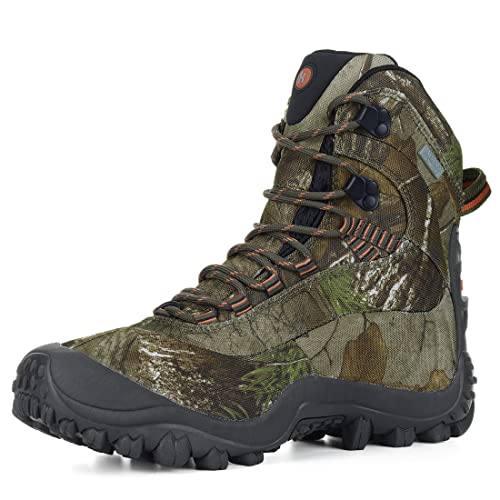
XPETI Men’s Thermator Mid-Rise Waterproof Hiking Boot Insulated Non-Slip Camouflage 12
This boot is for the hunter entering colder seasons on a tight budget without sacrificing basic protection. The insulated build and waterproof membrane handle frosty mornings, while the camouflage upper keeps you visually concealed in brushy terrain. The non-slip outsole provides reliable traction on damp rock and leaf litter.
- Affordable price point under $60 with insulation included
- Waterproof construction with camouflage pattern suitable for field use
- Mid-rise height may not offer enough ankle support for steep or uneven terrain
Skip it if you need to stand in standing water or hunt below freezing for extended periods. This is a transitional-season and early-cold boot, not a deep-winter specialist.
R RUNFUN Men’s 8-Inch Waterproof Lightweight Hunting Boots Camo Insulated Hiking Boots
The R RUNFUN targets hunters who cover ground. Eight inches of insulation via Thinsulate keeps feet warm in late autumn without the bulk of heavier 800-gram builds. The lightweight construction matters when your approach trail stretches over a mile. The eight-inch shaft height adds ankle coverage in tall grass.
- 200g Thinsulate insulation balances warmth and weight well
- Waterproof and lightweight, making it a solid hiking-hunting hybrid
- Owner reports on long-term waterproofing durability vary; some note seam wear after repeated wet use
Skip it if you are primarily a treestand hunter who rarely walks. You would get better warmth-per-pound from an 800-gram option.
MUCK Men’s Mossy Oak Break Up Country Woody Max Boot
This is the boot for hunters who spend time in the thickest, muddiest terrain. The rubber shell handles water, mud, and abrasion from briars far better than fabric uppers. The Mossy Oak camouflage pattern is specific to woodland settings, and the classic Woody Max design has been a staple for wet-woodland hunters for years.
- Full rubber construction resists punctures, water, and abrasion effectively
- Proven design with broad owner acceptance for muddy and wet conditions
- Runs warm in mild weather; limited breathability makes it uncomfortable above mid-50s Fahrenheit
Skip it if your hunting area is dry or rocky. The rubber sole offers less grip on bare stone than lugged hiking outsoles.
HANAGAL Hunting Boots Lightweight EVA Midsole Waterproof Tactical Army Combat Hiking Boots
The HANAGAL is for warm-season scouting, early bow season, or hunters who want a multi-purpose boot that doubles as tactical footwear. The EVA midsole keeps the boot light and cushioned for long walks. The anti-wicking construction helps prevent moisture from traveling up through the sole.
- Lightweight EVA midsole provides all-day comfort on dry or light-wet terrain
- Versatile enough for both hunting and tactical work use
- Minimal insulation makes it unsuitable for anything below cool autumn temperatures
Skip it if you hunt in frost, snow, or standing water. This is a warm and transitional-season boot at best.
NORTIV 8 Men’s Military Tactical Work Boots Hiking Side Zip
For under $50, the NORTIV 8 is the cheapest option here and serves hunters who want a simple side-zip boot for dry-terrain scouting or as a camp boot. The camo sand colorway works in arid or open-field environments. The side zip allows quick removal at the truck or camp.
- Lowest price in the group with a practical side-zip design
- Light enough for warm-weather hiking and casual use
- No insulation and no waterproofing claim — limited to dry conditions only
Skip it entirely if your hunts involve rain, snow, or water crossings. This boot has no defense against wet conditions.
ROCKY Retraction Waterproof 800G Insulated Outdoor Boot Realtree Xtra
The ROCKY Retraction is for the treestand hunter who sits still in real cold. Eight hundred grams of insulation is serious warmth, and the Waterproof construction keeps feet dry in light snow or damp leaf litter. The Realtree Xtra camo is a broad-appeal woodland pattern. For under $150, it sits at the premium end of this group.
- 800g insulation rated for deep cold; ideal for stationary hunts in freezing temperatures
- ROCKY is a long-established name in outdoor footwear with consistent owner trust
- Noticeably heavier than lighter-insulation boots, making it tiring for long approaches
Skip it if you cover significant ground or hunt in temperatures above the 30s. The heat buildup becomes a liability on warm days.
TIDEWE Rubber Hunting Boots Waterproof Insulated 800G
The TIDEWE combines rubber-shell waterproofing with 800g insulation, making it the pick for wet and cold simultaneously — flooded timber, late-season marsh hunts, or standing in icy creek crossings. The rubber construction is fully waterproof in a way that membrane-lined boots rarely stay long-term. For under $150, it offers serious protection without exceeding the $110 tier.
- Rubber shell plus 800g insulation handles the coldest and wettest scenarios in one boot
- Sturdy construction resists abrasion from rocks, stumps, and wire fencing
- Runs hot quickly; even in cool conditions, feet can overheat during active movement
Skip it if you need to walk more than half a mile in temperatures above freezing. This is a standing-in-wet-cold boot, not a hiking boot.
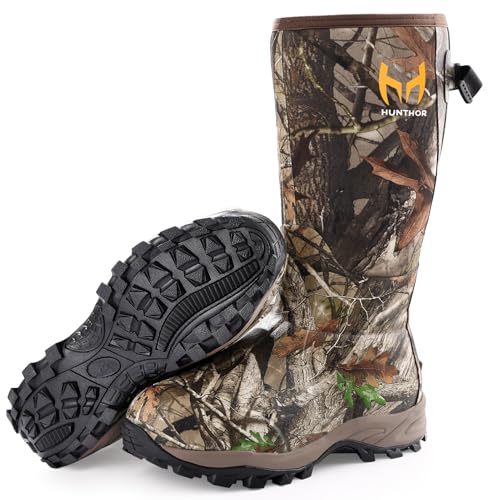
Hunthor Rubber Hunting Boots for Men Waterproof EVA Midsole
The Hunthor targets hunters who want rubber waterproofing and EVA comfort without the 800g heat penalty. For under $90, it fills the gap between lightweight fabric boots and heavy rubber insulated options. The EVA midsole adds cushioning that pure rubber boots lack, and the waterproof shell handles rain and light wet ground comfortably.
- Combines rubber waterproof protection with cushioned EVA midsole for long-standing comfort
- Mid-range price without overcommitting to heavy insulation
- Insulation level is moderate, so it will not substitute for a true deep-cold boot
Skip it if your priority is maximum warmth in freezing conditions. The lighter insulation is a comfort advantage only until temperatures drop below the mid-20s.
Buying Guide
Match Insulation Weight to Your Climate
Thinsulate ratings are the most common indicator. 200g suits late-fall hunts in the 30s and 40s Fahrenheit. 400g extends that into the 20s. 800g is built for single-digit and below-freezing treestand sessions. Buying more insulation than your climate requires does not improve performance — it creates sweaty, uncomfortable feet on the hike in. The XPETI and R RUNFUN at 200g Thinsulate are transitional boots. The ROCKY, TIDEWE, and their 800g builds are deep-cold tools. The HANAGAL and NORTIV 8 have no meaningful insulation for hunting in frost.
Understand Waterproof Construction Types
There is a real difference between a membrane-lined boot and a rubber shell. Membrane waterproofing in hiking-style boots can saturate at the seams or degrade after a season of flex. Rubber-shell boots like the MUCK Woody Max and TIDEWE remain waterproof because water has nowhere to enter through the material itself. For hunting in standing water, flooded timber, or repeated wet crossings, rubber construction is more reliable. For light rain and dew on vegetation, a membrane boot handles it fine.
Choose Sole and Midsole for Your Terrain
EVA midsoles, found in the HANAGAL, Hunthor, and NORTIV 8, keep boots light and cushioned on hard or flat ground. They compress over time, especially under a heavier hunter. Rubber outsoles with deep lugs, like those on the XPETI and R RUNFUN, grip well on mud, leaf litter, and damp rock. A smooth rubber boot bottom, as on many neoprene hunting boots, excels in mud but slides on wet stone. Think about where you walk, not just where you stand.
Our Verdict
The ROCKY Retraction 800G is the top pick for cold-weather treestand hunters who want a trusted brand with serious insulation. For budget-conscious buyers, the NORTIV 8 for under $50 delivers functional versatility for dry-season scouting at the lowest price in the group. The TIDEWE Rubber 800G wins outright when conditions are both wet and freezing, because no other boot here handles that combination more completely.
FAQ
Do I need waterproof boots for deer hunting?
If you hunt anywhere with dew, standing water, or precipitation during your season, yes. Wet feet lose warmth faster than dry feet, and no amount of insulation compensates for soaked socks. Even in dry climates, a dew-heavy morning in tall grass will saturate a non-waterproof boot within an hour of walking.
How many grams of Thinsulate do I need?
For temperatures in the 40s, 200g is sufficient. In the 20s and 30s, 400g works well. Below 20 degrees, 800g or rubber-shell insulated boots are the right call. Remember that insulation ratings assume a range of activity — standing still requires more warmth than actively walking the same temperature.
Are rubber hunting boots better than hiking-style boots for hunting?
Rubber boots are superior for wet and muddy conditions because they do not rely on a membrane that can fail. Hiking-style boots are lighter, more breathable, and better suited to long-distance travel in dry or moderately wet terrain. The best answer depends on your terrain, not a universal preference.
What camo pattern should I choose on hunting boots?
Match the pattern to your dominant environment rather than your clothing. Realtree Xtra works broadly in mixed deciduous and conifer forests. Mossy Oak Break Up Country suits open agricultural and woodland edges. If you hunt primarily in marsh or snow, solid colors or minimal pattern matter more since boots rarely draw attention against terrain.