Our Top Picks
 Scotts Turf Builder EdgeGuard Mini Broadcast SpreaderSingle Pack21.5 x 16 x 18 inches0.5 poundsCheck on Amazon
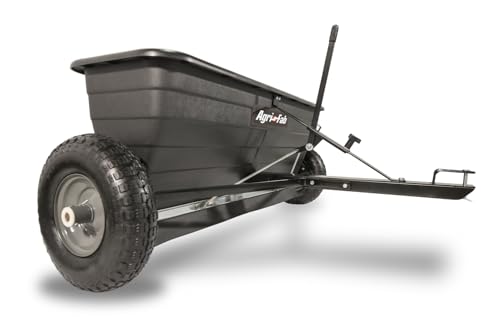 Agri-Fab Tow Behind Lawn and Garden Drop Spreader42 Inch33 x 50 x 28 inches50.5 poundsCheck on Amazon


A homeowner facing an icy driveway must choose between two ways of putting granules down, and the choice shapes every storm that follows. A broadcast spreader throws ice melt in a wide arc, covering open pavement fast but scattering material onto lawn and planting beds. A drop spreader releases granules straight down in a narrow band, placing them exactly where tires run but covering ground more slowly. The real decision is not which type is better in general, but which pattern fits the width, the edges, and the slope of the surface being treated.
This guide is for homeowners comparing the two types before buying, for anyone whose broadcast spreader keeps wasting material on the lawn, and for property owners who need precise lanes beside parked cars. Each pick below was chosen from the product name and listed specifications on its Amazon page, with two broadcast models and two drop models compared side by side.
Quick Picks
As an Amazon Associate we earn from qualifying purchases
| Product | Best for | Key spec from title |
|---|---|---|
| Scotts Turf Builder EdgeGuard Mini Broadcast Spreader | A sidewalk or driveway where speed matters | Holds up to 5,000 sq. ft. of product |
| Agri-Fab 45-0463 Tow-Behind Broadcast Spreader | A large paved area towed behind a tractor | 130 lb hopper, 12 ft spread width |
| Scotts Turf Builder Classic Drop Spreader | A narrow driveway edged by lawn | Drop spreader holds up to 10,000 sq. ft. |
| Agri-Fab 45-0288 Tow-Behind Drop Spreader | Precise lanes beside parked cars and curbs | 175-pound max tow-behind drop spreader, 42-inch width |
How to Choose
Compare coverage speed against placement precision
A broadcast spreader covers a wide band with each pass, so it finishes an open driveway or lot quickly, but the wide arc also throws granules beyond the pavement edge. A drop spreader covers a narrow band, so it takes more passes to finish the same area, but every granule lands where it was aimed. For a wide, open surface with few edges, speed wins and a broadcast model is the better fit. For a narrow driveway, a sidewalk, or lanes between parked cars, precision wins and a drop model wastes far less material.
Measure the surface and its edges before choosing
The width of the surface and the closeness of the lawn decide the type more than any other factor. A sidewalk three feet wide needs a narrow pattern or a deflector, because a broadcast arc will scatter most of the load onto grass. A double driveway with lawn on both sides needs baffles or a drop band to keep the edges clean. Measure the narrowest section, note where planting beds and drains sit, and compare those widths with the listed spread width on the Amazon page before buying either type.
Match the power source to the property
Walk-behind broadcast and drop spreaders are pushed by hand and suit a home driveway or sidewalk, while tow-behind models need a riding mower or lawn tractor with a hitch. A tow-behind broadcast unit covers a large lot fast, and a tow-behind drop unit lays precise lanes across it, but both are useless without a vehicle to pull them. Before buying, confirm what vehicle is available in winter, whether its hitch and battery are ready, and whether the surface has room to turn a towed unit at the end of each lane.
Weigh corrosion and clogging for each design
Both types face the same enemy in winter, which is wet salt that clumps, corrodes steel, and seizes small gears. A broadcast model adds a spinning plate that must stay free, while a drop model adds a long gate that must open evenly across its full width. Look for a rust-resistant poly hopper, an enclosed gearbox, and an agitator or auger that breaks up clumps in either type. After each use, empty the hopper, rinse the gate and the spinner, and store the spreader dry so the next storm starts without clogging.
The 4 Best Options
Scotts Turf Builder EdgeGuard Mini Broadcast Spreader
The EdgeGuard Mini is the broadcast pick for a home sidewalk or driveway, because its guard blocks material on one side while the spinning plate throws granules across the pavement in a steady arc. Its compact hopper is sized for a front walk and a driveway apron without becoming too heavy to push when full, and the dial setting adjusts the flow for coarse ice melt. For a homeowner who wants to finish the driveway quickly and keep most of the material off the lawn edge, it is the simplest broadcast option. The walk-behind design needs no vehicle and stores easily between storms.
Specs
- Holds up to 5,000 sq. ft. of Scotts product
- EdgeGuard technology blocks spreading onto non-lawn areas
- For seed, fertilizer, salt, and ice melt
- Push broadcast spreader with dial rate control
Best for: A sidewalk or driveway where broadcast speed matters and edge control is needed.
Watch out for: Check the dial setting for coarse ice melt before the first pass, since a setting meant for fine seed can underfeed heavy granules.
Agri-Fab 45-0463 Tow-Behind Broadcast Spreader
The Agri-Fab 45-0463 is the broadcast pick for a large paved area, because its 130-pound hopper and 12-foot spread width cover open ground in far fewer passes than a walk-behind model. It hitches to a riding mower or lawn tractor, and the flow control can be worked from the seat, so the operator opens and closes the gate without stopping. Pneumatic tires roll over frozen ruts, and the universal hitch fits most garden tractors. For a large driveway court or a small lot, it turns a long spreading job into a short driving job.
Specs
- 130 lb tow-behind broadcast spreader for seed, fertilizer, salt, and ice melt
- 12 ft spread width, covers up to 25,000 sq. ft. per fill
- Universal hitch fits most riding mowers and lawn tractors
- Flow control operated from the seat with pneumatic tires
Best for: A large paved area towed behind a tractor where wide broadcast coverage saves time.
Watch out for: A wide broadcast arc will throw granules onto lawn and beds, so keep the gate closed near edges and plan the turning room at the end of each lane.
Scotts Turf Builder Classic Drop Spreader
The Scotts Classic Drop Spreader is the drop pick for a narrow driveway edged by lawn, because it releases granules straight down in a controlled band instead of throwing them in a wide arc. That precision keeps ice melt on the tire tracks and off the grass, which matters when the lawn starts at the pavement edge. The walk-behind design is simple to steer along the driveway, and the hopper holds enough material for a standard driveway in one fill. For a homeowner whose main complaint is wasted material on the lawn, the drop pattern solves the problem directly.
Specs
- Classic drop spreader holds up to 10,000 sq. ft. of product
- Drop pattern releases material straight down for precise placement
- For seed, fertilizer, and ice melt
- Walk-behind push design with handle gate control
Best for: A narrow driveway edged by lawn where drop precision matters more than speed.
Watch out for: A drop spreader needs overlapping passes to avoid bare stripes, so plan the lane spacing and keep a steady walking pace.
Agri-Fab 45-0288 Tow-Behind Drop Spreader
The Agri-Fab 45-0288 is the drop pick for precise lanes across a larger paved area, because its 175-pound hopper and 42-inch drop width lay a controlled band exactly where tires run. The rustproof poly hopper resists salt corrosion, and the tow hitch fits a riding mower or lawn tractor for steady passes. Unlike a broadcast unit, it will not throw granules onto parked cars or planting strips beside the lane. For a lot or a long driveway court where precision matters at scale, it combines a large hopper with a narrow, controlled pattern.
Specs
- 175-pound max tow-behind drop spreader
- Hopper capacity 17 gallons dry, 175 pounds
- 42-inch spread width, covers up to 40,000 sq. ft.
- Rustproof poly hopper for seed, fertilizer, salt, and ice melt
- Designed to pull behind lawn and garden tractors
Best for: Precise lanes beside parked cars and curbs on a larger paved area.
Watch out for: A drop spreader needs overlapping passes to avoid bare stripes, so plan the lane spacing before the first run and keep a steady towing speed.
Which One Fits Your Situation
A wide, open driveway with few edges
Pick a broadcast spreader, and choose the Scotts EdgeGuard Mini for a home driveway or the Agri-Fab 45-0463 for a large paved area with a tractor. The wide arc finishes open pavement fast, and the edges are far enough away that scattered granules are a minor issue. Keep the gate closed near drains and planting beds.
A narrow driveway beside lawn
Pick a drop spreader, and choose the Scotts Classic Drop Spreader for a standard home driveway. The controlled band lays granules on the tire tracks without throwing them onto the grass, so less material is wasted and the lawn edge stays clean. Plan overlapping passes so no bare stripes remain between lanes.
A small lot with parked cars
Pick a drop spreader for the lanes and a broadcast model for the open center. The Agri-Fab 45-0288 lays precise lanes beside parked cars, while a broadcast model covers the open driving area faster. Use the drop unit near vehicles and curbs, then switch to broadcast passes in the middle of the lot.
A long sidewalk or a property with both types of surface
Pick the Scotts EdgeGuard Mini for the sidewalk and the Scotts Classic Drop Spreader for the driveway edge. The broadcast Mini covers the walk quickly with its edge guard, while the drop model keeps the driveway lanes precise. Owning one of each type is practical when the property mixes narrow paths and wide pavement.
Common Mistakes
- Choosing a broadcast spreader for a narrow walk, then wasting most of the ice melt on the lawn.
- Choosing a drop spreader for a large open lot, then taking far too long to finish each storm.
- Running a broadcast model at full width beside parked cars, so granules land on vehicles.
- Leaving bare stripes between drop passes, which refreeze into slick lines overnight.
- Storing either type full of wet salt, so the gate, the spinner, and the gears seize before the next storm.
Frequently Asked Questions
Which type spreads ice melt faster?
A broadcast spreader is faster on open pavement because each pass covers a wide band, while a drop spreader covers a narrow band and needs more passes. For a large, open driveway or lot, the broadcast model finishes first. For a narrow surface, the drop model wastes less time on cleanup and refills, so the speed gap narrows.
Which type wastes less ice melt?
A drop spreader wastes less, because it releases granules straight down onto the intended band instead of throwing them in an arc. A broadcast model with baffles or an edge guard wastes less than one without, but it still scatters some material past the edge. On a narrow driveway edged by lawn, the drop pattern saves the most material.
Can one spreader do both broadcast and drop work?
No, the two patterns come from different mechanisms, so a single unit cannot switch between them. A broadcast model uses a spinning plate, while a drop model uses a long gate under the hopper. Some homeowners keep a small broadcast model for walks and a drop model for the driveway, which covers both jobs.
How do I avoid stripes with a drop spreader?
Overlap each pass slightly so the edge of one lane covers the edge of the last, and keep a steady walking or towing speed. Mark the lane edges with cones on the first run until the pattern is familiar, and treat the tire tracks first. A second light pass on any stripe that looks thin prevents it from refreezing.
FAQ
Which type spreads ice melt faster?
Which type wastes less ice melt?
Can one spreader do both broadcast and drop work?
How do I avoid stripes with a drop spreader?
More from Amazon
Programs that pair well with the guide above. Offers and eligibility are set by Amazon and may change.
Free shipping on eligible items, Prime Video and more. Eligible new members can start with a free trial.
Start a Prime free trialA Prime membership for ages 18-24 with a trial period. Eligibility is set by Amazon.
See Prime for Young AdultsAudiobooks and podcasts to listen to on the go. Eligible new members can start with a free trial.
Try Audible freeAd-free music streaming. Eligible new subscribers can start with a free trial.
Try Music Unlimited freeAs an Amazon Associate we earn from qualifying purchases.