As an Amazon Associate, we earn from qualifying purchases. Prices were checked in November 2026 and move often — confirm the live price before you buy.
A $1,500 budget changes what a portable power station can be. Under $1,000, you are shopping for a big camping battery with home-backup ambitions. At $1,500, you can buy a genuine 3 kilowatt-hour home backup unit — enough to run a full-size fridge for about 17 hours — and still have money left over.
Quick Picks: The Best Portable Power Stations Under $1500 at a Glance
| Power Station | Capacity | Output | Weight | Price | Best For |
|---|---|---|---|---|---|
| BLUETTI Elite 300 | 3,014Wh | 2,400W | 58 lb | $1,199 | Top pick — most usable power per dollar |
| EcoFlow DELTA 3 Ultra | 3,072Wh | 3,600W | 72.1 lb | $1,369 | Biggest inverter, heaviest loads |
| Anker SOLIX C2000 Gen 2 | 2,048Wh | 2,400W | 41.7 lb | $949.99 | Lightest 2kWh, easiest to carry |
| EcoFlow DELTA 2 Max | 2,048Wh | 2,400W | 50.8 lb | $1,029 | Best expandable 2kWh |
| BLUETTI Apex 200 | 2,560Wh | 3,200W | — | $1,099 | Expandable platform, strong output |
| EcoFlow DELTA 3000 Gen4 | 3,072Wh | 3,600W | 57.3 lb | $1,299 | New 3kWh, pre-order |
| Jackery HomePower 3000 | 3,072Wh | 3,600W | 59.5 lb | $1,499 | Transfer-switch home backup |
| Pecron F3000LFP | 3,072Wh | 3,600W | 63–77 lb | $899 | Cheapest 3kWh, with caveats |
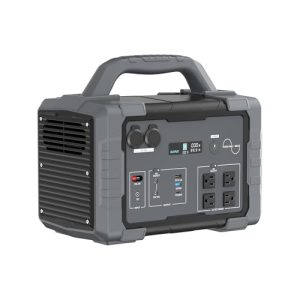
Our Top Pick: BLUETTI Elite 300 — $1,199
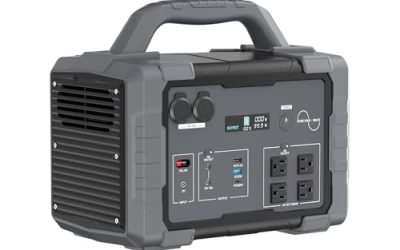
The BLUETTI Elite 300 is the station this budget was made for. At $1,199 on BLUETTI’s US store ($1,299 on Amazon as of November 6, 2026), it works out to about $0.40 per watt-hour, the best value density of any name-brand 3kWh unit we found, and it fits the budget by $301 — the most headroom of any pick here.
A TT-30 RV outlet and a 12V/30A DC port sit on the unit itself, and a 10ms UPS keeps a workstation or an aquarium running through a blackout. Solar input runs to 1,200W, and the LiFePO4 battery is rated for 3,500-plus cycles with a five-year warranty.
The trade-offs are honest ones. It cannot be expanded, and it has no 240V output. Its price has swung by $600 in a single month: $1,099 on Amazon on October 2, $1,699 on October 30, and $1,199 at BLUETTI on November 6, 2026.
Best for Big Loads: EcoFlow DELTA 3 Ultra — $1,369
If your loads are the problem, not your runtime, the EcoFlow DELTA 3 Ultra is the answer. It stores 3,072Wh and delivers 3,600W continuous with a 7,200W surge from four 20A outlets plus a TT-30, and it recharges to 80 percent in 89 minutes. At $1,369 on EcoFlow’s US store (list $1,599), it fits by $131, and it is the only station here that will start a sump pump, run a 1,500W space heater, and keep a fridge cold at the same time without breaking a sweat.
At 72.1 lb on rear wheels with a 25dB rating at 600W, it is the quietest big station here — but it cannot take an extra battery, and its 800W of solar trails the Elite 300’s 1,200W.
Best Lightweight 2kWh: Anker SOLIX C2000 Gen 2 — $949.99
The Anker SOLIX C2000 Gen 2 is the station to buy when you will actually carry it. It stores 2,048Wh and delivers 2,400W from five 20A outlets plus a TT-30 RV outlet, takes 800W of solar, switches to battery in 10ms, and weighs 41.7 lb — nearly 17 lb lighter than the Elite 300 and more than 30 lb lighter than the DELTA 3 Ultra. At $949.99 on Anker’s US store in mid-November 2026 (list $1,199.99, with the catalog still showing $1,499), it is $550 under budget, which leaves real money for a solar panel.
The C2000 Gen 2 is also the only 2kWh station here with a genuine growth path: one BP2000 Gen 2 expansion battery takes it to 4,096Wh.
Best Expandable 2kWh: EcoFlow DELTA 2 Max — $1,029
The EcoFlow DELTA 2 Max is the veteran of this guide, and it earns its place on expandability. It stores 2,048Wh, delivers 2,400W, and grows to 6,144Wh with extra batteries — the largest expansion ceiling here. It recharges to 80 percent in 1.1 hours and takes up to 500W of solar. At $1,029 on EcoFlow’s US store in mid-November 2026 (our catalog read showed $1,049), it fits by $471, the second-most headroom in the guide.
The trade-offs are weight and age: at about 50.8 lb it is heavier than the Anker, its 500W solar input on the base configuration trails the newer designs, and it lacks the TT-30 RV outlet that the Elite 300, the Ultra, and the C2000 Gen 2 all include — an RV plugs in through an adapter, not directly. It is also the station most often confused with its own siblings: the DELTA 2 (1,024Wh) and the DELTA 3 Max (2,048Wh, $879) are different units at different prices, and aggregator listings mix them up constantly.
Best Expandable Platform: BLUETTI Apex 200 — $1,099
The BLUETTI Apex 200 is the newest idea in this guide: a 2,560Wh station with a 3,200W inverter that treats its capacity as a floor, not a ceiling. At $1,099 on BLUETTI’s US store in November 2026, it fits by $401, and it delivers more output per dollar than any 2kWh-class station here — 3,200W continuous, enough for a microwave and a fridge together, from a mid-size box. Where the Elite 300 says “3kWh is all you get,” the Apex 200 says “2,560Wh is where you start,” with expansion batteries that grow the system as your needs grow.
The Apex 200 is the right pick for a buyer who is not sure how much capacity they need yet. The trade-offs are youth and documentation: it launched in November 2026, so there is no long owner record, no independent lab test, and fewer real-world runtime reports than the DELTA 2 Max or the Elite 300. For a buyer who values a growth path over a finished box, the Apex 200 is the most interesting $1,099 in this class.
Best New 3kWh Value: EcoFlow DELTA 3000 Gen4 — $1,299
The EcoFlow DELTA 3000 Gen4 is the newest 3kWh station on the market, and its headline numbers are hard to ignore: 3,072Wh, 3,600W continuous, 7,200W surge, five AC outlets, and a 57.3 lb body with no wheels — nearly 15 lb lighter than the DELTA 3 Ultra with the same battery and the same inverter. At $1,299, it fits by $201, and it costs $70 less than the Ultra while weighing less and offering the same five-outlet layout.
The catch: as of mid-November 2026, the DELTA 3000 Gen4 was a pre-order, not an in-stock unit. If you need backup before the next storm, buy the Ultra or the Elite 300 instead.
Best for a Transfer Switch: Jackery HomePower 3000 — $1,499
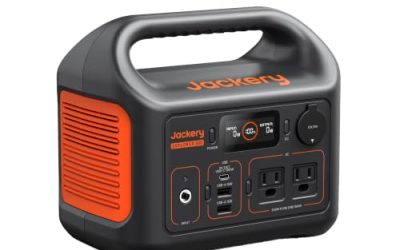
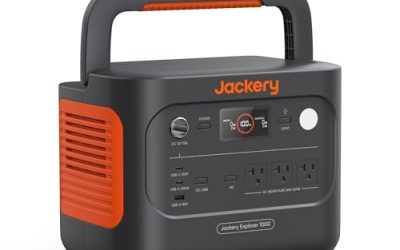
The Jackery HomePower 3000 is the station to buy when the plan involves an electrician. It stores 3,072Wh, delivers 3,600W with a 7,200W surge, runs a 150W fridge for about 17 hours, and supports Jackery’s transfer switch for up to six 120V circuits. It has a TT-30 RV outlet, two 100W USB-C ports, a UL-certified UPS that switches in 20ms, and a LiFePO4 battery rated for 4,000 cycles.
At $1,499 on Amazon in mid-November 2026, it fits the budget by exactly $1 — the tightest fit in this guide — and it was sold out at Jackery’s own US store on November 14, so Amazon is the reliable channel right now.
Best Budget 3kWh: Pecron F3000LFP — $899
The Pecron F3000LFP is the cheapest 3kWh in this guide by a wide margin: $899 on Pecron’s own store and Amazon in November 2026, which works out to about $0.29 per watt-hour — cheaper per Wh than every name-brand station here, including our top pick. It stores 3,072Wh, delivers 3,600W, expands to 10,752Wh with extra batteries, and was called “a breakout budget performer” by TheSolarLab after lab testing.
Trustpilot lists Pecron’s rating as unavailable over a guidelines breach and says it removed fake reviews, OutdoorGearLab declines to recommend the brand over reliability, and owners report support trouble. Pecron’s page marked the F3000LFP “expected to ship next week” on November 10, 2026, so delivery is not immediate. Buy the Pecron if the budget is the whole point and you accept the risk. Buy the Elite 300 if you want the same capacity with a brand that reviewers trust.
Buying Guide: How to Size a Portable Power Station Under $1500
Start with capacity, because it decides how long things run. A 3,072Wh station holds about 2,600 usable watt-hours after inverter losses, which runs a 150W fridge for about 17 hours, a 60W CPAP for about 40 hours, or a 1,000W microwave for about two and a half hours. A 2,048Wh station runs the same fridge for about 11 hours. If your outage plan is “fridge and phones overnight,” 2kWh is enough. If it is “fridge, furnace, and microwave through a day-long outage,” buy 3kWh.
Next, match the inverter to your biggest load. A fridge needs about 150W running but 600W or more to start its compressor; a microwave needs 1,000–1,500W; a space heater needs 1,500W; a sump pump needs a big surge. The 3,600W stations here — the DELTA 3 Ultra, the DELTA 3000 Gen4, the HomePower 3000, and the F3000LFP — start anything in a normal house. Never buy on surge watts alone; the continuous rating is the number that matters.
Then weigh the box. A 41.7 lb station is a one-hand carry; a 58 lb station is a two-hand carry; a 72.1 lb station is a roll, not a lift. Solar input decides how fast the sun refills you — 1,200W on the Elite 300, 1,000W on the HomePower 3000, 800W on the Ultra and the C2000 Gen 2, and 500W on the DELTA 2 Max. Every pick here is LiFePO4, rated for 3,000–6,000 cycles.
The Honest $1500 Budget: What the Sticker Price Leaves Out
None of the bare-unit prices in this guide include a solar panel: a 200W panel runs about $200–$400, so the Elite 300 plus a panel is really about $1,400–$1,600, and the Pecron F3000LFP with its 300W panel bundle is $1,168. A transfer switch plus an electrician runs $300–$800 on top of the HomePower 3000.
The smartest $1,500 in this guide is the Elite 300 at $1,199 plus a 200W panel at about $269, for $1,468 all-in — a complete solar backup system under budget. The tightest is the HomePower 3000 at $1,499, which leaves $1 for everything else — and a transfer switch alone costs hundreds more.
Two more stations fit $1,500 and deserve a mention. The BLUETTI Apex 300 costs $1,499 with 2,765Wh and a hub-based expansion system, and the BLUETTI Elite 400 costs $1,499 with 3,840Wh — the biggest battery under $1,500 — but at 86 lb it is a piece of furniture, not a portable station.
The EcoFlow DELTA Pro costs $1,799 (list $2,399) and misses by $299. The EcoFlow DELTA 3 Ultra Plus costs $1,599 and misses by $99 — the closest miss in the class, and the one that tempts buyers most, because it adds the expansion port the Ultra lacks. The EcoFlow DELTA Pro 3 costs $2,799. The Anker SOLIX F3800 Plus costs $2,399.99.
For context, Batch 6’s under-$1,000 guide — the EcoFlow DELTA 3 Max at $879, the Jackery Explorer 2000 v2 at $999, and the BLUETTI Elite 200 V2 at $899 — still fits $1,500, but those are covered in that guide and not re-reviewed here.
Traps to Avoid When Buying a Power Station Under $1500
The first trap is the glitch price. Aggregator listings in November 2026 showed an EcoFlow DELTA 2 at $35, a DELTA Pro at $125, and a BLUETTI Elite 200 at $119. None of those prices is real — cross-check any impossible price against the brand’s own store before you pay.
The second trap is the “solar generator” bundle that is not a bundle. A $899 station plus a $269 panel is a $1,168 system, not an $899 one, and a $1,168 bundle with a 300W panel — like the Pecron F3000LFP bundle — is a different deal from the bare $899 unit.
The third trap is watts versus watt-hours: capacity is how long things run, output is how big a load it starts, and a listing that shouts the bigger number and hides the smaller one is selling you the wrong thing. The fourth trap is the refurbished unit priced as new: a refurbished Jackery Explorer 1000 v2 at $999 sits next to new 2kWh stations at the same price, with a shorter warranty and a used battery.
The fifth trap is the pre-order sold as in stock. The DELTA 3000 Gen4 was a pre-order in mid-November 2026, the HomePower 3000 was sold out at Jackery’s own store, and the Pecron F3000LFP was “expected to ship next week.” And the last trap is the expansion battery math: a $949.99 station plus a $749.99 battery is $1,699.98, not $949.99.
Frequently Asked Questions
How long will a 3,000Wh power station run a fridge?
About 17 hours for a modern full-size fridge drawing around 150W, using a realistic 85 percent inverter efficiency on 3,072Wh of capacity. A 2,048Wh station runs the same fridge for about 11 hours, and the compressor’s start-up surge needs 600W or more for the first second.
Is $1,500 enough for a whole-home backup?
No, not for a whole house. $1,500 buys a 3kWh station that covers a fridge, a furnace blower, lights, phones, and a microwave on 120V circuits. It does not cover 240V loads like a well pump or central air. Whole-home backup starts at the DELTA Pro 3 at $2,799 and goes up from there.
Do I need a solar panel with my power station?
Not on day one, but it is the difference between a battery and a generator. A 200W panel refills a 3kWh station in about 15–20 hours of good sun. If outages last longer than a day, solar is not optional. Budget $200–$400 for a 200W panel and confirm the panel’s connector matches your station before you buy.
LiFePO4 or NMC — does the battery chemistry matter?
Yes. Every station in this guide uses LiFePO4, rated for 3,000–6,000 cycles to 70–80 percent capacity, which means a decade of regular use. Older NMC stations are rated for about 500 cycles and degrade faster.
Should I buy the BLUETTI Elite 300 or the EcoFlow DELTA 3 Ultra?
Buy the Elite 300 if you want the best value and the lightest 3kWh box: $1,199, 58 lb, $0.40 per watt-hour, with a TT-30 and a 12V/30A port. Buy the DELTA 3 Ultra if your loads are bigger than 2,400W: $1,369, 3,600W continuous, wheels, and the quietest fan in the class.
FAQ
How long will a 3,000Wh power station run a fridge?
Is $1,500 enough for a whole-home backup?
Do I need a solar panel with my power station?
LiFePO4 or NMC — does the battery chemistry matter?
Should I buy the BLUETTI Elite 300 or the EcoFlow DELTA 3 Ultra?
More from Amazon
Programs that pair well with the guide above. Offers and eligibility are set by Amazon and may change.
Free shipping on eligible items, Prime Video and more. Eligible new members can start with a free trial.
Start a Prime free trialA Prime membership for ages 18-24 with a trial period. Eligibility is set by Amazon.
See Prime for Young AdultsAudiobooks and podcasts to listen to on the go. Eligible new members can start with a free trial.
Try Audible freeAd-free music streaming. Eligible new subscribers can start with a free trial.
Try Music Unlimited freeAs an Amazon Associate we earn from qualifying purchases.