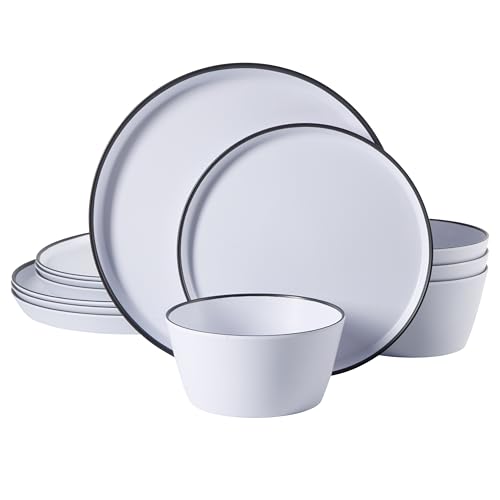
Key takeaways
- Place settings: Count plates, bowls, cups, forks, knives, and spoons separately. A “four-person set” may include only four plates and four forks.
- Serving utensils: One serving spoon and a pair of tongs are more useful for a group than four extra small forks. A knife suitable for slicing bread or cheese is also valuable.
- Containers: Look for at least two sizes rather than one large container. A 1 litre container suits dips or side dishes; 2–3 litre containers suit salads, fruit, and sandwiches.
- Condiment storage: Small screw-top jars or leak-resistant bottles prevent dressing and sauces from soaking napkins and food bags.
- Waste and cleaning storage: A washable pouch for dirty utensils and a separate bag for rubbish solve a problem that product photographs often ignore.
The best picnic serving set for outdoor meals is a compact, washable kit with enough plates, utensils, and leak-resistant containers for your usual group—not necessarily the set with the most pieces.
For two people, choose a lightweight nesting set with two plates, two bowls, two utensil sets, and one 1–2 litre container. For four to six people, prioritize divided storage, a larger serving capacity, and containers that seal independently. If you regularly bring salads, sauces, or food that must stay upright, a slightly heavier hard-sided set is usually worth carrying.

US Acrylic Coastal Plastic Serving Trays (Set of 4) 15” x 10” | Large Unbreakable Reusable Rectangular Party Platters | Serve Appetizers, Fruit, Veggies, & Desserts | BPA-Free & Made in USA
Included for 'Best Picnic Serving Sets for Outdoor Meals' because the listing specifies Large Unbreakable Reusable Rectangular Party Platters and Serve Appetizers, details this guide uses to compare options.
View on Amazon
ZLMTZDJD 20 PCS Serving Utensil Set - Stainless Steel Complete Buffet Catering Utensils for Summer BBQ, Grilling, Picnic, Parties & Family Gatherings - Outdoor Serving Set (Silver)
Included for 'Best Picnic Serving Sets for Outdoor Meals' because the listing specifies Grilling and Picnic, details this guide uses to compare options.
View on AmazonQuick picks by picnic situation
| Picnic situation | Best set type | Useful capacity | Target packed size and weight | Why it fits |
|---|---|---|---|---|
| Two people, short walk | Minimal nesting tableware kit | 2 plates, 2 bowls, 2 utensil sets, 1–2 L container | Up to 25 x 18 x 10 cm; 0.7–1.2 kg | Small enough for a daypack and quick to wash |
| Family of four | Stackable reusable picnic set | 4 plates, 4 bowls, 4 utensil sets, 2–4 L total containers | About 30 x 24 x 14 cm; 1.5–2.5 kg | Balances portion capacity, organization, and carrying weight |
| Six or more people | Modular serving kit with separate containers | 6–8 place settings, 5–8 L total food capacity | 30–40 x 25–30 x 15–20 cm; 2.5–4 kg | Separate containers prevent one oversized box from becoming difficult to carry |
| Car-based picnic | Hard-sided family hamper or box | 4–8 place settings, 6–12 L total storage | Variable; usually 3–6 kg | Better protection for glass, sauces, and prepared dishes |
| Hiking or cycling | Ultralight camping tableware plus soft food pouches | 1–2 place settings, 1–3 L food capacity | Up to 20 x 15 x 8 cm; 0.3–0.8 kg | Weight matters more than formal presentation |
What should be included?
A useful serving set should cover four jobs: eating, serving, storing, and cleaning. Many attractive picnic kits handle only the first job.
- Place settings: Count plates, bowls, cups, forks, knives, and spoons separately. A “four-person set” may include only four plates and four forks.
- Serving utensils: One serving spoon and a pair of tongs are more useful for a group than four extra small forks. A knife suitable for slicing bread or cheese is also valuable.
- Containers: Look for at least two sizes rather than one large container. A 1 litre container suits dips or side dishes; 2–3 litre containers suit salads, fruit, and sandwiches.
- Condiment storage: Small screw-top jars or leak-resistant bottles prevent dressing and sauces from soaking napkins and food bags.
- Waste and cleaning storage: A washable pouch for dirty utensils and a separate bag for rubbish solve a problem that product photographs often ignore.
For four people, a practical minimum is four plates, four bowls, four complete utensil sets, four cups, one serving spoon, one cutting or spreading knife, and 3–5 litres of total food-container capacity. Add 25–30 percent more capacity if the meal includes bulky foods such as pasta salad, fruit, or bread.
Materials: the trade-off between weight and longevity
Stainless steel
Stainless steel is durable, odor-resistant, and easy to wipe clean. It is a strong choice for plates, cups, cutlery, and serving tools. The drawbacks are weight, noise, and heat transfer: a metal cup can become uncomfortable with hot or cold drinks, and unprotected metal can rattle against other items.
Hard plastic or polypropylene
Reusable food-grade plastic is usually the best value for family picnics. It is light, inexpensive, and less likely to dent. Choose thicker pieces with rounded edges and lids that do not depend on a fragile snap tab. Plastic can retain strong food odors, become scratched, and eventually discolor when used with oily sauces or tomato-based dishes.
Silicone
Silicone containers collapse efficiently and are useful when packed space matters. They are especially convenient for leftovers. However, soft walls provide less protection, and the lid seal is only reliable when the rim is clean and the container is not overfilled. Silicone also tends to hold onto smells more than stainless steel.
Bamboo-fiber composites and melamine
These materials can feel rigid and attractive, but they should not automatically be treated as superior to ordinary reusable plastic. Check the manufacturer’s instructions for microwave, dishwasher, and hot-food use. Avoid using any plate or container that is cracked, heavily scratched, or showing a damaged surface.
Leak resistance matters more than the word “airtight”
For a picnic, leak resistance means surviving a sideways trip in a bag. It does not necessarily mean that a container can be shaken, inverted, or stored under pressure.
- Choose lids with a continuous silicone gasket for liquids and dressings.
- Prefer four-sided locking tabs for transport; friction-fit lids are better for dry snacks.
- Keep at least 1–2 cm of empty space below the lid so food does not push against the seal.
- Pack liquid containers upright inside a second washable pouch.
- Keep dressing separate from greens until serving; this protects texture as well as the rest of the bag.
A useful home check is to fill a container halfway with cool water, close it, place it on its side over a towel for 10 minutes, and inspect the seam. Repeat with the container inside your actual picnic bag. This will not prove long-term durability, but it exposes poor lid fit before a real outing.
Which set is best for different group sizes?
One or two people
Choose nesting plates and bowls with a combined footprint no larger than a paperback book or small lunch box. A single 1.5–2 litre container may be enough for sandwiches or a grain salad, but a separate 250–500 ml leak-resistant pot is better for dressing. Avoid carrying four-person sets “for flexibility”; the unused cups and utensils often outweigh the food.
Three or four people
This is the most versatile size. Look for stackable tableware and at least two food containers. One large container alone creates a serving bottleneck: everyone opens it, serves from it, and then tries to close it while food remains on the rim. Two containers also let you separate vegetarian, allergen-sensitive, or temperature-sensitive foods.
Five or more people
Favor modular kits over a single large hamper. Assign one container to mains, one to sides, one to fruit or dessert, and one to condiments. For six people, 5–8 litres of food capacity is a useful starting point, depending on whether bread, drinks, and snacks are packed separately. Add serving spoons and tongs before adding decorative extras.
Cleaning and ownership realities
The parts most likely to cause trouble are not usually the plates. Gaskets stretch, lid hinges weaken, utensil sleeves collect crumbs, and soft containers develop odors when packed damp.
- Remove gaskets when possible: Wash beneath them after oily or sweet foods, then dry both pieces separately.
- Do not seal damp items: Even a few drops trapped overnight can create stale smells and encourage residue buildup.
- Use warm water promptly: Dried dressing and mayonnaise are much harder to remove after a day in a hot car.
- Inspect hinges and tabs: Replace a lid when a tab no longer closes evenly. A container that needs force to latch may be distorted.
- Keep knives protected: A loose knife can scratch plastic plates and puncture soft bags.
- Check dishwasher guidance: Repeated high heat can warp thin plastic lids and reduce gasket life.
If a set costs $40–$80 and lasts five years with 12 uses per year, its tableware cost is roughly $0.67–$1.33 per outing before replacement parts. A cheaper set that needs replacement after one season may cost more over the same period, especially if its lids or gaskets are not sold separately.
Buying checklist
- Does the stated place-setting count include complete utensils?
- Are there at least two containers for a family meal?
- Can the containers be packed upright and secured?
- Are replacement lids or gaskets available?
- Can every narrow corner be reached with a brush or sponge?
- Does the packed weight match the distance from the car or home?
- Are the materials suitable for the foods and temperatures you plan to carry?
For most people, the best picnic serving set for outdoor meals is a four-person, stackable kit made from durable plastic or stainless steel, with two or more leak-resistant containers and a removable-wash pouch. Choose a lighter two-person nesting kit for walking trips, or a modular hard-sided set when serving a large group from a vehicle. The right capacity, reliable seals, and easy cleaning will matter far more than extra accessories that remain unused.