Our Top Picks

Choosing the best large running backpack means deciding how much you need to carry on a long run, and how that load should sit while you move. A pack that is too small forces you to leave water, food, or a layer behind, while one that is too large can bounce, rub, and distract you for hours. The real decision combines capacity, water carrying, fit and access. You need room for your planned distance, a sensible way to carry water, and a shape that stays close on climbs and uneven ground.

This guide is for trail runners planning long training runs, runners preparing for a first ultra-distance event, and fast hikers who want a running-style pack instead of a heavier daypack. It also suits runners who carry a phone, snacks, a light jacket, and a small first-aid kit on every outing. The three packs below were chosen from the names and specifications shown on their Amazon pages, focusing on capacity, water-bladder compatibility, pocket layout, and comfort on the trail.
Quick Picks
As an Amazon Associate we earn from qualifying purchases
| Product | Best for | Key spec from title |
|---|---|---|
| TETON Sports Oasis Trailrunner Hydration Backpack 18L | Long trail days with extra layers and supplies | 18L capacity |
| Zelvot Running Vest 12L | Balanced training runs with a full water bladder | 2L BPA-free water bladder included |
| AONIJIE Hydration Vest Pack 5L | Fast, light runs with a small amount of gear | Weighs 190g |
How to Choose
Capacity for the Distance You Plan to Cover
Start by matching capacity to the longest run you expect to do with the pack. A larger pack makes sense when you need to carry a jacket, extra food, a headlamp and a map, along with water for several hours away from a refill point. A smaller pack works better when your route passes water sources or aid stations, or when you travel light and prefer less bulk on your back. If you regularly run for four hours or more, the extra space is useful. If most of your runs last under two hours, a roomy pack may carry more empty space than you need.
Water Carrying and Bladder Compatibility
Water is usually the heaviest item in a running pack, so the way you carry it shapes the whole experience. Check whether the pack is sized for a two-litre or three-litre bladder, whether a bladder is included, and whether the hose can be routed where you can reach it without stopping. A bladder spreads weight across your back and keeps your hands free, which helps on technical trails where balance matters. Make sure the bladder compartment is easy to fill and clean, and that the hose does not swing loose or catch on branches. Capacity alone does not tell you enough; the water system has to work while you are moving.
Fit, Stability, and Comfort While Moving
A running pack should feel like part of your upper body, not like a separate bag pulling at your shoulders. Look for adjustable chest straps that let you tighten the pack before a descent and loosen it slightly on a long climb. The shoulder straps should sit flat without digging in, and the back panel should allow air to move so sweat does not build up against your skin. A vest-style design often suits runners who want front storage and a close fit, while a backpack shape can suit those who prefer a larger main compartment and a more traditional layout. Small adjustments to strap position can make a large difference over several hours.
Storage Layout, Weather Cover, and Visibility
Think about what you need to reach without taking the pack off. Front pockets are useful for a phone, gels, and a small map, while a main compartment should hold a jacket and food in a way that does not shift around. A sewn-in rain cover is a practical feature when a mountain shower arrives suddenly, because it protects the contents without adding a separate item to remember. Reflective elements help other trail users and road users notice you in low light, especially on early morning starts or evening finishes. Choose a layout that matches how you actually run, rather than a layout that looks impressive when the pack is empty.
The 3 Best Options
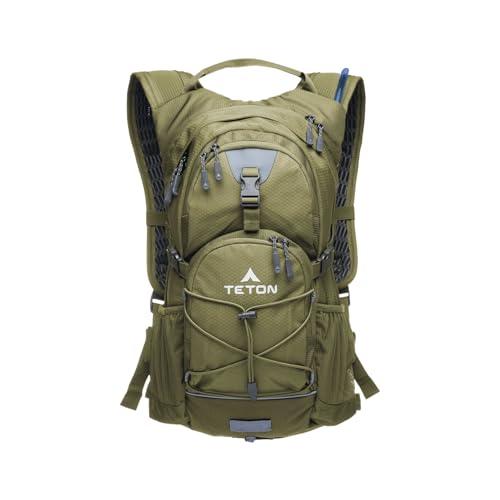
TETON Sports Oasis Trailrunner Hydration Backpack 18L
The TETON Sports Oasis Trailrunner suits runners who want generous room for a long day on the trail without switching to a heavier full hiking pack. Its larger capacity leaves space for a jacket, food, a headlamp, and other essentials alongside your water, which makes it a sensible choice for remote routes where you cannot rely on regular refill points or shelter. Its backpack shape gives you a single main compartment for bulky items and keeps the load centred and stable on your back. Runners planning extended outings or routes with changing weather will appreciate having room to spare for spare layers rather than leaving useful items behind.
Specs
- 18L capacity
- Fits a 2L or 3L water bladder
- Sewn-in rain cover
Best for: Long trail days when you need room for water, layers, food, and extra supplies.
Watch out for: Check the fit carefully when the pack is fully loaded, because a larger pack needs careful strap adjustment to prevent bouncing on descents.
Zelvot Running Vest 12L
The Zelvot Running Vest suits runners who want a close-fitting vest with enough capacity for training runs, longer races, and trail days that do not require a full-size pack. Its mid-range capacity holds water, snacks, a light layer, and small essentials without feeling bulky or bouncing, and the vest shape keeps the load stable when you change pace or direction. The included bladder lets you use the vest for hydration straight away, while adjustable chest straps let you fine-tune the fit as you drink and the load lightens. Reflective elements help you stay visible in low light, and the tough fabric is made to cope with regular outdoor use.
Specs
- 12L capacity
- 2L BPA-free water bladder included
- 900D Oxford fabric
- Adjustable chest straps
- Reflective elements
Best for: Balanced training runs and trail races where you want a stable vest fit and a full bladder.
Watch out for: Check that the bladder and hose sit comfortably against your back and shoulder before a long run, and confirm the chest straps adjust to your torso length.
AONIJIE Hydration Vest Pack 5L
The AONIJIE Hydration Vest Pack suits runners who move fast and want to carry as little as possible while still having water and a few essentials close at hand. Its compact capacity and very light weight suit shorter trail runs, tempo sessions, and races where freedom of movement matters most. Nine pockets hold a phone, keys, gels, and small items within easy reach without a separate belt, and breathable mesh helps air circulate freely against your body. This is the pack to choose when you know your route, your water needs are modest and known, and you would rather feel unencumbered than carry supplies for every possible situation.
Specs
- 5L capacity
- 9 pockets
- Weighs 190g
- Fits a 1.5L water bladder
- Breathable mesh
Best for: Fast, light runs where you want minimal weight and easy access to a phone, gels, and water.
Watch out for: Plan your water and food carefully, because the smaller capacity leaves little room for extra layers or supplies on a longer route.
Which One Fits Your Situation
Long Trail Days With Changing Weather
Choose the TETON Sports Oasis Trailrunner Hydration Backpack 18L when your route keeps you out for most of the day and the weather may change without warning. Its larger capacity holds a jacket, food, spare layers and extra supplies alongside a two-litre or three-litre bladder, and the sewn-in rain cover protects your gear quickly when rain arrives. This combination matters most on remote trails where you cannot shelter easily or refill often.
Training Runs and Trail Races
Choose the Zelvot Running Vest 12L when you want a stable, close-fitting vest that carries enough for training runs and races without feeling oversized. The included two-litre bladder, adjustable chest straps, and reflective elements suit regular use in varied light, weather and conditions. It gives you room for snacks, gels and a light layer while keeping the load close to your body. Adjust the straps as you drink to keep the fit snug.
Short, Fast Runs With Minimal Gear
Choose the AONIJIE Hydration Vest Pack 5L when your run is short, your route is familiar, and you want to move freely and fast. Its light weight, breathable mesh, and nine pockets let you carry water, a phone, keys and gels without a bulky pack. It works best on familiar routes when you do not need extra clothing, food or supplies. Leave heavy layers and spare food at home for this run.
One Pack for Varied Distances
Choose the Zelvot Running Vest 12L if you want one pack to cover both medium training runs, trail races and occasional longer outings. Its twelve-litre capacity sits neatly between the other two options, so it can handle a full bladder, snacks and a light layer without the bulk and bounce of the largest pack. Adjust the chest straps as you drink to keep the fit stable as the load changes during the run.
Common Mistakes
- Choosing capacity from the title alone without checking how much water, food, spare clothing and layers your longest route actually requires.
- Ignoring bladder compatibility and then finding that your existing bladder does not fit the pack or the hose cannot be routed comfortably or cleaned easily.
- Leaving the chest straps loose, which lets the pack bounce on descents and rub against your shoulders over several hours on long runs.
- Packing heavy items at the top or far from your back, which pulls you off balance on uneven ground and descents.
- Forgetting a rain cover or a waterproof layer, and then finding that a sudden shower soaks your food, phone, and spare clothing.
Frequently Asked Questions
How much water should I carry on a long trail run?
Carry enough for the distance between reliable refill points, plus a margin for heat, hills, wind and delays. A two-litre bladder suits many medium-length runs, while a three-litre bladder helps on remote routes with no water source. Drink regularly in small sips rather than waiting until you feel thirsty, and refill whenever you have a safe chance.
Is an 18L running backpack too large for most runs?
An 18L pack can feel large on a short run, but it suits long trail days when you need a jacket, food, and extra supplies. The key is to adjust the straps well so the load stays stable and does not bounce. If most of your runs are under two hours, a smaller pack may feel more comfortable.
Do I need a water bladder for a running backpack?
A bladder is not essential, but it keeps your hands free and spreads water weight across your back. Some runners prefer bottles in front pockets for shorter runs or for carrying a separate drink. Check whether the pack includes a bladder, what size it fits, whether the hose routing suits you, and how easy it is to clean.
Can I use a running backpack for hiking as well?
You can use a running backpack for fast hiking, especially on day routes where you travel light and want a close fit. It works best when your gear list is short and you do not need heavy food or camping supplies. For slower hikes with bulky gear, a dedicated hiking daypack may offer more comfort, space and organisation.
FAQ
How much water should I carry on a long trail run?
Is an 18L running backpack too large for most runs?
Do I need a water bladder for a running backpack?
Can I use a running backpack for hiking as well?
More from Amazon
Programs that pair well with the guide above. Offers and eligibility are set by Amazon and may change.
Free shipping on eligible items, Prime Video and more. Eligible new members can start with a free trial.
Start a Prime free trialA Prime membership for ages 18-24 with a trial period. Eligibility is set by Amazon.
See Prime for Young AdultsAudiobooks and podcasts to listen to on the go. Eligible new members can start with a free trial.
Try Audible freeAd-free music streaming. Eligible new subscribers can start with a free trial.
Try Music Unlimited freeAs an Amazon Associate we earn from qualifying purchases.