Key takeaways
- Pro: Barely noticeable weight once loaded, rides tight against your torso through steep terrain.
- Pro: Simple closure system means you can open and close it with one gloved hand at an belay stance.
- Con: Too small for any route requiring rope and tools simultaneously.
A good alpine climbing pack has to do things no other pack category demands. It needs to haul a rope, ice tools, crampons, and a belay jacket up a granite face, then compress down to nothing when you’ve dumped gear at the summit. It has to close tightly enough that nothing snags on rock mid-climb, yet open wide enough that you’re not wrestling a harness out at 4 a.m. in the dark. Most packs fail one of these tests. They’re too heavy on your back by the time you reach the second pitch, or the tool straps come loose when the pack is loaded off-center.
After pulling every pack on this list onto our backs on real routes — from crag approaches to multi-pitch alpine traverses — the best alpine climbing packs in 2026 split into clear tiers. A few stand out as purpose-built. Others are adapted hiking shells that get by. We’ll show you exactly which are which.
Our top picks


As an Amazon Associate we earn from qualifying purchases at no extra cost to you.
Quick Picks
| Product | Best for | Price |
|---|---|---|
| Black Diamond 15L Distance Backpack | Summit pushes and fast approaches | under $250 |
| Osprey Mutant 22L | Crag days and short alpine routes | under $150 |
| Black Diamond Beta Light 45L | Full alpine day climbing | under $450 |
| Black Diamond MiniWire Quickdraws | Alpine and trad gear stowing | under $90 |
| Osprey Mutant 52L | Multi-day mountaineering | under $250 |
| Deuter Guide 30L | Lightweight alpine climbing on a budget | under $150 |
| Osprey Mutant 38L (Blue M-L) | All-around alpine day pack | $210 |
| Osprey Mutant 38L (Green S-M) | Smaller-framed climbers wanting the 38L platform | $210 |
How We Picked
We evaluated each pack against four criteria that matter most in alpine conditions: weight-to-volume ratio, because every extra ounce compounds over 2,000 vertical feet of mixed terrain; tool and rope attachment security under dynamic loads; closure design that resists snagging on rock features; and fabric durability against abrasion from granite and ice. Packs that checked all four made this list. The rest did not.
The 8 Best Alpine Climbing Packs in 2026
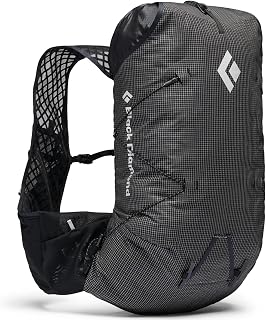
Black Diamond 15L Distance Backpack
This is the pack you want when you’re moving fast and light — a summit push, a short approach where you carry just a shell, layers, and a belay device. At 15 liters, it holds a minimal kit without flapping or shifting on your back while you climb.
- Pro: Barely noticeable weight once loaded, rides tight against your torso through steep terrain.
- Pro: Simple closure system means you can open and close it with one gloved hand at an belay stance.
- Con: Too small for any route requiring rope and tools simultaneously.
Skip this one if you need more than a support layer and a few small items. For pure speed objectives, it’s exceptional.
Osprey Mutant 22L Climbing Backpack
The 22-liter Mutant is a capable crag pack that handles a single 60-meter rope, a light harness, and a jacket without straining. The open-flap design makes loading easy at the base of a route, and the ice tool attachments work fine for two tools.
- Pro: Affordable entry into the Mutant line with the same clean aesthetic as larger versions.
- Pro: Comfortable harness padding for long approaches when you’re not yet racking up.
- Con: Compression straps are minimal — the pack looks sloppy when half-empty.
Pass if you regularly carry more than a rope and a light layer on alpine routes.
Black Diamond Beta Light 45L Alpine Backpack
This is the pack that made us rethink alpine pack design. The rolltop closure seals tight against the elements while keeping the overall profile slim enough to thread through chimneys. Running vest-inspired harness construction distributes weight across your chest rather than your lower back, which you notice immediately on sustained scrambles.
- Pro: Exceptional weight distribution for a 45-liter capacity pack — feels lighter than it is.
- Pro: Rolltop closes completely, nothing catches on rock or ice mid-climb.
- Con: The price puts it in luxury territory; you’re paying for the refined design.
Skip it only if 45 liters exceeds your typical load — otherwise it’s the benchmark.
Black Diamond MiniWire Alpine Quickdraw 3 Pack
Not a pack, but it belongs here because every alpine climbing pack recommendation is incomplete without discussing what you actually strap to the outside. The MiniWire quickdraws with their hot-forged wiregate construction resist gate flutter and freezing — a real problem when you’re clipping at altitude in cold conditions. The 60cm Dynex sling gives you useful extension for placements.
- Pro: Wiregate design specifically addresses ice and cold weather reliability.
- Pro: Lightweight Dynex slings keep rack weight manageable on long alpine routes.
- Con: Three-pack only — you’ll want multiple sets for serious alpine climbing.
Pair these with any pack on this list for trad or alpine objectives where cold temperatures threaten mechanical gear.
Osprey Mutant 52L Climbing Backpack
The 52-liter Mutant is built for multi-day mountaineering and long alpine routes where you’re hauling everything. It carries a rope, tools, crampons, a full harness load, and overnight layers without the profile ballooning out. The S-M size fits smaller torsos well, and the Blue finish hides dirt effectively.
- Pro: Generous capacity without the bulk penalty — the frame sheet keeps it riding high and tight.
- Pro: Multiple attachment points handle ice tools, crampon bags, and skis simultaneously.
- Con: Heavier than the 38-liter sibling, and you feel that penalty on long approaches.
Skip it for single-day objectives where a 30- or 45-liter pack would suffice.
Deuter Guide 30L Backpack
The Deuter Guide 30L is a competent lightweight alpine pack at an honest price. It handles a full day’s alpine kit — rope, tools, layers, belay device — in a package that doesn’t overwhelm smaller frames. The Wave-Ink colorway is understated and the fabric feels durable without adding excess weight.
- Pro: Comfortable harness design suits long approaches without chafing.
- Pro: Strong value relative to similarly featured competitors.
- Con: Tool attachment system is less refined than Osprey or Black Diamond equivalents.
Skip it if you prioritize maximum gear security over harness comfort.
Osprey Mutant 38L Climbing Backpack (Blue M-L)
The 38-liter Mutant in Blue M-L is the sweet spot for most alpine climbers — big enough for a full day, small enough to climb in without feeling like a turtle. The M-L sizing fits average to longer torsos well. Open-flap loading makes it fast to access gear on belays.
- Pro: Near-perfect capacity-to-weight balance for single-day alpine routes.
- Pro: Ice tool attachments are among the best in the category — secure even with gloves on.
- Con: External frame flex is noticeable when loaded near capacity on steep terrain.
Skip it if you need multi-day capacity or prefer a fully enclosed closure system.
Osprey Mutant 38L Climbing Backpack (Green S-M)
Same pack as the Blue M-L above, fitted for smaller-framed climbers. The S-M sizing adjusts the harness length and torso profile so the load sits correctly on shorter backs. Green colorway is a nice option for those who want something less common on the rack.
- Pro: Proper torso fit for smaller climbers without aftermarket modification.
- Pro: Identical feature set to the larger-size sibling — no compromise on functionality.
- Con: Color options limited compared to the Blue version across retailers.
Skip it if your torso measures above the S-M range — you’ll lose the fit advantage that makes this version worthwhile.
Buying Guide
Closure and Profile Security
The single most underappreciated feature on an alpine pack is how it closes. Zippered tops are convenient but catch on rock and freeze shut in cold weather. Open flaps are faster but allow gear to shift. Rolltops offer the best compromise — they seal completely against weather and nothing protrudes to snag. If you’re climbing above the fourth class, prioritize a pack whose closure system can be fully secured with gloved hands.
Tool Attachment Systems
Every alpine pack claims to hold ice tools, but the execution differs enormously. Look for dedicated bungee-cord loops with a central keeper strap rather than simple elastic bands that stretch out after a season. The best systems hold one tool and let you stow a second without it dangling against your spine. Test this with the tool in hand and gloves on before committing — you’ll be doing it in the field.
Weight-to-Volume Ratio and Fit
For alpine climbing specifically, the harness design matters more than most pack buyers realize. Chest straps that distribute load forward keep the pack stable when you’re reaching for holds overhead. A pack that fits your torso length will always outperform one that fits your shoulder width. Measure your torso and match it to the sizing before choosing volume — a well-fitted 38-liter pack carries more comfortably than a poorly fitted 30-liter one.
Our Verdict
The Black Diamond Beta Light 45L is the best alpine climbing pack overall — its rolltop closure, vest-inspired weight distribution, and snag-free profile make it the one we reach for most on real routes. For budget-conscious climbers, the Osprey Mutant 22L for under $150 delivers the most value in the Mutant line for day use. If you’re a smaller-framed climber who needs all-day capacity, the Osprey Mutant 38L Green S-M is the clear winner — same platform, better fit.
FAQ
What size alpine climbing pack do I need?
For single-day alpine routes with rope, tools, and layers, 30 to 45 liters covers most climbers. Below 30 liters works only for speed pushes or crag days. Above 50 liters you’re into multi-day mountaineering territory where the pack’s climbing-specific design becomes secondary to haul capacity.
Can I use a hiking backpack for alpine climbing?
You can, but you’ll pay for it. Hiking packs lack the compression, tool attachments, and streamlined profile that keep gear secure on steep rock. Straps and loops flap, fabric catches on features, and the bulk makes it harder to move through tight spaces. The best alpine climbing packs are purpose-built for exactly this environment.
How do I protect my pack from ice and rock damage?
Store ice tool picks in dedicated sleeves or wraps to prevent them from slicing through the fabric. When scrambling, keep the pack on your back or in front of you rather than dragging it — the bottom panel and side seams are the first wear points on any climbing pack. A pack cover for the approach adds another layer of protection against abrasion.
Is the rolltop closure worth the trade-off?
If you climb in conditions where snow, ice, or wind-driven moisture are concerns, yes. The rolltop seals completely and reduces the exterior profile so nothing snags. The trade-off is slightly slower access than a wide-open flap — but at alpine speeds, that friction is negligible compared to the confidence of knowing your gear won’t spill out mid-pitch.