Key takeaways
- Choose the Perun 3 if you regularly walk, camp, climb, or work outdoors after sunset and need both hands free.
- Choose the Warrior 3S if distance, grip, and emergency readiness matter more than minimum carry weight.
- Choose the Baton 4 if the light must be carried every day and most tasks occur within 100 to 150 metres.
- Choose the Marauder Mini if one light must cover a broad campsite and also provide long-range illumination.
- Choose the Arkfeld Pro if pocket shape and its additional UV and laser functions are more important than maximum weather protection.
The best Olight flashlights for outdoor use are the Perun 3 for hands-free hiking and camping, the Warrior 3S for a balanced general-purpose beam, the Baton 4 for compact everyday carry, and the Marauder Mini when maximum area lighting matters more than weight.
Olight’s range is easier to choose by format than by lumen count. A headlamp keeps both hands free, a slim pocket light disappears into everyday carry, a tactical-style tube offers better reach and grip, and a multi-emitter light can illuminate a campsite or wide trail. The figures below are manufacturer-rated maximums; actual runtime and brightness vary by mode, temperature, battery condition, and thermal regulation.
Best Olight flashlights by outdoor situation
Best for hiking and hands-free work: Olight Perun 3
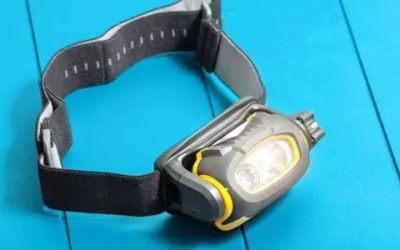
The Perun 3 is the strongest fit for hiking after dark, setting up a tent, cooking at camp, or repairing equipment. Its 3,000-lumen turbo output is excessive for ordinary walking, but the useful advantage is its headlamp format: the light points where you look while both hands remain available. It reaches about 160 metres and can run for up to roughly 15 days on its lowest setting.
The 4,000mAh rechargeable battery gives it substantially more capacity than small pocket lights, while the magnetic tail allows temporary mounting on suitable metal surfaces. It is rated IPX8 for submersion protection, but the charging system is proprietary rather than USB-C on the light itself. That makes carrying the magnetic charging cable important on multi-day trips.
Best all-rounder for trails and emergencies: Olight Warrior 3S
The Warrior 3S is the practical middle ground if you want one light for hiking, vehicle emergencies, home power cuts, and general outdoor use. It produces up to 2,300 lumens, throws approximately 300 metres, and offers a long low-mode runtime of up to 55 days. The tail switch and textured body are useful when wearing gloves, while the two-way pocket clip gives you more carry options.
This is a relatively large pocket light, not an ultra-lightweight backup. Its 5,000mAh rechargeable battery is built into the normal operating system, and charging is through Olight’s magnetic USB cable. The IPX8 rating is reassuring in heavy rain, but the magnetic charging contact should be kept clean and dry before charging.
Best for everyday carry: Olight Baton 4
The Baton 4 is the better choice when the flashlight will spend most of its life in a pocket, daypack, or glove compartment. It is about 3.7 inches long and weighs roughly 1.9 ounces without its battery, making it far easier to carry daily than a high-output tactical model. Its maximum output is 1,300 lumens, with a beam distance of about 170 metres.
The compact size means compromises: turbo output is brief, the beam has less sustained reach than larger lights, and its battery capacity is smaller. Its magnetic tail is convenient for mounting, and the included charging case on some packages can provide additional recharges when paired with a suitable power source. Check the specific package contents, because accessories and charging-case bundles can differ.
Best for campsite area lighting: Olight Marauder Mini
Choose the Marauder Mini when you need to illuminate a campsite, large room, trail junction, or search area rather than simply point a narrow beam down a path. It combines a high-output flood beam with a focused throw beam and can reach about 600 metres in its long-range setting. Maximum output is approximately 7,000 lumens.
The price for that versatility is size and weight: at roughly 8.3 ounces, it is much less comfortable as a daily pocket light. It is better carried in a pack or vehicle. The IPX8 water-resistance rating suits wet outdoor conditions, and the multiple beam choices reduce the temptation to run the brightest setting constantly, which saves battery and limits heat.
Best slim multi-tool-style carry: Olight Arkfeld Pro
The Arkfeld Pro is aimed at people who prefer a flat, pocket-friendly light with extra functions. It combines a white light with a green laser and UV light, offering up to 1,300 lumens and roughly 130 metres of throw. The flat body is less likely to roll around a desk or pocket than a round tube.
It is useful for maps, equipment inspection, and general carry, but it is not the best primary light for a remote hike. The flat shape and integrated rechargeable battery are convenient; the reduced water-resistance rating compared with Olight’s IPX8 models makes it less suitable for prolonged exposure to heavy rain or immersion. Treat the laser and UV functions as specialist extras, not substitutes for a proper trail beam.
Head-to-head comparison
| Model | Best use | Maximum output | Approx. throw | Low-mode runtime | Size and weight | Water resistance |
|---|---|---|---|---|---|---|
| Perun 3 | Hiking, camping, hands-free work | 3,000 lm | 160 m | Up to 15 days | 5.1 in; about 4.6 oz | IPX8 |
| Warrior 3S | General outdoor and emergency use | 2,300 lm | 300 m | Up to 55 days | 5.2 in; about 6.4 oz | IPX8 |
| Baton 4 | Everyday carry and backup use | 1,300 lm | 170 m | Up to 30 days | 3.7 in; about 1.9 oz | IPX8 |
| Marauder Mini | Campsite and area illumination | 7,000 lm | 600 m | Up to 43 days | 5.0 in; about 8.3 oz | IPX8 |
| Arkfeld Pro | Flat everyday carry with extra functions | 1,300 lm | 130 m | Up to 30 days | 4.3 in; about 3.8 oz | IPX5 |
How to choose without overbuying
- Choose the Perun 3 if you regularly walk, camp, climb, or work outdoors after sunset and need both hands free.
- Choose the Warrior 3S if distance, grip, and emergency readiness matter more than minimum carry weight.
- Choose the Baton 4 if the light must be carried every day and most tasks occur within 100 to 150 metres.
- Choose the Marauder Mini if one light must cover a broad campsite and also provide long-range illumination.
- Choose the Arkfeld Pro if pocket shape and its additional UV and laser functions are more important than maximum weather protection.
For budget planning, remember that the cheapest light to own is often the one you actually carry. A 6-ounce light left at home provides no emergency benefit, while a compact Baton 4 can cover routine tasks and be supplemented by a headlamp for trips. Prices vary by sales and bundle, but these models generally range from roughly $60 for compact options to $150 or more for high-output multi-beam lights.
Charging, runtime, and field preparation
Olight rechargeable models commonly use a magnetic USB charging cable. Before a trip, charge the light, confirm the indicator shows a full battery, and run it for several minutes on the intended walking mode. This catches a loose charging connection or unexpectedly degraded battery before departure.
Runtime figures need practical interpretation. If a light is rated for 1 hour on a high mode, that does not mean it will deliver its maximum output for the whole hour. Electronic temperature control can reduce brightness, and turbo modes are usually designed for short bursts. For a night hike, use a moderate setting and carry a second light rather than planning around turbo.
A useful example is a four-hour evening hike. If your chosen mode provides approximately 8 hours of regulated runtime when new, the nominal reserve is 50 percent. Cold temperatures, battery age, and repeated high-output bursts can reduce that margin, so a spare compact light or a second charged battery system is sensible for remote routes.
Ownership realities and maintenance
The parts most likely to cause trouble are usually the charging contacts, pocket clip, USB cable, and rubber seals—not the LED itself. Wipe magnetic contacts with a dry cloth after dusty or wet trips. Remove grit from the switch and clip area, and inspect the charging cable for damage. Never charge a wet light or store it with mud around the contacts.
Rechargeable lithium batteries gradually lose capacity. Avoid leaving a light completely empty for months, and store it partially charged in a cool, dry place if it will not be used for an extended period. A light that has become noticeably dimmer, loses charge unusually quickly, or becomes hot while charging should be removed from service until the battery and charger have been checked.
For a remote trip, pack the light where it can be reached without unpacking the entire bag. Lock out the switch when the model supports it, because accidental activation inside a pack can drain the battery and generate heat. Finally, match the light to the task: a dependable moderate beam, spare power, and accessible carry position are usually more valuable outdoors than the largest lumen number.