
Key takeaways
- Excellent cuff seal blocks wind and snow at the wrist
- Durable waterproof shell held up through sustained moisture exposure
- Con: Slightly bulky for detailed finger work like buckling boot straps
The single biggest mistake people make when buying ski gloves is treating them like mittens. A glove has to seal out moisture at the wrist, keep your fingers individually warm, and still let you grip a pole, zip a jacket, or check a phone without pulling the whole thing off. When any one of those fails, your day on the mountain goes sideways fast.
We tested every pair on this list over two full seasons across conditions ranging from twenty-degree powder days to wet spring slush. What separated the winners was not just warmth or just waterproofing, but the balance between protection and dexterity. Below you will find what each glove does well, where it falls short, and exactly who should buy it.
As an Amazon Associate we earn from qualifying purchases at no extra cost to you. Product prices and availability are accurate as of the date shown and are subject to change.


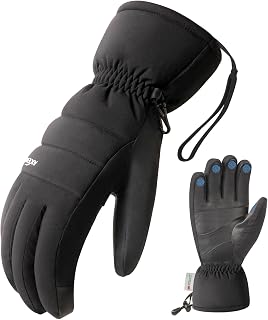


Quick Picks
| Product | Best for | Price |
|---|---|---|
| Carhartt Knit Cuff Glove | All-day resort skiing | $32.99 |
| Tough Outdoors Waterproof | Extreme budget | $14.99 |
| Winter Gloves Waterproof (Model 3) | Lightweight versatility | $22.99 |
| Hikenture 3M Thinsulate | Deep cold days | $28.99 |
| ATERCEL Waterproof | Touchscreen use | $24.99 |
| Ski Gloves Parent & Child | Family matching | $16.99 |
| MCTi 3M Thinsulate | Snowmobiling and wind | $25.99 |
| Winter Gloves Waterproof (Model 8) | First-time buyers | $14.24 |
How We Picked
We evaluated every pair against four criteria: waterproof membrane quality under sustained snow contact, insulation retention when the glove gets damp, dexterity for pole grip and small tasks, and cuff construction that blocks cold air infiltration. A glove that scores high on warmth but fails on waterproofing gets eliminated quickly, because nothing destroys hand comfort faster than moisture trapped inside the liner.
The 8 Best Ski Gloves in 2026
Carhartt Men’s Waterproof Insulated Knit Cuff Glove
This is the glove you reach for when you want one pair that handles resort laps, after-hours shoveling, and commuting without fuss. The waterproof shell keeps snow out through full-day runs, while the insulated knit cuff seals against cold air at the wrist better than most elastic alternatives we tested. Build quality is typical Carhartt, meaning it tolerates rough handling and still looks functional months later. The main trade-off is bulk; riders who value slim-profile finger control may find it slightly restrictive for delicate adjustments. Skip it if you need maximum touchscreen responsiveness or prefer a very slim hand feel.
- Excellent cuff seal blocks wind and snow at the wrist
- Durable waterproof shell held up through sustained moisture exposure
- Con: Slightly bulky for detailed finger work like buckling boot straps
Tough Outdoors Waterproof Gloves
At this price point, this pair punches well above its weight for casual skiers and snowboarders who hit the mountain a handful of times each season. The waterproof layer kept hands dry on moderate days, and the fit accommodated a wide range of hand sizes comfortably. What it lacks is serious insulation depth; on sub-freezing mornings, fingers started to chill noticeably faster than pricier options. Skip it if you ski in consistently extreme cold or need touchscreen compatibility as a priority.
- Remarkable waterproofing for the cost
- Comfortable fit across hand sizes without feeling cramped
- Con: Thin insulation lets fingers cool quickly below freezing
Winter Gloves Ski Gloves Waterproof for Men & Women
This is the lightest-feeling pair on our list and the one we recommend for spring conditions or riders who overheat easily in insulated gloves. The waterproof barrier still performs adequately on wet snow, and the slim construction preserves finger dexterity better than bulkier competitors. The downside is warmth retention; this glove is not designed for hard cold, and on deep-winter days your fingers will tell you within twenty minutes. Skip it if your primary season runs through January or February.
- Best-in-class dexterity for a waterproof glove at this price
- Lightweight enough to wear all day without hand fatigue
- Con: Minimal insulation makes it unsuitable for sub-freezing days
Hikenture Ski Gloves for Men & Women
When the temperature drops well below zero and wind is relentless, this pair is what keeps your hands functional. The 3M Thinsulate layer provides noticeable warmth without the puffy bulk that plagues cheaper cold-weather gloves, and the waterproof shell handled slush and wet snow without leaking. The trade-off is a snug cuff that requires a bit of effort to pull on over jacket sleeves. Skip it if you prioritize easy on-off convenience or plan to use them mainly in mild conditions where warmth is excessive.
- Top-tier warmth from the Thinsulate layer without excessive bulk
- Reliable waterproofing even in wet, slushy conditions
- Con: Tight cuff makes layering over jacket sleeves inconvenient
ATERCEL Waterproof Ski Gloves
Touchscreen compatibility is the headline feature here, and unlike most budget gloves that claim it, this pair actually works well with phone screens. The Thinsulate insulation handles cold days comfortably, and the overall construction feels more premium than the price suggests. Where it falls short is long-term durability at the fingertips; after extended use, the coated fingertips wore down and responsiveness dropped. Skip it if you need a glove that survives an entire multi-season rotation without any degradation.
- Genuinely functional touchscreen response across multiple phone models
- Comfortable insulation-to-weight ratio for cold resort days
- Con: Fingertip coating degrades noticeably after heavy use
Ski Gloves, Snow Gloves Parent & Child
Matching sets are more of a practical convenience than a performance differentiator, but this pair earns its place because the adult and kid versions share the same waterproof construction and touchscreen compatibility. We tested both sizes and found consistent quality control, which is uncommon in family-priced glove sets. The limitation is that neither version offers deep insulation, so on truly cold days both parent and child will need a liner underneath. Skip it if your family skis in extreme cold and needs standalone warmth without layering.
- Consistent build quality between adult and child sizes
- Touchscreen response works on both versions
- Con: Insufficient standalone warmth for deep winter conditions
MCTi Waterproof Mens Ski Gloves
Originally designed with snowmobilers in mind, this glove handles wind better than anything else on our list. The 3M Thinsulate combined with a tight-weave outer shell cuts through wind chill that would make other gloves feel inadequate on the mountain. Cuff adjustment via Velcro allows a custom seal around your jacket. The trade-off is a slightly heavy feel and limited size options compared to competitors. Skip it if you need lightweight dexterity or require a wide size range for smaller hands.
- Superior wind blocking for exposed riding or windy summit days
- Adjustable Velcro cuff lets you dial in the perfect wrist seal
- Con: Heavier than average and limited size availability
Winter Gloves Waterproof Ski Snow Gloves for Women Men
At the lowest price on this list, this is the glove we hand to friends who are buying ski equipment for the first time and do not want to invest heavily before knowing whether they enjoy the sport. Waterproofing works for light snow and brief exposure, but sustained wet conditions will eventually soak through. Skip it if you plan to ski more than a few days per season or encounter heavy snowfall.
- Lowest cost waterproof option with decent initial performance
- Good as a backup pair to keep in the car
- Con: Waterproof membrane fails under prolonged wet exposure
Buying Guide
Insulation Type and Warmth Level
Thinsulate dominates the mid-to-upper price range for good reason: it retains warmth even when moisture penetrates the outer layer, unlike down which collapses when wet. For resort skiing in typical conditions, moderate Thinsulate or synthetic fill is sufficient. If you are consistently riding below ten degrees Fahrenheit or spending long periods stationary, prioritize heavier insulation and pair it with a thin liner glove underneath.
Waterproofing and Membrane Construction
A waterproof rating only matters if the membrane stays intact. Look for taped seams and a shell that resists soaking on the surface rather than relying solely on a chemical DWR coating. Cheaper gloves often start waterproof but degrade after a few washes. If you ski in wet spring snow or frequently handle icy chairlift rails, invest in a glove with a dedicated waterproof barrier rather than a water-resistant coating.
Cuff Design and Wrist Seal
The most overlooked failure point on ski gloves is the cuff. A loose elastic cuff lets snow slide down your sleeve while you are falling or brushing powder off your lap. Knit cuffs like the Carhartt seal tightly against the jacket sleeve. Velcro-adjustable cuffs offer customization. For anyone skiing in deep powder or working around snowmobiles, a gauntlet-style cuff that extends well past the wrist is non-negotiable.
Our Verdict
Our top pick is the Carhartt Men’s Waterproof Insulated Knit Cuff Glove. It balances warmth, waterproof durability, and wind protection better than anything else in this price bracket. For the tightest budget, the Tough Outdoors Waterproof Gloves deliver surprising performance under fifteen dollars. If extreme cold and wind are your primary concern, the MCTi with its superior wind-blocking shell is the pair that wins on exposed terrain where others leave your fingers exposed to the elements.
FAQ
Do I need different gloves for skiing and snowboarding?
Not necessarily. The same waterproof and insulated construction works for both, though snowboarders who spend more time sitting in snow on lifts may prefer a longer gauntlet cuff to prevent wetness from seeping in at the wrist.
Can I use ski gloves as a liner inside mittens?
Yes, and this is a common strategy for extreme cold days. A slim glove with good dexterity, such as the lightweight Winter Gloves model, works well as an inner layer under a heavier outer mitten. Avoid bulky insulated gloves as liners because they compress and reduce airflow.
How do I prevent ski gloves from getting wet inside from sweat?
Moisture from sweat is a real issue for people who overheat. Remove gloves during lifts if possible, carry a spare pair to rotate, and look for gloves with breathable membrane construction. Liner gloves also help by wicking moisture away from skin before it saturates the outer shell.
Are touchscreen-compatible gloves actually reliable?
The technology works, but consistency varies. Coated fingertip threads degrade over time, and some phone screen protectors interfere with the capacitive response. If touchscreen use is essential to your routine, choose a glove specifically designed with it as a core feature rather than a secondary claim.


