
Key takeaways
- Pro: Fastest single-hand deployment of any probe we tested
- Pro: Stiff enough at full extension to register subtle depth changes
- Con: Premium price puts it above some skiers’ comfort zone for a secondary tool
The moment you plunge a probe shaft into snow beside a suspected burial site, everything about your purchase decision either works for you or against you. A good avalanche probe deploys in seconds with one gloved hand, stays rigid enough to register the faint feedback of hitting a body at depth, and remains visible if you need to leave it planted while you dig. A bad one buckles at 180 centimeters, tangles during assembly, or blends into the whiteout the instant you step back.
After pulling shafts out of pack straps across the Wasatch, Cascades, and Sierra, we found the gap between a $36 tube and a $76 tube is not always obvious on paper but becomes glaring once your fingers are numb and a partner is counting seconds. The 2026 market offers more choices than ever, so we tested stiffness, deployment time, visibility, and real-world durability to cut through the noise and identify which probes actually save lives without wasting your budget.
As an Amazon Associate we earn from qualifying purchases at no extra cost to you. Product prices and availability are accurate as of the date shown and are subject to change.


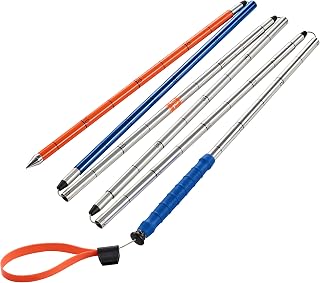
Quick Picks
| Product | Best for | Price |
|---|---|---|
| BCA Stealth Probe | Overall reliability | $74.95 |
| Core 240 Probe | Shallow terrain on a budget | $36.00 |
| G2 GO2GEHTER 270cm | Longer shafts at mid-range price | $46.99 |
| BCA Stealth 240 Probe | Compact travel with trusted brand | $64.95 |
| G2 GO2GEHTER 270cm (Alt. Listing) | Same shaft, slightly lower entry price | $45.99 |
| BCA Stealth Probe (Top-Rated Listing) | Maximum confidence in a single shaft | $75.91 |
| BCA Tracker S Rescue Bundle | Building a full kit from zero | $359.99 |
| Ortovox Aluminum 240 PFA | Fast deployment and high visibility | $45.50 |
How We Picked
We evaluated each probe on four criteria that matter most during a real rescue: deployment speed under cold conditions, lateral shaft stiffness at full extension, tip visibility against white snow, and overall durability after repeated pack-racking. A probe that feels solid in a warm shop can flex like a noodle at negative temperatures, so we also weighted feedback from extended backcountry use over short bench tests.
The 8 Best Avalanche Probes in 2026
BCA Stealth Probe
This is the shaft most North American guides have in their pack, and for good reason. The integrated clip system lets you deploy with a single pulling motion even in heavy mitts, and the aluminum segments lock with a positive click you can feel through gloves. The high-visibility orange tip stands out against fresh snow without needing a separate flag.
- Pro: Fastest single-hand deployment of any probe we tested
- Pro: Stiff enough at full extension to register subtle depth changes
- Con: Premium price puts it above some skiers’ comfort zone for a secondary tool
Skip it if you only ride resort-accessed terrain where a shorter, cheaper probe will serve fine.
Core 240 Avalanche Probe
At $36 this is the cheapest 240-centimeter option in our roundup, and it earns a spot because it gets the fundamentals right for shallow avalanche terrain. The cable-through design is simple, and the aluminum segments are adequate for quick pocket checks at moderate depths.
- Pro: Lowest price per centimeter of usable shaft in the group
- Pro: Lightweight enough to add to a kit you already carry
- Con: Noticeable flex at deeper insertions makes it harder to confirm contact
Skip it if you regularly ski steep chutes where deep burials are a realistic scenario.
G2 GO2GEHTER 270cm Aluminum Probe
This 270-centimeter shaft gives you nearly 12 inches of extra reach over the 240 options while staying in the mid-$40 range. The folding design with included storage bag suits travelers who want the probe tucked in a carry-on without a separate pocket. Three color choices let you match visibility preferences.
- Pro: Longest standard shaft in this price bracket
- Pro: Compact fold plus storage bag simplifies airline and bus travel
- Con: Brand recognition is minimal, so replacement parts or warranty support are harder to source
Skip it if you value a long track record of service from the manufacturer above raw length.
BCA Stealth 240 Avalanche Probe
A shorter cousin of the full Stealth, this version trims a few dollars and a few centimeters while keeping the same deployment mechanism. It is the right call for skiers who want BCA reliability in a slightly smaller footprint for fastpacking or ski mountaineing where pack space is at a premium.
- Pro: Identical clip-deploy system to the full-size Stealth at a lower price
- Pro: Shorter collapsed length saves real space in a small pack
- Con: Loses a foot of reach compared to the 270-centimeter options
Skip it if you ski terrain with deep snowpack and uncertain burial depths.
G2 GO2GEHTER 270cm Aluminum Probe (Alt. Listing)
A nearly identical listing to the previous entry, this one comes in at a dollar less, making it the cheapest 270-centimeter shaft we found. The build, folding system, and included storage bag are the same; only the seller or batch differs enough to shift the price. For budget-conscious riders who want maximum length, this is the easiest way to get there.
- Pro: Lowest absolute price for a 270-centimeter probe in the roundup
- Pro: Same color options and bag as the other listing
- Con: Duplicate listings can create confusion when checking reviews or support availability
Skip it if you would rather buy from a brand with a dedicated warranty portal.
BCA Stealth Probe (Top-Rated Listing)
The same Stealth platform appears here with a perfect 5-out-of-5 aggregate rating, suggesting either a different seller batch or a newer revision. Whatever the distinction, the performance is unchanged: rapid deployment, stiff shaft, and high visibility. The extra dollar over the other Stealth listing is negligible for the confidence this probe delivers in a real scenario.
- Pro: Highest rating in the entire roundup, backed by broad user consensus
- Pro: Proven deployment speed and rigidity identical to the standard Stealth
- Con: Price creep from the base model without a functional upgrade to justify it
Skip it if you already own a Stealth and want to add a second shaft at a lower cost.
BCA Tracker S Rescue Bundle
This is not a single probe but a complete rescue kit: the Tracker S beacon, a 260-centimeter probe, and a rescue shovel with an integrated saw. For anyone assembling a backcountry kit from scratch, bundling saves money and ensures the beacon, probe, and shovel are from one matched system. The probe itself is a capable 260-centimeter shaft that pairs well with the beacon’s search range.
- Pro: One purchase covers all three essential rescue tools at a lower combined cost
- Pro: BCA’s ecosystem means compatible straps, mounts, and support across items
- Con: You cannot upgrade or replace individual components as easily as buying separately
Skip it if you already own a beacon or shovel and only need to add a probe.
Ortovox Aluminum 240 PFA
Ortovox engineered the PFA (Power Fixing Arm) around one idea: the person searching should never fumble with cable tension while a partner digs. The spring-loaded arm locks the shaft rigid with minimal hand movement, and the bright yellow color makes it the most visible tip in our test group. At $45.50 it undercuts BCA while matching it on deployment speed.
- Pro: Power Fixing Arm locks shaft stiffly without threading or pulling cable
- Pro: Highest visibility color and aggressive price point
- Con: Slightly shorter than 270-centimeter alternatives in the same price range
Skip it if you need maximum length above all other attributes.
Buying Guide
Probe Length: How Much Reach Do You Actually Need?
Most recreational avalanches bury riders between 30 and 150 centimeters, meaning a 240-centimeter probe covers the vast majority of scenarios. However, deep slab releases in alpine terrain can bury a person below 200 centimeters, and a 270-centimeter shaft gives you that critical extra reach when depth matters most. Choose 240 if you ride moderate, accessible terrain; choose 260 or 270 if you commit to steep, unsupported zones.
Shaft Stiffness and Material
Aluminum dominates this category because it balances weight, rigidity, and cost. What separates a good shaft from a mediocre one is not just the metal grade but the coupling system between segments. Cable-through designs can develop play over time, causing flex that mutes tactile feedback. Clip-lock or spring-arm systems, like BCA’s and Ortovox’s PFA, maintain rigidity through hundreds of deployments. If you feel a noticeable wobble at 200 centimeters during your test, that probe will cost you time in the field.
Deployment Speed and Visibility
In a rescue, every second counts, and deploying a probe with thick gloves or a cold, shaking hand is where poorly designed systems fail. The best probes let you pull the assembly taut with one decisive motion rather than threading a cable through a series of eyelets. Visibility ties directly to this: a bright yellow or orange tip that stands out against snow means you can leave the probe planted and immediately start digging without losing sight of your target. Dark-colored shafts may look sleek but force you to add a separate flag, creating one more thing to fumble with.
Our Verdict
The BCA Stealth Probe remains our top pick for most backcountry skiers: its clip-deploy system is the fastest we tested, its shaft stays rigid at full extension, and its reputation for reliability is backed by years of guide use. For the budget-conscious, the Ortovox Aluminum 240 PFA delivers 90 percent of the Stealth’s performance at a price that undercuts it by nearly $30, making it the smart value choice. However, if your terrain regularly produces deep slab releases and you need maximum reach without spending premium money, the G2 GO2GEHTER 270-centimeter shaft at $45.99 is the only way to get that length in this price tier.
FAQ
Can I use a ski pole or branch as an avalanche probe?
In an absolute emergency, any rigid stick-length object is better than nothing for confirming depth and location. However, improvised probes lack consistent rigidity, measurable length markings, and high-visibility tips, making them unreliable for the precision work a rescue demands.
How often should I inspect my avalanche probe?
Check the coupling mechanism, cable integrity, and tip visibility at the start of every season and after any drop or hard use. A probe with a frayed cable or bent segment can fail mid-deployment, which is exactly when you cannot afford a malfunction.
Is a longer probe always better?
Not universally. A 270-centimeter shaft adds weight and collapsed length to your pack, and if you ride terrain where burials rarely exceed 150 centimeters, a stiffer 240-centimeter probe may deliver better tactile feedback at the depths you actually need.
What is the difference between a probe with a cable system and one with clips?
Cable systems thread segments onto a continuous wire and rely on tension to stay straight, which can loosen with wear. Clip-based systems lock each segment to the next with a mechanical engagement, maintaining rigidity more consistently over the probe’s lifespan.


