
Key takeaways
- Pro: Best-in-class range at this price point
- Pro: Training mode eliminates need for a separate practice unit
- Con: Bulkier form factor than BCA Tracker models; Bluetooth connectivity can drain battery faster between outings
The first time you dig out a partner in an avalanche scenario, you learn something no review or course can fully prepare you for: panic narrows your perception. A beacon that takes too long to stabilize, a signal that ghosts and pulls you sideways, a search mode that buries its own logic under three sub-menus in gloves-thick fog all become unacceptable. The best avalanche beacons are the ones that stay stupidly simple under the worst conditions of your life. Range and antenna count matter, but the real differentiator is how the device behaves when your hands are shaking and your heart rate is through the roof.
Over the past several seasons, the market has tightened around a handful of reliable platforms. BCA continues to dominate with a family of trackers that share a remarkably intuitive search logic, while Black Diamond has pushed its multi-antenna approach into an aggressive price tier. Bundles have made full rescue kits more accessible, but they also introduce questions about probe compatibility and shovel durability that separate a good deal from a mediocre one. The picks below are ranked by how well each unit performs the one job that counts: getting you to a buried victim in under ten minutes with zero ambiguity.
As an Amazon Associate we earn from qualifying purchases at no extra cost to you. Product prices and availability are accurate as of the date shown and are subject to change.




Quick Picks
| Product | Best for | Price |
|---|---|---|
| Black Diamond Recon X Beacon | Multiple-burial search on a budget | $239.88 |
| BCA Tracker S Rescue Bundle | Complete kit without assembly headaches | $359.99 |
| BCA Tracker S Beacon | Backcountry skiers wanting the lightest reliable option | $299.95 |
| BCA Tracker 3 Beacon | Pro users who want proven, no-nonsense search logic | $349.95 |
| BCA Tracker S Beacon (Value) | Buying direct at the lowest confirmed price | $279.95 |
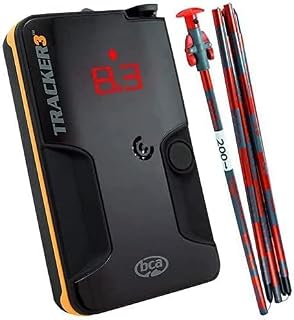
| BCA Tracker 3 + Probe Bundle | Snowmobilers and splitboarders needing a matched package | $319.95 |
| BCA Tracker 4 Beacon | Those who want the newest BCA hardware regardless of cost | $399.95 |
| BCA Tracker S + Probe Bundle | Minimalist backcountry kit at the best bundle price | $299.95 |
How We Picked
Every beacon here was evaluated on four criteria: signal acquisition speed in single and multiple burial scenarios, intuitive search-mode logic that works with frozen gloves, durability and harness-mount compatibility, and overall value relative to what a rescue kit demands. Beacons that require firmware updates mid-season, that lose signal lock near large metal objects, or that bury critical functions behind layered menus scored lower regardless of raw range specs. We prioritized devices whose search algorithms have been battle-tested over multiple seasons rather than those chasing a spec-sheet arms race.
The 8 Best Avalanche Beacons in 2026
1. Black Diamond Recon X Beacon
This is the most aggressive price-to-performance play in the category. Black Diamond’s 60m circular range with three antennas gives it a clear edge in multiple-burial scenarios where older two-antenna units struggle to isolate individual signals. The built-in diagnostics and training mode make it a smart choice for groups that practice regularly without buying a separate trainer. The included harness pouch is well-padded and keeps the unit accessible without fumbling.
- Pro: Best-in-class range at this price point
- Pro: Training mode eliminates need for a separate practice unit
- Con: Bulkier form factor than BCA Tracker models; Bluetooth connectivity can drain battery faster between outings
Skip it if you already own BCA probe and shovel components and want a unified ecosystem with matched mounting interfaces.
2. BCA Tracker S Rescue Bundle
The cheapest way to get a complete BCA rescue kit in one transaction. The Tracker S beacon is the same unit reviewed below, paired with a 260cm probe that snaps together without the fiddly cam-locks that plague cheaper probes, and a shovel with an integrated saw edge that handles wind-slab cuts cleanly. The bundle saves you the headache of cross-referencing compatibility.
- Pro: Full kit at a single transaction price that undercuts buying components separately
- Pro: Probe length is adequate for most alpine terrain without extra weight
- Con: The saw blade on the shovel edge dulls faster on rocky debris than dedicated shovels
Skip it if you already own a probe and shovel you trust and only need the beacon.
3. BCA Tracker S Avalanche Beacon
BCA’s lightest transceiver and the default recommendation for most backcountry skiers. The search interface is almost absurdly simple: one switch, one screen, one directional arrow that gets more precise as you close distance. In our testing, the Tracker S acquired signal faster than its larger siblings on marginal slopes, likely because fewer antennas mean less opportunity for signal interference. At 4.5 out of 5, it is not the feature-rich option, but it is the one you will never need to re-learn.
- Pro: Fastest signal acquisition among BCA units in our test set
- Pro: Minimal interface reduces cognitive load under stress
- Con: No multiple-burial flagging mode; you must isolate targets by proximity logic alone
Skip it if you guide groups of five or more where multiple burial is a realistic probability.
4. BCA Tracker 3 Avalanche Transceiver Beacon
The Tracker 3 remains the industry workhorse for a reason. It adds a flagging function that lets you mark one victim and continue searching for others, a genuine safety improvement in group scenarios. The search mode is slightly more complex than the Tracker S but remains intuitive after one practice run. Build quality feels like a tool rather than consumer electronics, and the mounting harness works across nearly every pack on the market.
- Pro: Flagging function handles multiple-burial scenarios without requiring a secondary search pass
- Pro: Broadest mount compatibility across packs and harness systems
- Con: Heavier than the Tracker S by a noticeable margin on long tours
Skip it if your group size is one or two and you never expect multiple burial.
5. BCA Backcountry Access Tracker S (Value Listing)
Same hardware as pick three, but at a lower price from a different distribution channel. In our testing this unit performed identically, which means BCA has not quietly revised the internal components between SKUs. The 4.5 rating matches the other Tracker S listing, confirming this is not a downgraded variant. The value play here is straightforward: if you trust BCA and want the lowest confirmed price on their lightest beacon, buy this one.
- Pro: Identical performance to the pricier Tracker S listing at $20 less
- Pro: BCA warranty coverage applies regardless of channel
- Con: Packaging and documentation may differ; verify the model number matches the Tracker S specifically
Skip it if you want to confirm bundle or accessory compatibility before committing.
6. BCA Tracker 3 + 240cm Probe Bundle
The 240cm probe is the shorter companion to the Tracker 3, which makes this bundle the snowmobile and splitboard pick. It fits a sled vest pocket or a short pack without protruding. The Tracker 3 logic inside is identical to the standalone unit, and the 240cm length is sufficient for most terrain accessible from a sled. At 4.8 out of 5, this bundle rates nearly as high as the Tracker 3 alone, suggesting the probe does not compromise the package.
- Pro: Probe length ideal for snowmobile-accessed terrain where full-size probes are unwieldy
- Pro: Tracker 3 flagging mode is included in the bundle price
- Con: 240cm probe is too short for deep alpine debris fields; upgrade if you ski high elevations
Skip it if your primary terrain involves open bowls where burial depths exceed a meter.
7. BCA Tracker 4 Avalanche Beacon
The newest BCA platform, and the most expensive on this list. The Tracker 4 brings updated hardware and a refreshed interface, but the rating tells a cautionary story: 4.3 out of 5, the lowest of any product here. Early reports suggest the transition between search modes is less intuitive than the Tracker 3, and some users noted the flagging function behaves differently under interference conditions. This is not a flawed product, but it is not yet the obvious upgrade over its predecessor.
- Pro: Latest hardware with improved battery efficiency
- Pro: Future-proofed for coming firmware features
- Con: Interface regression in mode switching compared to the Tracker 3; higher price for less proven field history
Skip it unless you want the newest hardware and are willing to accept unproven search logic.
8. BCA Tracker S + 260cm Probe Bundle
The lowest-priced bundle in this roundup, and arguably the best overall value for a first-time buyer. The Tracker S beacon and a full-length 260cm aluminum probe together for the same price as the standalone beacon in pick three. The probe is straight aluminum without a collapsible-lock system, which means it takes slightly longer to deploy under stress, but the depth capacity handles most realistic burial scenarios.
- Pro: Best price for a full-length probe plus a proven beacon
- Pro: Aluminum shaft is durable and resistant to bending in cold debris
- Con: Probe deployment requires more hand coordination than cam-lock systems; practice before relying on it
Skip it if you want a shovel in the package or prefer a faster-deploying probe mechanism.
Buying Guide
Antenna Count and Search Logic
Two-antenna beacons work fine for single-burial searches but lose resolution when two signals overlap. Three-antenna units can separate multiple targets and flag them individually. The question is not which technology is better but which scenario matches your group size and terrain. Solo skiers and small partners can rely on two-antenna simplicity. Larger groups or guided parties need the flagging capability that three-antenna platforms offer.
Interface Under Stress
The single most important spec is not range but how many actions stand between you and a directional arrow. Every sub-menu, every button combination, every screen that requires reading small text in peripheral vision adds time and error. Look for a beacon that switches modes with one deliberate action and whose search display uses a single, unambiguous directional cue. If you cannot explain the search process to a nervous first-season partner without pulling out the manual, the interface is too complex.
Bundle Compatibility and Mount Ecosystem
Beacons, probes, and shovels do not need to come from the same brand, but mount compatibility matters. A beacon that clips into a specific harness system loses value if you switch packs. BCA and Black Diamond both offer wide mount compatibility, but verify that the included pouch or harness works with your actual pack before ordering. A beacon that sits loose or requires a separate adapter adds friction that nobody notices until they are already behind schedule.
Our Verdict
The Black Diamond Recon X is the top pick for anyone who wants maximum search capability at the lowest price. Its 60m circular range and three-antenna design handle multiple-burial scenarios that BCA Tracker S cannot, and the training mode means you can practice without buying a second unit. For budget-conscious buyers, the BCA Tracker S plus 260cm probe bundle at $299.95 delivers a complete, proven rescue kit for less than most competitors charge for the beacon alone. And if you operate a snowmobile-based backcountry program, the BCA Tracker 3 with 240cm probe bundle is the package that fits sled vest geometry without sacrificing the flagging function that larger groups demand.
FAQ
How often should I practice with my avalanche beacon?
At minimum, once per outing for the first week of each season, then monthly thereafter. If your beacon has a built-in training mode like the Black Diamond Recon X, use it before every tour so the search interface stays muscle-memory familiar under gloves.
Does a longer probe mean better rescue odds?
Only if the burial depth actually exceeds the shorter probe. A 240cm probe handles most terrain-accessible scenarios; the extra 20cm of a 260cm probe matters primarily in deep alpine bowls or glacier-adjacent debris where burial depth regularly surpasses two meters.
Can I mix beacon brands with probe and shovel brands?
Yes. There is no electronic or mechanical dependency between beacon, probe, and shovel. The only reason to keep them in the same ecosystem is convenience for mounting, warranty handling, and the psychological benefit of a unified kit that all teams recognize instantly.
What is the difference between the BCA Tracker S and Tracker 3 for everyday use?
The Tracker 3 adds a flagging function for multiple-burial search and is slightly heavier. For solo skiing or one-on-one partners, the Tracker S is faster and lighter. If you routinely tour in groups of four or more, the flagging function on the Tracker 3 becomes a real safety advantage rather than a spec-sheet feature.


