
Key takeaways
- Double ratchet binding secures well with gloves on
- Heel lifts reduce calf strain on inclines
- Crampon traction is adequate only on gentle slopes
After spending three winters breaking in snowshoes across Midwest trails, I can tell you that most people buy the wrong pair the first time. They gravitate toward the cheapest option that looks good online, then discover that the bindings pinch through thick socks, the crampons slip on angled slopes, and the deck flexes so much that every step feels like walking on a trampoline. Snowshoes are one of those categories where a fifteen-dollar price difference separates a tool you grab every weekend from one that gathers dust in your garage.
What actually matters is float relative to your loaded weight, binding security that tolerates gloves and gaiters, and a traction system that bites on packed snow rather than skating across it. Frame stiffness, deck geometry, and heel lift function all play supporting roles. This roundup covers eight pairs at different price points so you can match the right snowshoe to your terrain, your budget, and how often you expect to use it.
As an Amazon Associate we earn from qualifying purchases at no extra cost to you. Product prices and availability are accurate as of the date shown and are subject to change.




Quick Picks
| Product | Best for | Price |
|---|---|---|
| Retrospec Drifter | Casual trail walkers on a tight budget | $49.99 |
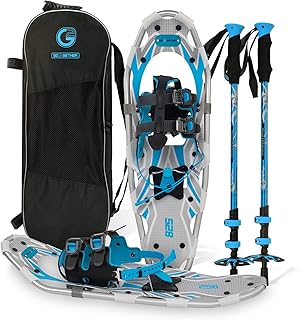
| G2 Snowshoes with Trekking Poles (21/25/30/36) | Complete kit buyers who want poles included | $114.99 |
| G2 Snowshoes with Trekking Poles (21/25/30/36) | Gift sets and multi-size flexibility | $114.99 |
| G2 Snowshoes for Women, Men, Youth | Families outfitting multiple members at once | $86.99 |
| Retrospec Drifter | Lightweight day hikes with carry convenience | $69.99 |
| MSR Evo Trail | Serious backcountry hikers who need proven traction | $169.95 |
| G2 Snowshoes with Trekking Poles | Color variety and moderate trail use | $109.99 |
| Franklin Sports Arctic Trails | Occasional use and absolute lowest cost | $47.91 |
How We Picked
I evaluated each pair across four criteria: float efficiency (how well the deck distributes weight without sinking on soft snow), binding reliability under cold and gloved conditions, traction quality on packed and angled surfaces, and value relative to what you actually get in the box. A snowshoe that scores well on one axis but fails on another does not earn a spot in the top tier here.
The 8 Best Snowshoes in 2026
Retrospec Drifter (Budget Pair)
At $49.99, this is the entry point for anyone who wants to try snowshoeing without committing a significant amount. The double ratchet binding adjusts cleanly and the heel lift helps on rolling terrain. The aluminum frame keeps weight low enough that leg fatigue stays manageable on shorter outings.
- Double ratchet binding secures well with gloves on
- Heel lifts reduce calf strain on inclines
- Crampon traction is adequate only on gentle slopes
Skip this if you plan to tackle anything steeper than a mild hillside or if you carry a heavy pack, since the float will let you down.
G2 Snowshoes with Trekking Poles (Full Size Range)
This complete kit pairs lightweight snowshoes with matching trekking poles, a tote bag, and a padded EVA ratchet binding. The toe box adds protection and the heel lift helps on ascents. Having poles in the box saves you the cost and hassle of sourcing them separately, making the overall value proposition hard to beat for someone starting from zero.
- Poles and bag included reduce total gear cost
- Four size options let you match your weight accurately
- EVA padding compresses noticeably after extended use
Skip if you already own quality poles and want to buy a standalone pair.
G2 Snowshoes with Trekking Poles (Color Options)
Same platform as the previous entry, but worth calling out because the six available colors mean you can pick a high-visibility option for group outings or a muted tone for photography in the backcountry. The binding system and frame construction remain the same, and the overall kit value stays strong at this price tier.
- Color choices help with trail visibility in whiteout conditions
- Size flexibility accommodates a wide weight range
- Frame is slightly less stiff than premium competitors on hard ice
Skip if you need maximum traction on icy or steep terrain where a dedicated backcountry model outperforms this.
G2 Snowshoes for Women, Men, and Youth
At $86.99, this bundle goes deeper into accessories than any other entry here. You get snowshoes, poles, a tote bag, and gaiters. The fast ratchet binding is simpler than the EVA-padded version but still functional. For families or groups where multiple people need gear simultaneously, buying one bundle covers the basics without three separate purchases.
- Gaiters included add snow-proofing at no extra cost
- Fast ratchet is quicker to adjust than traditional lacing
- Binding comfort is adequate but not plush for long days
Skip if you are a solo buyer who will never use the gaiters and would prefer a more refined binding on a standalone pair.
Retrospec Drifter (Carry Bag Pair)
The $69.99 version of the Drifter includes a carry bag that makes storage and transport noticeably easier, especially if you are loading these into a vehicle alongside other gear. The frame and binding are identical to the cheaper pair, so the price bump buys you logistics convenience rather than performance gains.
- Carry bag keeps the deck and bindings protected in transit
- Lightweight aluminum frame stays under leg-fatigue threshold
- Traction is the same modest crampon setup as the budget version
Skip if you already have a storage solution and care more about performance than portability.
MSR Evo Trail
This is the pair I recommend when someone asks me what to buy if budget is not the primary constraint. At $169.95, you get a proven platform with superior crampon geometry, a rigid perimeter frame that transmits power efficiently, and a binding system that MSR has refined over years. The 22-inch deck provides excellent float without excessive length, keeping stride natural on varied terrain.
- Perimeter aluminum frame delivers real edge-to-edge stability
- Crampons bite confidently on angled and icy surfaces
- Price is roughly triple the budget options
Skip only if you snowshoe fewer than five times per season and are willing to accept less traction on steep sections.
G2 Snowshoes with Trekking Poles (Value Variant)
Coming in at $109.99, this variant of the G2 full kit is the most cost-effective way to get a complete snowshoe-and-pole package in the mid-price range. The EVA padded binding, heel lift, and toe box are present. You are trading a small amount of padding thickness for a lower sticker price, and the functional difference on the trail is marginal for most users.
- Lowest full-kit price among the G2 line variants
- Heel lift and toe box retain their function at this cost
- Binding padding is thinner than the $114.99 version
Skip if you have wide feet or plan for full-day outings where every millimeter of binding padding matters over six hours.
Franklin Sports Arctic Trails
At $47.91, this is the absolute floor for adult-sized aluminum snowshoes. The frame is lightweight and the bindings function, but the overall build quality sits below the Retrospec Drifter in terms of rigidity and binding mechanism precision. For a first-time user who wants to test whether they even enjoy the activity, it removes all financial risk.
- Lowest price point with any real aluminum frame construction
- Adequate for flat, packed trails and short outings
- Bindings feel less secure and adjustable than pricier options
Skip if you carry more than ten pounds of gear or venture onto any terrain with meaningful slope.
Buying Guide
Size and Float Matching
Snowshoe length determines how much weight the deck can displace before you sink. A 21-inch pair handles roughly 100-150 pounds of total load (your body plus pack), while 36-inch models push that ceiling much higher. Buy short and you wade through powder; buy long and you trip on yourself in dense brush. Match the size to your loaded weight, not your body weight alone.
Binding System and Comfort
Look for a ratchet or rotating binding that you can tighten with thick gloves and that holds through repeated flex cycles without loosening. EVA padding matters more over longer outings than short hops. A heel lift that engages on climbs reduces calf burn significantly, but only if the binding keeps your boot firmly indexed so the mechanism actually activates.
Traction and Frame Rigidity
Crampon design is where budget and premium models diverge most. Flat teeth slide on angled snow; multi-directional steel or hardened teeth grip. A perimeter frame adds torsional stiffness, which means your foot tracks where the deck points rather than wobbling. If you encounter anything steeper than fifteen degrees regularly, frame rigidity becomes a safety feature, not a luxury.
Our Verdict
The MSR Evo Trail is the clear overall winner for anyone who uses snowshoes more than a handful of times per season and encounters mixed terrain. The Retrospec Drifter at $49.99 is the best budget pick for flat, packed trails and occasional use. If you want everything in one purchase and value convenience over peak performance, the G2 Snowshoes with Trekking Poles at $114.99 is the best all-in-one kit in the roundup.
FAQ
Do I need poles with my snowshoes?
Poles are not strictly necessary on flat trails but become valuable on uneven or sloped terrain where balance matters more. Buying a kit like the G2 bundle can save money compared to sourcing poles separately.
How long do snowshoes last?
With regular seasonal use, a quality aluminum-framed pair lasts many years because the frame does not degrade. Bindings and straps are the first components to wear, especially if you use them daily through a long winter.
What size snowshoe do I need?
Match the deck length to your total loaded weight including clothing, pack, and water. A 21-inch model suits lighter loads while 30-inch and 36-inch options handle heavier weights or deep powder better.
Can I use hiking boots with snowshoes?
Yes, most bindings accommodate standard hiking boots. Waterproof or insulated boots with gaiters are ideal because snow enters through the gap between pant leg and boot otherwise.


