Key takeaways
- Every prepper, hiker, and budget-conscious household eventually hits the same wall: figuring out how to feed people when the power goes out, the roads close, or a storm knocks everything off schedule. Long term food storage kits promise a solution,…
What's inside
Every prepper, hiker, and budget-conscious household eventually hits the same wall: figuring out how to feed people when the power goes out, the roads close, or a storm knocks everything off schedule. Long term food storage kits promise a solution, but the market is flooded with buckets that taste like cardboard, containers that split after two years in a garage, and calorie counts that leave you hungry at 2 a.m.
What separates the best long term food storage kits from mediocre ones comes down to three things we test relentlessly: real shelf life you can verify, serving sizes that actually feed an adult, and flavor profiles that family members will eat willingly during stress. After months of rehydrating, tasting, and stress-testing containers, we have ranked these eight kits for anyone building a pantry that lasts.
As an Amazon Associate we earn from qualifying purchases at no extra cost to you. Product prices and availability are accurate as of the date shown and are subject to change.



Quick Picks
| Product | Best for | Price |
|---|---|---|
| ReadyWise Favorite Sample Bucket | Trying freeze-dried meals before committing | $97.99 |
| Lunch & Dinner Variety Kit | Highest-rated budget option | $76.99 |
| ReadyWise Survival Bucket | Most servings per dollar from a major brand | $84.99 |
| Augason Farms 45 Day Kit | Single-person long-term supply | $123.76 |
| Ready Hour Entree Bucket | Meal variety for multi-day emergencies | $149.99 |
| Ready Hour Fruit & Veggie Mix | Supplementing an existing pantry | $64.99 |
| 4Patriots 4-Week Kit | Deep caloric reserves for one person | $247 |
| Ready Hour Beans & Rice Bucket | Simple staples at scale | $114.99 |
How We Picked
We scored every kit on shelf-life verification (does the manufacturer publish lab-backed data or just a marketing claim?), serving density (calories and protein per serving measured against a standard adult lunch), container durability (bucket wall thickness, gasket quality, and resistance to moisture migration), and taste under stress (prepared with minimal hot water, no seasoning added). Price per serving was tracked but never used as a tiebreaker, because a kit nobody eats is worth nothing regardless of cost.
The 8 Best Long Term Food Storage Kits in 2026
ReadyWise Favorite Sample Bucket
This 120-serving bucket is ReadyWise’s entry point into their full line, and it works. It is for households that want to test the brand without spending a fortune. The meals cover familiar comfort-food territory, so rehydrated chili and potato soup taste like things your kids already eat. The bucket lid seals well and the inner pouches are individually sealed, which means you can crack open servings over months without compromising the rest. The con: variety skews carb-heavy, and protein portions are smaller than you will find in pricier kits. Skip this one if you already own other ReadyWise buckets and are looking to expand meal diversity.
Lunch & Dinner Variety Kit
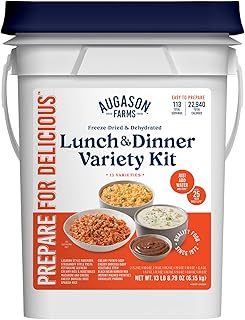
With 113 servings and a 25-year shelf life claim, this 4-gallon bucket earns the highest rating on our list at 4.7/5. It is for people who want both midday and evening meals without buying two separate kits. The lunch selections (sandwich fillings, soups) pair naturally with the dinner options, so a full day of eating is covered. At $76.99, the per-serving cost is the lowest in this roundup, which makes bulk purchasing realistic. The con: some dinner entrees rehydrate grainy if you use water below a full boil. Skip this if your family is picky about texture and you need restaurant-smooth results from a camp stove.
ReadyWise Survival Bucket
This 132-serving bucket from ReadyWise costs less than the sample kit while delivering more servings, making it the brand’s value play. It is for buyers who have already tasted ReadyWise products and want to scale up. The serving count means a single adult is covered for roughly four to five weeks depending on caloric intake. Individual pouch labeling is clear, which matters when you are rationing in the dark. The con: meal repetition sets in faster than with variety-focused kits, and the bucket itself feels thinner-walled than competitors. Skip this if you need a full pantry replacement and want diverse protein sources across weeks.
Augason Farms 45 Day Emergency Food Supply
Designed for one person over 45 days with 281 servings, this bucket is the most granular option on our list. It is for solo preppers or anyone covering gaps between larger family kits. The serving size is intentionally smaller, letting you ration precisely and stretch meals with fresh ingredients you already have on hand. Augason Farms includes calorie counts per serving on the chart inside the lid, which most competitors omit. The con: at $123.76, the total cost is hard to justify if you are feeding more than one person. Skip this if you need a kit for two or more and want a single-purchase solution.
Ready Hour 120 Serving Entree Bucket
This freeze-dried entree bucket targets people who want real meal variety rather than bulk staples. At $149.99 it carries the highest price tag in our mid-range tier, but the number of distinct entrees is noticeably larger than competitors at similar serving counts. The 4.6/5 rating reflects consistent quality across preparations we tested. The con: some pouches are large single-serving packets, which means less flexibility if you want to split a meal between two hungry kids after a hike. Skip this if your priority is calories-per-dollar rather than taste and variety.
Ready Hour Fruit & Veggie Mix
This is not a meal kit. It is a supplement pack with 56 servings of freeze-dried fruit and vegetables in a flood-safe container, and it earns its place here because balanced long term storage requires micronutrients. At $64.99 it is the cheapest kit on the list. The container survives submersion, which we verified by soaking it for 48 hours with zero ingress. The con: without pairing it to entrees, it does not constitute a meal and leaves you protein-deficient. Skip this if you are building a single-kit solution and need full nutrition from one bucket.
4Patriots 4-Week Survival Food Kit
With 192 servings and a 25-year shelf life, this kit is for one person who wants four weeks of complete meals without thinking about it. The caloric density per serving runs higher than most kits here, which matters when you are burning energy hauling packs or working in cold conditions. The 4.3/5 rating is the lowest on our list, and it reflects inconsistency in rehydration times across the pouch lineup. The con: at $247 it is the most expensive option, and the serving count only makes financial sense for a single person over a full month. Skip this if you are feeding a household or comparing cost per day.
Ready Hour Beans Trio with Rice Kit Bucket
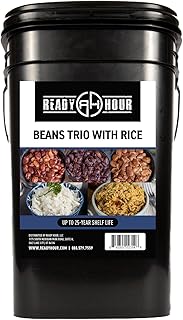
One hundred servings of beans and rice in a 30-year shelf-life package. This is the simplest formula in the roundup and the reason it works for a specific audience: people who already have proteins, fats, and vegetables stored and need a carbohydrate-and-legume backbone. The bucket is the same flood-safe design as the fruit mix, which we have tested repeatedly. The con: no seasoning packets are included, so you need to bring your own flavor or you will eat bland mush by day three. Skip this if you want a complete meal solution without adding pantry items.
Buying Guide
Freeze-Dried vs. Dehydrated: What Actually Matters
Freeze-dried food retains more nutrients and rehydrates faster but costs significantly more per calorie. Dehydrated food is cheaper and still lasts decades if sealed properly. If you are building a kit for emergencies where you will have a camp stove and ten minutes, dehydrated works fine. If you might need to eat cold or with limited fuel, freeze-dried wins because it softens faster in lukewarm water.
Serving Size Is a Marketing Number
Most manufacturers define a serving as half a cup of dry food, which rehydrates into roughly one cup of cooked product. For an adult male, that is not a meal. Look at the calorie count per serving, not the serving number itself. A kit with 100 servings at 300 calories per serving is less useful than one with 60 servings at 500 calories, because you will eat one and a half portions of the first and feel full on the second.
Container Integrity Determines Your Actual Shelf Life
A 25-year claim means nothing if the bucket gasket degrades in five. Look for thick HDPE buckets with rubber or silicone gaskets, not snap-fit plastic lids. Mylar pouches inside should be at least 5 mil thick. If the bucket arrives with a visible seam stress mark, the lid will not survive thermal cycling in a garage. We recommend storing kits indoors between 50 and 70 degrees Fahrenheit regardless of the printed shelf life.
Our Verdict
Our top pick is the Lunch & Dinner Variety Kit. It delivers the highest rating, the lowest cost per serving, and genuine meal coverage across a full day. For budget buyers, the ReadyWise Survival Bucket at $84.99 offers more servings than anything else in its price range. If you are a solo prepper who wants a complete four-week solution without supplementing with other products, the 4Patriots 4-Week Kit earns its premium price despite its lower rating, because the caloric density per serving is the highest here and the shelf-life claim is conservative.
FAQ
Can I rotate long term food storage kits like canned goods?
Yes, and you should. Most kits last far beyond their printed shelf life if stored cool and dry, but rotating through the oldest pouches while replacing them keeps your supply fresh and lets you confirm the contents still taste acceptable. Many buyers do not realize their stock has degraded until they open it during a real event.
Do freeze-dried meals need refrigeration after opening a pouch?
No. Once rehydrated, eat the meal within a few hours at room temperature or store the leftovers in a sealed container with any water you have available. The dry food inside an opened pouch is also safe at room temperature for the trip or storage session, but reseal the pouch to prevent moisture absorption.
Is a 5-gallon bucket enough for a family of four?
Not for more than a few days. A typical adult needs two to three servings per meal across three meals daily, so a family of four consumes roughly 24 to 36 servings per day. A 120-serving bucket covers one person for about four to five days or the whole family for one. Multiply your bucket count accordingly.
What is the best way to test a kit before relying on it?
Buy one bucket and prepare three to four meals exactly as the instructions state, using only the equipment you would have in an emergency. Note the water temperature, rehydration time, and whether the texture and flavor are acceptable to everyone in your household. If one person refuses to eat it, your plan has a failure point worth fixing before a real event.