
Key takeaways
What's inside
Best rated hiking shoes come down to matching the right pair to your trails, not chasing one winner. This roundup of the best rated hiking shoes breaks six trail-tested pairs down by waterproofing, traction, and fit, so whether you tackle wet granite, dusty desert, or long miles, you find a shoe your feet will thank you for.
As an Amazon Associate we earn from qualifying purchases at no extra cost to you. Product prices and availability are accurate as of the date shown and are subject to change.




As an Amazon Associate we earn from qualifying purchases at no extra cost to you. Product prices and availability are accurate as of the date shown and are subject to change.
By Jake Thompson, gear writer at Roger Bacon Outdoors
🛒 Best Price Today on Amazon
Prime members get fast, free shipping on everything above, plus member-only deals. New members get a 30-day free trial — cancel anytime.
How to Choose the Best Rated Hiking Shoes
The perfect shoe for a friend can wreck your feet, because fit, terrain, and climate change the equation. Before you buy, weigh three factors that separate the best rated hiking shoes from the rest: waterproofing versus breathability, traction and outsole design, and the fit, cushioning, and drop that suit your stride.
Waterproofing Versus Breathability
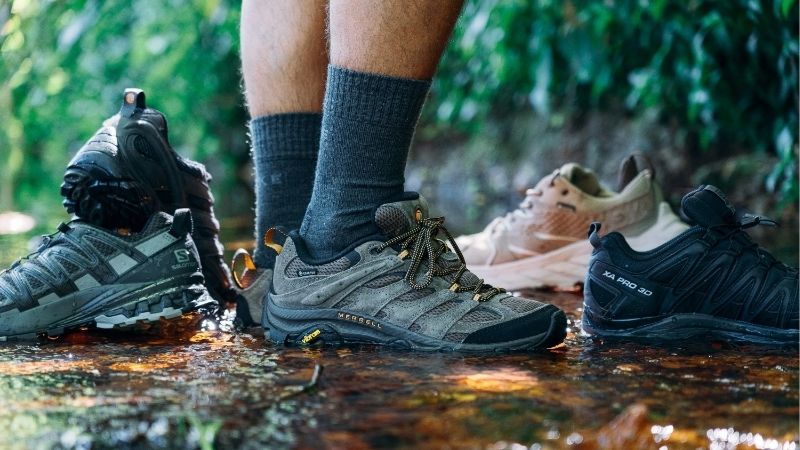
A Gore-Tex or membrane-lined shoe keeps water out in cool, wet, or shoulder-season conditions, which is a real comfort advantage on muddy or snowy trails. The catch is heat: that same membrane traps warmth, so waterproof shoes run hotter and dry slowly once water gets in over the collar.
Non-waterproof mesh shoes breathe far better and drain fast, making them the smarter pick for hot, dry climates and summer hikes. If your feet run warm or you hike where creek crossings are routine, a quick-draining mesh upper often beats a membrane that turns your shoe into a swamp.
Traction and Outsole
Grip comes from the rubber compound and the lug pattern. Premium outsoles from Vibram or Salomon’s in-house Contagrip use stickier compounds and multidirectional lugs that bite on rock, mud, and loose dirt. Deeper 4 to 5 millimeter lugs shed mud and dig into soft ground, while shallower lugs feel smoother on hardpack and pavement.
Match tread to terrain honestly. Aggressive lugs are overkill for groomed trails and wear faster on roads, while a low-profile outsole will slip on wet, technical descents. The best traction is the one suited to where you actually walk, not the most extreme pattern on the shelf.
Fit, Cushioning, and Drop
Fit is the whole game. Your toes need room to splay on descents without jamming the front, and a locked-down heel prevents the rubbing that causes blisters. Try shoes on late in the day when feet are swollen, and hike downhill in the store or at home to check for toe bang.
Cushioning and heel-to-toe drop shape the ride. Max-cushion shoes soak up impact on long, hard miles, while lower-stack shoes give more ground feel and stability on technical terrain. Zero-drop, foot-shaped models suit some hikers beautifully but require a gradual break-in to adapt calves and tendons.
What Tariffs Mean for Hiking Shoe Prices in 2026
Footwear pricing has shifted enough that a quick market check is worth it before you buy the best rated hiking shoes, especially with fall hiking and hunting season approaching.
Footwear Is Squarely in the Tariff Zone
The overwhelming majority of hiking shoes are manufactured in Vietnam, China, and Cambodia, precisely the countries facing new import tariffs. Industry estimates put tariff-driven cost increases near 7.7 percent on average, and footwear has been one of the categories where those higher landed costs show up on price tags first.
Brands Cannot Fully Forecast Prices
Because trade policy keeps shifting, outdoor brands increasingly describe upcoming prices as estimates rather than firm numbers, and some have paused or reworked their U.S. shipping plans entirely. For buyers, that uncertainty is a nudge to purchase a proven pair when you find your size rather than waiting for a better deal that may not come.
Buy Ahead of the Fall Season
Timing helps too. Early in the fall season, stock is deepest and popular sizes and widths are still on the shelf, especially in footwear where a sold-out size means waiting or compromising. Buying before the autumn rush lets you break shoes in properly and avoid scrambling once the trails and hunting grounds fill up.
The Best Rated Hiking Shoes We Recommend
These six pairs of the best rated hiking shoes cover waterproof and breathable, budget and premium, wide feet and fast-and-light. All are current, widely stocked models chosen for trail-tested performance. Weights reflect manufacturer figures and vary by size, and we avoid quoting prices since tariffs keep moving them.
| Model | Waterproof | Approx. Weight (pair) | Best For |
|---|---|---|---|
| Salomon X Ultra 5 GTX | Yes (Gore-Tex) | 1 lb 11 oz | All-around, wet conditions |
| Merrell Moab 3 | No (WP available) | 2 lb 6 oz | Budget, wide feet |
| Merrell Moab Speed 2 | Optional GTX | 1 lb 8 oz | Lightweight all-rounder |
| Hoka Speedgoat 7 | No | 1 lb 5 oz | Cushioned long miles |
| Altra Lone Peak 9 | No | 1 lb 4 oz | Zero-drop, wide toe box |
| Hoka Anacapa 2 GTX Low | Yes (Gore-Tex) | 1 lb 8.6 oz | Waterproof cushioned hiking |
Salomon X Ultra 5 GTX
The X Ultra 5 GTX is the do-everything champion for hikers who want one shoe for mixed terrain and cool, wet weather. A Gore-Tex membrane seals out water, the Contagrip outsole with a multidirectional lug pattern bites confidently on rock and mud, and a running-shoe weight paired with a supportive chassis gives it real stability on uneven ground.
Its drawbacks are fit and lacing: the shoe runs on the narrow side, so wide-footed hikers may feel pinched, and Salomon’s Quicklace system, while fast, is not to everyone’s taste and is fiddly to replace. For average-width feet on damp, rugged trails, it is the pair to beat.
Merrell Moab 3
The Moab 3 is the budget benchmark and one of the best-selling hiking shoes ever made. A nubuck leather and mesh upper, a roomy, accommodating fit, and a grippy Vibram outsole make it comfortable straight out of the box with almost no break-in, and its tank-like protection against roots and rocks lasts hundreds of miles.
The honest cons are weight and water: the base model is heavier than modern trail-runner hybrids and is not waterproof, though a waterproof version exists. Narrow feet may find it too roomy. For casual hikers and anyone with wide feet who wants proven comfort at a low price, it is the easy pick.
Merrell Moab Speed 2
The Moab Speed 2 is the lighter, nimbler sibling that splits the difference between a running shoe and a rugged hiker. A FloatPro EVA midsole cushions without adding bulk, the shoe needs no break-in, and a Gore-Tex option adds weather protection while staying breathable, making it a versatile all-rounder for beginners and experienced hikers alike.
Its main weakness surfaces over time: testers report the footbed and midsole lose some cushion after heavy mileage, and the roomy fit lacks the precision of a dedicated performance shoe. For an approachable, lightweight hiker that handles most trails with ease, though, it is a standout value.
Hoka Speedgoat 7
The Speedgoat 7 is the cushioned-mile machine for hikers who want to protect their feet and knees on long, hard days. A thick, springy midsole absorbs impact, a sock-like fit with padding around the Achilles locks the foot in, and a Vibram Megagrip outsole delivers bomber traction on varied surfaces despite the plush ride.
The trade-offs are waterproofing and stability: it is a breathable, non-waterproof shoe, so it excels in hot, dry conditions but soaks through in the wet, and the tall stack can feel less planted on very technical, off-camber terrain. For cushioned comfort over distance, it is a top choice.
Altra Lone Peak 9
The Lone Peak 9 is the cult favorite for hikers who want a natural, foot-shaped fit. Its zero-drop platform and wide toe box let toes splay and spread the load, which many long-distance and thru-hikers swear relieves foot fatigue, and the balanced cushioning gives good ground feel on trail without feeling harsh.
Its cons are adaptation and toughness: the zero-drop geometry demands a gradual break-in to avoid calf and Achilles strain, and the light build is less protective and less durable than burlier shoes on sharp, rugged terrain. For those who love a roomy, low-drop feel, nothing else quite compares.
Hoka Anacapa 2 GTX Low
The Anacapa 2 GTX Low blends Hoka’s plush cushioning with genuine waterproof protection for hikers who face wet trails but still want a soft ride. A Gore-Tex membrane keeps feet dry, a nylon ripstop upper adds durability, and a Vibram Megagrip outsole grips confidently, making it a comfortable choice for established trails in changeable weather.
The downsides are breathability and price: the waterproof membrane runs warmer and drains slowly if water gets in over the collar, and it sits at the premium end of the range. For hikers who want cushioned comfort with reliable weather protection, it is well worth the investment.
Frequently Asked Questions
These are the questions hikers ask most when choosing the best rated hiking shoes. Clear answers follow.
Hiking shoes or hiking boots: which do I need?
Low-cut hiking shoes are lighter and more nimble, ideal for day hikes and lighter loads on established trails. Boots add ankle support and protection for heavy packs, rough off-trail terrain, and unstable ground. Many hikers now choose shoes for most outings and reserve boots for demanding backcountry trips.
Are waterproof hiking shoes worth it?
It depends on your climate. Waterproof membranes shine in cool, wet, or shoulder-season conditions but run hot and dry slowly once soaked. If you hike mostly in warm, dry weather or cross streams often, a breathable, quick-draining mesh shoe usually keeps your feet more comfortable overall.
How long do hiking shoes last?
Most hiking shoes last roughly 300 to 500 miles before the midsole cushioning and outsole lugs wear down enough to reduce protection and grip. Rugged terrain, heavy loads, and frequent pavement shorten that life. Watch for flattened lugs and packed-out cushioning as signs it is time to replace them.
Should I size up for hiking?
Many hikers go a half size up to leave room for toe splay on descents and for thicker hiking socks, which prevents jammed toes and blisters. Fit varies by brand and model, so try shoes on with your hiking socks and walk downhill to confirm your toes are not hitting the front.
See More:
- best travel backpack for females
- best backpack for laptops
- best hydrogen water bottle
- best headlight restoration kit
Final Thoughts
The best rated hiking shoes are the ones matched to your feet, terrain, and climate rather than a single winner. The Salomon X Ultra 5 GTX leads for wet, mixed trails, the Merrell Moab 3 wins on value and roomy fit, and the Altra Lone Peak 9 serves the zero-drop crowd. Try pairs on with your socks and buy early while your size is in stock.
Write Your Review
No reviews yet. Be the first to share your experience!