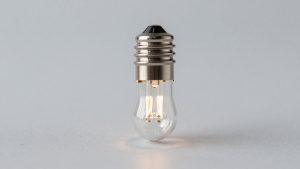
A $200 headlamp budget is a strange place to shop. The best camping headlamps ever made cost $50 to $140, and what $200 buys is not a brighter camp light but a specialist: reactive lighting or a 1,500-lumen trail-running light.
As an Amazon Associate, rogerbaconoutdoors.com earns from qualifying purchases made through links in this article, at no extra cost to you.
Quick Picks
| Headlamp | Price | Max Lumens | Weight | Best For |
|---|---|---|---|---|
| Petzl Nao RL | $199.95 | 1,500 | 5.1 oz | Best overall premium |
| Black Diamond Distance 1500 | $199.96 | 1,500 | 6.9 oz | Best for trail running |
| BioLite HeadLamp 800 Pro | $119.95 | 800 | 2.6 oz | Best long runtime |
| Black Diamond Icon 700 | $119.99 | 700 | 5.5 oz | Best hybrid power |
| Fenix HM65R-T V2.0 | $104.95 | 1,600 | 5.4 oz | Brightest trail light |
| Nitecore HC65 UHE | $89.95 | 2,000 | 3.4 oz | Best lumens per dollar |
| Fenix HP25R V2.0 | $119.95 | 1,000 | 5.0 oz | Best spot + flood combo |
| UltrAspire Lumen 800 Catalyst | $89.95 | 800 | 3.2 oz | Best ultralight runner |
Our Top Pick: Petzl Nao RL — $199.95
The Petzl Nao RL is the best headlamp under $200, and it wins on a feature no spec sheet can fake: reactive lighting. A sensor watches the ground in front of you and adjusts the beam automatically, brightening when you look down a dark trail and dimming when you look down at your hands. On a night hike that means you stop touching the button every thirty seconds, and on a climb it means both hands stay on the rock. It is the only headlamp in this guide that thinks for you, and after one night with it, every other light feels like a flashlight taped to your forehead.
The Nao RL puts out 1,500 lumens on boost from a 3,200mAh lithium-ion battery pack that charges over USB-C in about three and a half hours.
The Nao RL lists at $199.95, and Battery Junction, an authorized retailer, has it in stock at exactly that price in November 2026, so it fits this budget by five cents at its everyday price.
Black Diamond Distance 1500 — $199.96
The Black Diamond Distance 1500 is the fastest headlamp in this guide, and it is built for one job: moving through technical terrain at night, fast. Its PowerTap technology lets you tap the side of the housing to jump instantly to the full 1,500-lumen max, which is for spotting a trail marker at distance or reading a slope before you commit to it, and then tap back to a moderate setting without stopping.
The magnetic battery pack swaps one-handed and a single pack lasts an entire night at a moderate setting. Correction to Batch 35, which listed this light at $250: Als has it in stock at $199.96, twenty percent off list, so it fits by four cents, but only while the sale lasts.
BioLite HeadLamp 800 Pro — $119.95
The BioLite HeadLamp 800 Pro is the light you buy when your nights are long and your hands are busy. It runs seven hours on high and up to 150 hours on low.
Black Diamond Icon 700 — $119.99
The Black Diamond Icon 700 is the headlamp for people who do not trust rechargeable batteries, and it is right to earn that trust. It runs on a rechargeable cell and on three AAAs, so a gas-station battery pack revives it in the backcountry.
Fenix HM65R-T V2.0 — $104.95
The Fenix HM65R-T V2.0 is the brightest trail-running headlamp in this guide, and it is the one to buy if you run at night. Its dual beam runs spot and flood together or alone, and it charges over USB-C.
Nitecore HC65 UHE — $89.95
The Nitecore HC65 UHE is the lumens-per-dollar champion of this guide, and it is almost absurd. It puts out 2,000 lumens on turbo, which is more than the $200 top pick, with a 222-meter throw, from a light that weighs 3.4 ounces and costs $89.95 at authorized retailers, with some reads at $94.95.
Fenix HP25R V2.0 — $119.95
The Fenix HP25R V2.0 is the workhorse of this guide, and it is the light for people who need a spotlight and a floodlight at the same time. It puts out 1,000 lumens from its spotlight, with a 187-meter throw, and a separate 500-lumen neutral-white floodlight for close work, and you can run either one alone or both together for a combined beam. It is the best-built light here for the money, with a metal housing.
UltrAspire Lumen 800 Catalyst — $89.95
The UltrAspire Lumen 800 Catalyst is the lightest serious headlamp in this guide, and it is the one built by runners for runners. It puts out 800 lumens, it charges over USB-C, and it weighs 3.2 ounces, which is barely more than the BioLite and far lighter than the Fenix or the Black Diamond flagships. Its wide strap does not bounce on a run, but there is no red light.
How to Choose a Headlamp Under $200
Brightness is the number everyone shops by and the number that matters least. A lumen rating is the turbo output before the light steps down, so the brightness you actually use is about half the turbo number.
Runtime is quoted at the lowest setting, so check it at the brightness you will use. A swappable battery never really dies, and a built-in battery dies when it dies.
The Honest Budget: What $200 Really Buys
Two hundred dollars is more than a headlamp needs, and this guide says so plainly. The best camping headlamps ever made cost less than $140, and the jump from a $25 light to an $88 Petzl Actik Core, our Batch 34 top pick, matters more than the extra $60 to $110 this guide spends. The Actik Core is still $87.95, it still fits, and it is still the smartest single purchase in this whole series. The Petzl Swift RL, our Batch 35 top pick at $134.95, is still the best reactive-lighting value, and the Black Diamond Spot 400-R, our Batch 23 top pick at $49.95, is still the cheapest good light, though its price has drifted to $64.95 to $79.95 at most authorized retailers in November 2026, so do not pay $79.95 for it when the Storm 500-R costs the same. The Black Diamond Storm 500-R at $79.95 and the Fenix HM65R at $99.99 are still standing too, and none of them needed to be re-reviewed here.
What $200 buys is a specialist, and the smartest $200 in this guide is not one light. It is the Nitecore HC65 UHE at $89.95 plus the BioLite HeadLamp 800 Pro at $119.95, which totals $209.90, nine dollars over, or the Nitecore plus the UltrAspire Catalyst at $89.95, which totals $179.90 and leaves $20 for a power bank. Two good lights beat one great light on a trip, because one can charge while the other works, and because a headlamp is the one piece of gear that fails at the worst possible moment. If you insist on one light, buy the Nao RL, and buy it at $199.95, not a dollar more.
The lights that do not fit are worth naming, because they are the ones the search results will push at you. The Fenix HP30R V2.0 lists at $219.95, misses by $19.95, and Fenix Lighting now marks it discontinued, so do not chase it. The Ledlenser H19R Core reads $247.45 at Battery Junction, and it is out of stock there, so it misses by $47.45, and its old $199.95 list price is no longer buyable in stock. The Ledlenser H19R Signature is $329.95, which misses by $129.95. The Black Diamond Distance 1500 at its $249.95 list price misses by $49.95, and only the Als sale read at $199.96 fits. And the Petzl Nao RL’s spare battery at $99.95 is not a headlamp, but it is half the price of the light, so budget for it if you need it.
Real totals matter more than sticker prices. The Nao RL at $199.95 is really about $200 to $215 in its first year, because the USB-C cable is included but a spare battery is not. The Distance 1500 at $199.96 is really about $210 to $270, because a spare battery is $69.95 and you will want one for an all-night run. The Icon 700 at $119.99 is really about $125 to $135, because a pack of AAAs is $5 and you will want spares. The Nitecore at $89.95 is really about $90 to $110, because a second 18650 is $15 and a power bank is $20. The cheapest light in this guide is not the cheapest to own, and the most expensive light is not the most expensive to own, because the battery is the real cost.
Traps to Avoid
The lumen lie is the oldest trap in headlamps, and it is worse in 2026 than ever. A $15 to $25 light that claims 1,000 to 10,000 lumens is lying, and the giveaway is the price: a real 1,000-lumen light costs at least $50, and a real 2,000-lumen light costs at least $90. The no-name lights also lie about runtime, claiming 100 hours on a battery that holds 30, and about waterproofing, claiming IPX8 on a light with no gasket. If the brand has no website, no warranty, and no reviews outside its own listing, it is not a headlamp. It is a toy.
The bundle that is not a bundle is the second trap. Some sellers photograph a headlamp with a battery, a charger, a case, and a headband, and the box contains the headlamp and the headband. The Fenix HM65R-T V2.0 has been sold this way, with the 18650 battery listed separately, and the Petzl Nao RL’s spare battery is a separate $99.95 purchase that some listings make look included. Read the “what’s in the box” line before you buy, and buy from an authorized retailer, because a marketplace seller is where the bundle trick lives.
Price spreads are the third trap, and they are wide in this category. The Nao RL reads $179.95 at some sellers and $199.95 at others, a $20 spread on the same light. The Icon 700 reads $119.99 and $129.99. The HC65 UHE reads $89.95 and $94.95. The HM65R-T V2.0 reads $92.95 and $104.95. None of these spreads is a scam, but they mean you should check two sellers before you buy, because $20 is $20. The Distance 1500 has the widest spread of all: $199.96 at Als and $249.95 at list, a $50 gap that is the difference between fitting this budget and missing it.
Model-name confusion is the fourth trap. The Black Diamond Distance 1500 and the Black Diamond Distance LT 1100 are different lights, and the LT 1100 at $149.95 is lighter and dimmer, with 1,100 lumens instead of 1,500. The Fenix HM65R and the HM65R-T V2.0 are different lights, and the V2.0 is brighter. The Petzl Swift RL and the Petzl Swift RL Pro are different lights, and the Pro costs more. The Ledlenser H19R Core and the H19R Signature are different lights, and the Signature costs $80 more. Read the full model name, including the suffix, before you pay.
Proprietary batteries are the fifth trap. A headlamp with a built-in battery that cannot be replaced turns into a disposable light when the battery dies, and a headlamp with a proprietary battery pack costs $70 to $100 to replace, which is half the price of the light. The Nao RL’s $99.95 spare battery and the Distance 1500’s $69.95 spare battery are both proprietary, and both are worth it if you use the light hard. The Icon 700’s AAA fallback is the antidote, and it is the reason that light earns its place in this guide despite being dimmer than the rest.
Frequently Asked Questions
How many lumens do I actually need for camping?
About 400 lumens is enough to cook by, and about 700 lumens is enough to hike a trail at night. Anything above 1,000 lumens is for spotting distant markers, running fast, or working, not for camp. The brightest light in this guide, the Nitecore at 2,000 lumens, steps down to about 800 lumens within minutes, which is the brightness you actually use. Buy the beam shape and the runtime first, and treat lumens as a tiebreaker, not a target.
Is the Petzl Nao RL worth $200 when the Actik Core is $88?
It depends on what your nights look like. The Nao RL’s reactive lighting is genuinely useful on a night hike or a climb, because it dims and brightens without you touching it, and its 1,500-lumen boost is real. But for camp chores, reading, and cooking, the Actik Core at $87.95 does the same job, and it is lighter. If you hike at night, buy the Nao RL. If you camp, buy the Actik Core and spend the other $112 on a sleeping pad.
Can I use a trail-running headlamp for camping?
Yes, and it will work fine, but it is the wrong tool in two ways. A running light is built to be light and bright for a few hours, so it has a smaller battery and a simpler interface than a camping light, and it usually has no red mode and no AAA fallback. The Distance 1500 and the HM65R-T V2.0 are both excellent running lights that work fine in camp, but the BioLite 800 Pro is more comfortable for camp, and the Icon 700 is more practical for a long trip.
What is the difference between IPX4, IPX7, and IPX8?
IPX4 means the light survives splashing water, which is rain. IPX7 means it survives being dunked in one meter of water for thirty minutes, which is a dropped light in a creek. IPX8 means it survives deeper water for longer, which is a river crossing. The Nao RL and the BioLite are IPX4, the Icon 700 is IP67, and the Fenix and Nitecore lights are IP68. For camping, IPX4 is enough. For anything near water, buy IPX7 or better.
Should I buy a rechargeable headlamp or one that takes AAA batteries?
Buy rechargeable if you camp near the car or carry a power bank, because it is cheaper over time and brighter for the weight. Buy a Dual Fuel light like the Black Diamond Icon 700 if you go off-grid for days, because AAAs are available everywhere and a dead rechargeable battery is a dead light. The honest answer for most campers is one of each: a rechargeable light for the head and a AAA light in the pack as a backup.
FAQ
How many lumens do I actually need for camping?
Is the Petzl Nao RL worth $200 when the Actik Core is $88?
Can I use a trail-running headlamp for camping?
What is the difference between IPX4, IPX7, and IPX8?
Should I buy a rechargeable headlamp or one that takes AAA batteries?
More from Amazon
Programs that pair well with the guide above. Offers and eligibility are set by Amazon and may change.
Free shipping on eligible items, Prime Video and more. Eligible new members can start with a free trial.
Start a Prime free trialA Prime membership for ages 18-24 with a trial period. Eligibility is set by Amazon.
See Prime for Young AdultsAudiobooks and podcasts to listen to on the go. Eligible new members can start with a free trial.
Try Audible freeAd-free music streaming. Eligible new subscribers can start with a free trial.
Try Music Unlimited freeAs an Amazon Associate we earn from qualifying purchases.