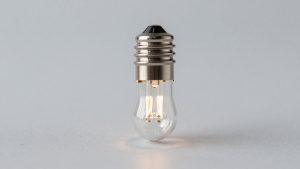
A $200 lantern budget is generous. Almost every serious camping lantern costs less than $150, and the ones that cost more are usually work-site lights wearing a camping costume. So this guide is not about scraping under a ceiling. It is about what the extra money actually buys over the cheaper guides in this series: swappable batteries, real waterproofing, a working power bank, and light you can read by without blinding the whole campsite after dark.
As an Amazon Associate, we earn from qualifying purchases made through links on this page, at no extra cost to you.
Quick Picks
| Lantern | Price | Max Output | Best For |
|---|---|---|---|
| Fenix CL30R | $109.99 | 650 lumens | Top pick — swappable batteries, IPX7 |
| Streamlight Super Siege | $134.99 | 1,100 lumens | Brightest real lantern |
| Coleman Quad Pro 800 | $119.99 | 800 lumens | Family camping, detachable panels |
| Fenix CL26R Pro | $79.99 | 400 lumens | Compact premium, USB-C |
| BioLite AlpenGlow 500 | $79.95 | 500 lumens | Best ambience and light quality |
| Coleman Classic Recharge 800 | $96.99 | 800 lumens | Classic look, modern internals |
| Black Diamond Apollo | $48.96 | 250 lumens | Best dimmable budget lantern |
| Cabela’s 1,200-Lumen Rechargeable | $69.99 | 1,200 lumens | Brightest for the money |
Our Top Pick: Fenix CL30R
The Fenix CL30R costs $109.99 at the Fenix store and through authorized retailers, and it is the only lantern in this guide that never has to die. It runs on one, two, or three 18650 lithium-ion batteries, and Fenix includes three 2,600mAh cells in the box. Every other lantern here has a sealed battery, so when the battery fades after a few seasons, the whole lantern becomes trash.
Maximum output is 650 lumens across five brightness levels plus Turbo and a flashing mode, lighting a circle about 35 meters wide.
Three spare 18650 cells cost $30 to $42, and they turn a one-evening lantern into a week-long one. The CL30R is the only lantern in Fenix’s own lineup rated IPX7, meaning it survives submersion in a meter of water for 30 minutes. It also works as a power bank, charging a phone through its Micro-USB port. The trade-offs are real: it weighs 14.5 ounces without batteries, closer to a pound and a half with three cells in it, and charging three cells over Micro-USB takes about 8.5 hours. But for a base-camp lantern that has to survive weather and keep working for years, nothing else under $200 matches it.
Streamlight Super Siege: The Brightest Real Lantern
The Streamlight Super Siege reads $134.99 at an authorized retailer in the catalog, and $148.95 at other authorized sellers. It is the brightest genuine camping lantern in this guide at 1,100 lumens, and it is built like rescue equipment: IPX7 waterproof, floats, and drop-tested to 6.5 feet.
Runtime is 5.75 hours on high, 36 hours on low, and 140 hours on red. The 10,400mAh battery doubles as a USB power bank, and at 1.88 pounds it is a car-camping lantern, not a backpacking one. The Super Siege led our under-$150 guide, where it fit by only $1.05 to $5.18 depending on the seller. Under $200 it fits comfortably, and the honest question is whether you need 1,100 lumens. Buy the Super Siege for brightness and toughness; buy the CL30R for longevity and for wet weather.
Coleman Quad Pro 800: Best for Family Camping
The Coleman Quad Pro 800 costs $119.99 at authorized retailers, and its trick is simple: the lantern splits into four detachable panels, each one a flashlight of its own. One lantern becomes the table light plus four torches for the kids, the dog walk, and the trip to the latrine.
Each detachable panel runs for hours on its own charge, so the kids can take a light to the bathroom and the table still stays lit. The catch is the power source. It runs on eight D batteries, sold separately, so the real first-night total is closer to $130 once you add a set of D cells. The Quad Pro is the right lantern for a family that camps from a car and wants one light that does five jobs. It is the wrong lantern for anyone counting grams or anyone who hates buying disposables.
Fenix CL26R Pro: Best Compact Premium Lantern
The Fenix CL26R Pro reads $79.99 in the catalog and $99.95 in 2026 roundups, and it is the most feature-dense small lantern in this guide. Maximum output is 400 lumens, it charges over USB-C, and it runs up to 408 hours on its lowest setting — the longest low-mode runtime Fenix publishes.
The multiple color temperatures are more useful than they sound: warm light for evenings, neutral white for cooking, and red for preserving night vision. At well under a pound it is the lantern to pack when space matters but you still want a real area light. The compromise is output: 400 lumens lights a tent and a table, not a whole group site.
BioLite AlpenGlow 500: Best Ambience and Light Quality
The BioLite AlpenGlow 500 costs $79.95, and it led our under-$100 guide for one reason: light quality. Its ChromaReal LEDs produce warm, high-CRI light that flatters food, faces, and a campsite in a way cold white LEDs do not.
It puts out 500 lumens, runs from a 6,400mAh rechargeable battery, and offers warm, cool, and color modes, plus a shake-to-activate feature and a power-bank output. It is IPX4 rated — splash-proof, not submersible — and at 13.4 ounces it is light enough to hang from a tent loop. The AlpenGlow 500 is the lantern for people who care what the light feels like, not just how many lumens it throws. One warning carried from the under-$150 guide: there is no BioLite “AlpenGlow 640” lantern. The 640 in search results is the AlpenGlow 500’s 6,400mAh battery, and listings calling a lantern a “640” are confused or selling something else.
Coleman Classic Recharge 800: Classic Look, Modern Internals
The Coleman Classic Recharge 800 costs $96.99, and it looks like the lantern your grandfather carried — same shape, same warm glow — with a 4,800mAh rechargeable battery inside instead of a propane mantle.
Maximum output is 800 lumens across three brightness levels, it is impact resistant and IPX4 water resistant, and it runs up to 45 hours on low. This is the lantern for car campers who want a familiar shape and zero fuel to buy. The sealed battery is the weakness: when it fades in a few years, the lantern goes with it. Buy the Classic Recharge for the look and the simplicity; buy the CL30R if you want one lantern to last a decade.
Black Diamond Apollo: Best Dimmable Budget Lantern
The Black Diamond Apollo reads $48.96 at an authorized retailer, and $69.95 at list, and it is the cheapest lantern in this guide that still feels like a designed product rather than a commodity.
It puts out 250 lumens, dims smoothly from full to a glow, collapses down for packing, and runs on four AA batteries. Two hundred and fifty lumens sounds modest next to 1,100, but it is enough to cook by, read by, and play cards by, and the dimmer means you are not blasting your neighbors with light you do not need. The Apollo is the right second lantern, the right tent lantern, and the right pick for a camper who already owns a big light and wants something small and civilized.
Cabela’s 1,200-Lumen Rechargeable: Brightest for the Money
The Cabela’s 1,200-Lumen Rechargeable Lantern costs $69.99, and on paper it beats every lantern in this guide except the Super Siege: 1,200 lumens for seventy dollars. It is a house-brand light, so the warranty and build quality are Cabela’s, not a specialist lighting brand’s, but the value is real. The honest caveat is that lumen counts from house brands are measured generously, and the light quality is cold and flat next to the AlpenGlow 500. The diffuser spreads the light evenly across a table, which matters more than raw lumens when you are reading a map or cooking after dark. Still, if your only metric is lumens per dollar, nothing in this guide touches it. Pair it with the Apollo for ambience and you have a two-lantern kit for under $120.
How to Choose: Brightness, Runtime, Charging, Weight, Size
Brightness is the most misunderstood number in lanterns. For a two-person tent, 150 to 250 lumens is enough. For a picnic table, 400 to 650 lumens is the sweet spot. For a group site, you want 800 lumens or more, or two lanterns. More lumens past 1,000 mostly means shorter runtime and more glare.
Runtime figures are measured on the lowest setting, and the lowest setting is often a 10-lumen glow. Read the high-mode runtime instead: the CL30R gives 4.5 hours at 650 lumens, the Super Siege 5.75 hours at 1,100. If you camp for three nights without charging, you need a big battery, a low setting you can live with, or swappable cells. The CL30R’s swappable 18650s are the only honest answer to a multi-night trip without power.
Charging matters more than most buyers expect. USB-C is the 2026 standard, and the CL26R Pro has it. The CL30R still uses Micro-USB and takes 8.5 hours to charge three cells — an overnight charge, not a lunch-break top-up.
Color temperature deserves a mention, because it decides whether you enjoy the light. The AlpenGlow 500 and the CL26R Pro let you choose; most budget lanterns do not, and they default to a cold white that flatters nothing. Weight and size decide whether a lantern actually comes on the trip. For car camping, weight is irrelevant and brightness wins. For backpacking, the CL26R Pro or the Apollo are the only sensible picks here, and a headlamp may be a better buy than any lantern for trail use after dark.
The Honest $200 Budget
Here is the uncomfortable truth about this guide: $200 is more than a camping lantern needs. The best lantern here costs $109.99. The brightest costs $134.99. The difference between the under-$150 guide and this one is not a better lantern; it is headroom.
Under $150, the Super Siege fit by about a dollar at some sellers and missed by $1.69 at Amazon’s $151.69 read. Under $200, it fits everywhere, and so does every other real lantern on the market. So what should the extra $50 buy? It should buy a second lantern, not a more expensive first one. A CL30R at $109.99 plus an Apollo at $48.96 is $158.95, and that pair covers a group site and a tent better than any single $200 lantern. The single best use of $200 is two good lights, not one extravagant one.
The other honest use of the headroom is batteries. Three spare 18650 cells for the CL30R cost $30 to $42, and they turn a one-evening lantern into a week-long one. Spend the budget on runtime, not on lumens you will only dim anyway.
What Doesn’t Fit $200, and the Traps to Avoid
Almost no genuine camping lantern costs more than $200. The real doesn’t-fit list is shorter than in other guides, and it is mostly about things that look like lanterns but are not.
First, the Goal Zero Lighthouse 1000 does not exist. Search results for it return the Lighthouse 600 at $79.95, the Lighthouse Core at $59.95, and the Lighthouse Micro at $39.95.
Any listing selling a “Lighthouse 1000” is either a mislabeled 600 or a fake. Buy the 600 if you want a Goal Zero; it is a fine lantern and it fits easily. Second, propane lanterns are excluded from this guide on purpose. The Coleman NorthStar 1500 reads $74.10 to $90.02, which looks like a bargain for 1,500 lumens, but mantles cost money, propane costs money, and a propane lantern is a fire risk inside a tent and a burn risk around children.
Third, watch the seller spreads. The CL30R reads $109.99 at the Fenix store and authorized retailers, but one authorized retailer lists it at $184.20, and a poor-rated seller lists it higher still. The Super Siege reads $134.99 at one authorized retailer and $154.99 for the Coyote color at the brand’s own store. Always check the brand’s own store before buying.
Fourth, the million-lumen trap. Listings advertising a “1,000,000 lumen” flashlight or lantern for $23.89 are lying. A real 1,000-lumen lantern costs $70 or more, needs a battery the size of a phone, and gets hot. The same goes for no-name 1,000-lumen lanterns at $29.97: the lumens are inflated, the battery is small, and the warranty is a fiction.
Fifth, batteries are never in the box unless the listing says so. The CL30R includes its cells, and the Super Siege, AlpenGlow 500, and Classic Recharge have sealed batteries. A lantern that needs batteries you do not own costs $10 to $20 more than the sticker on the first night.
Frequently Asked Questions
How many lumens do I need in a camping lantern?
For a two-person tent, 150 to 250 lumens is enough. For a picnic table, 400 to 650 lumens is the sweet spot. For a group site, 800 lumens or more, or two lanterns. Two lanterns also let you keep one inside the tent and one at the table, which is more practical than one very bright light.
Are rechargeable lanterns better than battery lanterns?
Rechargeable lanterns cost less over time and weigh less, because you are not carrying spare D cells. Battery lanterns keep working when there is no power to recharge, which matters on long trips. The best of both worlds is a lantern with swappable rechargeable cells, like the Fenix CL30R: carry charged spares and you never wait for a charge.
Can I use a camping lantern in the rain?
Only if it is rated for it. IPX4 means splash-proof and survives rain. IPX7, like the Fenix CL30R and the Streamlight Super Siege, means it survives submersion in a meter of water for 30 minutes.
How long does a camping lantern battery last?
On high, most lanterns in this guide run 4 to 6 hours. On low, they run 30 to 400 hours depending on the model. For a three-night trip without charging, bring spare batteries or a lantern with swappable cells.
Is the Fenix CL30R worth $109.99 when cheaper lanterns exist?
Yes, if you camp often or camp in wet weather. The swappable 18650 batteries mean the lantern never becomes e-waste over a dead cell, the IPX7 rating is the best in this guide, and the power-bank output charges a phone.
FAQ
How many lumens do I need in a camping lantern?
Are rechargeable lanterns better than battery lanterns?
Can I use a camping lantern in the rain?
How long does a camping lantern battery last?
Is the Fenix CL30R worth $109.99 when cheaper lanterns exist?
More from Amazon
Programs that pair well with the guide above. Offers and eligibility are set by Amazon and may change.
Free shipping on eligible items, Prime Video and more. Eligible new members can start with a free trial.
Start a Prime free trialA Prime membership for ages 18-24 with a trial period. Eligibility is set by Amazon.
See Prime for Young AdultsAudiobooks and podcasts to listen to on the go. Eligible new members can start with a free trial.
Try Audible freeAd-free music streaming. Eligible new subscribers can start with a free trial.
Try Music Unlimited freeAs an Amazon Associate we earn from qualifying purchases.